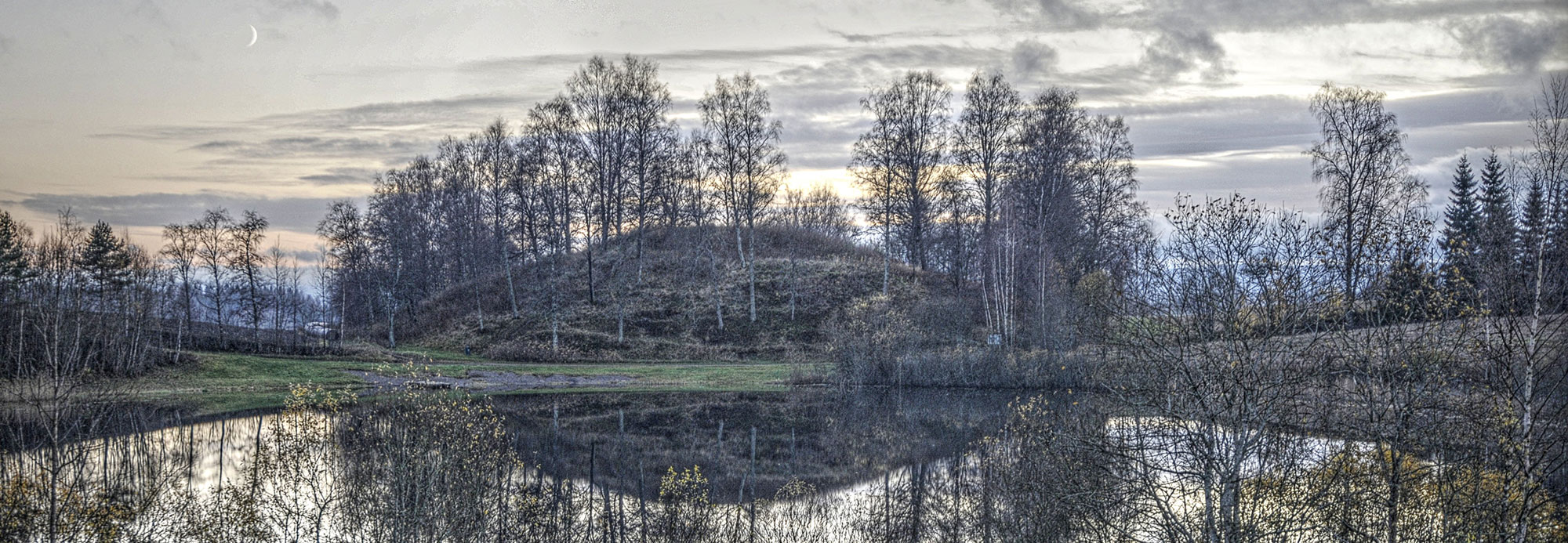
Raknehaugen mound, NorwayTommy Gildseth/Wikimedia Commons
Posted on 04/13/2026 6:03:38 PM PDT by SunkenCiv
A new study of southern Norway's Raknehaugen mound conducted by Lars Gustavsen of the Norwegian Institute for Cultural Heritage Research suggests that it does not contain a burial and may have been built in response to a landslide, according to a Phys.org report. "I actually discovered the landslide scar more or less by accident," Gustavsen said. "While investigating the visibility of the mound using LiDAR data, it suddenly appeared in one of the visualizations I was using to analyze the landscape," he said. When the mound was excavated in 1869 and 1870, no central burial mound was found. Excavations in 1939 and 1940 found no evidence of a burial either, but archaeologist Sigurd Grieg noted that the mound had an unusual construction, including structures made of snapped timbers. Dendrochronological analysis of these timbers indicates that the mound was built around A.D. 551, or about 15 years after a volcanic eruption that led to the so-called Dust Veil Event, which caused large-scale climate disruptions in the Northern Hemisphere, including cooling, crop failures, famine, and population decline. Gustavsen thinks that the trees found in the mound had been felled by the landslide and that the mound was built in response to the disaster. "I think this study shows that by shifting the focus from mounds as primarily mortuary structures to mounds as primarily ritual structures that were sometimes also used for burials, we can get closer to understanding what lies behind the mound phenomenon in general," he concluded. Read the original scholarly article about this research in the European Journal of Archaeology. To read about Viking ship burials in Norway, go to "Setting Sail for Valhalla."
(Excerpt) Read more at archaeology.org ...
Raknehaugen mound, NorwayTommy Gildseth/Wikimedia Commons
[snip] ...the mound was built around A.D. 551, or about 15 years after a volcanic eruption that led to the so-called Dust Veil Event, which caused large-scale climate disruptions in the Northern Hemisphere, including cooling, crop failures, famine, and population decline. [/snip]
Uff da Sven!
The pic of the mound with the body of water, appears the mound is the over burden from digging out that stock tank.
Something to shore up the south end of the pond and prevent it from becoming / initiating the next earth slump. (Beaver dam seems unlikely. :)
Has anyone thought to just ask Keith Richards?
He was likely there when it happened
“Glad to be here, glad to be anywhere.” — Keith Richards
Dendrochronological analysis of these timbers indicates that the mound was built around A.D. 551, or about 15 years after a volcanic eruption that led to the so-called Dust Veil Event, which caused large-scale climate disruptions in the Northern Hemisphere, including cooling, crop failures, famine, and population decline. Gustavsen thinks that the trees found in the mound had been felled by the landslide and that the mound was built in response to the disaster.
“I think this study shows that by shifting the focus from mounds as primarily mortuary structures to mounds as primarily ritual structures that were sometimes also used for burials, we can get closer to understanding what lies behind the mound phenomenon in general,”
There was a terrible landslide in Washington state that wiped out a community near OSO, Washington. 43 people lost, some never to be recovered. It took them 10 years to build a memorial site, it is very nice and well thought out. Sadly it will not come close to lasting 1500 years.
Back in the day there was a company tasked with how to mark the proposed nuclear waste site. And it needed to last and be understandable for whatever the millions/billions of years it would take for the waste to be safe as it decayed. Pretty much impossible I would think.
“Hey look George - a marker! I bet it is an old grave site with lots of gold and other treasures!! Grab your shovel!!!”
https://snohomishcountywa.gov/3965/SR-530-Slide-Memorial-2024
At many landslides near the terminus of the run off it is hummocky and wet. The slide brings down a lot of finer-grained materials with it which ponds up the water. This memorial mound may have placed at the terminus - just like the memorial at the Oso, Washington slide.
Gustavsen thinks that the trees found in the mound had been felled by the landslide and that the mound was built in response to the disaster.
So it was just a brush pile?
A similar mound with felled trees inside was found in the Sahara Forest.
“Don’t you mean Sahara Desert?”
“Sure, now.”
[singing] Got to take a sentimental journey...
Good call, and the mound would be the ‘sponge’ to make that work. Water supply. Probably remains of a village or more than one nearby, just hasn’t been found. I don’t see this in Wikiwacky, but I’ve seen it suggested that Silbury Hill in England served a similar purpose.
https://en.wikipedia.org/wiki/Silbury_Hill#Purpose
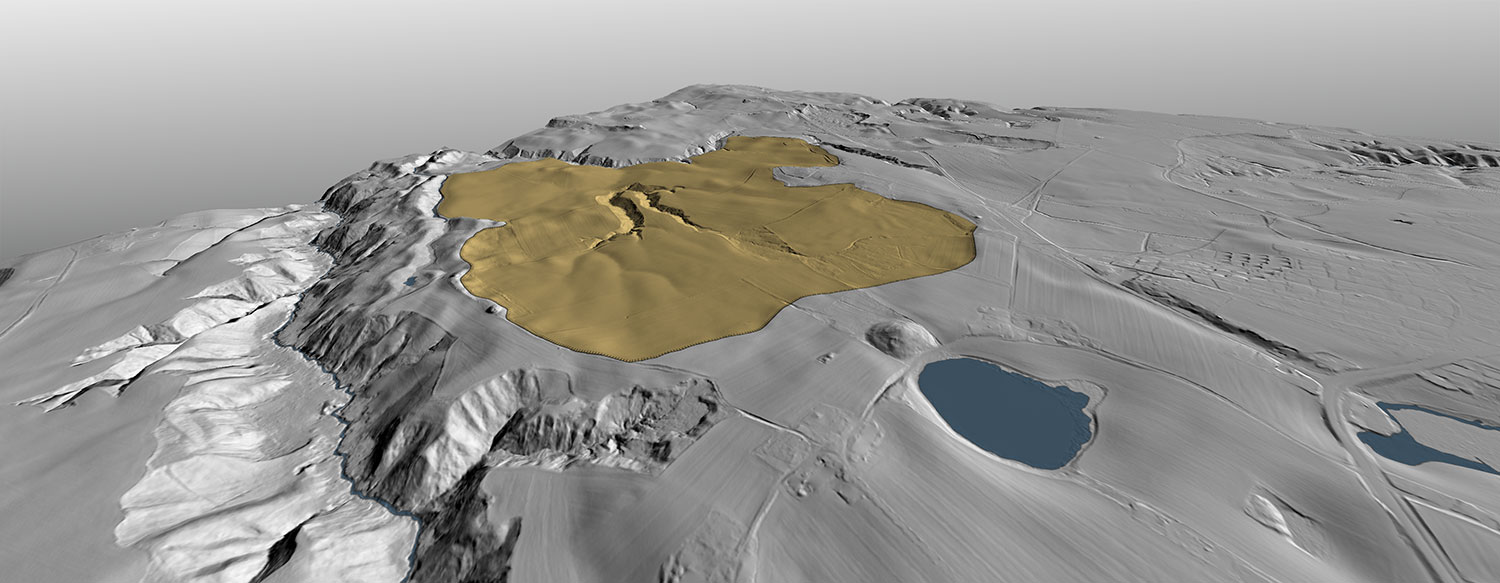
Here is a topographical picture from the article. Hard to determine the exact perspective absent any elevation lines. What I interpreted as a Fosse that recived the flow is probably an escarpment located at the headland. Is the slump flowing toward the pond or away and is it at the headland or the terminus? OK, I suppose that a jumble of snapped off timbers and sediments would argue terminius.
I recall the Oso landslide. Very sad!
Here is a topographical picture from the article. Hard to determine the exact perspective absent any elevation lines. What I interpreted as a Fosse that recived the flow is probably an escarpment located at the headland. Is the slump flowing toward the pond or away and is it at the headland or the terminus? OK, I suppose that a jumble of snapped off timbers and sediments would argue terminius.
I recall the Oso landslide in WA State. Very sad!
From that image I would guess that the flow was moving from upper left to lower right, so the mound is near the terminus of the flow. Doesn’t seem much of a slope to produce a slide, but...
Disclaimer: Opinions posted on Free Republic are those of the individual posters and do not necessarily represent the opinion of Free Republic or its management. All materials posted herein are protected by copyright law and the exemption for fair use of copyrighted works.