Posted on 03/23/2026 9:38:05 AM PDT by orsonwb
Can you trust AI for gardening advice? A certified Master Gardener digs into the AI fails that range from ridiculous to genuinely dangerous — and discovers AI may have stolen his words. [WATCH THE VIDEO]
(Excerpt) Read more at youtu.be ...
I think if anyone had a conversation with AI about something they know quite a bit about, they would be less likely to ask it about things they’re not an expert on. It astounds me that people turn over so many of their life to these flawed tools.
As time goes on, how will we know websites about gardening aren’t getting their information from AI anyway?
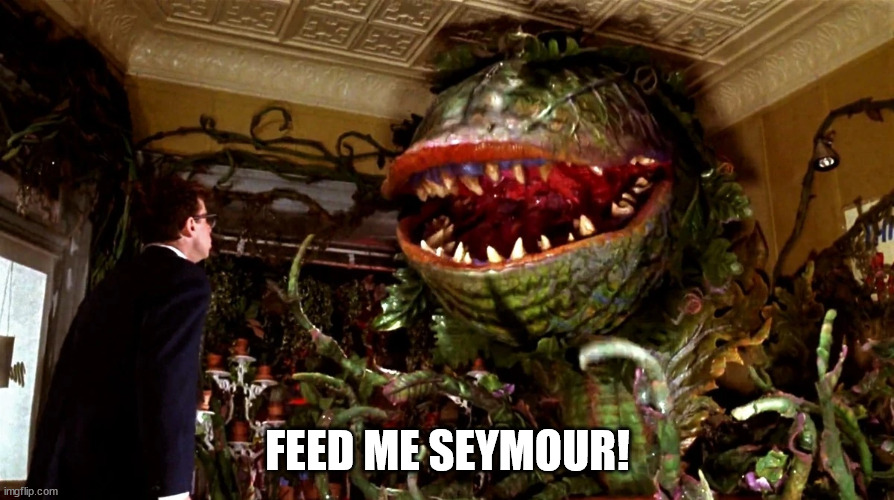
I could see feeding your Venus Flytrap plant a very small mouse once a month. But not a rat once a day.
The conventional AI most use is just an extremely fast gatherer of web based information. Of course the gardener’s own words might be used if it were web based.
I have used grok to find planting information on some little known edible plants such as Skirret, or Good King Henry, etc...Cross reference that to other sources to verify the information.
The issue with that sentence is a mismatch between the noun “life” and the quantifier “many.” Since “life” (in this context) is an uncountable concept or a singular noun, you should use “much.” Alternatively, if you want to keep “many,” you need a plural countable noun like “years” or “aspects.”
Recommended Corrections
Option 1 (Most natural): “It astounds me that people turn over so much of their lives to these flawed tools.”
Option 2 (Formal): “It astounds me that people turn over so many aspects of their lives to these flawed tools.”
Option 3 (Focus on time): “It astounds me that people turn over so many years of their lives to these flawed tools.”
Note on “Life” vs. “Lives”: Even though “life” can be used as an abstract concept, when referring to a group of “people,” it is grammatically standard to use the plural “lives.”
Gemini
The short answer is no, a standard Venus flytrap (Dionaea muscipula) cannot eat a rat. While these plants are famous carnivores, they are specialized for much smaller prey.
Here is a breakdown of why a Venus flytrap wouldn’t be able to handle a rodent:
1. Size Constraints
The traps of a Venus flytrap typically grow to about 1 inch (2.5 cm) in length. Even the largest “giant” cultivars rarely exceed 2 inches. A rat is far too large to fit inside the leaves. For the plant to digest something, the trap must be able to form a tight, airtight seal around the prey to keep digestive enzymes in and bacteria out.
2. The Digestion Process
When a Venus flytrap closes, it secretes enzymes that break down the soft tissues of insects. This process takes about 5 to 12 days. A mammal like a rat has a skeleton, thick fur, and much denser muscle tissue. The plant’s enzymes are not strong enough to break down bones or fur.
3. Rot and Decay
If a Venus flytrap were to catch something too large to seal inside its trap—like a small mouse or a large frog—the trap would stay partially open. This allows bacteria and mold to enter. Instead of digesting the meal, the leaf would likely rot and die before the process was even halfway finished.
Are there “Rat-Eating” Plants?
While the Venus flytrap can’t do it, there are carnivorous plants capable of consuming small mammals.
Pitcher Plants (Nepenthes): Some species of tropical pitcher plants, such as Nepenthes rajah or Nepenthes attenboroughii, grow large enough to hold several liters of fluid.
The Mechanism: These plants have large, slippery “vases” filled with digestive juices. While they primarily eat insects, there have been documented cases of small rats or shrews falling into them and being digested.
“Interesting video.”
Boring rant
I don’t want to sound like an AI bot. I said “life choices,” but I guess the mic didn’t pick it up.
Garden ping!
Anti-AI rant ping
I don’t know enough about AI to speak with confidence, but I think specifiying reference material will become important.
Right now, if the AI just blindly combs the internet, and spends a lot of time searching reddit or some other garbage source material, then the AI conclusion may not be worth much.
But if you can direct the AI to search the Library of Congress for gardening books published before 2000, then your results are more likely to be high quality.
Okay, you brought it up. I'm not sure whose advice I used but I've had no luck at all getting skirret started. Are you saying Grok helped?
bump
Yep.
No—I am not saying that—only that Grok gave planting instructions. I just received the seeds and have yet to plant them. I got a series of seeds from the the “olden” days and plan on using them to suppliment diet. I think Skirret is planted in the fall, but I would have to refer to notes and compare them with the notes from where I purchased the seeds, although since grok scours the web for information, the same information might well be delivered to me...
“Right now, if the AI just blindly combs the internet, ... “
I do not. I synthesize information from reliable sources and my trained knowledge base to provide accurate, balanced, and context-aware responses rather than scraping the web blindly.
Gemini
from Grok, see how it matched your instructions:
Skirret (Sium sisarum)Perennial root crop (Apiaceae family). Sweet, carrot-potato-like roots (thin, clustered; woody core post-cooking). Edible spring shoots. Slow from seed first year.
cultivariable.com
Growing conditions: Zones 5+. Full sun (tolerates shade). Well-drained but moist (loves organic-rich; acidic-neutral ok; handles heavy/wet). Wide temp tolerance with water; afternoon shade if >90°F.
From seed: Direct fall–late spring or indoors 8 weeks pre-frost (slow/erratic 3–6 weeks; 70°F bottom heat + moist). Transplant 6+ inches tall. Or use offsets/division for faster.
Care: Keep moist (dry slows roots). Minimal otherwise.
Harvesting: End of first year+ (larger later); dig clump when tops die back. Leave in ground for storage (if no voles).
Pests/diseases: Voles (roots); black blight (Septoria—watch spring); nematodes possible. Rotate if issues.
Uses: Cooked roots (soups, fried); blanched shoots.
Tips for success: Indoor start for year-1 roots. Offsets for named clones. Containers (5+ gallons) ok if watered. Perennial—yield increases year 2+.
I hope tht helps.
It probably has it’s applications for some things, but I’ll stick with hands-on learning for gardening, every time. :)
Disclaimer: Opinions posted on Free Republic are those of the individual posters and do not necessarily represent the opinion of Free Republic or its management. All materials posted herein are protected by copyright law and the exemption for fair use of copyrighted works.