
Posted on 02/06/2026 5:56:40 AM PST by MtnClimber
My last two posts have been about the new Federal Reference Manual on Scientific Evidence, just out (December 31) from the Federal Justice Center. The Chair of that Center is U.S. Chief Justice John Roberts. The latest version of the Manual is the Fourth Edition. The prior version in 2011 was the Third Edition; and there were also two prior Editions from 2000 and 1994.
In those previous two posts, I principally criticized a newly-added chapter in the Fourth Edition titled “Reference Guide on Climate Science.” Today, I want to take a look at another chapter titled “How Science Works.” There was no such chapter in the First Edition, but a chapter by that title, written by a guy named David Goodstein (an Emeritus Professor at Caltech), was added in the Second Edition. In the Third Edition, Goodstein’s chapter was somewhat modified and slightly expanded (from 16 pages to 18). Goodstein died in 2024, and in the Fourth Edition he has been replaced by Michael Weisberg and Anastasia Thanukos, who have now produced a chapter with the same title, but now running to some 61 pages.
In my January 31 post, my comment on the Weisberg/Thanukos work product was that it was “not too terrible,” but that it was “way longer than it needs to be” and “the most important points are buried.” Further comparing this chapter to the chapter on (so-called) “climate science” (which is entirely hoakum) I continue the view that there are some good points here. However, there are also some serious flaws, and I don’t want to move on without pointing some of those out.
Let’s start with the identity of the lead author. Weisberg is said to be a Professor of Philosophy at the University of Pennsylvania. One part of that gives great pause, and it’s not that Weisberg is a Professor of Philosophy rather than of some field of science. I think that the nature of the scientific method and of the development of scientific knowledge is actually a bona fide part of philosophy, namely logic. So the part of Weisberg’s resume that gives me pause is instead that he works at the University of Pennsylvania. That is the institution that in 2022 hired the single biggest charlatan pseudoscientist in the entire country, namely Michael “Hockey Stick” Mann, and gave him a top University Professorship. Has Weisberg ever spoken out against Mann, or criticized him in any way? Not that I can find. So for starters, here we have a guy who is willing to look past and excuse the worst of the worst in the way of politicized pseudoscience.
As I said in the previous post, there are many things here to which I can subscribe, and I should start with those. As the most important example, the section on “Key Traits of Science,” beginning at page 60, basically has it right. Subsections include: “Science Investigates the Natural World and Natural Explanations”; “Science Investigates Testable Hypotheses”; and “Science Responds to Evidence.” So far, so good.
But in the process of generating a way-too-long 60+ pages, Weisberg veers badly off track from time to time. There are too many examples to cover them all in a short blog post, but here are a several of the more important:
Is Science a method of inquiry or a body of accepted knowledge (or both)?
Weisberg gets this one completely wrong. From page 50:
Science is both a body of knowledge and the process for building that knowledge based on evidence acquired through observation, experiment, and simulation. The term is accurately applied to knowledge on a wide variety of topics and to diverse lines of inquiry.
I completely disagree. The idea that Science can be a body of knowledge is where we get pronouncements from a priestly class that “The Science” has established such and so, and therefore we mere laymen and peons are not allowed to question it. That is the opposite of the scientific method. So science cannot be both the method that questions all allegedly accepted propositions, and also a body of accepted knowledge. Richard Feynmann’s definition of science is the one I subscribe to: “Science is the belief in the ignorance of experts.”
Confused treatment of the concept of falsification.
At the beginning of a subsection titled “Science Does Not Prove Hypotheses,” Weisberg states “No matter how much evidence supports or refutes it, a hypothesis cannot be absolutely proven true or false.” I agree that a hypothesis cannot absolutely be proven true, but how about false? After making that statement, Weisberg goes through a series of examples, all of which are instances of how a hypothesis can still turn out to be false even after much accumulation of corroborating evidence. Yes. But he gives no examples of the opposite circumstance, where a hypothesis could turn out to be true after falsified by definitive evidence. In discussing the subject, he confuses the logic of advancing knowledge through a process of falsification with a very separate concept, which is the practical difficulty of accumulating unambiguous evidence.
Sloppy statements about “accepted science” and “consensus.”
In the midst of otherwise sensible sub-sections and paragraphs, sloppy sentences repeatedly appear about things deemed to be “accepted science” and “consensus.” For example, from page 64:
Despite its tentative nature, accepted scientific knowledge is reliable.
Well, Michael, which “accepted” scientific knowledge is “reliable”? All of it? And, “accepted” by whom? By your friends? By my friends? By the orthodox climate clique? How can someone make such a statement after the “accepted science” Covid debacle of lock-downs and masking and “social distancing” that we have just been through, not to mention the endless and ongoing climate scam?
Weisberg continues:
Such [“accepted science”] explanations generate predictions that hold true in many different contexts and at many diff er ent scales, allowing us to figure out how entities in the natural world are likely to behave and how we can harness that understanding to solve problems and dispense justice.
Well, “accepted science” explanations do generate useful predictions in some circumstances, and in other circumstances they prove to be completely wrong. The only thing significant about real science (the method) is providing a method to distinguish between those two categories. Weisberg does not do that.
Correlation and causation
From page 92:
While the often-stated maxim that correlation does not imply causation is true, in fact, correlation is the only means that we have of establishing causation in science.
That’s just completely wrong. We absolutely have a way of “establishing causation” — or at least of progressively ruling out causes other than our hypothesized cause — which is by disproof of the null hypothesis. In the most common example with which almost everyone is familiar, pharmaceutical companies seeking approval of a drug are required to (at least tentatively) prove its efficacy by disproving the null hypothesis that a placebo is as good or better.
Weisberg follows the statement I quote above with a long example about how the causal relationship between smoking and lung cancer was established through a long series of studies proving correlation. Yes, in part. But those studies also disproved the null hypothesis that people or animals not exposed to inhaled tobacco smoke got lung cancer at the same rate.
Conclusion
So the operating hypothesis is that Professor Weisberg wrote this chapter in complete good faith to give the courts a neutral guide to science, and the flaws I have identified are just a few innocent mis-steps attributable to short deadlines or sloppiness. But then there’s the null hypothesis that what I say are flaws were actually very intentionally inserted to give support to the litigation efforts of the most politicized consensus “science” scams going on these days, starting with the climate alarm scam. I kind of think that we are close to having to reject the original operating hypothesis in favor of the null hypothesis.
Manhattan Contrarian ping
sounds a lot like "de-bunked"
All ruling class institutions are corrupted.
Mostly drivel
If science does not yield a useful body of knowledge, it becomes all process and inquiry without any conclusions that can be applied in court or in life. Can you imagine going to a doctor for a pain in your gut and getting test after test without any conclusion and course of treatment?
Just read an article about how Proctor&Gamble sponsored the AHA to draw a "consensus" regarding butter and lard versus Crisco.
"Consensus" gave us vaccine mandates and destructive publuc policy.
"Accepted science" put Galileo in prison (substitute 'political heresy' for 'religious heresy').
Notice how Fauci has pretty much disappeared from public duscourse, but is still a free man?
Bkmk
Old science welcomed debate.
New science shuts down debate.
So now “trust the science” actually means “just shut up”. We saw this clearly in the Climate Change and Covid discussions - which weren’t really discussions at all.
Does the National Academy of Science promote vigorous and continual debate? If not, they are just another trash propaganda organization.
Once upon a time, a long, long time ago, I would have.
No more.
Back in the 90’s Bill Clinton changed the criteria for funding science. He included considering political goals into the grant process. I thought it would damage the powerhouse of American science and it did.
IMO this one will dismantle American science altogether through the Marxist process of redefinition.
Would you trust the CDC? How about the AMA? 🤔😂👍
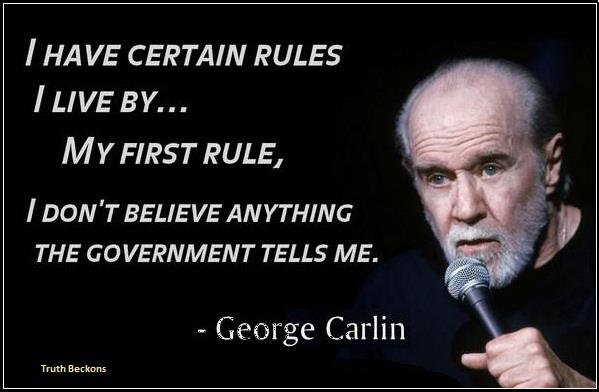
I don’t trust anything from the government at any level.
Good post.
Much of establishment science these days is riddled with contradictions and complete nonsense—with a sprinkling of finger pointing and name calling on top.
No.
If you look at books on science in the 1800s and even early 1900s they were amazing—great open discussion and debate—a true attitude of discovery.
Most scientists of those days understood that their analysis could be found wanting with new information at some future date.
Example: Einstein’s written work is very humble—he did not expect his theories to be accepted as holy writ. He viewed them as moving the discussion forward for later improvement.
I wouldn’t trust those who run the National Academies Of Science to tell me how science works but I would trust their handlers to tell me how a con game works, how government grant schemes work, and how kickbacks from industry work.
I agree. So does this guy.
I have attended several National Academy Conferences on neuroscience in New York City.
I’ve personally observed Nobel Prize winners standing up and shouting during the presentations by other scientists whom they disagreed. Often the shouting arguments get out of hand as the big egos argue to defend their individual identities.
Several times I have observed professors start shaking during my own university lectures where I explained and demonstrated knowledge that was inconsistent with their own knowledge that they owned as a possession and formulated an ego identity around. They freak out.
I highly recommend Thomas Kuhn’s short but excellent book, “The Structure of Scientific Revolutions” as it outlines the developmental process of new ideas in science.
Disclaimer: Opinions posted on Free Republic are those of the individual posters and do not necessarily represent the opinion of Free Republic or its management. All materials posted herein are protected by copyright law and the exemption for fair use of copyrighted works.