The Last Men of the American Revolution | 10:33
BBC Global | 717K subscribers | 363,677 views | January 14, 2025
Posted on 01/14/2026 12:01:34 AM PST by SunkenCiv
The Last Men of the American Revolution | 10:33
BBC Global | 717K subscribers | 363,677 views | January 14, 2025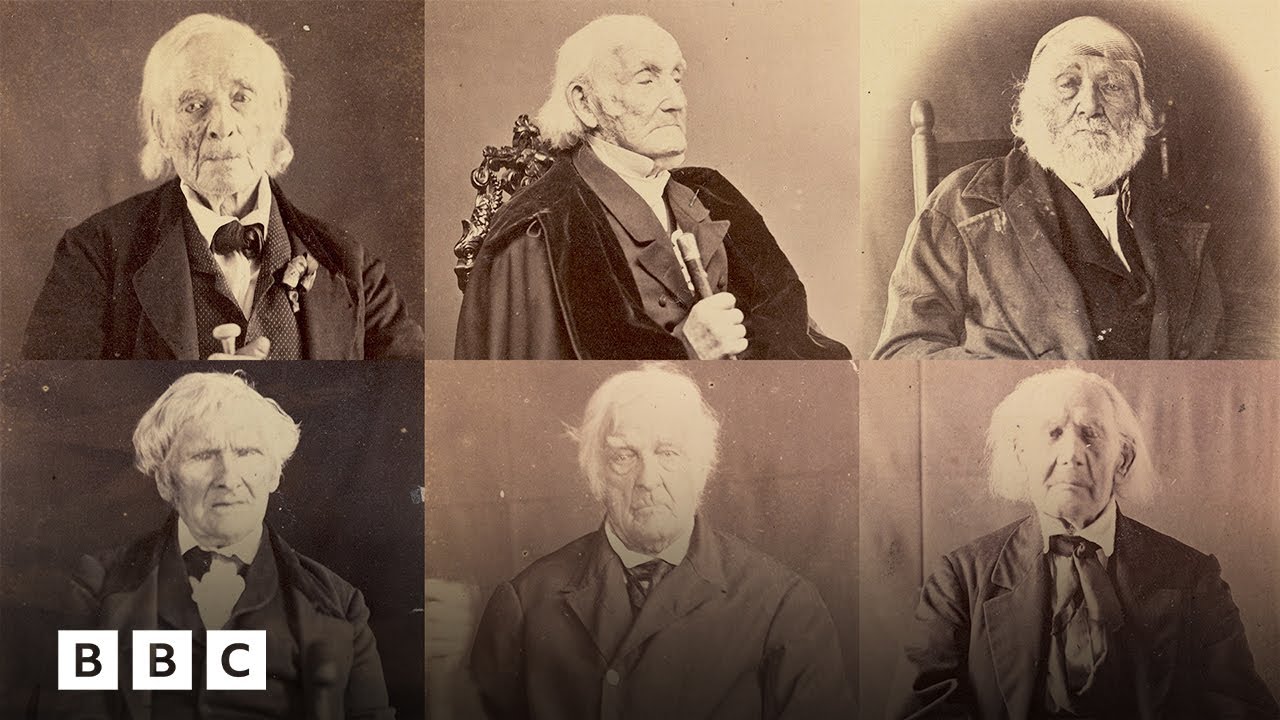
(Excerpt) Read more at youtube.com ...
YouTube transcript reformatted at textformatter.ai follows.
[Transcript]
Introduction
It’s so exciting for me to see these photographs in person, so to speak. The pictures appeared in Life magazine in 1954 and American Heritage in 1964. Before the photographic camera was invented, pivotal moments in history were like shooting stars, burning brightly only to fade away and never be seen again, rendered to our past in documents, artwork, and oral history. But what if we could still glimpse the dying glow from one huge 18th-century event, one that created a nation? Amazingly preserved in early photographic form, these were the last men of the American Revolution.
This is time.
[Music]
History
What we have here is a grouping of six photographs, all depicting veterans of the Revolutionary War. They are by the photographers Son and Roswell Moore, who were two Connecticut brothers and photographers. The photos of these elderly gentlemen first appeared in 1864, then they were published in a book that same year, which included interviews with each veteran. But before we meet our revolutionary soldiers, how and why were they found?
At the end of the American Revolution, the United States disbanded their army for a few years, and then things changed. In the early 1800s, the U.S. government finally put together a system for a pension for Revolutionary War veterans. There was a distinction then between Revolutionary War veterans and anybody else who had served in the army since. Because there was this nice break every year after that, when the federal budget was produced and published in newspapers, there would be a line item for how many Revolutionary War veterans were receiving a pension.
1864 rolls around. Now the war was 80, almost 90 years ago, and there was this realization that there were hardly any of these guys left. That’s what drove the photographer to go out and get pictures of everyone he could find. When the budget was published at the beginning of 1864, there were 12 remaining veterans. By the summer, when the photographers had tracked the men down and made arrangements to visit them, there were only six. It had become an urgent race against time. He took the photographs. The advertisements in the Hartford Current first started appearing in, I believe, it was August of 1864. These photos were on sale somewhere in there. The author went around to interview them. One man had died in the meantime, so he couldn’t interview all six of them even, but he went and he spoke to these men, got their stories, and then the book came together.
William Hutchings, Daniel Wo, Adam Link, Alexander Miliner, Lemuel Cook, and Samuel Downing, each of them aged between 100 and 105. That’s a combined age of 615. But photography, as a popular art form, was still very young, around 30 years old by 1864. The veterans’ photos were captured in the increasingly popular carte de visite format, where the photographs were mounted on small cards. The print type is called an albumen silver print. Cartes de visite were most frequently made with a camera that had multiple lenses—four lenses, six lenses, eight lenses. The photographer could choose all of those exposures; they could also block off some of those lenses and make four different exposures on that same plate. It was an economical way to make a number of prints from a single negative, and that’s in part what made cartes de visite very available, generating a phrase called “cameramania” in the news, where it was really the first popular collecting experience that occurred in the Americas.
Okay, so that’s fully 80 years after the American Revolution. Now we have these veterans, so they’re all right around 100 years old. I think that’s what’s interesting in the presentation on the card. Each of them is pictured, their name is listed, and their age is listed, so that you know that longevity is very important to the photographer, and then also to the people who are collecting these cards. And then also the phrase, one of the survivors of the Revolution, those highly collectible Reverend Hillard, highly patriotic pictures clearly appealed to Reverend Elias Brewster Hillard from Connecticut. It’s apparent that when he saw these photographs, he thought that we needed more from these men than just their images. This was 1864 when the Civil War was still going on; it was not apparent who was going to win at this time. So here’s a war that’s threatening to tear the nation apart, and here’s six men who were part of the war that brought it together in the first place. So he said we have to get the words of these men to show the importance of holding the nation together.
Meet the Soldiers
Let’s meet three of these elderly revolutionary soldiers as featured in Hillard’s book. Samuel Downing was born in Massachusetts in 1761 and talks about serving at the pivotal Battle of Saratoga in 1777. Descriptions of the men themselves and how they lived are throughout the book. It’s noted that Downing kept bees and that his voice is strong and clear, the very best of company, and that he rests well at night.
Reverend Daniel Waldo, born in Connecticut in 1762, was taken prisoner during the Revolution, and much later in life, at the age of 96, he became chaplain of the House of Representatives. Lemuel Cook, also born in Connecticut in 1761, says he served at the Battle of Brandywine and later Yorktown, where the British General Cornwallis surrendered, ending the war. He is noted in the book as being a man who loves a joke, though perhaps not all is as it seems.
Interviews and Perspectives
Don Hagist has written a book that provides a new perspective on the veterans’ stories, revealing how distorted some details in Hillard’s publication actually are. We say he interviewed the men; he wasn’t a journalist, he wasn’t even an author by profession, he was in the clergy. So he talked to the men, and he listened to them, and he wrote down what he decided that he heard them saying. Well, some of these men didn’t do a lot in the war, which I don’t mean to diminish their service that way, but they weren’t necessarily in the biggest battles. They didn’t, as individuals, do large heroic things, but he wanted to present them as specimens of heroism. It seems that when he said to a man, “You tell me about the American Revolution and what you did,” these men, who are around 100 years old now, would say things like, “Wow, you know, the important thing in the American Revolution was the Battle of Saratoga when General Burgoyne surrendered.” Elias Hillard, listening to this, thought, “Oh, so this man was in the battle where Burgoyne surrendered,” which wasn’t actually what he said. So there were a lot of inconsistencies and incongruities that took a lot of digging and puzzling to try to put together what seems like the real story of these men.
Age and Memory
So how much do you think that their ages then play into the story that Moore and Hillard are trying to tell? That is a great question because there are two things at play. One is their memories. I mean, they are nearly 100 years old. The way that Moore describes some of them, he says some of the men were clearly very lucid; others were quite infirm and barely able to talk to them at all. So that’s a factor, and even men who are lucid, that doesn’t mean their memory is really what it should be. The good news is that the men’s more realistic stories are interesting now.
These six men were the ones who were found because they were the last of the known Revolutionary War pensioners, but it turns out they weren’t the only veterans still alive. As these men became celebrities because they were publicized, because they were among the last survivors, other people started coming out of the woodwork, also claiming that they had served in the Revolution and that they were entitled to pensions. Two that I’ve been able to determine did, in fact, prove their service and received Revolutionary War pensions after 1864. These other veterans, John Gray and Daniel Frederick Bakan, also have photographs, with the latter outliving all his other comrades. So it’s not unique by any stretch that these men were photographed; it’s just that while when the photographs were published, the Moore brothers put out their advertisements and said, “Among them will be the last survivor of the American Revolution,” even that turned out not to be true because other men came out, and one of them outlived all of these fellows.
Presentation Formats
I think it’s interesting too that they’re presented in two different formats. There is this book, and then there are these cartes de visite, and both of them are going to have overlapping but different audiences. I mean, I think a carte de visite is really, in many ways, the predecessor of the selfie—the image that people are placing on their social media feeds still today, the way that people are presenting themselves in the image. In many ways, it’s still carrying the same role, and then those are then becoming public images that, you know, at the time they were being placed on a carte de visite; today they might be in someone’s Instagram feed.
You talk about how evocative these images are. I still see this all the time; they’re still very widely circulated on social media, unfortunately still with the same obsolete biographies. You know, I struggle to say, “Let’s put these people in their real context,” because it’s every bit as interesting. There’s so much more to them than even just what was written in 1864.
Celebrate the Semiquincentennial!
(half of 500)
Bkmk
Disclaimer: Opinions posted on Free Republic are those of the individual posters and do not necessarily represent the opinion of Free Republic or its management. All materials posted herein are protected by copyright law and the exemption for fair use of copyrighted works.
