Skip to comments.
5 of the Most Brutal Winters in History
Mental Floss ^
| December 26, 2025
| Mental Floss Staff
Posted on 12/26/2025 10:32:30 AM PST by Diana in Wisconsin
In the years preceding the advent of central heating and high-precision weather forecasting, winter brought with it a definite sense of unease and danger. Whereas today a tough winter might just mean spending a bit more time inside, for years, a brutal winter could bring with it death, disease, and total isolation.
Whether it be through cataclysmic volcanic winters or historically unprecedented blizzards, these devastating winters had far greater consequences than mere travel delays and hours spent shoveling snow.
The Great Frost of 1709
Known as Le Grand Hiver (the Great Winter) in France, the Great Frost was a winter of unprecedented bitter cold across the European continent between 1708 and 1709. Lasting about three months, the Great Frost decimated the agricultural industries in countries like France and England.
Some historians have estimated that the grueling winter led to a dramatic drop of 13% in England’s GDP and left more than half a million French dead from exposure, illness, or starvation. Coinciding with the Little Ice Age, a widespread regional cooling across the North Atlantic between the 16th and 19th centuries, the Great Frost came during a period of widespread social upheaval across Europe, compounding the losses incurred during the cold spell.
Though the circumstances of the Great Frost and the global COVID-19 pandemic vary greatly in nature, their seismic economic ramifications have often found the two compared to one another.
The Volcanic Winter of 536 CE
Frequently described as the worst year in human history, 536 CE was a year plagued with misfortune—its winter being no exception.
Following a massive volcanic eruption somewhere in Earth’s northern hemisphere (purportedly Iceland or Alaska), much of the Earth’s atmosphere became saturated with volcanic ash, dimming the sun for more than a year and leading to massive, widespread crop failures that plunged much of the world into famine. Plummeting global temperatures as much as 3.6℉, the widespread crop and vegetation failure brought on by the volcanic eruption decimated human and wildlife populations across Eurasia.
Still reeling from widespread famine, Eastern Europe was quickly overcome by plague and disease, with the comorbid arrival of the Plague of Justinian that claimed the lives of an estimated 50 million people. Weakened by the grueling winter and raging plague, the cataclysmic events of 536 CE brought an end to both the Sananian and Gupta empires, permanently altering the Eurasian geopolitical landscape.
The Year Without a Summer (1816)
Following the 1815 eruption of Mount Tambora in Indonesia, millions of tons of ash and debris were shot into Earth’s atmosphere. Largely considered to be the single most powerful volcanic eruption in man’s history, the eruption itself claimed the lives of an estimated 10,000 to 20,000 people immediately, but its true impact wouldn’t be felt until the following year.
Exacerbated by another eruption in the Philippines a year prior, the high concentration of ash in Earth’s atmosphere resulted in Europe’s coldest winter ever, leading to widespread crop failures and the year to be fittingly dubbed the Year Without a Summer. Destroying crop yields across Europe and Asia, the ensuing global famine led to an increase in deaths from disease and exacerbated political tensions between countries like the United Kingdom and Ireland.
While much of the Year Without a Summer can be described as one of general misery, the volcanic winter and its corresponding chilly conditions indirectly gave rise to Mary Shelley’s Frankenstein, when the literary classic was penned during a particularly dreary getaway during the Year Without a Summer.
The Great Blizzard of 1888
One of the most severe blizzards in American history, the Great Blizzard of 1888 effectively crippled the northern half of the East Coast when heavy rainfall turned to snow in the early hours of March 12, 1888. Trapping families across New England inside their homes for up to a week, the Great White Hurricane, as it came to be called, dropped 50 inches of snow across the Northeast, disabling telegraph lines and bringing rail travel to a screeching halt.
Leading to the deaths of an estimated 400 people (half of which were in New York City alone), the unprecedented storm incentivized New York City to begin taking much of its infrastructure, like telegraph, power, and rail lines underground, catalyzing the creation of the city’s now ubiquitous underground subway transit.
The 1993 Storm of the Century
Sometimes also referred to as the Great Blizzard of 1993, the Storm of the Century was a behemoth nor’easter that hit half of the United States and much of eastern Canada in March 1993. Dropping several feet of snow all along the Atlantic seaboard, the Storm of the Century claimed the lives of at least 300 and caused property damage in excess of $6 billion.
Hitting the U.S. with hurricane-force winds, the storm’s icy conditions and strong winds left an estimated 10 million homes without power and brought commercial travel to a standstill overnight. Raging from March 10 to March 14, 1993, the blizzard hit Tennessee the hardest, dropping about five feet of snow onto the landlocked Southern state.
Though the damage from the storm was still considerable, advancements in weather reporting accurately forecasted the storm days in advance, giving local and federal governments critical time to prepare for the brutal conditions and mitigate any losses.
TOPICS: History; Weather
KEYWORDS: history; snow; storms; weather
Navigation: use the links below to view more comments.
first previous 1-20, 21-40, 41-60, 61-76 last
To: vis a vis
Yes-The 77-78 winter was rough. I lived in Central NJ. Our street had snow pack for like 2 months plus. We had two snow storms 2ft plus and an ice storm in between. However- neighborhood snowball fights, sleigh riding, bumper riding etc! Some if my best childhood memories that winter. Stuck in school until the end of June with a shortened Easter break.
61
posted on
12/26/2025 5:20:17 PM PST
by
Fire137
(A man once said to me the whole world is bullshit- he was right. )
To: Diana in Wisconsin
The Ice Storm of 1998 was one off the worst storms we
have ever been through!
It wreaked havoc in Canada. and here in Maine.
We were 12 days with no power, but plenty of
firewood to keep us warm.
Also had a propane fire place in the living room.
It gave us a whole new respect for what our ancestors
went through to survive.
I was younger then! LOL
You can look at the damage done by clicking this link:
from Wikipedia
https://en.wikipedia.org/wiki/January_1998_North_American_ice_storm
62
posted on
12/26/2025 5:34:08 PM PST
by
MS.BEHAVIN
(Women who behave rarely make history!)
To: Diana in Wisconsin
The coldest one around here was in, hmm, winter of 2003-2004, or 2004-2005; one very deep snow, and then no thaw until March because of the cold temperatures. Another very cold one was 1998-1999 if memory serves; a restaurant that I used to frequent had a small parking lot, and the plowed snow pile didn’t finally vanish until nearly June (once the trees leafed out it was in the shade, but still...).
However, the worst storm I ever saw:
https://search.brave.com/search?q=winter+storm+of+1978
63
posted on
12/26/2025 8:00:13 PM PST
by
SunkenCiv
(NeverTrumpin' -- it's not just for DNC shills anymore -- oh, wait, yeah it is.)
To: SunkenCiv
My folks were in the 78 blizzard
Lost power and had to huddle by the fire in blankets.
They were on a list of evacuees, but the power did return.
I was on the West coast and couldn’t reach them for hours.
To: Diana in Wisconsin
If Yellowstone blows we’re going to have a lot bigger problem than just cold winters.
65
posted on
12/26/2025 8:14:57 PM PST
by
GOPJ
(Democrats stand with criminals, dope dealers, illegals & terrorists. <P><I><B><big><center></B>)
To: Salamander
“To this day I have more flashlights and battery powered LED lanterns than would be considered sane.”
Same. I have a flashlight in every room of the house, and a few of the old glass lanterns ready to fire up as needed.
We live very rural and we are at the END of the power grid, so we’re usually the first to lose power and the last to be restored. And there is NEVER any rhyme or reason for it - but usually it’s a squirrel getting ZAPPED somewhere along the line. ;)
66
posted on
12/27/2025 6:42:02 AM PST
by
Diana in Wisconsin
(I don't have, 'Hobbies.' I'm developing a robust Post-Apocalyptic skill set.)
To: vis a vis; FRiends
No mention of the 1967 Green Bay Packers Ice Bowl?
C'mon, Man! I've toughed it out at winter games at Lambeau, but never this brutal. THIRTEEN BELOW?!?! Note: remember NOT to drink a lot of beer when you're in many layers of clothing as well as your snowmobile suit. The lines to the Ladies Rooms are ALWAYS VERY LONG, LOL! (We were all stripping off layers while waiting in line...)
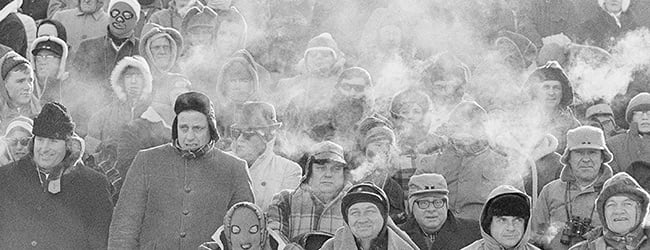
"Pro football fans in Green Bay, Wisconsin have always been recognized as a loyal and hearty bunch. But one wouldn’t have faulted even the most loyal 'Packer Backer' if he’d decided not to attend the 1967 NFL Championship game between the Packers and Dallas Cowboys. Played at Lambeau Field on December 31, the temperature at game time registered a frigid 13 degrees below zero. Nonetheless, more than 50,000 parka-clad fans braved the elements that New Year’s Eve and watched in awe as the Packers claimed their third consecutive NFL title, with a 21-17 victory."
https://www.profootballhof.com/football-history/the-ice-bowl/
67
posted on
12/27/2025 6:53:26 AM PST
by
Diana in Wisconsin
(I don't have, 'Hobbies.' I'm developing a robust Post-Apocalyptic skill set.)
To: Yogafist
WOW! Had never read of that one.
And yet, ALL of these weather disasters are somehow the fault of Mankind, Right? Even in the Middle Ages when there weren’t very many of us around! *SMIRK*
68
posted on
12/27/2025 7:00:41 AM PST
by
Diana in Wisconsin
(I don't have, 'Hobbies.' I'm developing a robust Post-Apocalyptic skill set.)
To: AppyPappy
Did you name her, ‘Carolina?’ ;)
69
posted on
12/27/2025 7:03:06 AM PST
by
Diana in Wisconsin
(I don't have, 'Hobbies.' I'm developing a robust Post-Apocalyptic skill set.)
To: Sawdring
That one deserves to be on the list, too! Yikes!
70
posted on
12/27/2025 7:06:52 AM PST
by
Diana in Wisconsin
(I don't have, 'Hobbies.' I'm developing a robust Post-Apocalyptic skill set.)
To: MS.BEHAVIN
Hi, Ms. B! Do you remember me telling you that ‘Ms.Behavin’ was the name of my Dad’s sailboat? Makes me smile every time I see you posting. :)
We had a LOT of fun on that boat!
71
posted on
12/27/2025 7:09:51 AM PST
by
Diana in Wisconsin
(I don't have, 'Hobbies.' I'm developing a robust Post-Apocalyptic skill set.)
To: SunkenCiv
The 1978 storm has been mentioned here by quite a few. I remember us getting really heavy snow in Wisconsin - I think it was New Year’s Eve and all of us dopey teens were out in it!
72
posted on
12/27/2025 7:11:27 AM PST
by
Diana in Wisconsin
(I don't have, 'Hobbies.' I'm developing a robust Post-Apocalyptic skill set.)
To: GOPJ
"If Yellowstone blows we’re going to have a lot bigger problem than just cold winters."
And it will still be the fault of Mankind, don't 'cha know! ;) It truly WOULD be the end of North America. :( I'm in the SW corner of WI, though we have a cabin way up north that 'supposedly' wouldn't be effected. At first...

73
posted on
12/27/2025 7:16:55 AM PST
by
Diana in Wisconsin
(I don't have, 'Hobbies.' I'm developing a robust Post-Apocalyptic skill set.)
To: Diana in Wisconsin
74
posted on
12/27/2025 7:27:44 AM PST
by
AppyPappy
(They don't call you a Nazi because they think you are one. They do it to justify violence. )
To: Diana in Wisconsin
75
posted on
12/27/2025 6:59:03 PM PST
by
SunkenCiv
(NeverTrumpin' -- it's not just for DNC shills anymore -- oh, wait, yeah it is.)
To: vis a vis
There was ice on the Boston sidewalks for two months. When it finally warmed up, there was two months worth of decomposing dog poop.
76
posted on
12/27/2025 9:50:56 PM PST
by
Tymesup
Navigation: use the links below to view more comments.
first previous 1-20, 21-40, 41-60, 61-76 last
Disclaimer:
Opinions posted on Free Republic are those of the individual
posters and do not necessarily represent the opinion of Free Republic or its
management. All materials posted herein are protected by copyright law and the
exemption for fair use of copyrighted works.
FreeRepublic.com is powered by software copyright 2000-2008 John Robinson