Posted on 07/28/2023 11:20:42 AM PDT by Red Badger
Energy of the future? Even a $28.3 million grant from the West Australian Government company was not enough to push the project over the line.
Australian green hydrogen project scrapped due to transport costs, pumped hydro on hold
Giles Parkinson 26 July 2023:
Canadian gas giant Atco says it has scrapped plans for one of the first commercial scale green hydrogen projects in Australia, despite strong funding support from the government’s renewable agency, and has also put a proposed pumped hydro project in NSW on hold.
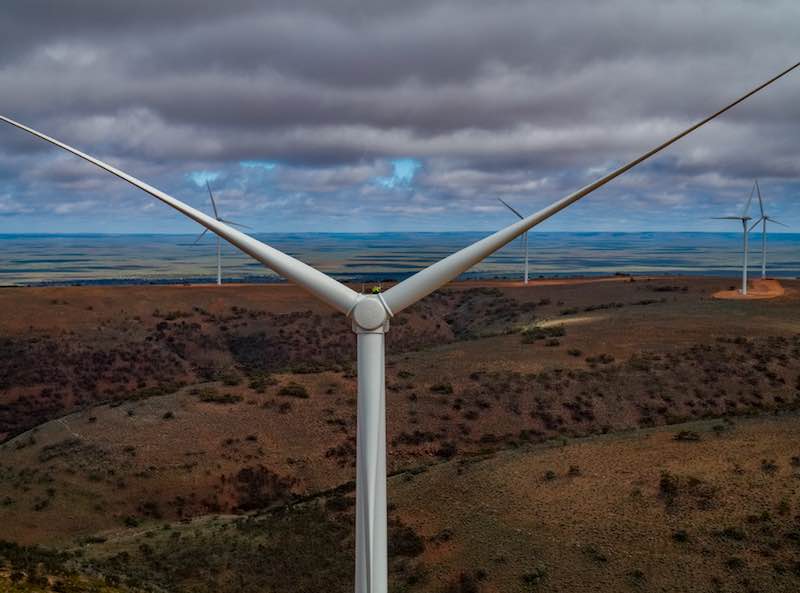
Atco had planned to build a 10MW green hydrogen electrolyser next to Bright Energy’s 180MW Warradarge wind farm in Western Australia (pictured above), fuelling the plant with renewable energy and producing 4.3 tonnes of green hydrogen a year.
…
But Atco’s $53 million Clean Energy Innovation Park – also known as the Mid West project – has been scrapped because it would involve trucking the hydrogen to points where it can be injected into the gas network.
Atco has now decided that this is not viable and says it will relinquish the $28.3 million grant promised by ARENA.
…
Atco says it is still confident green hydrogen can be delivered, but says it needs to be located closer to heavy industry where the green hydrogen can be used.
…
This cancellation casts a long shadow over Australia’s alleged renewable hydrogen revolution.
Renewable projects need vast acreages of cheap land, but major gas pipelines are rarely built to the middle of nowhere.
So unless Aussie governments are prepared to sweeten the pot even further, pour ridiculous sums of money into building hydrogen ready pipelines between proposed hydrogen parks and the rest of the gas network, why would anyone proceed with green hydrogen projects which even with subsidies are struggling to be commercially viable?
Even funnier, if Aussie governments do pour money into building a pipe network, all that extra public spending will drive up inflationary pressures, which will in turn drive up interest rates and the cost of borrowing money to fund major projects.
Either way, Aussie green energy enthusiasts lose.
The only remaining questions, why didn’t Atco instead choose to store their hydrogen, instead of piping the hydrogen, and use the hydrogen as energy storage, to “firm” electricity output from the Warradage Wind Farm? Or alternatively, they could have converted the hydrogen to green Ammonia, which is much easier to store or transport than green hydrogen?
I think we all know the answer to those questions.
5
Butt, butt ,butt........
Suckers
Ben Rich discusses this in the book “Skunk Works”. They were considering the feasibility of a hydrogen powered successor to the SR-71. He said the guy at the Bureau of Standards convinced them the idea of a tank farm of hydrogen was nearly insane.
>> ...10MW green hydrogen electrolyser next to Bright Energy’s 180MW Warradarge wind farm... fuelling the plant with renewable energy and producing 4.3 tonnes of green hydrogen a year... But Atco’s $53 million Clean Energy Innovation Park... has been scrapped because it would involve trucking the hydrogen to points where it can be injected into the gas network.
OH NOES! My self-licking ice cream cone MELTED!!! 😂🤣😂
>> the idea of a tank farm of hydrogen was nearly insane.
But why??? What could possibly go wrong?!?
“”despite strong funding support””
Despite large sums of taxpayer dollars being funneled to ridiculous projects. When private venture capital starts flowing to any ‘green’ adventure, then we will know that there may be something to it.
> scrapped because it would involve trucking the hydrogen to points where it can be injected into the gas network.
Is this something the engineers, planners and politicians never thought about or did they know it the whole time?
That’s my thinking, and pipelines into town where the people can access it at a pump. Seems like a no brainer.
1) So called "green" hydrogen ain't green (good for the environment). But I guess it could be useful in extreme use cases.
2) Even so I don't see it as useful on the massive scale they're pushing it, with all the problems of distribution. If anything do it decentralized (each home/business generates it and stores it for their own use).
3. Fossil fueled power generation is way more practical anyway. And if that's not available (by either the location being remote or because of stupid govt regulations), then solar and battery storage in the Aussie climate would provide most of a home's energy needs (again decentralized, since that bring personal responsibility to making sure you have the components and configuration for your specific needs and wants).
4. The one thing hydrogen electrolysis brings to the table is large quantities of storage is cheaper than battery storage. So if you had a remote house (read: off-grid) that wanted to store 3,500 kWh of power for (the total I pulled from the grid through the winter from November to March for my all-electric home, including charging our EV), it's cheaper to add tanks to store that much hydrogen gas (to later use in a fuel cell when you need power) than it is to buy that much battery storage.
5. But the round trip of hydrogen is horribly inefficient. At best 50% (i.e. for every 100kWh of power you use to run the electrolyzer and create hydrogen, you get at most 500kWh of that back from the fuel cell you power). Compare that to the 90% to 95% round trip efficiency of battery storage. So even if you're in one of the rare use cases where hydrogen energy storage would be useful, it's probably best to do most of your common (read: short term) energy storage in the batteries and run the electrolyzer only when your battery stack is fully charged (and you still have more solar coming in than your home is using so might as well put that energy to use for later when you have a week's worth of rain that your battery storage isn't enough to get you through).
Somebody told me, that hydrogen is the fuel of the future.
They said that, since water is H2O, that you simply run water through some chemical reaction, to liberate the hydrogen, and then you have hydrogen fuel.
I’m sure that greatly over simplifies the process, but some people are talking about it, for what it’s worth.
To liberate the hydrogen from the oxygen water bond, requires energy, namely electricity.
The energy you get from using that hydrogen as a ‘fuel’ does not equal the electrical energy you used to produce it.
That’s the 2nd Law of Thermodynamics.
You cannot get more energy out of a system than you put into it, i.e. ‘break even’.................
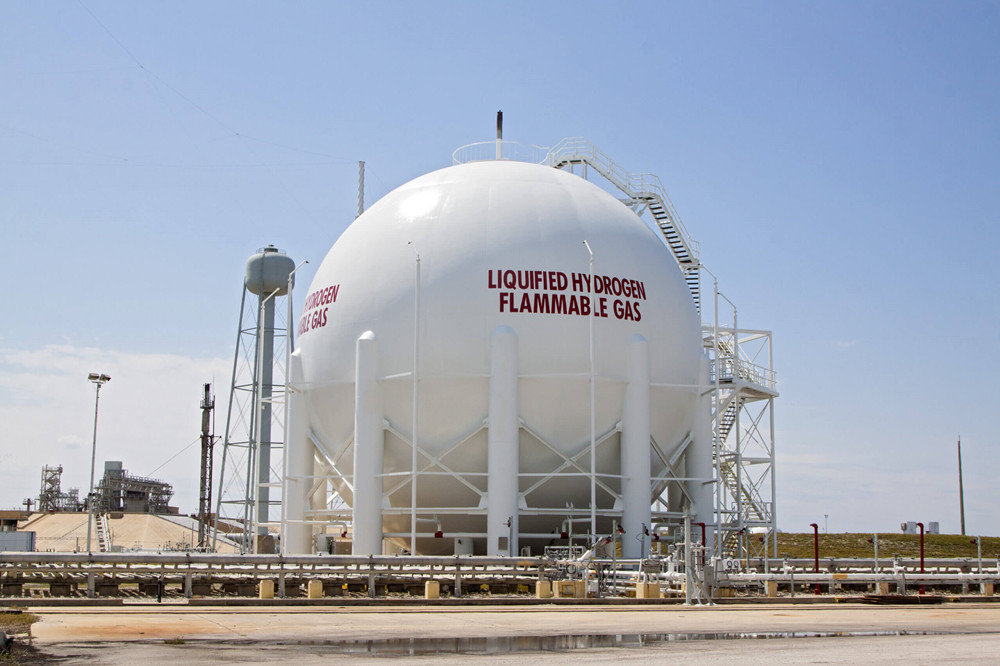
World's Largest Liquid Hydrogen Storage Sphere Nears Completion for NASA
Who needs a field? Build bigger.
My back yard, so to speak. 
Note the number of spheres, even in the distance up top.
Things could have been much worse.
They were right to be concerned.
Aside - The company used to be called Neches Butane, construction completed 1944. (1:21 in video at link shows spheres already built) It wasn't until the company was sold did problems arise. Those tanks have been there all of my life. My family member worked on the other side of the property fence at an asphalt plant.
New company comes in...oops.
"Exceptional" new catalyst cheaply splits hydrogen from seawater
It's a catalytic reaction from water electrolysis and the catalyst components. (in most instances)
Technologies advance every day.
Toyota project scrapped a week ago - was a post on FR.
However, it IS far more efficient than the government choosing unilaterally how we transition a portion of the economy.
Disclaimer: Opinions posted on Free Republic are those of the individual posters and do not necessarily represent the opinion of Free Republic or its management. All materials posted herein are protected by copyright law and the exemption for fair use of copyrighted works.