Skip to comments.
Heat pumps: The 'geeks' obsessing over their new heating systems
BBC ^
| 23 Jan 2023
| Chris Baraniuk
Posted on 01/24/2023 7:30:49 AM PST by DUMBGRUNT
He's got heat meters fixed to the pipework. Room temperature monitors. And gadgets tracking how much electricity his solar panels are generating.
The jewel in the crown of this system, though, is a recently installed heat pump.
"It's like a geek's paradise, really," says Mick Wall of his 1930s semi-detached house in Sheffield.
(Excerpt) Read more at bbc.com ...
TOPICS: Chit/Chat
KEYWORDS: cheap; cold; electricity; energy; heatpump
Navigation: use the links below to view more comments.
first previous 1-20, 21-40, 41-60, 61-78 next last
To: PeterPrinciple; TangoLimaSierra
—” A well-installed heat pump might get three kilowatt hours (kWh) of heat for each kWh of electricity it consumes.
Must be a fusion heat pump.”
As with any $$$ purchase you have to do your homework.
Not rocket science but takes some time.
And you have to get past the buzzwords the government agencies keep pumping out and modifying.
In this article, they use COP (Coefficient of Performance)
A simple multiplier that changes with the temperature.
My son-in-law the HVAC guy installed a Mitsubishi HP in their house, he says it is the Cadillac of heat pumps.
His unit has an advertised COP of 2.88 at 5 F.
I installed a Pioneer HP, more like a Chevy and costs less.
It has a COP at 5 F of ~2.
for 1000 Watts input:
Mitsubishi HP = 1000 x 2.88 (COP) x 3.4(Watts/Btu)= 9,820 Btu output.
Pioneer HP = 1000 x 2 x 3.4 = 6,800 Btu output.
A noticeable difference. Had I known gas was going to the moon, I would have selected the Mitsubishi.
An old friend that likes to buy things not comparison shop, walked into the dealer and told them he wanted a red jeep and the payments had to be under $600/month.
At that point, the entire sales crew ran into the back room for a cage match to select the lucky salesman.
41
posted on
01/24/2023 10:42:29 AM PST
by
DUMBGRUNT
( "The enemy has overrun us. We are blowing up everything. Vive la France!"Dien Bien Phu last messa)
To: DUMBGRUNT
I think the lowest I've seen this Winter was -10F. The lowest I've measured on my backyard thermometers was -27F. This week we are ranging from +7F to +21F. Snow coming on the weekend, so temps may rise slightly.
42
posted on
01/24/2023 11:17:51 AM PST
by
Myrddin
To: Eric in the Ozarks
....four 200 foot deep wells
~~~~~~~~~~~~~~~~~~~~~~~
Why so many wells? Is it something with the overburden that makes for a crappy draw-down ratio on the wells?
To: George from New England
For my heated floors, I have a Weil McLain Ultra and added almost every monitor I could find.
Primary and secondary, supply and return, outside air, boiler exhaust, domestic hot water(runs off the boiler), and main stat temperature.
Total of eight temp sensors on the hot water system plus hour meters on all the pumps and the boiler.
Everything is from an Arduino... cat5 to my hub...
With the heat pump, a friend recommended an inexpensive wifi power meter, two split coils for the 220v HP supply ($45).
Works well so I added temperature sensors for $5 each.
The resolution of the sensors is a bit low, logging once each hour, but works well. I suspect they employ Uber drivers with french curves to plot the data???
With high-mass floors and cast iron baseboards, the temperature changes slowly.
And recently ordered a new temperature logger with a resolution down to one second, <$20, mostly to watch the defrost cycling of the HP. I’m curious!
A fun bit, not one of the sensors is integrated into the other, so I have to manually add them into a single spreadsheet to generate a combined graph.
But I use a dual monitor workstation and can view several at once, just not superimposed.
Retired and I find this interesting.
44
posted on
01/24/2023 12:00:52 PM PST
by
DUMBGRUNT
( "The enemy has overrun us. We are blowing up everything. Vive la France!"Dien Bien Phu last messa)
To: DUMBGRUNT
The nice thing about most Heat Pumps is that they keep your cool win her and summer. The further North you live - the worst it gets.
45
posted on
01/24/2023 1:43:58 PM PST
by
TNoldman
(AN AMERICAN FOR A MUSLIM/BHO FREE AMERICA. (Owner of Stars and Bars Flags))
To: DUMBGRUNT
Now looking for ideas.
~~~~~~~~~~~~~~~~~~~
I wish I had the time to jump more deeply into this discussion… One of the things I deal with in the professional side of my life is HVAC and ventilation although what I do is more ‘industrial’ than residential or commercial. I can tell you a lot about airflow measurement though. Here are a few thoughts for you….
If you have hot wire and mechanical anemometers (are you referring to a vane anemometer?), you are way ahead of most residential HVAC contractors. I was talking to a furnace distributor/installer recently and said something along the lines of “you sell folks on the idea that you know something about providing either cooled or heated air to their space… while you take a bunch of measurements to establish one thing or another when you sell/install a new furnace and/or AC unit, you don’t do one thing to actually measure the airflow. Am I the only one scratching my head at something being wrong with that concept?” In fact, I’ve never met a ‘residential furnace installer’ who had the foggiest clue about how to actually measure airflow. Whenever I’ve had furnace folks in my basement looking at my unit (which is very rare), the first thing they ask about is why there is a series of plugged ¼” diameter holes in the return air duct just before the filter. That is when I get into a discussion about how to measure airflow because those holes are so I can do my own Pitot tube traverse (which is the most accurate way to establish the volume flow rate). The only caveat to my ‘most accurate way’ comment is that the accuracy starts to fall off once the flow velocity starts to get low…. and since the flow velocity in residential ductwork systems is generally quite low, the Pitot tube method does have this limitation and it does mean that you have to have good equipment for the data to provide something meaningful.
One question for you that may change my following comments… In your post 36, you said the airflow is continuously variable. Why is that? Doe your system use a fan driven by an ECM that is controlled in such a way that the speed is constantly changing?
Regardless, here is what I have done and since by this discussion it is apparent that you are smarter than the average bear, here is what I’d suggest you do…
- Get yourself a Pitot tube, a micromanometer and the required lengths of hosing to connect the two. You will likely want an electronic micromanometer that gives readings into two decimal points of one inch (readings that will go down to 0.01 inch water gauge). I have quite a few different ones, but they are for serious airflow testing (industrial performance guarantee test applications) and I’m not going to promote any particular brand. For the purpose of making some points in this discussion only, I’m going to provide a few links. Dwyer is a company that is well known for a variety of airflow testing equipment for general purpose applications, and I see one of their basic electronic micromanometer units at this link that reads out in 1/100th of an inch. I don’t have this particular unit but at a glance, it looks to be suitable for what you are doing and is certainly reasonably priced… https://dwyer-inst.com/products/pressure/manometers/digital/series475.html You can also use an old fashioned inclined manometer… see the ones that Dwyer sell on page 28 in their catalogue…. https://legacy.dwyer-inst.com/catalog/ Years ago, I was at an auction and for a few dollars, bought a box that had about 30 of the No. 25 inclined-vertical manometers… since they have an upper range of 3 in. wg, I use them for measuring differential pressure and have installed a bunch of them on my HVAC unit so that I can instantly see at a quick glance how things are working i.e. DP across the filters, across the coils, across the heat exchanger, from the fan inlet to the fan outlet etc. As for the Pitot tube, you’ll want one that is long enough to span the duct with enough length to hold on to it when the measurement is being taken. For HVAC applications, the Pitot tube can just be short… good thing since the cost goes up with length. Here is a link that shows what these look like… https://dwyer-inst.com/products/air-quality/pitot-tubes/series-160-stainless-steel-pitot-tube.html In the past few years, the cost of these have gone up a bunch and what I do is just make my own. If you do an ixquick search on ‘DIY Pitot tubes’, you’ll get a bunch of ideas on how to do that. It’s not very difficult and you don’t need to lose hardly anything on accuracy with your homemade one(s).
- Doing accurate flow testing also means being able to do calculations that involve air density and that means including barometric pressure, temperature and humidity measurements. However those additional parameters are just ‘fine-tuning’ that takes the accuracy above and beyond what is typically needed for cursory HVAC applications… you are not doing this as a guarantee test in an airflow testing lab and the kinds of assumptions you will need to make to simplify the calculation are not going to radically change the results.
- To get an accurate airflow reading using a Pitot method, you’ll need to do a ‘velocity pressure traverse’…. Here are a couple of links to explain how to do this. https://tsi.com/getmedia/1a11d344-0a58-4ca6-94fe-65721825686b/AF-106%20Traversing%20a%20Duct?ext=.pdf and http://blog.dwyer-inst.com/2017/10/18/duct-traversing-for-average-air-velocity-and-air-volume/#sthash.dT2lvQ0y.dpbs
- Lastly, every time you want to know what the flow rate is, you don’t want to go through all the above. What you will want to do is take other pressure readings at various points at the same time as when you do the flow traverse testing and effectively what you can do is ‘calibrate’ the pressure drop across some ‘resistive element in the ductwork’ to the flow rate. That way in the future, you can just use the pressure drop as a proxy for the flow. To do this, just make sure that the element you use isn’t something that changes resistance… for this reason, filters don’t work. You also just need to remember that pressure drop varies as the square of the flow velocity.
Some of the above can get complicated… if you have any questions, you are welcome to freepmail me.
To: TangoLimaSierra
An air-to air heat pump has an outside unit and an inside unit. When it is heating the house, the outside unit sucks in outside air and sends it back outside, cooler than when it came in. That outside heat is added to the inside unit to help it warm the house. There is no ‘free’ energy.
47
posted on
01/24/2023 2:28:21 PM PST
by
norwaypinesavage
(Once you predict children will no longer see snow, you can’t now claim snow proves you are right)
To: hecticskeptic
I should have concluded by saying that with a differential pressure calibrated to a flow (by extension of going from an average velocity pressure to velocity to a volume flow rate) all you then need to have is a pressure logger to do what you are looking for.
To: hecticskeptic
# of wells is based on ttr number of bedrooms plus the thermal floor system.
49
posted on
01/24/2023 4:03:51 PM PST
by
Eric in the Ozarks
(Baseball players, gangsters and musicians are remembered. But journalists are forgotten.q at)
To: hecticskeptic
--"Some of the above can get complicated… if you have any questions, you are welcome to freepmail me." I have been around pitot tubes a bit and have one or two around of different lengths. And a few used Magnehelics from my now unused ductwork.
That said, my system is a DUCTLESS type mini split heat pump.
Return is in the top. 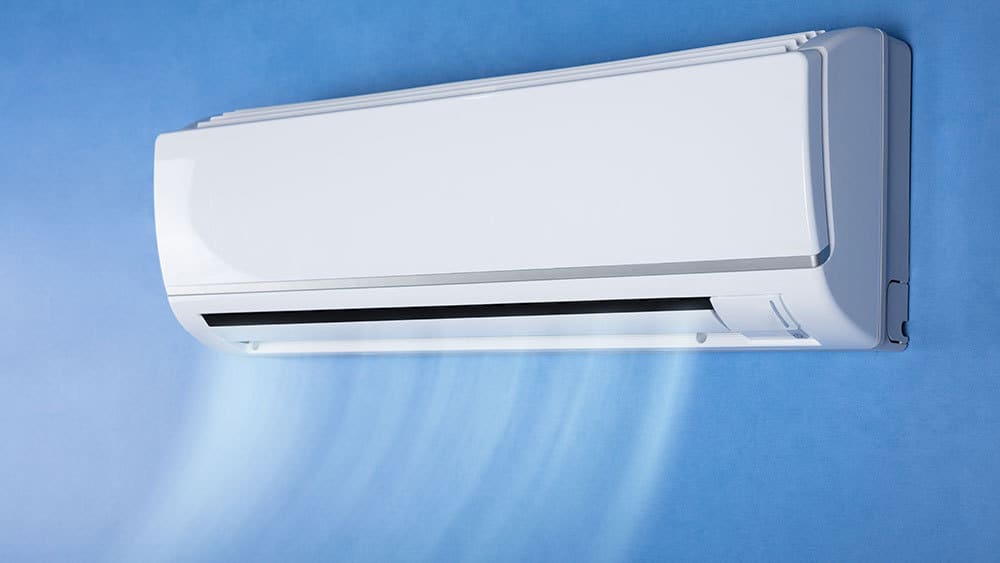 NOTE: This is something I do for fun, I have an HVAC son in law but he is always working and a graduate engineer daughter with three of my grandkids and a full-time job. Even when I'm at my daughter's house she is always thinking about the kids; no time for my projects!!!
To determine the COP I need the S&R temperatures, Airflow rate, and power consumption. Not certain but think that is what is needed. Works well for wet systems GPM x Delta T x 500 yields the total Btu.
The HP uses both an outdoor reset and guessing a PID controller to modulate the pump and blowers so the output just equals the load; very efficient and constantly changing.
I feel like a blind guy describing an elephant, I do not actually know how it works.
--"That way in the future, you can just use the pressure drop as a proxy for the flow. "
Using an anemometer on both supply and return, it is not a nice smooth column of air. Yes, an average across the opening can be determined but guessing it is not linear as the flow changes.
Also guessing that the blowers are DC and a current transformer will not work to measure the current draw.
I have seen procedures to determine the COP using the supplementary electric resistance heat in the unit as a known load and the delta T... I installed the HP mostly for cooling, so no E-R elements.
Thank you for thinking about my system.
Before I retired I was in a large lab full of pilot plants for testing new processes; million dollar tinker toys. After verifying the process... they are scrapped! I'm certain that I could have found what is needed in the scrap bin and I was surrounded by sharp engineers that would point to what would work.
50
posted on
01/24/2023 4:19:18 PM PST
by
DUMBGRUNT
( "The enemy has overrun us. We are blowing up everything. Vive la France!"Dien Bien Phu last messa)
To: DUMBGRUNT
“Works well for wet systems GPM x Delta T x 500 yields the total Btu.” I believe that the relationship you are looking for with air sensible heat is BTU/hr = CFM x ΔT x 1.08. For the record, this relationship assumes 0.075 lb/ft3 air density which should be fairly close to what you have since your air temperature will be close enough to 70 degrees F on the return side and elevation is not that big a deal in Northern Illinois. Converting into Watts so that you can calculate your COP, one Btu/hr is equivalent to 0.293 Watts. Then all you need to calculate is your input electrical power in Watts.
Re your comment “Using an anemometer on both supply and return, it is not a nice smooth column of air.” That will be true but if I wanted to measure airflow on a unit like what you have in the picture, what I would do is duct tape some fairly stiff cardboard on the return air side (which will be more even than the supply side) and essentially create a rectangular duct for it. To make sure the entrance loss is minimized, I would flare out the opening at the top with a 45 degree angle on it. Some dividers in the top part of the duct would also help to straighten the flow out. Then just about say 6” above where it connects to your unit, I would put some holes just big enough for a Pitot tube (or holes big enough for your anemometer) and do a traverse with that. My guess is that with a short 2 or 3 foot long cardboard duct, you will be able to establish a reasonable flow rate and the cardboard duct won’t add any significant resistance that would change the flow rate from what it would be without it.
“….but guessing it is not linear as the flow changes.” If it is changing that rapidly, then some condition will need to be created that holds it steady for the time needed to run a test. I can’t imagine it is changing so rapidly that this can’t be done. Once a traverse is done, find a spot that represents as close to the average as possible and leave the anemometer or Pitot tube at that location and see how it varies over time. If using a Pitot tube that is located at a good ‘average location’, the velocity pressure it provides can be used to log data that can give you a trend of what the flow rate is. I’m still thinking that taking a pressure differential and calibrating that to your flow measurement would be the best way to log the flow. To do that, just create a piezometer ring on the three sides of your temporary ductwork on the return air side (at the plane used for the traverse) and take the differential between that ring and the room. Obviously a different method will be needed in the long term.... this is ok for a ‘test’ but no one will want a ‘cardboard duct’ hanging in their space for any length of time.
“Also guessing that the blowers are DC and a current transformer will not work to measure the current draw.” But to calculate the COP, don’t you want the input electrical power to the whole unit… not just the blower? Maybe calculating COP is a bit different than what I thought….
To: DUMBGRUNT
Heat pumps are fine as long as it doesn’t get under around 40 degrees F. That’s where you have to have a supplemental heat source. Most residential units have electric resistance strips to supply supplemental heat - very costly to run.
If you are used to having hot air come out of your vents, heat pumps are not very satisfying. They constantly exchange ambient air with air that is just a little warmer - you have nothing you can stick your rump against to get warm.
If you live in the South or Southwest, heat pumps may be a viable option. Wouldn’t want one anywhere north of, say, Tennessee.
52
posted on
01/24/2023 7:54:52 PM PST
by
Some Fat Guy in L.A.
(Still bitterly clinging to rational thought despite its unfashionability)
To: hecticskeptic
THANK YOU!
—”“Works well for wet systems GPM x Delta T x 500 yields the total Btu.” I believe that the relationship you are looking for with air sensible heat is BTU/hr = CFM x ΔT x 1.08.”
A temporary cardboard duct!!!
Fast and easy!!!
NICE.
I was hoping to use an Amprobe on the blower similar to checking the current draw on a pump, the blower is ~50 watts max, yes I know about clamp/fork on DC milliamp current meters but it is something I do not own, I may have to go shopping.
Pump curve not included.
Thank you again, you have provided me with some great help.
53
posted on
01/24/2023 8:55:55 PM PST
by
DUMBGRUNT
( "The enemy has overrun us. We are blowing up everything. Vive la France!"Dien Bien Phu last messa)
To: DUMBGRUNT
If you had some technical details on the blower, an estimate could be made of its capacity i.e. diameter and width of the impeller... is there some cowling you can take off so you can get those dimensions and a picture of the impeller? I would almost guarantee it is a forward curved design. You might not have a fan performance curve but if you have some of those details, it shouldn’t be that hard to create one.
To: hecticskeptic
Yet again Thank You for assisting my tilting at the wind blower.
I was planning to attempt an average reading of the return intake... But before that, the filter screen must be cleaned.
...The blower wheel has a surprising amount of build-up dust!! I clean the screen every two weeks. That will have to wait until AC cooling season so after washing the condensate can rinse.
For what little it may be worth... I took some basic measurements:
Return opening 600MM x 152MM
The Kestrel vane anemometer .5 M/S & 105 CFM
Testo Hotwire .45 M/S & 95 CFM The Testo displays cubic meters/H so I multiplied by .59 for CFM.
Next will be the cardboard ducting.
Not sure about air, but have some experience with water flow and usually a flow reading near an elbow or pump is to be avoided usually by a specified number of diameters. Also, I can view the meter face-on without jamming my head against the ceiling.
The blower wheel appears to be 24" end to end NOT INCLUDING THE SHAFT STUB ENDS.
The diameter was a bit less obvious because the coil wraps ~180 degrees around the blower wheel. But by probing and marking the probe; a SWAG measurement of 3 5/8"OD The vanes appear to be ~1/2" deep. This matches fan wheels for replacement 90.8mm(3.57" x 602mm 23.7") ---I could not match any part numbers.
My belief is that most components from China can be second-sourced.
Photo of blower wheel for my unit. 
https://www.highseer.com/products/indoor-blower-wheel-11 Thank you
55
posted on
01/25/2023 12:34:51 PM PST
by
DUMBGRUNT
( "The enemy has overrun us. We are blowing up everything. Vive la France!"Dien Bien Phu last messa)
To: DUMBGRUNT
Ah of course…. This has a crossflow type of fan in it (also called a tangential blower). Since we virtually never see these in the industrial world, I’m not as familiar with these. A company called Ziehl-abegg out of Germany is one of the most well known companies for making this type of fan. I did a quick search and found a catalogue for their fans and if you go to say Page 30, you will find the performance curve for a fan that sort of matches the size you mentioned… https://www.ziehl-abegg.com/fileadmin/Downloadcenter_NEW/00_englisch%28EN%29_MASTER/X02_Catalogues/ZIEHL-ABEGG-Catalogue-Cross-flow-fans-english.pdf Well, at least the blower there is about your length but it doesn’t exactly say what the impeller diameter is. However, scaling off their provided diagram (bottom left of the three diagrams), it looks to be about what you have….diameter of 90.8mm (3.57”). The length of the one on page 30 is 680mm which is a bit longer than what you have 602mm (23.7”). Since the lengths are a bit different, I’d just ratio the flow capacity they show on their curve when drawing up your own curve i.e. multiply by 602/680. As for the diameter, that gets much trickier and beyond the scope of what is possible here. Hopefully you’ll find it to be close when you try to scale it.
The more difficult test parameter is the speed. You can see on performance data on page 30 that they show curves for speeds from 740 to 1,500 rpm. How are you going to get the speed of your unit? If all you want is capacity, you don’t need any of this… the curve is only useful if you are trying to plot the data to see if what you have works somewhat according to design. If you want speed, you’re going to have to get some equipment… a strobe or something that can read off a piece of reflective tape. In a pinch, I’ve also done it using vibration data (that needs some interpretation) but that is trickier.
Will the performance of your fan be the same as the Zielhl-abegg given that they are different manufacturers? Nope… but hopefully it won’t be that far off.
You are correct about measuring near elbows… it’s the same for air. This is why I would make the cardboard about 2 feet long (assuming you can at least do that long) and put holes closer to your return air inlet. You would like the flow to travel at least 1 ½ foot to give it a chance to straighten out before it gets to the point where you measure it. The holes obviously need to be big enough to allow you to insert your vane anemometer…. and make sure you put some duct tape over the holes you aren’t using so that the results won’t be distorted.
I only looked in the Z-A catalogue for a minute and if you have time to browse around it, you might find something that is closer to exactly what you and I suspect you will find this to be very useful to your testing. I have to leave you here as I’m traveling shortly and away until Monday. I will check into FR from time to time though… I am curious to hear how you made out.
To: hecticskeptic
Thank you!
—”How are you going to get the speed of your unit?”
I have a noncontact laser tachometer that I use for adjusting the draft inducer of my boiler and occasionally my sewing machines, and lathe...
If I can attach a bit of reflective tape or bright white paint to the blower wheel, hopefully on the periphery. With a sight path for the laser...
IIRC the CFM, the delta T will give the Btu output
and the total Watts consumed X 3.41 is the total Btu input.
I was into the pump curve as a workaround to verify the CFM and possibly correlate it to the DC current draw of the blower motor for real-time survey because the speed appears to constantly modulate.
I already have a power meter on the heat pump that logs and transmits CSV for the power consumption and also logging temperature sensors on supply and return.
The CFM is the tricky one.
Even if I manually record the CFM that will give me a good view of the lower air temperature performance.
HP manufacturers usually publish a few points on the COP curve.
I have seen test results from DOE on a few models but nothing recent.
Why go to all the trouble?
So I can determine the crossover point, where the cost of natural gas for my heated floor or the heat pump cost the least.
Also, the COP varies with load.
Thank you again!
I think I can see a light at the end of the tunnel!
Hoping it is not a TRANE. (MY old AC was from TRANE.)
57
posted on
01/25/2023 5:06:07 PM PST
by
DUMBGRUNT
( "The enemy has overrun us. We are blowing up everything. Vive la France!"Dien Bien Phu last messa)
To: DUMBGRUNT
Hopefully you get a spot on impeller (or end of the motor?) that you can attach some reflective tape. That should be possible although with so much stuff made of plastic, you’ll need to hold the tach as opposed to magnetic base mounting it. Oh well.
Yup… BTU/hr = CFM x ΔT x 1.08 and the conversion for 1 watt is that it is equal to 3.41 btu per hour
Regarding your idea of using the DC current draw to get to the CFM value… not a bad idea but I think if you don’t do at least a few flow tests, you have no way to ensure that the flow-power relationship is correct or if something else is going on. You mentioned a dirty fan impeller… that’s just one of a few things that can go wrong. Similarly, the filter will get dirty and change the results a bit.
By the way in case you didn’t know, flow varies directly with speed.... it’s a 1 to 1 relationship. If your fan speeds up 20%, the flow goes up by 20%. However, the power goes up by the cube of the speed. Thus if the fan speed increases by 20%, the power increases by 73%.
Thought for you on using your vane anemometer… when you make the cardboard box, put a slot in the side so that you can run the anemometer in and out as well as sideways along the length. That way you can quickly move the vane all over the place to see how even the readings are across the cross section. To do that, you might want to have a second person with a small piece of cardboard to cover the slot so that it can be moved along as the vane is moved… you want to minimize the opening to just around where the vane is inserted. My guess is that if you build the box right, you will find that the readings with the vane anemometer are fairly even… and then you can do the same thing with the hot wire to get a comparison of what that method tells you. After you check what the average is, you can just use one location that is the closest to the average for monitoring purposes. Hopefully the speed holds reasonably steady while you are doing the tests.
Good joke about the Trane! I used to work on them years ago…..
To: hecticskeptic
—”By the way in case you didn’t know, flow varies directly with speed.... it’s a 1 to 1 relationship. If your fan speeds up 20%, the flow goes up by 20%. However, the power goes up by the cube of the speed. Thus if the fan speed increases by 20%, the power increases by 73%.”
Good stuff, thank you, I see in the study linked below, they use FAN RPM to determine CFM.
I painted a white dot on the fan but holding a steady aim is not easy, I might have to put a couple of screws in the wall for this one. Also, I have readings from the tach where there is no paint dot???
I acquired a nice selection of cardboard and a working plan...
I shaped a box to fit the front of the head unit and was taping it in place and noticed the unit pulling slightly from the wall???
PROBABLY NOT GOOD.
Pulling down gently on the front of the unit distorts the wall bracket ...
Everything except the bracket is plastic, the unit weighs about 20 pounds, I easily hung it singlehanded. Not made for additional attachments.
And I wanted a long strait trunkline...
Well, I could add a few trapeze hangers?
Looking around I found Figure 13 Flow test setup, on page 13 from:
https://www.nrel.gov/docs/fy11osti/49881.pdf
I have always heard using flex duct is not good for flow.
...Moving on to my floor mount unit with a large flat return grille to attempt a few measurements and compare three different anemometers, a friend loaned me #3.
The grille is dived into six horizontal elements, so one high, one low, and a dozen samples should work.
The meters were surprisingly consistent with each other, the hot wire had a flyer or two; probably from how I held it?
My son-in-law the HVAC guy said “Hold the meter center and multiply by 0.9 “ of what the meter shows in CFM for the opening size.
Doing a second flow survey the numbers dropped and the air cooled???
DEFROST CYCLE; that and a few more variables make hard(or close) numbers difficult to find if not constantly logging input and output. The outside coil will frost up, limiting flow, and the system used compressor heat and maybe steals a bit from the house to defrost.
And the temperature is dropping to minus seven tonight, a good time to be watching what the heat pump does. Typically we have 5 subzero days each year, we had 3 over Christmas... about over.
Looking around the few solutions that come up are expensive and/or junk.
Scope, time, cost-—PICK TWO!
And I’m Cheap Charlie #10
59
posted on
01/30/2023 5:05:51 PM PST
by
DUMBGRUNT
( "The enemy has overrun us. We are blowing up everything. Vive la France!"Dien Bien Phu last messa)
To: DUMBGRUNT
Also, I have readings from the tach where there is no paint dot???...... White paint dots don’t always work… you should be using a strip of proper tachometer ‘reflective tape’. It’s cheap and readily available. The other problem is that when you put it on a location where other blades pass by the laser, it’s possible to get false readings. Is there someplace you can put the reflective tape where it doesn’t also cross the other blades. Can you get access to the end panels of the impeller or a rotational part of the motor.?
Pulling down gently on the front of the unit distorts the wall bracket ..... My goodness, that’s not much of a factor of safety, is it?
I have always heard using flex duct is not good for flow..... No kidding. I looked at the pictures and it does not look like a good set up at all. The idea is to test and not change the conditions by adding any system resistance. It’s always better to test on the inlet side of a unit due to the fact there is less turbulence than after the unit. However, that can be a problem if there isn’t any available space.
Doing a second flow survey the numbers dropped and the air cooled???....... Yup… not easily to test a moving target.
Navigation: use the links below to view more comments.
first previous 1-20, 21-40, 41-60, 61-78 next last
Disclaimer:
Opinions posted on Free Republic are those of the individual
posters and do not necessarily represent the opinion of Free Republic or its
management. All materials posted herein are protected by copyright law and the
exemption for fair use of copyrighted works.
FreeRepublic.com is powered by software copyright 2000-2008 John Robinson