/cloudfront-us-east-1.images.arcpublishing.com/octane/OXP4S5PEIBCSHJRL3AC73WRFKI.jpg)
Posted on 09/15/2022 8:03:43 AM PDT by martin_fierro
Last year, Kawasaki revealed plans to electrify all of its motorcycles in developed markets by 2035, and also have at least 10 electric or hybrid models in the range by 2025. Now, late-stage prototypes for both types of powertrains have been revealed thanks to a surprise demonstration ahead of the Suzuka 8-Hour motorcycle race in Japan.
Kawasaki gave no prior notice of the demonstration and made no subsequent announcement, nor did it release any images. However, thanks to friends at the Japanese motorcycle magazine Auto-By who were present at the demonstration, we’ve acquired detailed images of both prototypes.
Hybrid
The hybrid is clearly more radical and the higher-performance bike of the two. Although Kawasaki has been hinting at its hybrid technology for a while, initially with teaser videos and then by showing a stripped-down prototype last October, the machine is clearly a lot closer to production. In addition to revisions to both the combustion engine and the electric part of the powertrain, it features bodywork that’s clearly much closer to production ready.
With no official announcement about the bike’s specs, we’re left with what we can gather from our Japanese sources and what can be seen on these images of the prototype. The combustion engine is based on the parallel-twin design used in the Ninja 250 and Ninja 400; although their internal dimensions are different, the two are externally identical. The latest prototype gained new castings for the engine covers on both sides, perhaps hinting at more changes within. All indications point to the fact that the bike uses the larger 399cc version of the twin from the Ninja 400 and Z400. Its exhaust system appears identical to the version on each of those bikes, with a longer muffler and slightly different downpipes compared to the 249cc Ninja 250/Z250 variant.
The presence of dual front disc brakes is another change from the 2021 prototype, which had a single petal-shaped disc, and further evidence that the bike uses the larger engine. Allied to a power boost from an electric motor, it could potentially have performance on a par with the larger, internal-combustion-only Ninja 650, which appears to have lent the hybrid its fork, front fender, and brake calipers.
Visually, the nose has obvious Kawasaki styling elements, although the green-tinted headlight was clearly added purely for show, while the rear section is quite bulky. That’s because there’s a 48-volt battery to power the hybrid system lurking under the seat. A smaller 12-volt battery is also fitted, powering the conventional elements of the bike’s electrical system.
The hybrid setup features an electric motor mounted above the transmission, just below the intake tracts of the IC engine and linked to the gearbox via its own electronically controlled clutch. This allows the electric-drive element to be engaged and disengaged as needed. While the transmission is a relatively conventional design internally, and believed to be a six-speed, it has no shift lever or hand-operated clutch. Instead, there’s a push-button shifter on the left handlebar. By essentially making the transmission semi-automatic, Kawasaki can smooth the transition between electric power and internal-combustion drive.
The idea, of course, is that at low speeds, such as those that predominate in urban environments, the bike can travel on electric power alone, with no local emissions. Out of town, particularly on fuel-efficient constant-speed runs, the combustion engine can take the strain and top up the hybrid battery. And when maximum performance is needed, both electric and internal-combustion powertrains can work in unison to offer the best acceleration and top speed. In theory, the result should be a bike that uses less fuel than a conventional 400cc bike but has the performance to match a 650cc motorcycle.
Notable technical details on the prototype include an intake low down on the right side, running through a duct carrying the “Hybrid” logo. This likely cools the electric motor. On Kawasaki’s earlier prototype, the motor was liquid cooled, with a second radiator below the main water radiator at the front of the bike. While liquid cooling is still likely for the electric powertrain, it seems the radiator has been shifted to the rear, nearer the motor and out of sight behind the bodywork.
Kawasaki is no stranger to unique technology; it remains the only mainstream motorcycle company to offer a range of bikes with forced induction in its supercharged H2 machines. The hybrid, however, is notable because it’s clearly not intended to be prohibitively expensive. The frame is purpose-made to suit the unique powertrain, but it’s a simple steel-tube design. The swingarm is a mass-produced box-section unit and the fork and brakes are relatively low-spec, all hinting that despite its advanced technology, the hybrid will be an affordable offering.
Officially, Kawasaki is keeping quiet about the hybrid’s release date, just as it is in regard to the machine’s performance and specifications, but our Japanese colleagues believe that more information, and perhaps even a final production version of the bike will be announced at or near the EICMA show towards the end of this year.
Electric
/cloudfront-us-east-1.images.arcpublishing.com/octane/QOGVVNNO5VFSJEXOPYKIBU5I24.jpg)
Kawasaki’s electric offering, namely the prototype shown at Suzuka, is a notable move away from the long-running, battery-powered-development project that the company revealed in late 2019.
That early prototype featured 125cc-level performance, but proved surprisingly heavy thanks to a large, fixed battery pack and an advanced car-style charging system using the CHAdeMO DC fast-charging format. That bike also used a purpose-made four-speed transmission, likely to give more rider engagement, unlike typical electric bikes that use clutchless direct-drive transmissions.
This new design shown at Suzuka features a very different approach, one that’s more closely aligned to rivals’ offerings in the sector. It ditches the oversized battery pack and the multi-speed transmission, swapping in a much smaller, and potentially swappable, battery along with a direct-drive, single-speed powertrain.
Like the hybrid prototype at the same event, the EV has a simple steel frame and box-section swingarm, plus off-the-shelf suspension, wheels and brakes to help keep costs down. Its electric motor and reduction gearbox look less production-ready than the hybrid bike’s powertrain, with elements that are machined from billet aluminum and others that appear to be sand-cast prototype parts. Much of the bodywork is lifted from existing bikes: the headlight, front fender, side panels and tail are all from the Z250 or Z400, for instance. Those bits will likely change before production, as Kawasaki will want its first pure-electric streetbikes to be instantly recognizable.
A few noticeable details include a battery case that hangs down at an angle ahead of the motor. It looks like the top of the “fuel tank” can either swing open or be removed, hinting that there may be swappable battery packs underneath it. Kawasaki, alongside Honda, Suzuki and Yamaha, have already hammered out a design specification for a common 48-volt swappable battery for electric bikes, opening the door to a network of battery-swap stations that would eliminate the need for fast chargers and the expensive and bulky on-bike electronics that they require.
Kawasaki is expected to have two 125cc-equivalent electric bikes on the market in the U.S. in 2023, one a faired sports model, the other a naked “Z” like the prototype seen here. Whether they turn out to be derived from this prototype or the earlier design with the multi-speed transmission remains unknown at this stage, but this bike would likely be less expensive and lighter weight than the earlier version, making it more tempting for urban riders who are likely to be the target customers.
As always with new technology, the big question hanging over both the electric and hybrid Kawasaki projects is whether buyers will be persuaded by the combination of price, performance, and practicality that the machines can offer, and whether they can stack up against the more conventional competition already in the market. Kawasaki appears to be taking a low-cost approach, and with high fuel prices pushing a growing number of people towards electric transport, these might be coming at just the right time.
The Wigmasters Cometh
A golf cart motor is not the same.
Lithium batteries are much lighter than lead acid ones. Lighter than an equivalent sized ICE engine.
Hybrids have the potential for very good performance due to the low end torque of an electric motor.
This is the reason there will be a new Corvette hybrid, massive down-low acceleration.
Outside of that, batteries do not have the energy density required for a motorcycle. You need a motor to recharge them.
“My wife’s Harley fell over once and we damn near couldn’t get it back up with both of us trying!.................”
Right, and Harleys have a low center of gravity to help with that. I could barely pick up my Yamaha 1100 Maxim and it only weighed about 420 lbs, IIRC.
There’s a video somewhere on YouTube of a small woman showing a ‘trick’ on how to pick up a downed Harley, or any other large bike I suppose, lying on its side...............I’ll try and find it..............
Idea — Government sponsors the making of a good economical electric car? Maybe one that can’t go 70 miles an hour but that people could use to go to work? Like the Germans did for the VW long ago? Say a car they could offer for $5,000 bucks? A Bug for America!
“A golf cart motor is not the same.”
Correct. These EV motors are much more sophisticated than your typical golf cart motor but the general principle is the same.
I already linked it.
“You must not ride.”
I’ve only owned 4 and done about 110k miles total. I did give them up in the 90’s due to wanting to live longer, so I’m way behind as I don’t follow them anymore.
Still waiting to hear how much the electrics weigh.
But nobody seems to be able to post an actual weight.
“You need a motor to recharge them.”
Motor? just plug it in.
https://www.youtube.com/watch?v=ndRF64N-PmQ
Found it!....
Another:
https://www.youtube.com/watch?v=q3T4BS3p8MU
Idea — Government WORKERS REQUIRED TO USE ELECTRIC VEHICLES ONLY.................................
Battery. Musk raises ante.
Coming next year. 250+ mph, 1.9 0-60, 620 mile range
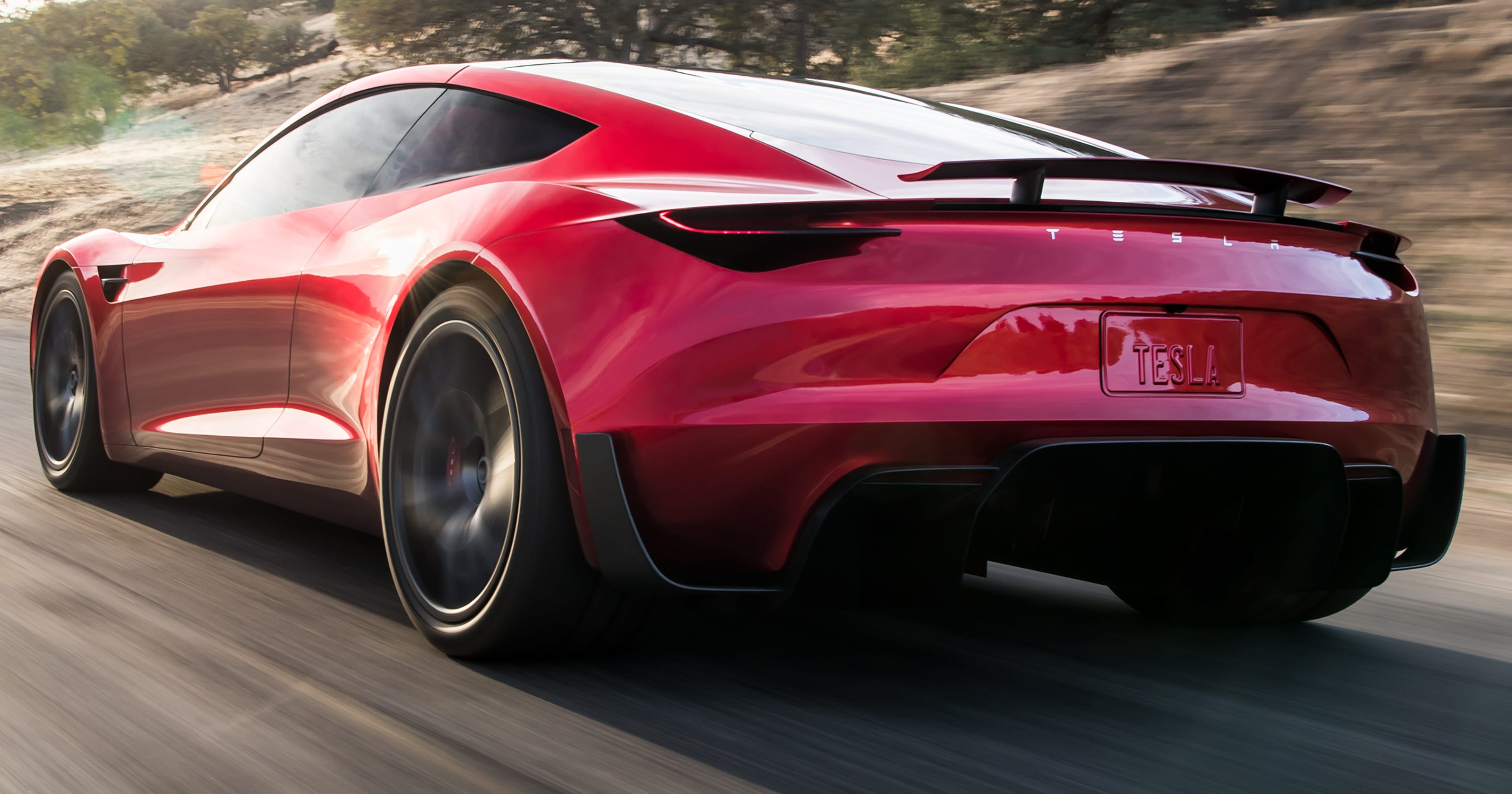
Thanks...................
... but can the driver stop it?
Nice!
I want one!...........................
Disclaimer: Opinions posted on Free Republic are those of the individual posters and do not necessarily represent the opinion of Free Republic or its management. All materials posted herein are protected by copyright law and the exemption for fair use of copyrighted works.