Posted on 11/08/2021 10:34:51 AM PST by Red Badger
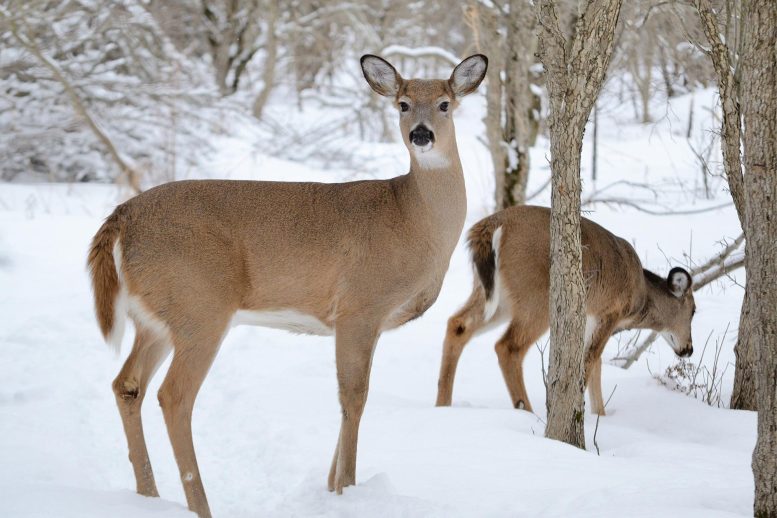
Researchers found that more than 80% of the white-tailed deer sampled in different parts of Iowa between December 2020 and January 2021 tested positive for SARS-CoV-2.
=======================================================================
More than 80% percent of the white-tailed deer sampled in different parts of Iowa between December 2020 and January 2021 tested positive for SARS-CoV-2. The percentage of SARS-CoV-2 positive deer increased throughout the study, with 33% of all deer testing positive. The findings suggest that white-tailed deer may be a reservoir for the virus to continually circulate and raise concerns of emergence of new strains that may prove a threat to wildlife and, possibly, to humans.
“This is the first direct evidence of SARS-CoV-2 virus in any free-living species, and our findings have important implications for the ecology and long-term persistence of the virus,” said Suresh Kuchipudi, Huck Chair in Emerging Infectious Diseases, clinical professor of veterinary and biomedical sciences, and associate director of the Animal Diagnostic Laboratory, Penn State. “These include spillover to other free-living or captive animals and potential spillback to human hosts. Of course, this highlights that many urgent steps are needed to monitor the spread of the virus in deer and prevent spillback to humans.”
According to Vivek Kapur, Huck Distinguished Chair in Global Health and professor of microbiology and infectious diseases, Penn State, while no evidence exists that SARS-CoV-2 can be transmitted from deer to humans, he believes hunters and those living in close proximity to deer may want to take precautions, including during contact with or handling the animals, by wearing appropriate personal protective equipment and getting vaccinated against COVID-19,” said Kapur.
Previous research by the USDA showed that 40% of white-tailed deer had antibodies against the coronavirus; however, Kuchipudi and his colleagues note that those antibodies only indicated indirect exposure to SARS-CoV-2 or an immunologically related organism and did not prove infection with SARS-CoV-2 or the ability to transmit the virus onwards.
In this new study — which posted on the pre-print server bioRxiv on November 1 and will be submitted to a peer-reviewed journal — the team examined nearly 300 samples collected from deer across the state of Iowa during the peak of human COVID-19 infection in 2020. The samples — extracted from deer retropharyngeal lymph nodes, which are located in the head and neck — had been collected by the Iowa Department of Natural Resources as part of its routine statewide Chronic Wasting Disease surveillance program. The team tested the samples for SARS-CoV-2 viral RNA using a real-time reverse transcription polymerase chain reaction (RT-PCR) assay, which provides direct evidence of infection with the virus.
“We found that 80% of the sampled deer in December were positive for SARS-CoV-2, which proportionally represents about a 50-fold greater burden of positivity than what was reported at the peak of infection in humans at the time,” said Kuchipudi. “The number of SARS-CoV-2 positive deer increased over the period from April to December 2020, with the greatest increases coinciding with the peak of deer hunting season last year.”
The team also sequenced the complete genomes of all the positive samples from the deer and identified 12 SARS-CoV-2 lineages, with B.1.2 and B.1.311 accounting for about 75% of all samples.
“The viral lineages we identified correspond to the same lineages circulating in humans at that time,” said Kapur. “The fact that we found several different SARS-CoV-2 lineages circulating within geographically confined herds across the state suggests the occurrence of multiple independent spillover events from humans to deer, followed by local deer-to-deer transmission. This also raises the possibility of the spillback from deer back to humans, especially in exurban areas with high deer densities.”
Kuchipudi added, “The research highlights the critical need to urgently implement surveillance programs to monitor SARS-CoV-2 spread within the deer and other susceptible wildlife species and put into place methods to mitigate potential spillback.”
Reference: “Multiple spillovers and onward transmission of SARS-Cov-2 in free-living and captive White-tailed deer (Odocoileus virginianus)” by Suresh V. Kuchipudi, Meera Surendran-Nair, Rachel M. Ruden, Michelle Yon, Ruth H. Nissly, Rahul K. Nelli, Lingling Li, Bhushan M. Jayarao, Kurt J. Vandegrift, Costas D. Maranas, Nicole Levine, Katriina Willgert, Andrew J. K. Conlan, Randall J. Olsen, James J. Davis, James M. Musser, Peter J. Hudson and Vivek Kapur, 1 November 2021, bioRxiv. DOI: 10.1101/2021.10.31.466677
The Huck Institutes of the Life Sciences at Penn State, the U.S. Department of Agriculture National Institute of Food and Agriculture, the U.S. Fish and Wildlife Service Wildlife and Sport Fish Restoration Program, the Iowa Department of Natural Resources Fish and Game Protection Fund, National Institute of Allergy and Infectious Diseases, and Houston Methodist Academic Institute Infectious Diseases Fund supported this research.
Other Penn State authors include Meera Surendran-Nair, assistant clinical professor; Michele Yon, research technologist; Ruth H. Nissly, research technologist; Lingling Li, research technologist; Bhushan M. Jayarao, professor of veterinary and biomedical sciences; Kurt J. Vandegrift, associate research professor of biology; Costas D. Maranas, Donald B. Broughton Professor of the Department of Chemical Engineering; Nicole Levine, research technologist; and Peter J. Hudson, Willaman Professor of Biology. Other authors include Rachel M. Ruden, wildlife veterinarian, Iowa Department of Natural Resources; Rahul K. Nelli, research assistant professor, Iowa State University; Katriina Willgert, graduate student, University of Cambridge; Andrew J. K. Conlan, senior lecturer in epidemiology, University of Cambridge; Randall J. Olsen, Professor of Clinical Pathology, Houston Methodist and Weill Cornell Medical College, James J. Davis, computational biologist, Argonne National Laboratory and University of Chicago; and James M. Musser, professor of pathology and genomic medicine, Houston Methodist.
Wait till they start testing horses...
Heck, deer are everywhere out here (Route 66). Mostly dead due to an unfortunate tendency to run across the road at the exact same moment a car going 65-70 mph comes careening through.
Oh no! Quick keep the deer pinned up so that they will find it more difficult to find enough food. Then tax them on the food they do have so big pharma can rush out an experimental treatment to save them. Then tell the dear if at least half of them risk taking the experimental treatment they will have to stay pinned up. Then raise that to 60 percent. Then 70. Then 80. Finally start denying the hold outs ability to seek food even in the pen. Also censor all information showing the ineffectiveness and side effects of the experimental medicine and suppress information about proven alternatives. After all, its the only compassionate thing to do to animals in such an emergency. We certainly don’t want the emergency to go to waste.
Ever try to get a deer to wear a mask?
Looks like a job for DR TED NUGENT!!
Or maybe we should question the TEST. Any positive test should prompt a 2nd test. I do not trust them for a second, the PCR tests weren’t even developed around having COVID-19 samples available.
I have family in the UK that tell me they have a ‘pee test’ now....probably just a flu test.
Sooo, if I eat venison from a COVID positive deer, can I get antibodies/immunity?
Put a bounty on them.
Drop the vernacular...
That’s a derby...
lol
"Of course, this highlights that many urgent steps are needed to..."
Translation: We need gubment money to research it because we said it's "urgent".
Give them the covid vaccine. I hear it’s safe.
Old news, this came out months ago. The real question is it relevant at all or even true.
Humans are not, I take it...
Deer are a preferred host for Lyme- and Babesia- carrying ticks in the NorthEast. I’d like to see their numbers reduced drastically.
Perhaps COVID will be the politically acceptable excuse for a long overdue thinning of the herd.
No. Let’s ban deer hunting altogether. And, by extension, ban those weapons used to hunt them, since they’d no longer be needed under the 2A. Because it’s all about hunting and sports. Oh, and muskets, too.
Did they test *ALL* forest mammals?
It was convenient to do it as part of a CWD study in deer.
I bet the virus can be found in pretty much every warm-blooded animal. I bet my dogs and my daughter’s cats would test positive.
Same is true for most ALL corona viruses since time eternal.
This is not news.
As has been pointed out animals carry all sorts of disease and viruses and have since time began, this is nothing new or of a huge concern. Just more Fear Mongering.
My point was that even if we see some deer running around, we are very unlikely to be in such close proximity to them and for the length of time required to be infected with Covid-19. If you are a deer hunter that obviously wouldn’t apply.
Disclaimer: Opinions posted on Free Republic are those of the individual posters and do not necessarily represent the opinion of Free Republic or its management. All materials posted herein are protected by copyright law and the exemption for fair use of copyrighted works.