
The Emperor’s Corridor in the Czech Republic. Several movies have filmed here, Van Helsing, Hellboy, etc.
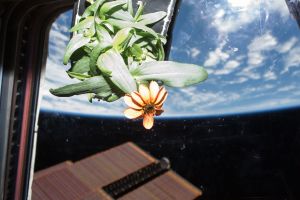
An orange Zinnia, the first flower to grow in space
Posted on 10/30/2021 7:19:46 AM PDT by Diana in Wisconsin
The Weekly Gardening Thread is a weekly gathering of folks that love soil, seeds and plants of all kinds. From complete newbies that are looking to start that first potted plant, to gardeners with some acreage, to Master Gardener level and beyond, we would love to hear from you.
If you have specific question about a plant/problem you are having, please remember to state the Growing Zone where you are located.
This thread is a non-political respite. No matter what, you won’t be flamed, and the only dumb question is the one that isn’t asked.
It is impossible to hijack the Weekly Gardening Thread. Planting, Harvest to Table Recipes, Preserving, Good Living - there is no telling where it will go - and that is part of the fun and interest. Jump in and join us! Send a Private Message to Diana in Wisconsin if you'd like to be added to our New & Improved Ping List.
NOTE: This is a once a week Ping List. We do post to the thread during the week. Links to related articles and discussions which might be of interest to Gardeners are welcomed any time!
“Is there any way to get rid of these pests?”
Nope. After China nukes us, thanks to Sloppy Joe’s stellar leadership, the only thing left will be cockroaches and Socialist Democrats! ;)
Thanks, Pete! :)
“...we planted strawberry plants in the raised beds this year. So, how do I winterize them?”
I have a small bed, 8x4, so I cover them 3-4” deep with straw. (Takes about 1.3 of a small square bale.) Chopped leaves will work as well. I wouldn’t use grass clippings because they mat together so badly. You could also use a layer of compost or just plain soil if you don’t have access to straw or chopped leaves. Take the mulch off as soon as you see new growth in the spring.
My friend INSISTS on mowing strawberries back at the end of the growing season, but I never do. I just cover them up. And, of course, then pray for a nice, insulating layer of SNOW (I know, too early for the ‘S’-word!) before we hit the sub zero temps. ;)
My bed has been in for 4 years now; I’m getting nice spring crops for just the two of us. ‘Honeoye’ is the variety I planted.
Good Kitty!
Good Afternoon, Everyone! Sorry, but I had to post and run this morning. The boys were here bow hunting, and then Amanda stopped by and them Mom and her friend came over and we hit the local orchard as it’s the last weekend for apples ...and Cider Doughnuts!
Mom and I bought a peck each of ‘Pink Lady’ and ‘Crimson Crisp’ and split both. Pies, Apple Sauce and Apple Butter coming soon!
https://www.acnursery.com/fruit-trees/apple-trees/76/crimsoncrisp
https://www.stemilt.com/stem-blog/all-about-pink-lady-apples/
Then, back here for a Chili Lunch and a few dog chores and Mom needed to visit with ‘her’ mule, Ithaca. ;) We cleaned off the front porch, moving the dog kennel off, and then sat out there for a while, until the wasps moved us back inside. Super-sunny and WARM day for end of October - hitting 60! I’ll take it.
Went up to change my clothes so I can do barn chores in a few, and pulled a t-shirt out of my dresser and pulled it over my head, and there was a @#$%^&*! WASP in it, that stung me in the shoulder. OUCH! So, I got the fly swatter and smashed it and flushed it. HA! I win!
I hate wasps. I don’t care if they’re pollinators. They all need to die. Now.
After barn/dog chores tonight I am relaxing with a movie, my Beagle and a Martini. Beau is in CO hunting Elk, so I’ll hear from him when he has a signal for a call or a text.
The only thing garden-related I did today was cut a big bag of Kale for Mom to deliver to friends in town, and I unloaded pumpkins and winter squash on the kids that were here hunting this morning. More deer hunters coming through in the morning. They are spotting a lot, but 50 yards is about it for a kill shot with bow.
Glad to read that you are all happy, healthy and winding down for the season. :)
Just my thoughts; If you have room in your Fenced in area (assuming here!) leave enough room to till between rows. It does not hurt to a lot of room in between plants/rows, more air circulation, more nutrients, more water per plant. Then, mulch around the base of the plants, hand pull any weeds in the non tillable areas. If I had room i would consider doing this. Use your space to your advantage, it generally results in larger plants and yields! (Big farm Illinois and Kansas think here! (Stuck in a small lot!))
Diana...I think you use a permanent mulch system? It has a lot of benefits! What are the comparative advantages in this situation?
We also stopped at a place that grows all kinds of awesome, weird Pumpkins and Squashes; all things fall-related.
I bought a ‘Long Island Cheese’ winter squash to try because it’s on my short list to grow next season, and a ‘Sweet Potato Squash’ which is similar to an Acorn squash but is supposed to be sweeter and taste like sweet potatoes, so after I eat them, I’ll see if they make the cut for next season.
I also bought four ‘Candy’ Onions because they are right up there with Vadalia onions in my opinion. I LOVE them!
Mom was talking to the owner, and they’ve been growing out this stuff for 14 years now. Also, anything that doesn’t sell - this is their last weekend and they were still LOADED with produce - they have contracts with local grocery stores that will buy up their excess and some goes to a few food banks and churches, so nothing goes to waste, which was nice to know. :)
I mulch exclusively with straw on my raised beds because it’s available to me. It’s a great weed barrier, keeps in the moisture and as it breaks down, gives back to the soil. We till beds every 3-4 years - just lightly; don’t want to disturb my hard-working Earthworms, you know!
I weed as needed and it’s usually not too much of a problem if I stay ahead of it. Sometimes I will get some Timothy Grass seed in with the straw - because that’s what it’s made from. So, I’ll get a tuft of grass here and there, but it pulls out easily.
My Mom came up with the BRILLIANT idea of laying sheets of roofing shingles between the rows of raised beds as a weed barrier and that is working really well. Cardboard works, but is SLIPPERY when wet, so not so good, and it breaks down too fast for me. I used some plywood before, but that tends to curl up when dry, so it becomes a trip hazard. There are still a few weeds that come up between shingles and the edges of the beds, but they’re easy enough to slice off with a hoe or blast with some sat & vinegar or Round-up if they REALLY won’t go away.
I need another pack of shingles to finish the job; been asking around to find an old pack in someones barn so I don’t have to pay for a new stack of them! ;)
The shingles are a great idea. I love your raised bed setup. That’s my dream someday. For now I’m old school. I have tried cardboard between rows, I may need to think about doing that again.
We have room, we just don’t have time, lol. The tiller is too heavy for me and hubby doesn’t have time. So I end up hoeing by hand which takes so much time and is a little rough on my back!
I keep making the mistake of planting my tomatoes too close together. Also, my tomatoes are growing so high, like 6-7 feet. I have yet to find a frame that will accommodate them. I have some cattle panels, I’m thinking I may try to figure out a way to make tomato cages out of them. I used them for trellising cucumbers this year and they did great. My spaghetti squash lived them too.
An orange Zinnia, the first flower to grow in space
Thank you Diana! It is good to have options and your way is a good one! Almost Ruth Stark!
Asphalt Shingles; mother knows best, you have good footing!
Any roofing companies or local carpenters in the area who might sell or give you a broken pack? They usually leave the overage with the homeowner! See if they know any one!
Options!
maybe String tomatos. Some ideas!
https://www.theartofdoingstuff.com/turns-im-never-really-satisfied-anything-including-tomatoes/
http://foodformyfamily.com/manic-organic/tomato-gardening-101-a-string-trellis
Neat ideas, thanks! Bookmarking
If you just have open land, then cardboard is a good solution between rows. As we were expanding our garden to build more raised beds, we plotted it all out with layers of cardboard, straw and mulch and dirt just to break down the grass/weeds where we were going to put new beds the next season. That worked well.
At my old farm I didn’t have raised beds until Mr. Wonderful started to ‘woo’ me and he built me nine beds. Prior to that I put down cardboard with straw & dirt over it between the rows.
BUT - now that I have raised beds (15 of them!) I ain’t NEVER goin’ back, Sister! NEVER! LOL! :)
Love all of your pictures, today! I’d believe a Zinnia could grow in space; they are nearly indestructible! And ‘Hellboy’ is one of my favorite movies!
I was watching it in my office one evening and my teenager came in to see what was all the fuss (’cuz I had the sound up really loud and I was laughing and really enjoying Ron Pearlman).
Sonny: “WHAT the heck is going on in here?”
Me: “I’m watching ‘Hellboy!’”
Sonny: “You are the Coolest. Mom. Ever.” :)
Hey, when they’re teens and normally won’t even TALK to you other than GRUNT, you take the COMPLIMENTS where you can!
Actually, Mom started this all by finding broken packs at HER nearest lumberyard. They GAVE them to her, so she brought me two packs to begin with, along with her idea.
I’m still hitting up the farmers in the area because I KNOW there is a treasure-trove of them in a barn somewhere nearby!
Halloween’s Agricultural Roots
Oct 31, 2016
Andrew Amelinckx
Halloween’s ancient roots are as much about agriculture as scary costumes and jack-o-lanterns. Maybe this year you should dress as a zombie farmer to celebrate this holiday’s agrarian past.
It’s believed the Halloween’s origins lie in the ancient Celtic festival of Samhain (pronounced sow-in), which was celebrated from October 31 into November 1, marking the end of the harvest season and the beginning of winter.
It was a time of the year for the Celtic peoples of England, Ireland, Scotland, Wales, northern France, and Brittany to bring their cattle from summer pasture – to slaughter livestock that was unlikely to make it through the long, cold winter and to hold celebratory feasts to consume the meat and other foods that easily spoiled in an age before refrigeration. It was also a time for fairs, regional markets, and assemblies – and the brewing of mead and beer following the harvesting of grains.
“In Ireland, turnips would be carved and used as lanterns, which gave rise to our modern practice of carving jack-o-lanterns”
Our modern conception of Halloween is based on the Celtic belief that Samhain was a time when the boundaries between our world and the Otherworld, a place inhabited by the dead and supernatural creatures like fairies, monsters, demons, and the like, were lowered. The inhabitants of the Otherworld could make their way to our world and unsuspecting humans could find themselves in the Otherworld by accident or trickery. Villagers would dress in frightening outfits to try to fool these dark and dangerous creatures thought to be roaming around that night.
In Scotland, Samhain was a night of chaos when young men would dress up in costumes to impersonate the spirits of the dead, pull pranks on people, and generally raise a ruckus. In Ireland, turnips would be carved and used as lanterns, which gave rise to our modern practice of carving jack-o-lanterns. In Wales, food and drink would be left out for the dead, which may have led to the idea of giving treats to costumed folks representing the departed. Bobbing for apples to predict who you would marry derived from a long-held belief by Celtic people that apples could be used for fortune telling.
There is some conjecture that the ties between apples and Halloween go back to the Roman conquest of Britain that began in 43 AD. A Roman harvest festival dedicated to Pomona, the goddess of abundance and orchards, thought to be celebrated on November 1, may have somehow merged with the festivities of Samhain. Many scholars dispute this, believing this idea was based on a misreading of an early Roman text that describes a feast that was actually held in August for Pomona’s godly consort Vertumnus, (sometimes spelled Vortumnus) the deity associated with the changing of the seasons and the harvest. What we can say for sure is that the Romans brought their love of apples and a superior knowledge of how to cultivate fruit trees with them to the British Isles.
Christianity began making some inroads in the Celtic world as early as the First Century AD, but it didn’t really take off until Constantine the Great began championing the religion in 312 AD helping to spread Christianity throughout the empire. As the Catholic church began supplanting various older religions, Christian holidays were often superimposed on the dates of traditional pagan ones. It’s believed by some scholars that was the case with Samhain with the introduction by the Church of All Hallows’ Eve, on October 31, All Hallows’ Day (more commonly known as All Saints’ Day), on November 1, and All Souls’ Day on November 2. But in Ireland, Scotland, and Wales, remnants of the earlier Celtic traditions remained alongside the Christian holidays. These traditions eventually came to the United States and by the early 20th century Halloween had become a secular holiday mostly for the young, with trick-or-treating used as a way to stem pranking and vandalism that had become associated with the night.
While we’ve pretty much jettisoned the agriculture-related aspects of the holiday, except for the jack-o-lantern and the occasional apple bobbing, we shouldn’t forget it all began with the celebration of agriculture. Maybe this year you should get back to basics and dress up as the goddess Pomona or perhaps a zombie farmer to give a nod to Halloween’s real roots.

Had our first FREEZE last night; 31 degrees when I got up this morning. Brrrr! I am in growing Zone 4/5, so my following list of chores may or may not apply to your Zone quite yet - or ever, but here goes!
My chores for November, in no particular order:
*Deal with Pumpkin Processing - move winter squash from greenhouse where it's curing - to the basement.
*Clean up grow light rack - it accumulates so much JUNK during the season, it's ridiculous! Check light banks and replace bulbs as needed. Put fresh, unwrinkled aluminum foil across back for more light reflection.
*Sort and organize seeds; start thinking about what to grow next season and hit some end of season seed sales on-line. (I'm pretty well stocked, but I've decided on more flowers for next season.) Pro-Tip: Got a little bit of various seeds left from lettuces, spinach, arugula and kale? Mix them up and put the mixed seeds in a jar and plant them as a 'patchwork' of baby greens for next spring. It always turns out so pretty, and I'm going to use them all together in a mixed salad, anyway, so why not grow them all together? They have the same growing needs.
*Work on my Garden Journal. Yep. I've decided to pick mine up again and carry on! It is cathartic fun for the coming Winter Gloom. I have TONS of seed catalogs stashed, with more to come of course, and lots of clipped articles and pretty photos to add to it. My glue stick is at the ready! Some is useful, some is whimsical.
*On a sunny, windless day, do some spray painting of garden decor that needs it. Wooden bird feeders could use a cleaning and face-lift, too! Look around for some new garden flags for next season, or sew my own this Winter. The ones I have now are pretty much faded rags. Not pretty! Not cheerful in the least!
*Clean up and then ask Beau to sharpen some of my hand tools, pruners and hoes. Come to think of it - kitchen knives could use some sharpening too in preparation for the Thanksgiving Feast!
*Dig the last row of potatoes; German Butterball. I've kind of been saving them just for us and left them in the ground so my Mother didn't abscond with them all, LOL! I am hosting Thanksgiving this year and I want mashed taters from my own tater patch. Yeah, I'm kind of a show-off that way. ;)
*Start stockpiling bird seed. I do NOT want to have to run to the store for that, once the snow hits and they really need it. We have two containers we keep on the porch in Winter with screw-on lids, about the size of old metal milk cans, that hold a lot of seed and keep it safe from rodents or foraging squirrels and raccoons. Also, make bird suet and get that in the freezer for later use.
*Check my stash of gardening books and keep what's best suited for me and my garden and donate the others to the Library. Same goes for cookbooks. This stuff accumulates, but I never use EVERY BOOK, so releasing books into The Wild, where they can do some good for another, is always A Good Thing, Martha!
Disclaimer: Opinions posted on Free Republic are those of the individual posters and do not necessarily represent the opinion of Free Republic or its management. All materials posted herein are protected by copyright law and the exemption for fair use of copyrighted works.
