Posted on 06/21/2021 3:53:12 PM PDT by MtnClimber
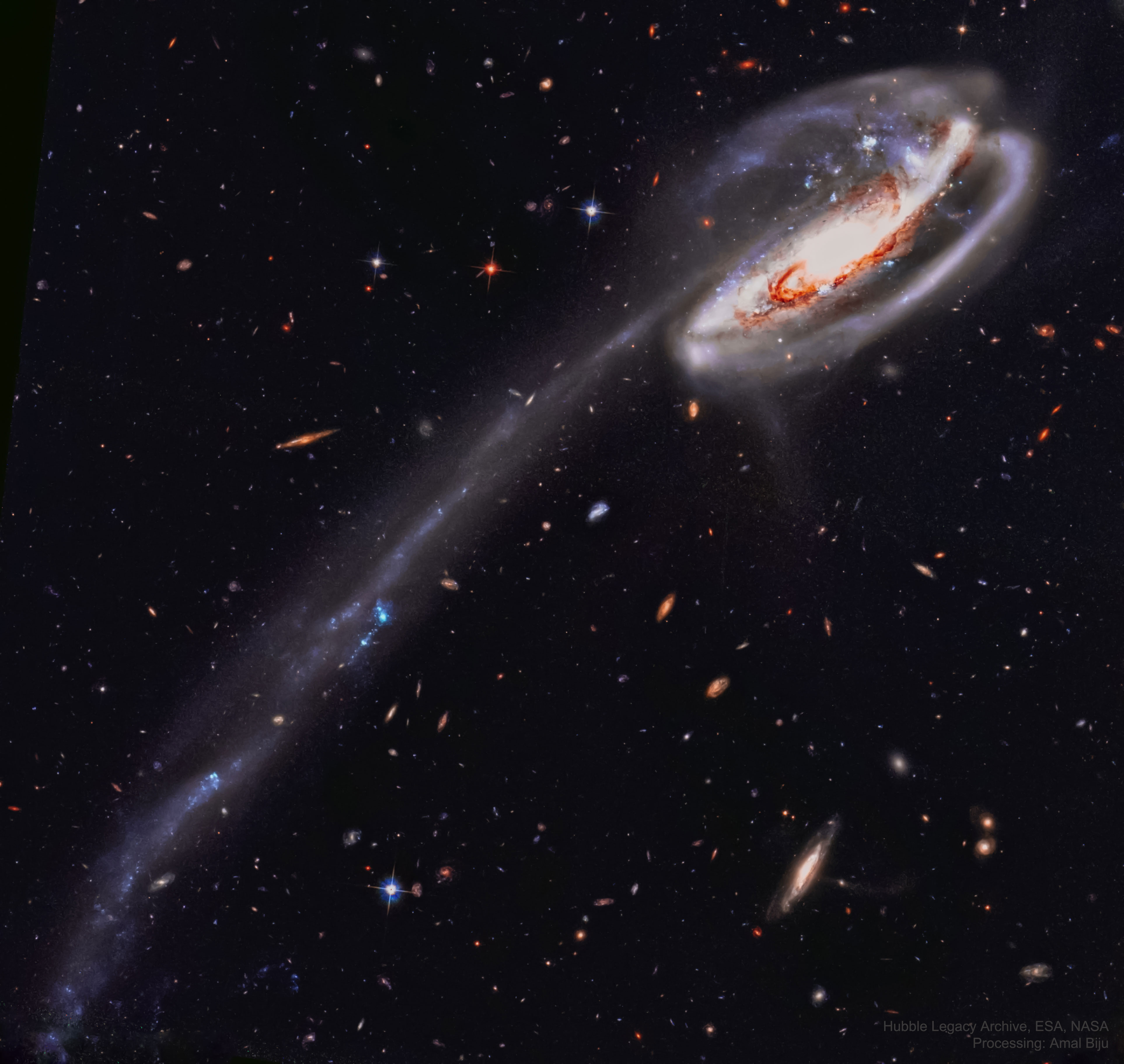
Explanation: Why does this galaxy have such a long tail? In this stunning vista, based on image data from the Hubble Legacy Archive, distant galaxies form a dramatic backdrop for disrupted spiral galaxy Arp 188, the Tadpole Galaxy. The cosmic tadpole is a mere 420 million light-years distant toward the northern constellation of the Dragon (Draco). Its eye-catching tail is about 280 thousand light-years long and features massive, bright blue star clusters. One story goes that a more compact intruder galaxy crossed in front of Arp 188 - from right to left in this view - and was slung around behind the Tadpole by their gravitational attraction. During the close encounter, tidal forces drew out the spiral galaxy's stars, gas, and dust forming the spectacular tail. The intruder galaxy itself, estimated to lie about 300 thousand light-years behind the Tadpole, can be seen through foreground spiral arms at the upper right. Following its terrestrial namesake, the Tadpole Galaxy will likely lose its tail as it grows older, the tail's star clusters forming smaller satellites of the large spiral galaxy.
For more detail go to the link and click on the image for a high definition image. You can then move the magnifying glass cursor then click to zoom in and click again to zoom out. When zoomed in you can scan by moving the side bars on the bottom and right side of the image.
bttt
Looks like a flying cheeseburger that’s been hit and is leaving a trail of grease behind it.
I scope out these pics almost everyday (thanks for posting) - I can’t remember one that had this many galaxies all in the same shot. Remarkable.
Many of them have hundreds of billions of stars.
Imagine all the aliens species wanting to probe us.
That’s a hungry tadpole.
When it grows into a full frog, it will be able to suddenly jump large distances.
And at that point the dragonfly nebula needs to watch out.
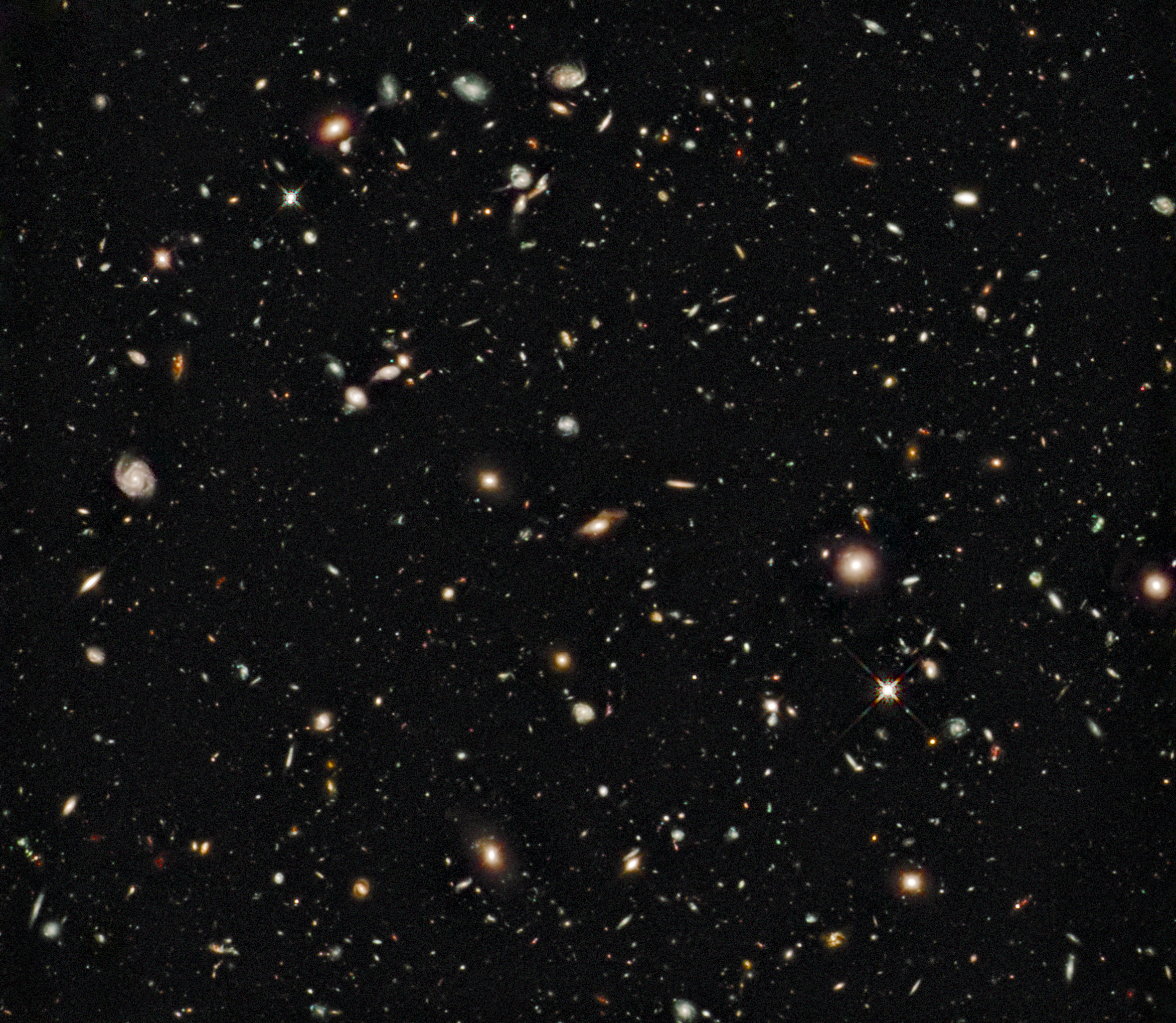
Try this one:
HUDF Infrared: Dawn of the Galaxies

This is a reprocess of M51 Galaxy I shot recently. This galaxy is much closer to our celestial neighborhood than the Tadpole Galaxy, at about 30 million light years away. 212x30' ISO 2500, total integration 1hr, 46min.
The easiest place to hide is in a crowd
:format(jpeg):mode_rgb():quality(90)/discogs-images/R-2750125-1299338072.jpeg.jpg)
That is a nice photo of M51! I wonder how many stars are in your photo.
I dunno. Looking at the galaxy arms which appear to be wispy or smoke like, are all made up of stars and dust. So many stars it’s impossible to count them in my image. The experts estimate this galactic system is composed of about 100 million stars. I’m told the arms are star-formation factories, compressing hydrogen gas and creating clusters of new stars.
Disclaimer: Opinions posted on Free Republic are those of the individual posters and do not necessarily represent the opinion of Free Republic or its management. All materials posted herein are protected by copyright law and the exemption for fair use of copyrighted works.