Posted on 04/29/2021 2:55:30 PM PDT by MtnClimber
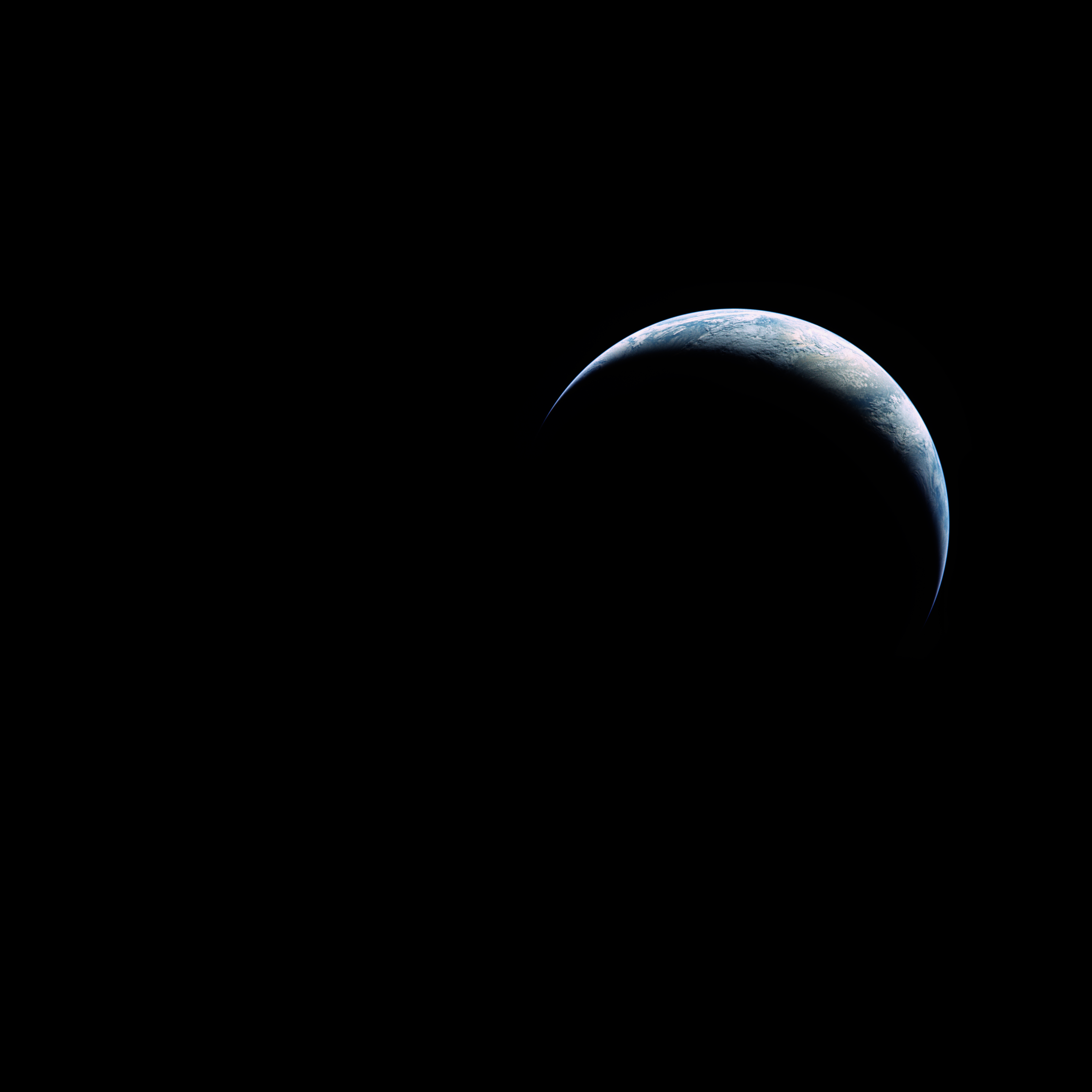
Explanation: Our fair planet sports a curved, sunlit crescent against the black backdrop of space in this stunning photograph. From the unfamiliar perspective, the Earth is small and, like a telescopic image of a distant planet, the entire horizon is completely within the field of view. Enjoyed by crews on board the International Space Station, only much closer views of the planet are possible from low Earth orbit. Orbiting the planet once every 90 minutes, a spectacle of clouds, oceans, and continents scrolls beneath them with the partial arc of the planet's edge in the distance. But this digitally restored image presents a view so far only achieved by 24 humans, Apollo astronauts who traveled to the Moon and back again between 1968 and 1972. The original photograph, AS17-152-23420, was taken by the homeward bound crew of Apollo 17, on December 17, 1972. For now it's the last picture of Earth from this planetary perspective taken by human hands.
For more detail go to the link and click on the image for a high definition image. You can then move the magnifying glass cursor then click to zoom in and click again to zoom out. When zoomed in you can scan by moving the side bars on the bottom and right side of the image.
bttt
If you look real close you can see me waving.
Our planet is indeed beautiful.

HOW DARE YOU!
Voted #1 person in the world most deserving of a cream pie in the face.
I can see my house
I was in high school at the time. I was sad this would be the last mission to the moon and IIRC the commentators were saying it would be unlikely there would be a return to the moon before the end of the century which seemed like forever at the time. Those were heady days likely never to be recaptured.
Disclaimer: Opinions posted on Free Republic are those of the individual posters and do not necessarily represent the opinion of Free Republic or its management. All materials posted herein are protected by copyright law and the exemption for fair use of copyrighted works.