Posted on 02/11/2021 11:12:12 AM PST by Red Badger
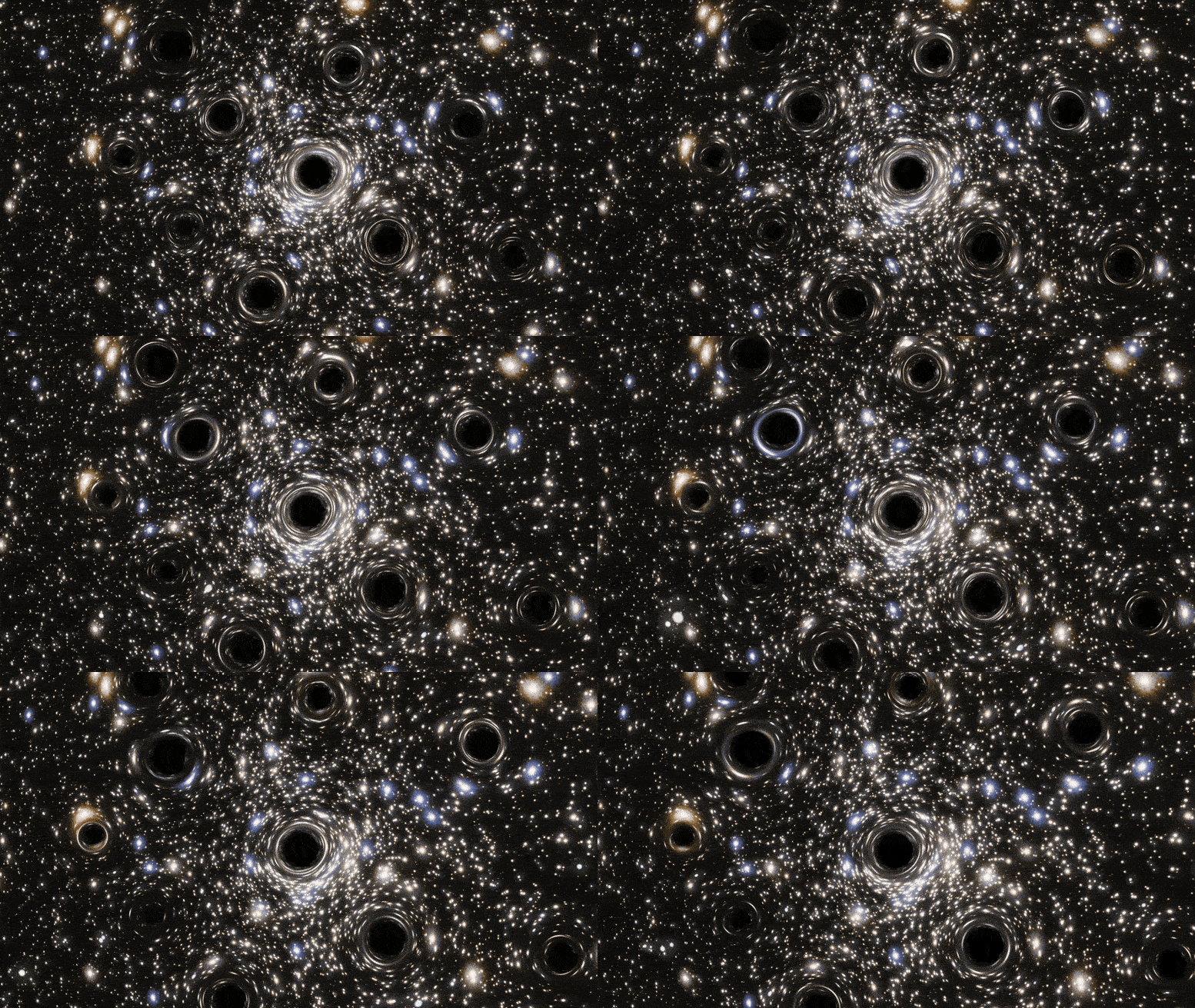
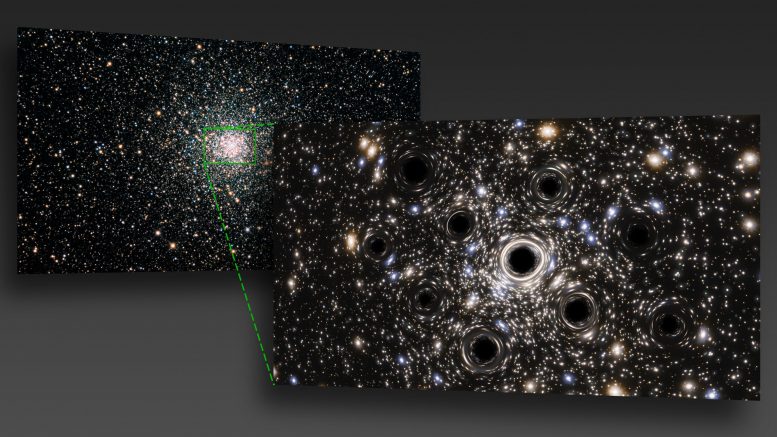
Scientists were expecting to find an intermediate-mass black hole at the heart of the globular cluster NGC 6397, but instead they found evidence of a concentration of smaller black holes lurking there. New data from the NASA/ESA Hubble Space Telescope have led to the first measurement of the extent of a collection of black holes in a core-collapsed globular cluster.
Globular clusters are extremely dense stellar systems, in which stars are packed closely together. They are also typically very old — the globular cluster that is the focus of this study, NGC 6397, is almost as old as the Universe itself. It resides 7800 light-years away, making it one of the closest globular clusters to Earth. Because of its very dense nucleus, it is known as a core-collapsed cluster.
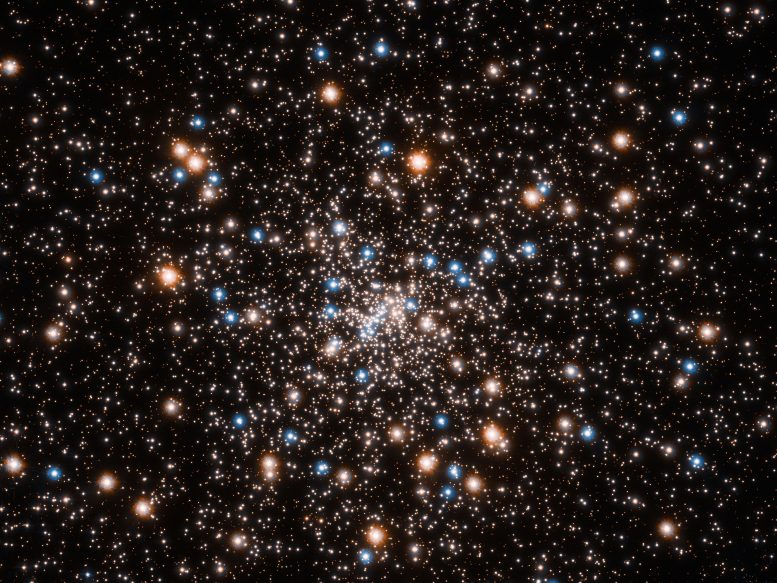
This ancient stellar jewelry box, a globular cluster called NGC 6397, glitters with the light from hundreds of thousands of stars. Astronomers used the NASA/ESA Hubble Space Telescope to gauge the cluster’s distance at 7800 light-years away. NGC 6397 is one of the closest globular clusters to Earth. The cluster’s blue stars are near the end of their lives. These stars have used up their hydrogen fuel that makes them shine. Now they are converting helium to energy in their cores, which fuses at a higher temperature and appears blue. The reddish glow is from red giant stars that have consumed their hydrogen fuel and have expanded in size. The myriad small white objects include stars like our Sun. This image is composed of a series of observations taken from July 2004 to June 2005 with Hubble’s Advanced Camera for Surveys. The research team used Hubble’s Wide Field Camera 3 to measure the distance to the cluster. Credit: NASA, ESA, and T. Brown and S. Casertano (STScI), Acknowledgement: NASA, ESA, and J. Anderson (STScI)
==================================================================
When Eduardo Vitral and Gary A. Mamon of the Institut d’Astrophysique de Paris set out to study the core of NGC 6397, they expected to find evidence for an “intermediate-mass” black hole (IMBH). These are smaller than the supermassive black holes that lie at the cores of large galaxies, but larger than stellar-mass black holes formed by the collapse of massive stars. IMBH are the long-sought “missing link” in black hole evolution and their mere existence is hotly debated, although a few candidates have been found (see [1], for example). To look for the IMBH, Vitral and Mamon analyzed the positions and velocities of the cluster’s stars. They did this using previous estimates of the stars’ proper motions[2] from Hubble images of the cluster spanning several years[3], in addition to proper motions provided by ESA’s Gaia space observatory, which precisely measures the positions, distances and motions of stars. Knowing the distance to the cluster allowed the astronomers to translate the proper motions of these stars into velocities.
“Our analysis indicated that the orbits of the stars are close to random throughout the globular cluster, rather than systematically circular or very elongated,” explained Mamon.
“We found very strong evidence for invisible mass in the dense central regions of the cluster, but we were surprised to find that this extra mass is not point-like but extended to a few percent of the size of the cluster,” added Vitral.
This invisible component could only be made up of the remnants (white dwarfs, neutron stars, and black holes) of massive stars whose inner regions collapsed under their own gravity once their nuclear fuel was exhausted. The stars progressively sank to the cluster’s center after gravitational interactions with nearby less massive stars, leading to the small extent of the invisible mass concentration. Using the theory of stellar evolution, the scientists concluded that the bulk of the unseen concentration is made of stellar-mass black holes, rather than white dwarfs or neutron stars that are too faint to observe.
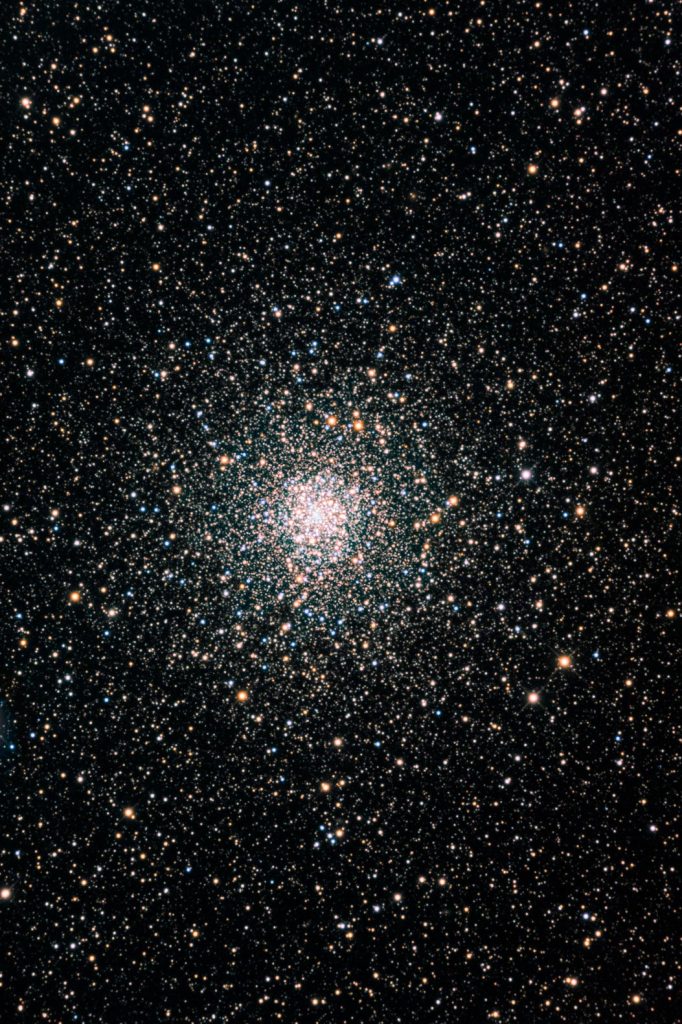
Ground-based Image of Globular Cluster NGC 6397. Credit: D. Verschatse (Antilhue Observatory, Chile)
===================================================================
https://scitechdaily.com/images/Callout-of-NGC-6397-Black-Hole-Concentration-777x437.jpg">
Scientists were expecting to find an intermediate-mass black hole at the heart of the globular cluster NGC 6397, but instead they found evidence of a concentration of smaller black holes lurking there. New data from the NASA/ESA Hubble Space Telescope have led to the first measurement of the extent of a collection of black holes in a core-collapsed globular cluster. Credit: ESA/Hubble, N. Bartmann
======================================================================
Two recent studies had also proposed that stellar remnants and in particular, stellar-mass black holes, could populate the inner regions of globular clusters.
“Our study is the first finding to provide both the mass and the extent of what appears to be a collection of mostly black holes in a core-collapsed globular cluster,” said Vitral.
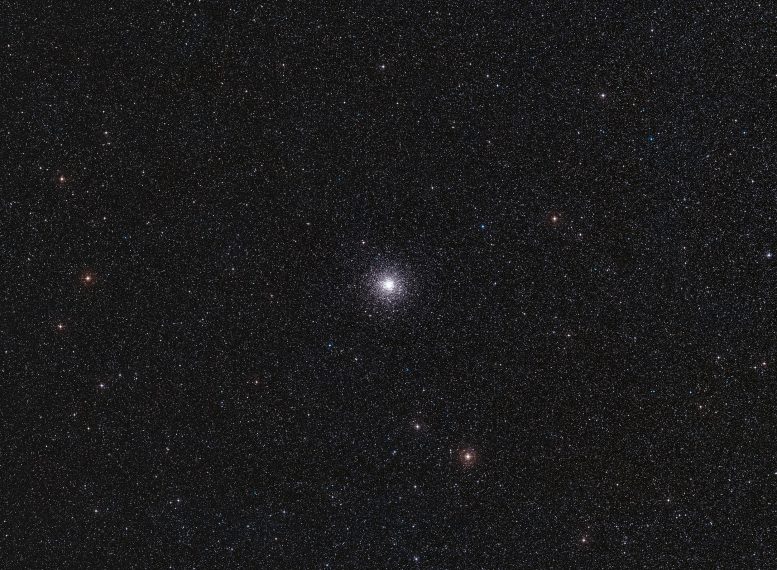
Pictured here is the region around the globular cluster NGC 6397. Credit: ESA/Hubble, Digitized Sky Survey 2. Acknowledgement: Davide De Martin
==================================================================
“Our analysis would not have been possible without having both the Hubble data to constrain the inner regions of the cluster and the Gaia data to constrain the orbital shapes of the outer stars, which in turn indirectly constrain the velocities of foreground and background stars in the inner regions,” added Mamon, attesting to an exemplary international collaboration.
The astronomers also note that this discovery raises the question of whether mergers of these tightly packed black holes in core-collapsed globular clusters may be an important source of gravitational waves recently detected by the Laser Interferometer Gravitational-Wave Observatory (LIGO) experiment.
Reference: “Does NGC 6397 contain an intermediate-mass black hole or a more diffuse inner subcluster?” by Eduardo Vitral and Gary A. Mamon, 11 February 2021, Astronomy and Astrophysics. DOI: 10.1051/0004-6361/202039650
Notes
In 2020, new data from the NASA/ESA Hubble Space Telescope provided the strongest evidence to date for a mid-sized black hole. Read about this result here.
Proper motion describes how fast objects move in the sky.
The Hubble data for this study were provided by A. Bellini, who measured the proper motions for over 1.3 million stars in 22 globular clusters, including NGC 6397.
PING!...........................
With direct ties to the Imposter in Chief currently in occupation of the White House.
That looks like a dangerous neighborhood.
###Small black holes####
Sounds like termites;>)
Yes, there are Klingons around Uranus....................
Time to call Orkin Galactic!...............
Sounds like BLM is protesting there too.
damn... those kardashians sure get around...
But did they find that dark matter?
All these discoveries that Hubble has revealed are nice to chat about. Beyond that their usefulness is questionable at best.
Neat but it looks like a drain hope it’s not a omen.
It's a MercyFlush...
*groan*
The courageous followers of Icare were Francois Pilâtre de Rozier and the Marquis d'Arlandes, using a device invented by the Montgolfier brothers: the hot-air balloon ("Montgolfière" still means "balloon" in modern French).
Of course, people who watched the sight were amazed beyond description; however, as often happens with great discoveries, some sceptics loudly expressed their contempt for the invention. One of them clutched Franklin's arm and asked him scornfully:
"Monsieur, franchement, à quoi peut bien servir de s'envoler dans les airs?" (Sir, frankly, what's the use of flying in the air?)
To which Franklin replied:
"Monsieur, à quoi peut bien servir l'enfant qui vient de naître ?" (Sir, what's the use of a newborn baby?)
It may be that we just lack the tools to understand what we are looking at....that is why the data is not “useful”.
An ant could be staring at a human and think “big, boring, not very useful”.....
;-)
Yeah that’s the ticket
Disclaimer: Opinions posted on Free Republic are those of the individual posters and do not necessarily represent the opinion of Free Republic or its management. All materials posted herein are protected by copyright law and the exemption for fair use of copyrighted works.