Posted on 01/31/2021 3:02:59 PM PST by MtnClimber
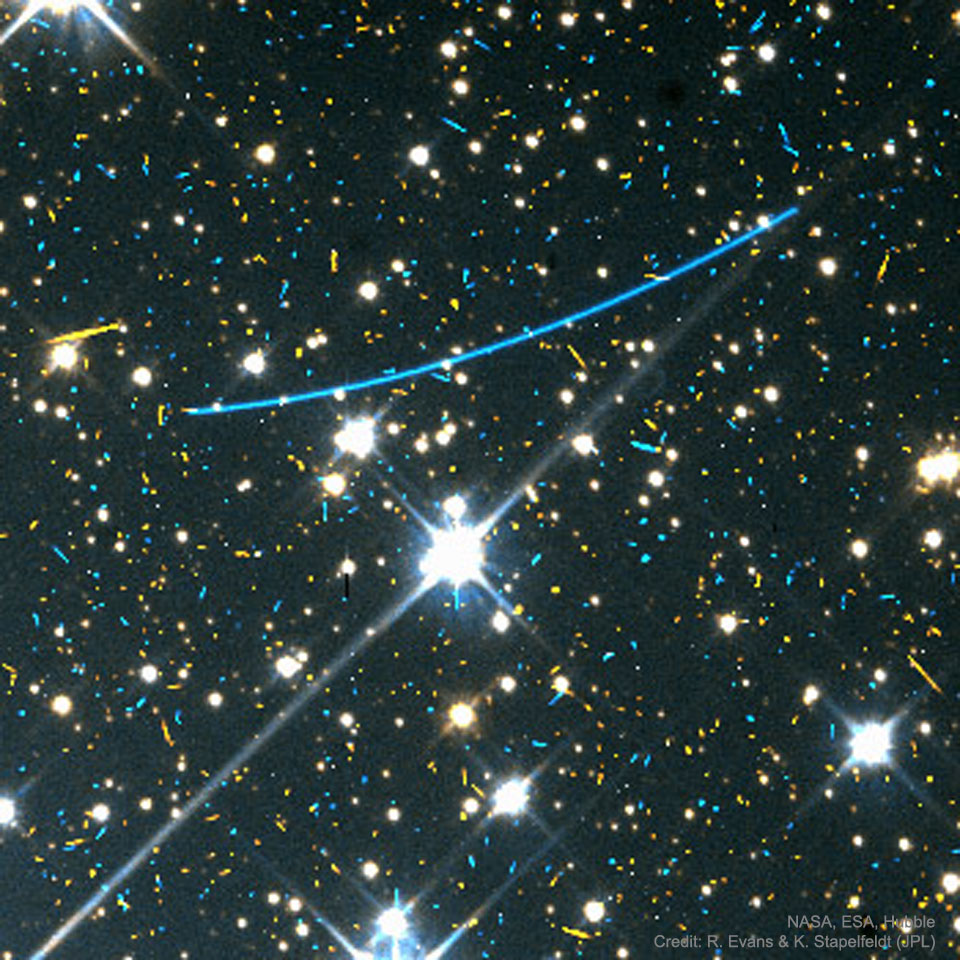
Explanation: Rocks from space hit Earth every day. The larger the rock, though, the less often Earth is struck. Many kilograms of space dust pitter to Earth daily. Larger bits appear initially as a bright meteor. Baseball-sized rocks and ice-balls streak through our atmosphere daily, most evaporating quickly to nothing. Significant threats do exist for rocks near 100 meters in diameter, which strike the Earth roughly every 1000 years. An object this size could cause significant tsunamis were it to strike an ocean, potentially devastating even distant shores. A collision with a massive asteroid, over 1 km across, is more rare, occurring typically millions of years apart, but could have truly global consequences. Many asteroids remain undiscovered. In the featured image, one such asteroid -- shown by the long blue streak -- was found by chance in 1998 by the Hubble Space Telescope. A collision with a large asteroid would not affect Earth's orbit so much as raise dust that would affect Earth's climate. One likely result is a global extinction of many species of life, possibly dwarfing the ongoing extinction occurring now.
For more detail go to the link and click on the image for a high definition image. You can then zoom by moving the magnifying glass over an area and then clicking. The side bars will move the zoomed area over the photograph.
In the middle of season 5 of “ the Expanse”.
Big Rocks Bad.
It seems to describe an asteroid or comet in the book of Revelation. There are comets that are composed of cyanide and the rock described in the revelation is supposed to poison the waters of the Earth.
Do you have Asteroids?
No, but my Dad does....................
Disclaimer: Opinions posted on Free Republic are those of the individual posters and do not necessarily represent the opinion of Free Republic or its management. All materials posted herein are protected by copyright law and the exemption for fair use of copyrighted works.