
Hate to ask and don’t want to be pushy, but could y’all please really try to
Make Your Donation early

Posted on 04/08/2019 10:37:23 AM PDT by Red Badger
I’ve had a long and exciting journey — full of failures and successes — since I first started working at Apple in 1983. I was part of the original Macintosh team and had two stints at the company (one from 1983 to 1987, and then from 1995 to 1997).
Ask people who worked at Apple when Steve Jobs was around, and they’ll very bluntly tell you it wasn’t easy. There were days where he was impressed by my work, and there were days when I was certain he would fire me. But it was always exciting because we were on a mission to prevent totalitarianism. (You can read more about my adventures in my new book, “Wise Guy: Lessons from a Life. ”)
I wouldn’t trade working for him for any job I’ve ever had — and I don’t know anyone in the Macintosh Division who would, either. My job as a software evangelist in the Macintosh Division defined my career.
Here are the top 11 life-changing lessons that I learned at Apple: 1. Only excellence matters
Jobs elevated women to positions of power long before it was cool or socially responsible to do so. He didn’t care about gender, sexual orientation, race, creed or color. He divided the world into two groups: “Insanely great people” and “crappy people.” It was that simple. 2. Customers can’t tell you what they need
In the early 1980s, Apple was selling Apple IIs. If you asked customers what they wanted, they would say a bigger, faster and cheaper Apple II. No one would have asked for a Mac. 3. Innovation happens on the next curve
Macintosh was the next curve in personal computing. It wasn’t merely an improvement to the Apple II or MS‑DOS curve. Innovation isn’t making a slightly better status quo. It’s about jumping to the next curve. 4. Design counts
It may not count for everyone, but design counts for many people. Jobs was obsessed with great design. He drove us nuts with his attention to detail, but that is what made Apple successful. 5. Less is more
One of the key tenets of Jobs’ obsession with design was the belief that less is more. He was the minimalist’s minimalist. You can even see this in his slides: They had dark blue or black backgrounds with 90 to 190 point text and no more than a handful of words. 6. Big challenges beget big accomplishments
The goal of the Macintosh Division was preventing totalitarianism and worldwide domination by IBM. Merely shipping yet another computer was never the goal. 7. Changing your mind is a sign of intelligence
When Jobs announced the iPhone, it was a closed programming system to ensure that it was safe and reliable. A year later, he opened it up to third-party apps, and iPhone sales skyrocketed. This was a 180 degree reversal and a sign of intelligence and courage.
8. Engineers are artists
Jobs treated engineers like artists. They weren’t cogs in a machine whose output was measured in lines of code. Macintosh was an artistic expression by engineers whose palette was software and hardware design. 9. Price and value are not the same thing
No one ever bought a Macintosh based on price. Its true value became evident only when you factored in the lower requirements for support and training. Jobs didn’t fight on price, but he won on value. 10. But value isn’t enough
Many products are valuable, but if your product isn’t also unique or differentiated in some way, you have to compete on price. You can succeed this way — as Dell did, for example. But if you truly want to “dent the universe,” your product needs to be both unique and valuable. 11. Some things need to be believed to be seen
Innovators ignore naysayers to get the job done. The “experts” told Jobs he was wrong many times — for example, Macintosh, iPod, iPhone and Apple retail stores. It’s not that Jobs was always right, but sometimes, you need to believe in something in order to see it.
I hope that everyone has at least one chance to work for someone as brilliant as Steve Jobs. It won’t be easy, but what doesn’t end your career makes it stronger.
Guy Kawasaki is the chief evangelist of Canva. Previously, Kawasaki was chief evangelist of Apple. He has written fifteen books, including ”The Art of the Start, ” ”Selling the Dream ” and his latest, ”Wise Guy: Lessons from a Life. ” Follow him on Twitter .
*This is an adapted excerpt from ”Wise Guy: Lessons from a Life, ” by Guy Kawasaki, and with permission of Portfolio, an imprint of Penguin Publishing Group, a division of Penguin Random House LLC.
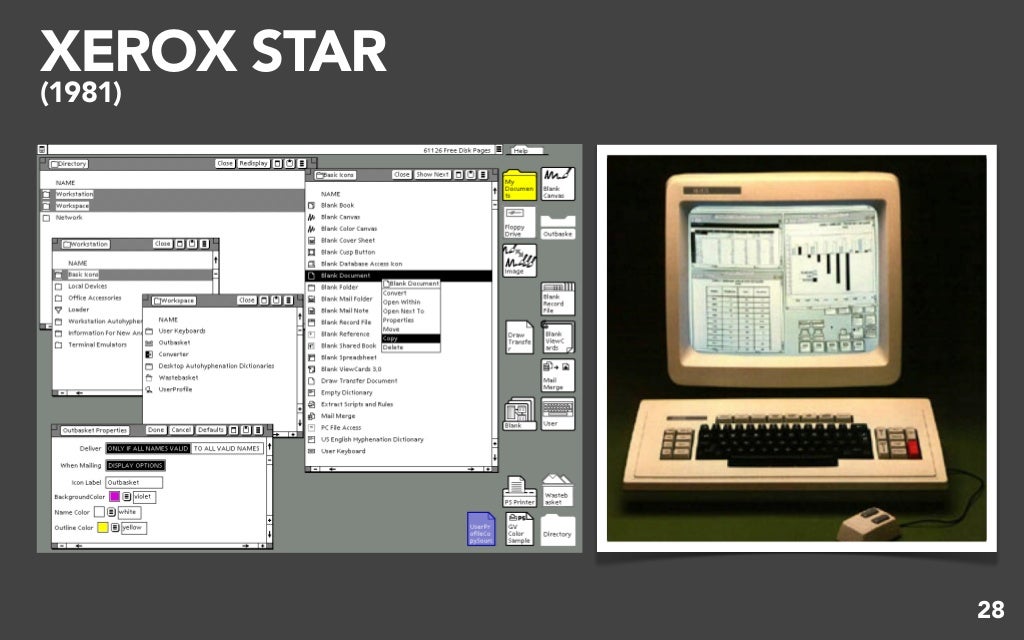
The Alto became well known in Silicon Valley and its GUI was increasingly seen as the future of computing. In 1979, Steve Jobs arranged a visit to Xerox PARC, in which Apple Computer personnel would receive a demonstration of the technology from Xerox in exchange for Xerox being able to purchase stock options in Apple.[10] After two visits to see the Alto, Apple engineers used the concepts to introduce the Apple Lisa and Macintosh systems.
Not a very nuanced view of things huh?
He’s a little narcissistic...................
Sigh. . . For about the two-hundredth time, there are no "slave" factories being operated by Apple, anywhere. When a new assembly line opens for Apple products is opened, workers queue by the thousands to apply for the jobs on those lines because the pay and working conditions are far better on those lines than any other lines even in the same assembly plant. The employees there are there voluntarily and are paid CHINESE middle-class level wages. . . no one is forced.
Foxconn is a Taiwanese company that does contract assembly work for over 750 consumer electronic companies from around the world of which Apple is just one. The likelihood is that your computer, phone, TV, and much of the other electronics you own were assembled by Foxconn as it assembles about 60% of the CE in the world. . . and none of it is done by "slaves." China has embraced capitalism. . . Foxconn is a publicly traded international corporation with assembly plants in China, India, Brazil, and the United States.
So much for your ignorant "slave labor" lies.
“The insanely great people matter. They are few in number, but they will do 80% of the work. I’ve seen management focus on the crappy 80% and try to turn them into insanely great people. It never works. I think management should shower attention on the best people, consider most of the staff as just deadweight. Because that’s what they are. And if management showers attention on the deadweight, they will have nothing to show for it — and the insanely great people will start to leave because they feel unappreciated. You really don’t want that.”
This.
A lot of the DEC WSE staff came from PARC before the Sun/SGI/DEC workstation wars of the ‘80s. Some very
smart people..
“Delusional much?”
I would have to agree with that. Apple was fighting with IBM over who would be the totalitarian. If anyone prevented totalitarianism, it was Compaq.
Xerox used the Alto Computer’s in the the late-late 70’s early 80’s to generate Postscript which was used on the Laser Printers of old. We used to send stuff to a local company who did mass mailings. Those Laser printers were the size of a car.
Ever wonder why Apple was so stuck on Postscript in the early Mac’s.
no iPencils were harmed by this puff piece
You don’t know what you are talking about, Okie. The Xerox mouse had three buttons and later moved to a two button mouse, but never a single button mouse:
They did not have a toolbar:
Xerox copied the toolbar from the Mac in later Xerox Altos after 1986. . .
Certainly have. I’ve used one. You obviously have never even seen one or you wouldn’t be blithering as you are. There are worlds of differences, starting with purpose and astronomical price. You keep demonstrating your ignorance. Take a look at a real $75,000 Xerox Alto Star office wordprocessing workstation:

You guy’s really have that copy/paste thing down. I remember seeing it at work, and you could reverse the screen to paper white.
Customers can’t tell you what they need
...................................................
Baloney. Customers define need. Engineers and designers who want to meet those needs must learn to ask the right questions.
*****************************************************
Jobs and much of Apple’s developers/designers/architects have been more along the line of “if you build it, they will come”. Jobs KNEW that his potential customers had nascent needs that those customers did not recognize as “needs”. Once they saw what Jobs/Apple created, THEN they recognized their new found “needs”.
That’s nice ... but when stated as an absolute, as the author does, it’s sheer nonsense. In many lines of engineering work, the customer knows perfectly well what he’s trying to do ... the trick sometimes is to get him to state it clearly.
That might be a sarcastic dig at Microsoft.
There are several myths right there that have misinformed you completely. The Alto was not a retail computer. It was an in-house project for Xerox use only, and only rumors were spreading; there were only 120 in use at Xerox. It was originally developed as a means to control high end, high quality Xerox typographic printers, and management was talking about it eventually being a competitor to typesetting machines, but not putting any real effort into it . . . . The GUI was not "well known’ nor was it increasingly considered the future of "computing" except among a very small group of computer visionaries, including Steve Jobs. That’s 20/20 hindsight from people who didn’t see it.
The MAINSTREAM COMPUTER INDUSTRY was stuck in the command line, keyboard mode and would remain there, ala Microsoft, for almost fifteen years! Even Xerox’s Alto’s OS was mostly command line with a program for WYSIWYG DOCUMENT production and another for DRAWING in the GUI mode. They had yet to develop any file handling or general OS support. . . That would come around the time of Steve Jobs’ visit in 1979.
Secondly, Xerox did not get to "purchase stock options in Apple" because Apple had not even had an original IPO yet so there could not be any "stock options" for Xerox to purchase. That IPO wouldn’t occur until 1980. It’s amazing how many falsehoods get published in Wikipedia. Steve Jobs gave Xerox one million shares of pre-IPO share of Apple common stock for the visits and the rights to use what they learned there. Had Xerox retained those shares instead of selling them, they’d be worth about twice the total market cap of Xerox today. Too bad they were so shortsighted and sold them about three years later for $16 million.

The Xerox Alto II was finally released to retail sales in 1979 at ~$33,000 (in 2018 dollars, about $95,000).
Incidentally, the computer mouse as made by Xerox was costing over $450 per unit. In 2018 dollars, that’s over $1000 per unit, far too expensive for consumer retail. Steve Jobs gave one to an engineer and said eep working on it until you get the price down to under $25. The guy come back with a prototype using a Tupperware tub, one button, and a small superball. He hit the price point!
And we’ve been merrily clicking away ever since!.................
No, I don’t wonder. I know. Apple bought 19% of Adobe for that reason and built Postcript fonts into the Mac from day one. . . And vector graphic screen fonts. Apple also deliberately used square screen pixels and square pixel screen grids while IBM and clones were using rectangular grids which brought distortions into manipulating and rotating images and graphics.
Apple then designed and brought out their own AppleTalk and SCSI Postscript Laser Printer at a reasonable price in 1985 which opened up prepress and low end direct to offset Press for home and small business.
Disclaimer: Opinions posted on Free Republic are those of the individual posters and do not necessarily represent the opinion of Free Republic or its management. All materials posted herein are protected by copyright law and the exemption for fair use of copyrighted works.