










Posted on 08/26/2026 9:37:32 PM PDT by SeekAndFind
What jobs do data centers actually create?
It is a question increasingly on Americans’ minds as public opinion turns against data centers, their construction, environmental footprint, energy and water use, and uncertain local economic benefits. Yet in an era when President Trump has promised to reindustrialize America, many people are asking a simpler question: what good jobs will these facilities actually provide?
First, it is important to remember that jobs should not be the primary metric for evaluating any infrastructure project. Treating them as such is reminiscent of the public-works programs of the 1930s under FDR, when the focus often shifted away from building what people needed, toward employing as many people as possible. Conservatives should understand that a jobs program is not the purpose of economic development.
Second, it is wrong to assume data centers, by themselves, must be massive job creators to justify their existence. The same criticism could be leveled at power lines, nuclear reactors, bridges, and other essential infrastructure projects. It may be technically true that they employ relatively few people once complete, but it also misses the point entirely.
Similarly, you could claim electrical power lines provide no jobs, or that refrigerators provide no jobs, or that computers provide no jobs. It would, of course, be ridiculous, but you could claim it. https://t.co/vaND6rqT23— Perry E. Metzger (@perrymetzger) August 24, 2026
Now, onto the jobs data centers do, in fact, provide.
The answer begins with construction. Building a large data center requires electricians, plumbers, HVAC technicians, heavy-equipment operators, steelworkers, concrete workers, engineers, project managers, security personnel, and other skilled trades. Those jobs are temporary, but major projects can take years to complete and can employ hundreds or thousands of workers across the life of the build. Construction is, in fact, where most of the immediate employment effect occurs.
Now, onto the more disputed question of long-term jobs. Data centers do create permanent local employment, even if they are not labor-intensive in the manner of an old-fashioned factory. A Brookings analysis found that, over the first decade after a county receives its first large data center, employment in data processing rose 56 percent and employment in telecommunications rose 43 percent. In a typical county, those gains translate to roughly 100 to 200 additional jobs, depending on the type of facility.
The permanent jobs are also quite varied. Data centers need data-center technicians to install, test, repair, and maintain servers; network engineers and fiber technicians to keep enormous volumes of data moving; electrical and mechanical technicians to maintain generators, batteries, and power-distribution equipment. They need HVAC and cooling-system specialists to keep equipment from overheating; critical-facilities engineers and chief engineers to oversee the site’s core systems; operations managers; logistics and inventory personnel; and physical-security staff. Major operators also hire cybersecurity specialists, safety professionals, contractors, and vendor-management personnel to keep a facility reliable around the clock.
That covers the jobs inside the data centers themselves. What is discussed far less often is the broader employment these facilities can make possible across the technology sector, and across the economy as a whole. As computing capacity becomes more available, startups can build products that would otherwise be too expensive or too difficult to launch. Established companies can create new AI teams, develop new products, and take on projects that previously would not have made economic sense. That means more work not only for software engineers, data scientists, product managers, and cybersecurity specialists, but for the electricians, plumbers, construction workers, equipment technicians, and other tradesmen needed to build and sustain the infrastructure behind that growth.
The jobs a data center provides must be measured beyond the workers immediately inside the physical building. The benefits are broader and longer-term, even if much of the public debate is understandably focused on the immediate disruption: the construction, the land use, the power demand, and the number of local people hired on day one.
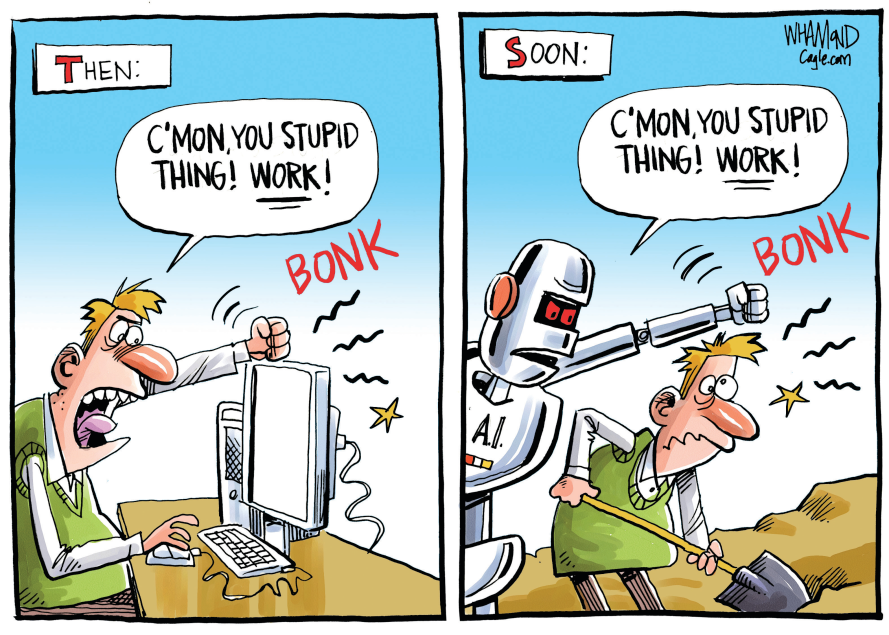
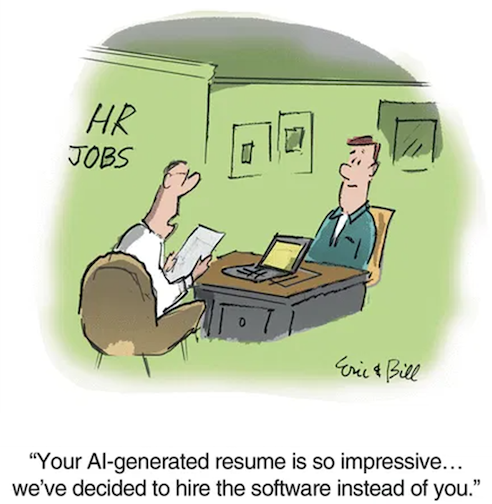
Of course, none of this means AI will leave every already existing job untouched. It will automate certain tasks, eliminate some roles, and force workers and companies to adapt to a new economy. But that has been true of every new technology. The relevant question is whether America will build the infrastructure, develop the skills, and create the new industries needed to turn that disruption into greater productivity and broader opportunity.
A data center may not resemble a mid-century factory, with thousands of workers clocking in every morning to work an assembly line. But that is because the economy is changing, not because these facilities are useless. If AI is the next industrial revolution, then data centers are among the factories of that revolution, the infrastructure that makes a new generation of products, companies, and industries possible. The question should not be whether every data center creates the same kind of jobs as a factory did in 1955. It plainly does not.
The question is whether America wants to build the capacity to lead in the industries of the future, or allow fear of change and an outdated definition of “good jobs” to leave that work, that investment, and that leadership to someone else.
that’s all just pure unadultrated BS...
Copper, YOY + 48 percent!
$6.56 USD
+2.14
+48.42%
Bid: $6.56 Ask: $6.56
8/27/2026 9:47 AM EDT
I gave you this fact, you can now research the other metals and things data centers are gobbling up....I won’t spoon feed you.
Forty people isn’t what anyone would congestion.
If not data centers, then something else would be built with the money which could be just as resource hungry. I am not promoting data centers but your logic is flawed.
Learn how to use numbers without irritating people.
That statement contradicts everything Beale Infrastructure told the people in rural Wagoner County. I went to the meeting. Beale rep said they needed water from rural water district for the cooling towers.
That’s a weird design then. I don’t know what they’re doing.
If we don’t create thousands of new jobs in the Data Centers, where will the millions of illegal immigrants and H1B VISA holders find work?
Jobs are vitally important to a small community that has few.
Anyone who has actually worked at a job would know this. Slugs and parasites working at MSM are incapable of recognizing this.
Ask AI:
Q: On average how many and what type of jobs do data centers create?
AI Answer:
Data centers create between 50 and 3,000+ permanent jobs depending on their size and capacity, with larger facilities typically generating more employment. Additionally, they support many temporary construction jobs and indirect jobs in the local economy.
Construction Job: Temporary positions during the building phase, including skilled trades. 400 to 1,200 workers for large facilities (e.g., 100 MW)
Permanent Operations: Full-time roles needed for ongoing facility management and maintenance. 50 to 200 jobs for typical facilities, depending on size.
Indirect Jobs: Jobs created in the local economy due to increased demand from data center operations. 1.5 to 2.5 additional jobs per direct data center job.
Q: Do data centers need grounds keepers/landscapers?
AI Answer:
Yes. Data centers commonly need groundskeeping or landscaping services, especially large campuses with extensive lawns, trees, stormwater areas, roads, parking lots, and security buffers.
Typical work includes:
Mowing, trimming, planting, and pruning
Maintaining irrigation and drainage systems
Managing snow and ice in colder regions
Clearing leaves, debris, and storm damage
Controlling weeds and invasive plants
Maintaining vegetation around fences, generators, substations, and cooling equipment
Applying mulch, fertilizer, or pesticides where permitted
Keeping entrances, walkways, and parking areas presentable
The work may be handled by:
An on-site facilities or maintenance employee
A contracted landscaping company
A grounds crew shared across multiple facilities
Specialized contractors for snow removal, tree work, irrigation, or stormwater management
Data centers often prioritize low-maintenance landscaping and may limit vegetation near critical infrastructure, so the role can be smaller than at a corporate or university campus. Still, a large data-center campus may provide recurring contracts or several grounds-maintenance jobs, particularly during construction, expansion, and seasonal maintenance.
You are funny.
“do not use water except for emergency chillers”
They don’t consume the water, do they? They just make it warmer and then discharge back to the body of water from which it was taken, isn’t that correct.
Power consumption by data centers is not my primary concern. It’s what their final object presumably is, namely, to augment human thinking.
That’s to say they are to produce solutions that are beyond the power of us humans to produce. Not sure those are the types of solutions we need.
And a big trash compactor truck.
* Laziness to ..
* Force feeding, to ..
* Antichrist takeover...
Ping to post 72
Wilde Child, what a collection!
I love these. Thanks.
the economic law of diminishing returns.
the first few are profitable.
the last few are cost centers.

I will be fine when these data centers are stuck near the mega rich communities. When I see that, I will understand how good they are for a community!
You are so welcome, KitJ. Spread ’em around!
and just how many months of construction workers, heavy equipment, and logistics support do you think it’ll take to build out the surrounding infrastructure and building?
Disclaimer: Opinions posted on Free Republic are those of the individual posters and do not necessarily represent the opinion of Free Republic or its management. All materials posted herein are protected by copyright law and the exemption for fair use of copyrighted works.