Post 1B
Welcome to our Q thread.
It's impossible to learn about Trump's successes and strategies by following the MSM.
President Trump and his warriors have dedicated much prayer, courage and sacrifice to the strategy now transforming D.C. The groundwork took time, but the path to justice is finally being exposed to the public.
By learning all we can, we are supporting President Trump's vision for our country.
MAGA!
Our prior Q thread is here: Q ~ Trust Trump's Plan ~ 07/01/26


To: foldspace
Bonjour y’all! Laissez le bon Trump rouler!!!
Know your Nautical Terminology
We continue our new series of items highlighting with humanity’s early exploration of Earth’s oceans, lakes, and rivers and leading to the use of watercraft for transportation and commerce. Last month I introduced the devices that allowed the finding of latitude. This month we discuss longitude. Together they will allow practice of the Dark Art of Celestial Navigation.
By the 1600s, European nations were expanding global trade and naval power. The problem grew urgent. Scientists and inventors proposed various solutions. Galileo Galilei suggested using the eclipses of Jupiter’s moons as a celestial clock—visible from land and, in theory, from a steady ship. Christiaan Huygens developed improved pendulum clocks and hoped they might keep time at sea. Others studied the Earth’s magnetic variation (the difference between true north and magnetic north), hoping it formed a usable pattern. None of these approaches proved reliable enough for ordinary sailors in the rough conditions of an ocean voyage. Clocks lost or gained time with the motion of the ship, temperature changes, and humidity; celestial observations required clear skies and complex calculations.
The crisis came to a head in Britain after a series of disasters, most famously the wreck of a squadron under Admiral Sir Cloudesley Shovell on the Isles of Scilly in 1707. Hundreds of men drowned because navigators had misjudged their longitude. Public and parliamentary pressure mounted. In 1714 Parliament passed the Longitude Act, offering a prize of up to £20,000 (a fortune at the time—roughly equivalent to several million pounds today) for a practical method of determining longitude at sea to within half a degree (about 30 nautical miles at the equator). A Board of Longitude was established to judge submissions and award the money.
Into this arena stepped John Harrison, a self-taught carpenter and clockmaker from Lincolnshire. Harrison had never been to sea and had little formal education, yet he possessed extraordinary mechanical insight and an almost obsessive perfectionism. He understood that the key was a timekeeper that could remain accurate despite the rolling of a ship, changes in temperature, and the lack of a stable pendulum. Between the 1720s and 1760s he built a series of remarkable marine timekeepers.
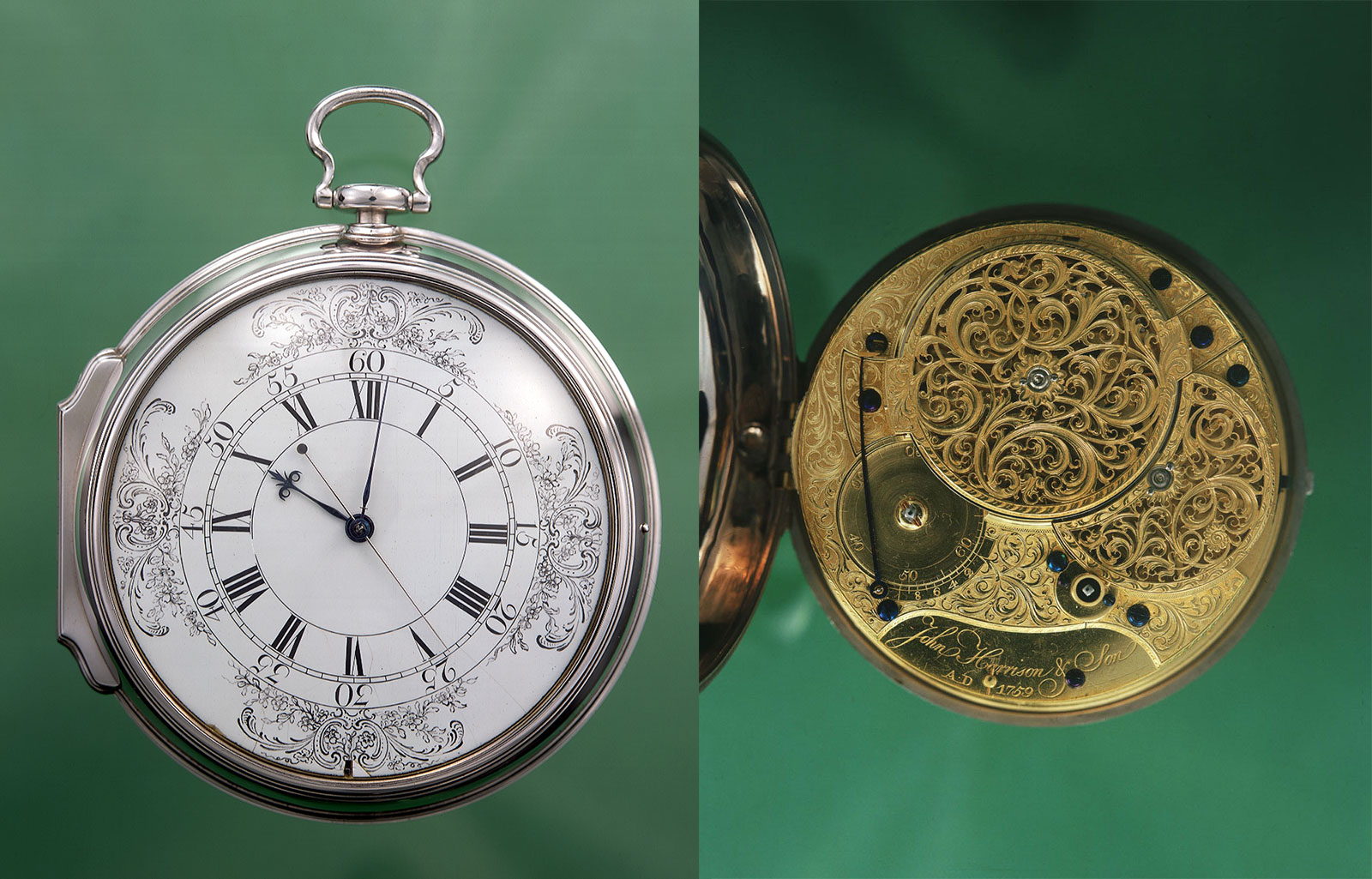
His first major effort, H1 (completed around 1735), was a large, intricate clock that used balancing mechanisms instead of a pendulum and performed promisingly on a trial voyage to Lisbon. H2 and H3 followed—each an attempt to solve remaining problems of friction, temperature compensation, and size. H3 alone occupied him for nearly two decades. Then, in a dramatic shift, Harrison produced H4 (completed in 1759), a much smaller watch-like instrument about five inches in diameter. It used a novel temperature-compensated balance spring and other innovations that allowed it to keep time with astonishing accuracy.
H4 was tested on a voyage to Jamaica in 1761–62. It lost only a few seconds over the entire trip—well within the prize requirements. Yet the Board of Longitude, dominated by astronomers who favored a rival method based on measuring the Moon’s position against the stars (the “lunar distance” method), hesitated. They demanded further trials and were reluctant to award the full prize to an outsider whose solution relied on mechanical craftsmanship rather than pure astronomy. Harrison felt obstructed and cheated. He appealed to King George III, who took a personal interest and had the watch tested at the palace. Under pressure, Parliament eventually voted Harrison substantial payments, though he never received the full official prize in the clean form originally envisioned. He died in 1776, recognized at last as the man who had solved the practical problem of longitude.
Longitude: The True Story of a Lone Genius Who Solved the Greatest Scientific Problem of His Time by Dava Sobel

John Harrison’s H4 chronometer which solved the longitude problem
SpyNavy
Garde la Foi, mes amis! Nous nous sommes les sauveurs de la République! Maintenant et Toujours!
(Keep the Faith, my friends! We are the saviors of the Republic! Now and Forever!)
LonePalm, le Républicain du verre cassé (The Broken Glass Republican)
Know your Nautical Terminology
We continue our new series of items highlighting with humanity’s early exploration of Earth’s oceans, lakes, and rivers and leading to the use of watercraft for transportation and commerce. Last month I introduced the devices that allowed the finding of latitude. This month we discuss longitude. Together they will allow practice of the Dark Art of Celestial Navigation.
By the 1600s, European nations were expanding global trade and naval power. The problem grew urgent. Scientists and inventors proposed various solutions. Galileo Galilei suggested using the eclipses of Jupiter’s moons as a celestial clock—visible from land and, in theory, from a steady ship. Christiaan Huygens developed improved pendulum clocks and hoped they might keep time at sea. Others studied the Earth’s magnetic variation (the difference between true north and magnetic north), hoping it formed a usable pattern. None of these approaches proved reliable enough for ordinary sailors in the rough conditions of an ocean voyage. Clocks lost or gained time with the motion of the ship, temperature changes, and humidity; celestial observations required clear skies and complex calculations.
The crisis came to a head in Britain after a series of disasters, most famously the wreck of a squadron under Admiral Sir Cloudesley Shovell on the Isles of Scilly in 1707. Hundreds of men drowned because navigators had misjudged their longitude. Public and parliamentary pressure mounted. In 1714 Parliament passed the Longitude Act, offering a prize of up to £20,000 (a fortune at the time—roughly equivalent to several million pounds today) for a practical method of determining longitude at sea to within half a degree (about 30 nautical miles at the equator). A Board of Longitude was established to judge submissions and award the money.
Into this arena stepped John Harrison, a self-taught carpenter and clockmaker from Lincolnshire. Harrison had never been to sea and had little formal education, yet he possessed extraordinary mechanical insight and an almost obsessive perfectionism. He understood that the key was a timekeeper that could remain accurate despite the rolling of a ship, changes in temperature, and the lack of a stable pendulum. Between the 1720s and 1760s he built a series of remarkable marine timekeepers.
His first major effort, H1 (completed around 1735), was a large, intricate clock that used balancing mechanisms instead of a pendulum and performed promisingly on a trial voyage to Lisbon. H2 and H3 followed—each an attempt to solve remaining problems of friction, temperature compensation, and size. H3 alone occupied him for nearly two decades. Then, in a dramatic shift, Harrison produced H4 (completed in 1759), a much smaller watch-like instrument about five inches in diameter. It used a novel temperature-compensated balance spring and other innovations that allowed it to keep time with astonishing accuracy.
H4 was tested on a voyage to Jamaica in 1761–62. It lost only a few seconds over the entire trip—well within the prize requirements. Yet the Board of Longitude, dominated by astronomers who favored a rival method based on measuring the Moon’s position against the stars (the “lunar distance” method), hesitated. They demanded further trials and were reluctant to award the full prize to an outsider whose solution relied on mechanical craftsmanship rather than pure astronomy. Harrison felt obstructed and cheated. He appealed to King George III, who took a personal interest and had the watch tested at the palace. Under pressure, Parliament eventually voted Harrison substantial payments, though he never received the full official prize in the clean form originally envisioned. He died in 1776, recognized at last as the man who had solved the practical problem of longitude.
Longitude: The True Story of a Lone Genius Who Solved the Greatest Scientific Problem of His Time by Dava Sobel
John Harrison’s H4 chronometer which solved the longitude problem
SpyNavy
Garde la Foi, mes amis! Nous nous sommes les sauveurs de la République! Maintenant et Toujours!
(Keep the Faith, my friends! We are the saviors of the Republic! Now and Forever!)
LonePalm, le Républicain du verre cassé (The Broken Glass Republican)