Posted on 04/09/2026 6:31:52 AM PDT by Diana in Wisconsin
The Newberry Library in Chicago is scouting transcribers to demystify its handwritten collection.
As Dan Kelly wrote in yesterday’s Chicago, the archive’s hunt for “living Rosetta stones” first kicked off in 2013, when the Newberry launched a campaign to transcribe all its Civil War letters in time for the sesquicentennial. This was such a success that the project has since gained momentum, expanding into all corners of the collection’s vast archive.
Volunteer crowdsourcing efforts began in earnest during the pandemic. Because, as Alison Hinderliter, the Newberry’s curator of modern manuscripts and archives has put it, “people were looking for something meaningful to do.”
But as digitization demand stays up, the trusty transcriber herself has become harder to source. And this seems a harbinger, given that cursive has been cut from the Common Core.
In 2022, historian Drew Gilpin Faust rang the bell for the dying art of handwriting, cautioning NPR that “we will become reliant on a small group of trained translators and experts” to keep the historical record.
All archives predating the printing press, Faust said, “including the documents and papers of our own families,” are in danger of going the way of the dodo bird if there are no people around who can read them. Which is why projects like the Newberry’s—and this similar call last year, from the National Archives—are more important than ever.
So what’s in the Newberry that’s so in need of saving? It’s honestly hard to say where to begin. The Chicago behemoth holds documents that date back to the 17th century.
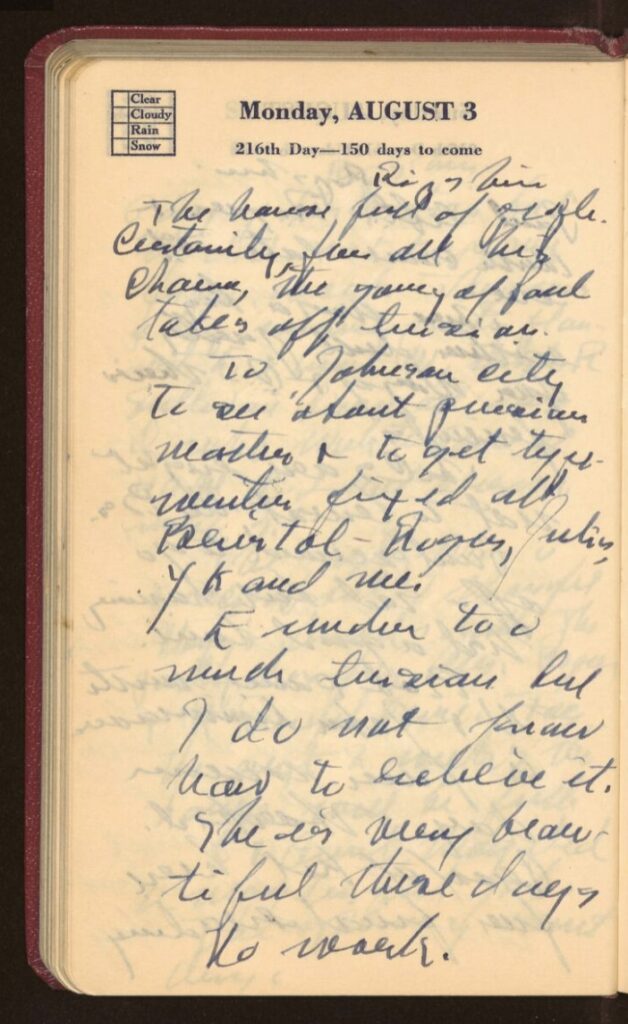
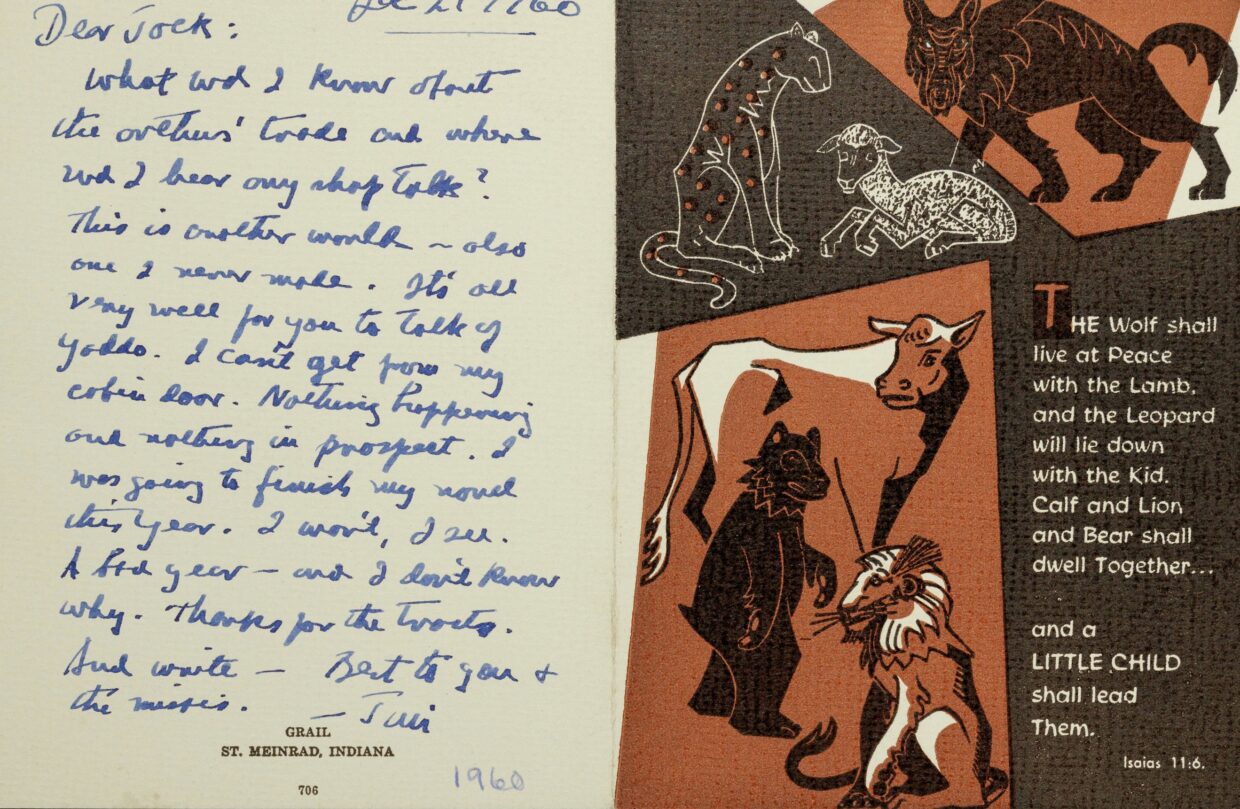
Others hold the key to early modernism. There’s correspondence to and from Chicago literary luminaries like Nelson Algren, Gwendolyn Brooks, Jack Conroy, and Sherwood Anderson.
Kelly noted discrepancies after a visit to the stacks. “Algren’s correspondences are at least semi-legible,” he said. “The same can’t be said for Sherwood Anderson’s.”
But you be the judge. (Posted below)
There’s also a trove of city-specific history. Like irreplaceable firsthand accounts of the Great Chicago Fire, and diary entries from attendees of the World’s Columbian Exposition of 1893.
But my personal favorite? A 17th century book of magic spells.
The Newberry currently has 146 registered transcriber volunteers, but thousands of others have come and gone over the last decade. If you’re willing to brush up on those loopy Qs, you too can join the bold at Newberry Transcribe.
It’s Chicago. It should say…”if you read.” That’s a BIG if!
This is part of why I think A.I. is bunk. If it can’t read these scanned letters, it isn’t intelligent at all.
To be fair it’s not just about reading cursive.....these are civil war era writings.
Not only were the writing implements crude 160 years ago, also the was people spoke and the words they used were far different from contemporary English.
If you read cursive??? If????? God do I feel old.
The Newberry has some really great collections and regularly has fascinating special exhibits.
Unfortunately, a common joke in my family when extended family or friends visit and the topic of sights to see comes up — my kids used to joke “Don’t ask him - he’ll try to get you to go to a library!”
Of course, I then tell my kids what a terrible mistake we made not taking that gypsy up on his offer to buy them for 2 dollars long ago...
The author is described as an “actor and writer living in Brooklyn.” She should focus on the former if she can’t get an editor to help with the latter. She refers to documents that predate the printing press, c. 1450, but goes on to say the oldest documents are from the 1600’s. The metaphorical reference to the dodo bird is input because the purported danger here is inability to interpret, not complete disappearance, I.e., absence due to extinction. The more apt comparison is to the Rosetta Stone, which she quotes someone else as referring to
That said, is the situation really so dire? I was trained to write in cursive and I can readily decipher the supposedly difficult example shown. But even if that weren’t the case, so many of the letters are readily recognized as looking just like their printed counterparts . This looks like a solution in search of a problem
Agreed.
How true.
Having transcribed several of the Jefferson Papers that were actually depositions taken for the Virginia legislature in 1775 or so, I can testify that there is some pretty difficult work involved.
The script is sometimes flowing and easy to make out but then some words or phrases lose the flowing cursive readability. There is also the problem of spelling. Old spelling is not the same as ours. Also, English was in fact English but some words are no longer in common usage.
Today we have one extremely important advantage over those trying to read the old stuff years ago. We can view it on the computer magnified many times to make the script clearer. If the document is not already digitized, it is easy to take a picture and read that on the computer.
For an old guy needing something to do, volunteering to transcribe the old cursive documents is in fact a worthwhile pursuit.
𝓒𝓾𝓻𝓼𝓲𝓿𝓮 𝓲𝓼 𝓽𝓸𝓸 𝓱𝓪𝓻𝓭 𝓽𝓸 𝓻𝓮𝓪𝓭.
I can read most of those words, but that it not the best cursive.
Cool work!!
Thomas Jefferson's Vanilla Ice Cream
When I started collecting ancestral letters, I was saved by the fact that 4th ggfather's handwriting was illegible, so collectors only valued it for the stamp. I searched for unstamped letters from that period from his town and recognized his handwriting.
Sounds like a job for AI
I think it’s the library of congress that has cursive volunteers also.
There is cursive as what people are taught and then there is the sloppy sometimes unintelligible cursive some folks handwriting becomes.
Then you have the history of spelling - in any language, and the older a document is the greater the chance is that many words were not spelled in the standard manner that was eventually adopted for them.
“the words they used were far different from contemporary English.”
The old folk in my Tennessee family still used thee and ye. They were from back in the hills though.
I’ll ‘see’ your Jefferson’s Ice Cream and ‘raise’ you George Washington’s Cherry Bounce!
Washington’s Cherry Bounce Recipe
10 to 11 pounds fresh sour or tart cherries, pitted
4 cups brandy
3 cups sugar, plus more as needed
2 cinnamon sticks, broken into pieces
2 to 3 cloves
1 (1/4-inch) piece fresh whole nutmeg
I have two tart cherry trees, so I make this every few years at Christmastime - but at a lesser quantity. ;)
https://www.almanac.com/recipe/george-washingtons-cherry-bounce
President Washington made a GREAT Eggnog, too!
https://www.almanac.com/george-washingtons-christmas-eggnog
No wonder he was our Best. President. Ever. EVER! :)
Disclaimer: Opinions posted on Free Republic are those of the individual posters and do not necessarily represent the opinion of Free Republic or its management. All materials posted herein are protected by copyright law and the exemption for fair use of copyrighted works.