Skip to comments.
Finally, an honest Abe
New York Post ^
| Nov. 25, 2012
| Harold Holzer
Posted on 02/11/2026 10:47:43 AM PST by T Ruth
Director Steven Spielberg, whom I introduced last week [in 2012] at Gettysburg at ceremonies marking the 149th anniversary of Abraham Lincoln’s greatest speech, said he was deeply humbled to be delivering an address on that history-making spot.
***
… Daniel Day-Lewis gives the definitive portrayal of our time, perhaps ever, of Honest Abe.
For people like me, who have spent their lives studying Abraham Lincoln, the film is chilling — as if he’s really come to life.
Day-Lewis does it by avoiding the traps most Lincoln actors fall into, the stoic, “Hall of Presidents”-esque stereotype that probably most Americans imagine.
There are no moving pictures of Lincoln, no recordings of his voice. But after his death, everyone was Lincoln’s best friend, and there are descriptions of everything from his accent to his gait.
The most important thing is the voice. Far from having a stentorian, Gregory Peck-like bass, Lincoln’s was a high, piercing tenor. Those who attended his speeches even described it as shrill and unpleasant for the first 10 minutes, until he got warmed up (or his endless stories managed to cow them into submission).
***
Few great people are appreciated in their time. And it’s good to remember that, no matter how right the decisions seem now, they were hard-fought then.
“I wanted — impossibly — to bring Lincoln back from his sleep of one-and-a-half centuries,” Steven Spielberg said at Gettysburg, “even if only for two-and-one-half hours, and even if only in a cinematic dream.”
***
Harold Holzer is one of the country’s leading authorities on Abraham Lincoln. ...
[At the end of the article Holzer gives thumbnail reviews of all prior Lincoln films, ranking them from worst to best, which Holzer considers to be Spielberg’s.]
(Excerpt) Read more at nypost.com ...
TOPICS: Arts/Photography; History; TV/Movies
KEYWORDS: abrahamlincoln; danieldaylewis; greatestpresident; haroldholzer; lincoln; newyorkpost; spielberg; stevenspielberg
Navigation: use the links below to view more comments.
first previous 1-20 ... 61-80, 81-100, 101-120 ... 541-548 next last
To: DiogenesLamp
A tax on imports is the exact same thing as a tax on exports! You don't get imports without exports to pay for them!
You can scream it from the rooftops but you are wrong. A tax on imports is not the same as a tax on exports. And what the hell do you mean that the North got their hands on all the money? The tariff raised federal revenues. The money didn’t go into northern pockets.
Your Lost Cause mania is way over the top. Way over.
81
posted on
02/17/2026 6:59:01 AM PST
by
Ditto
(Pu)
To: rxh4n1; DiogenesLamp; Pelham
You sure are a nasty puke No he’s just kicking your ass…maybe you should ask ditto or bruh for help
82
posted on
02/17/2026 7:13:39 AM PST
by
wardaddy
(If u hate Trump you’re stupid or clueless what’s going on)
To: DiogenesLamp
They had gotten themselves into such positions of power, partially because of natural advantages such as New York harbor being ideally situated, but to a greater extent because of their ability to create protectionist laws that benefitted the North at the expense of the South. Also Federal subsidies for Northern industries such as fishing, and mail delivery. Nothing in those laws, I repeat NOTHING, prevented southerners from going into shipping, insurance, the packet trade or any other venture they wanted. What convinced them not to invest in those things was the large profits that could be made in the cotton industry with far less risk.
It was the choice of Southern people with money to invest that money in land and slaves rather than ships or factories.
83
posted on
02/17/2026 7:15:24 AM PST
by
Ditto
To: wardaddy; rxh4n1; DiogenesLamp
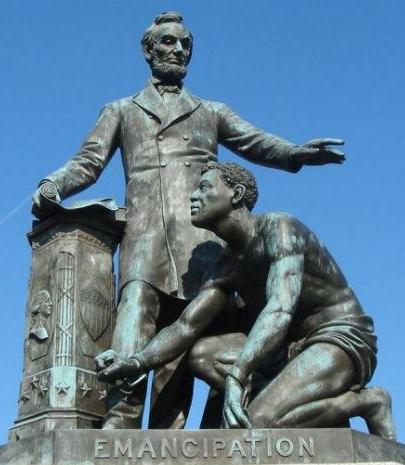
Let us recount the words of Frederick Douglass, who knew Lincoln very well, in a speech delivered at the unveiling of The Freedmen’s Monument in Lincoln Park, Washington, D.C. in 1876:
“It must be admitted, truth compels me to admit, even here in the presence of the monument we have erected to his memory, Abraham Lincoln was not, in the fullest sense of the word, either our man or our model. In his interests, in his associations, in his habits of thought, and in his prejudices, he was a white man.
He was preëminently the white man’s President, entirely devoted to the welfare of white men. He was ready and willing at any time during the first years of his administration to deny, postpone, and sacrifice the rights of humanity in the colored people to promote the welfare of the white people of this country.
In all his education and feeling he was an American of the Americans. He came into the Presidential chair upon one principle alone, namely, opposition to the extension of slavery. His arguments in furtherance of this policy had their motive and mainspring in his patriotic devotion to the interests of his own race. To protect, defend, and perpetuate slavery in the states where it existed Abraham Lincoln was not less ready than any other President to draw the sword of the nation.
He was ready to execute all the supposed guarantees of the United States Constitution in favor of the slave system anywhere inside the slave states. He was willing to pursue, recapture, and send back the fugitive slave to his master, and to suppress a slave rising for liberty, though his guilty master were already in arms against the Government.
The race to which we belong were not the special objects of his consideration. Knowing this, I concede to you, my white fellow-citizens, a preëminence in this worship at once full and supreme. First, midst, and last, you and yours were the objects of his deepest affection and his most earnest solicitude.
You are the children of Abraham Lincoln. We are at best only his step-children; children by adoption, children by forces of circumstances and necessity. To you it especially belongs to sound his praises, to preserve and perpetuate his memory, to multiply his statues, to hang his pictures high upon your walls, and commend his example, for to you he was a great and glorious friend and benefactor.
Instead of supplanting you at his altar, we would exhort you to build high his monuments; let them be of the most costly material, of the most cunning workmanship; let their forms be symmetrical, beautiful, and perfect; let their bases be upon solid rocks, and their summits lean against the unchanging blue, overhanging sky, and let them endure forever!
But while in the abundance of your wealth, and in the fullness of your just and patriotic devotion, you do all this, we entreat you to despise not the humble offering we this day unveil to view; for while Abraham Lincoln saved for you a country, he delivered us from a bondage, according to Jefferson, one hour of which was worse than ages of the oppression your fathers rose in rebellion to oppose.”
https://teachingamericanhistory.org/document/oration-in-memory-of-abraham-lincoln/
84
posted on
02/17/2026 11:59:26 AM PST
by
Pelham
(President Eisenhower. Operation Wetback 1953-54)
To: Ditto
You can scream it from the rooftops but you are wrong. A tax on imports is not the same as a tax on exports. You are wishful thinking. You know very well it is exactly the same value being taxed. You are desperate to not believe who was creating the money, and who was taking the money, because it shows the people you thought were heroes motivated by noble ideas, to be just nasty corrupt thieves, motivated by greed and power.
You don't want that to be true, but the evidence shows it was.
They didn't fight the war for slaves. They didn't fight the war about slaves. They fought the war because the South was cutting them out of 700 million dollars per year.
That war was fought for the same reasons all wars are fought. Resources and money.
Here is what Charles Dickens, a staunch abolitionist, had to say on the matter.
March 16, 1862
"I take the facts of the American quarrel to stand thus. Slavery has in reality nothing on earth to do with it, in any kind of association with any generous or chivalrous sentiment on the part of the North. But the North having gradually got to itself the making of the laws and the settlement of the tariffs, and having taxed the South most abominably for its own advantage, began to see, as the country grew, that unless it advocated the laying down of a geographical line beyond which slavery should not extend, the South would necessarily recover it's old political power, and be able to help itself a little in the adjustment of the commercial affairs. Every reasonable creature may know, if willing, that the North hates the Negro, and until it was convenient to make a pretense that sympathy with him was the cause of the War, it hated the Abolitionists and derided them up hill and down dale. For the rest, there's not a pins difference between the two parties. They will both rant and lie and fight until they come to a compromise; and the slave may be thrown into that compromise or thrown out, just as it happens."
Isn't that interesting? He saying the exact same thing in 1862, that I am saying now!
85
posted on
02/17/2026 1:40:26 PM PST
by
DiogenesLamp
("of parents owing allegiance to no other sovereignty.")
To: Ditto
Nothing in those laws, I repeat NOTHING, prevented southerners from going into shipping, insurance, the packet trade or any other venture they wanted. You clearly haven't studied this issue. The Federal government provided subsidies to Northern Shipping companies, who also had what would be considered monopolies in modern times. You do know how monopolies work, don't you?
The South used to have several shipyards that built ships, but over time they all closed down because they could not compete with the Northern shipyards, which the government favored. Government subsidies gives any company that receives them a financial advantage over those who don't.
What convinced them not to invest in those things was the large profits that could be made in the cotton industry with far less risk.
You need to read more about what happened. After South Carolina seceded, Charleston became a boom town with every hotel booked, every dock hired, and a massive inward flood of money and people from the North began.
There were projects to build more warehouses, hotels, homes, docks, and everything else. I read a newspaper account of it from the Charleston Mercury, and people were amazed and flabbergasted at all the capital investment pouring into the city.
And of course New York didn't like it.
86
posted on
02/17/2026 1:51:20 PM PST
by
DiogenesLamp
("of parents owing allegiance to no other sovereignty.")
To: Pelham
Frederick Douglas was a very talented wordsmith.
I think his understanding of the situation was exactly correct.
87
posted on
02/17/2026 1:52:48 PM PST
by
DiogenesLamp
("of parents owing allegiance to no other sovereignty.")
To: Pelham
Let us recount the words of Frederick Douglass, who knew Lincoln very well, in a speech delivered at the unveiling of The Freedmen’s Monument in Lincoln Park, Washington, D.C. in 1876: People should read the entire speech. Douglass brilliantly uses these critical words of Lincoln at the beginning to offset and contrast with his praise of Lincoln later in the speech. For example:
I have said that President Lincoln was a white man, and shared the prejudices common to his countrymen towards the colored race. Looking back to his times and to the condition of his country, we are compelled to admit that this unfriendly feeling on his part may be safely set down as one element of his wonderful success in organizing the loyal American people for the tremendous conflict before them, and bringing them safely through that conflict. His great mission was to accomplish two things: first, to save his country from dismemberment and ruin; and, second, to free his country from the great crime of slavery. To do one or the other, or both, he must have the earnest sympathy and the powerful coöperation of his loyal fellow-countrymen. Without this primary and essential condition to success his efforts must have been vain and utterly fruitless. Had he put the abolition of slavery before the salvation of the Union, he would have inevitably driven from him a powerful class of the American people and rendered resistance to rebellion impossible. Viewed from the genuine abolition ground, Mr. Lincoln seemed tardy, cold, dull, and indifferent; but measuring him by the sentiment of his country, a sentiment he was bound as a statesman to consult, he was swift, zealous, radical, and determined....
Had Abraham Lincoln died from any of the numerous ills to which flesh is heir; had he reached that good old age of which his vigorous constitution and his temperate habits gave promise; had he been permitted to see the end of his great work; had the solemn curtain of death come down but gradually—we should still have been smitten with a heavy grief, and treasured his name lovingly. But dying as he did die, by the red hand of violence, killed, assassinated, taken off without warning, not because of personal hate—for no man who knew Abraham Lincoln could hate him—but because of his fidelity to union and liberty, he is doubly dear to us, and his memory will be precious forever.
Douglass gave this speech at the unveiling of the Freedmans' Memorial in Washington DC, 1876.
88
posted on
02/17/2026 2:35:10 PM PST
by
Antoninus
(Republicans are all honorable men.)
To: DiogenesLamp; wardaddy
“I think his understanding of the situation was exactly correct.”
That’s true. The Lincoln of popular history and the actual one have some significant differences. Douglass had more of an interest in getting the history right than most did.
Douglass had met with Lincoln on three occasions at the White House and he harbored no illusions about Lincoln’s goal.
Our pop history version is that Lincoln waged the Civil War for the purpose of freeing the slaves. But Lincoln didn’t say that, and he repeatedly said that his war was “to Preserve the Union”.
He made this explicitly clear in his letter to Horace Greeley:
“As to the policy I “seem to be pursuing” as you say, I have not meant to leave any one in doubt.
I would save the Union. I would save it the shortest way under the Constitution. The sooner the national authority can be restored; the nearer the Union will be “the Union as it was.” If there be those who would not save the Union, unless they could at the same time save slavery, I do not agree with them. If there be those who would not save the Union unless they could at the same time destroy slavery, I do not agree with them. My paramount object in this struggle is to save the Union, and is not either to save or to destroy slavery.
“If I could save the Union without freeing any slave I would do it, and if I could save it by freeing all the slaves I would do it; and if I could save it by freeing some and leaving others alone I would also do that. What I do about slavery, and the colored race, I do because I believe it helps to save the Union; and what I forbear, I forbear because I do not believe it would help to save the Union. I shall do less whenever I shall believe what I am doing hurts the cause, and I shall do more whenever I shall believe doing more will help the cause. I shall try to correct errors when shown to be errors; and I shall adopt new views so fast as they shall appear to be true views.”
https://www.abrahamlincolnonline.org/lincoln/speeches/greeley.htm
89
posted on
02/17/2026 2:36:25 PM PST
by
Pelham
(President Eisenhower. Operation Wetback 1953-54)
To: Antoninus
Lincoln had a significant fan club praising him. This one was written by a foreign correspondent for Horace Greeley’s GOP newspaper, who here is listed as the Corresponding Secretary for Germany:
Sir:
We congratulate the American people upon your re-election by a large majority. If resistance to the Slave Power was the reserved watchword of your first election, the triumphant war cry of your re-election is Death to Slavery.
From the commencement of the titanic American strife the workingmen of Europe felt instinctively that the star-spangled banner carried the destiny of their class. The contest for the territories which opened the dire epopee, was it not to decide whether the virgin soil of immense tracts should be wedded to the labor of the emigrant or prostituted by the tramp of the slave driver?
When an oligarchy of 300,000 slaveholders dared to inscribe, for the first time in the annals of the world, “slavery” on the banner of Armed Revolt, when on the very spots where hardly a century ago the idea of one great Democratic Republic had first sprung up, whence the first Declaration of the Rights of Man was issued, and the first impulse given to the European revolution of the eighteenth century; when on those very spots counterrevolution, with systematic thoroughness, gloried in rescinding “the ideas entertained at the time of the formation of the old constitution”, and maintained slavery to be “a beneficent institution”, indeed, the old solution of the great problem of “the relation of capital to labor”, and cynically proclaimed property in man “the cornerstone of the new edifice” — then the working classes of Europe understood at once, even before the fanatic partisanship of the upper classes for the Confederate gentry had given its dismal warning, that the slaveholders’ rebellion was to sound the tocsin for a general holy crusade of property against labor, and that for the men of labor, with their hopes for the future, even their past conquests were at stake in that tremendous conflict on the other side of the Atlantic. Everywhere they bore therefore patiently the hardships imposed upon them by the cotton crisis, opposed enthusiastically the proslavery intervention of their betters — and, from most parts of Europe, contributed their quota of blood to the good cause.
While the workingmen, the true political powers of the North, allowed slavery to defile their own republic, while before the Negro, mastered and sold without his concurrence, they boasted it the highest prerogative of the white-skinned laborer to sell himself and choose his own master, they were unable to attain the true freedom of labor, or to support their European brethren in their struggle for emancipation; but this barrier to progress has been swept off by the red sea of civil war.
The workingmen of Europe feel sure that, as the American War of Independence initiated a new era of ascendancy for the middle class, so the American Antislavery War will do for the working classes. They consider it an earnest of the epoch to come that it fell to the lot of Abraham Lincoln, the single-minded son of the working class, to lead his country through the matchless struggle for the rescue of an enchained race and the reconstruction of a social world. [B]
Signed on behalf of the International Workingmen’s Association, the Central Council:
Longmaid, Worley, Whitlock, Fox, Blackmore, Hartwell, Pidgeon, Lucraft, Weston, Dell, Nieass, Shaw, Lake, Buckley, Osbourne, Howell, Carter, Wheeler, Stainsby, Morgan, Grossmith, Dick, Denoual, Jourdain, Morrissot, Leroux, Bordage, Bocquet, Talandier, Dupont, L.Wolff, Aldovrandi, Lama, Solustri, Nusperli, Eccarius, Wolff, Lessner, Pfander, Lochner, Kaub, Bolleter, Rybczinski, Hansen, Schantzenbach, Smales, Cornelius, Petersen, Otto, Bagnagatti, Setacci;
George Odger, President of the Council; P.V. Lubez, Corresponding Secretary for France; Karl Marx, Corresponding Secretary for Germany; G.P. Fontana, Corresponding Secretary for Italy; J.E. Holtorp, Corresponding Secretary for Poland; H.F. Jung, Corresponding Secretary for Switzerland; William R. Cremer, Honorary General Secretary.
https://www.marxists.org/archive/marx/iwma/documents/1864/lincoln-letter.htm
90
posted on
02/17/2026 2:50:03 PM PST
by
Pelham
(President Eisenhower. Operation Wetback 1953-54)
To: DiogenesLamp; Ditto; BroJoeK
I keep telling you to talk to an economist or a reputable historian about this so they can tell you where you are wrong.
I notice that you posted another picture that doesn’t say what you think it does (Post #53). It shows that cotton growing was possible in California and in Arizona. Compare it to maps of where slaves and slaveowners were and you’ll see that areas that didn’t grow cotton had more than a few slaveowners and enslaved people.
To be sure, some of these areas were tobacco and sugar growing areas. But counties in Florida, Missouri, and Arkansas that didn’t grow cotton also had slaves and slaveowning families. So did counties in Georgia, Alabama, Mississippi, Louisiana, and North Carolina outside the main cotton-growing areas. So did counties in Virginia that grew wheat (which could also be grown in Kansas, Nebraska, and Oklahoma). Once slavery was legal in a state and enough supporters of slavery lived there, uses would be found for enslaved people.
91
posted on
02/17/2026 5:09:54 PM PST
by
x
To: wardaddy
Sure he was, with his AI cut and paste and personal insults.
92
posted on
02/17/2026 11:11:18 PM PST
by
rxh4n1
To: x
I keep telling you to talk to an economist or a reputable historian about this so they can tell you where you are wrong. I have no faith in "experts." Credentials do not impress me, and on certain politically charged topics (such as this), I don't trust them to be honest or objective.
Too many people want to steer the evidence to support what they want to be true, and won't even consider evidence that undermines what is the popular view.
I notice that you posted another picture that doesn’t say what you think it does (Post #53). It shows that cotton growing was possible in California and in Arizona.
It is possible now. It certainly was not possible in 1860. Anything from West Texas to parts further west is grown using aquifers and modern pump and irrigation systems that didn't exist in the 1860s.
Now I have read that people successfully grew cotton in Arizona next to a river in the 1880s, but it was a small scale experiment, and doesn't even address the issue of how you would ship cotton from Arizona to markets back East or in Europe.
But what the map does show is that other than below Oklahoma, you couldn't grow cotton at all in the territories, so all the worry about "expansion" of slavery was just nonsense.
Last year I came across a video of Zachary Taylor. It talked about his life, and one of the things mentioned is that even though he was a follower of Henry Clay, his political allies were frustrated that he was not getting on the "expansion of slavery" band wagon.
He was not concerned about it because as a Military officer, he had been all through the regions in question, and he knew it was impossible to grow cotton or any other crop in those areas, and therefore knew it was completely infeasible to send slaves there.
Once slavery was legal in a state and enough supporters of slavery lived there, uses would be found for enslaved people.
This is likely true, but as with the Northern states which gradually realized their value wasn't worth their cost, it is unlikely that any of this slave presence would have been to any significant degree.
Additionally, while looking at this issue some time ago, I discovered a major portion of the opposition to slavery was not actual opposition to slavery, but was instead opposition to any black people being in white communities.
It was entirely racism based, not morality based.
They hated black people and did not want any of them around. That's the ugly little truth about Northern opposition to slavery and "expansion" of slavery.
1 black person in a white community was seen as too many.
93
posted on
02/18/2026 6:53:03 AM PST
by
DiogenesLamp
("of parents owing allegiance to no other sovereignty.")
To: Pelham
Lincoln had a significant fan club praising him. This one was written by a foreign correspondent for Horace Greeley’s GOP newspaper, who here is listed as the Corresponding Secretary for Germany....
You can't damn someone based on the awful people who claim to be his admirers. It's the same as when the modern Left attempts to damn Trump by saying that there are some whacked-out neo-Nazis who claim to admire him.
94
posted on
02/18/2026 8:47:05 AM PST
by
Antoninus
(Republicans are all honorable men.)
To: Antoninus; wardaddy
Well you apparently assume that letter is damning. In reality it’s part of the GOP’s early association with radical politics.
Horace Greeley’s New York Tribune was largest circulation newspaper in the country as well as the house organ for the Whig and GOP parties, and Karl Marx would be one of its main writers for over a decade.
Greeley’s managing editor for the Tribune was Charles Dana, who became buddies with Karl Marx when Dana was in Europe for the Tribune cheering on the 1848 revolutionaries. The same year that Marx published his pamphlet which we know as the Communist Manifesto. This wasn’t a secret to Dana, Greeley, or anyone else.
“Well”, you might object, “Lincoln wouldn’t have known about that!”. Except that Lincoln owned a ‘48er German language newspaper, the Illinois Staats-Anzeiger, based in Springfield Illinois.
After the 1848 Revolutions failed the revolutionaries scattered around the world and in America they played a big role in founding the GOP and in gaining Lincoln the 1860 nomination. The Illinois Staats-Anzeiger was part of that which is why Lincoln bought it.
https://drloihjournal.blogspot.com/2020/08/abraham-lincoln-and-german-journalist-henry-villard.html
95
posted on
02/18/2026 12:45:58 PM PST
by
Pelham
(President Eisenhower. Operation Wetback 1953-54)
To: Pelham
As many times as you cats clip and post those two paragraphs from Lincoln’s Letter to Greeley, you always leave off the final, closing sentence. In the interest of historical accuracy I include it below:
“I have here stated my purpose according to my view of official duty; and I intend no modification of my oft-expressed personal wish that all men every where could be free. Yours,
A. Lincoln.”
96
posted on
02/18/2026 1:48:09 PM PST
by
HandyDandy
(“Borders, language and culture.” Michael Savage)
To: DiogenesLamp
You clearly haven't studied this issue. The Federal government provided subsidies to Northern Shipping companies, who also had what would be considered monopolies in modern times. You do know how monopolies work, don't you? So many myths, so little time.
Between 1848 and 1858, Congress gave subsidies to 3 shipping lines. In 1858 they cut all subsidies for shipping.
Because many ships historically have been capable of serving both commercial and naval or military purposes, the government always has had an interest in the ocean-shipping business—between 1848 and 1858, for example, the federal government paid three shipping lines more than $11 million in subsidies1—but the government’s actions in relation to the building and operation of merchant vessels remained ad hoc and transitory prior to World War I.
Source: https://www.independent.org/article/2003/11/01/how-the-federal-government-got-into-the-ocean-shipping-business/
Yes, I know how monopolies work. The biggest lesson is that they tend to make a lot of money. But here is a story about the most prominent shipping line of the day the lobbied for subsidies. They got the subsidies based on the fact that they carried the trans Atlantic mail. They got subsidies between 1853 and 1857, and went bankrupt. You get that? They went bankrupt! Some monopoly. Read all about it here: . https://www.cnrs-scrn.org/northern_mariner/vol05/tnm_5_1_19-32.pdfG
The South used to have several shipyards that built ships, but over time they all closed down because they could not compete with the Northern shipyards, which the government favored. Government subsidies gives any company that receives them a financial advantage over those who don't.
No they didn’t all close down. I don’t know of any that closed down. Newport Va was probably the biggest shipyard in the nation then as it is now. Charleston had shipyards that mostly built shallow draft coastal ships as opposed to blue water ocean going vessels. With Charleston, on of the biggest complaints was the use of slave labor which drove down the pay for skilled ship builders who headed to northern ship yards for more money.
97
posted on
02/19/2026 8:56:09 AM PST
by
Ditto
To: Ditto
I am going to have to take a closer look at the information you have provided, but I have to say this is the most cognizant and rational response I have yet seen from you.
You are starting to make arguments in what I consider to be a rational manner. You are looking for sources and evidence, which is exactly how people should argue.
But just off the top of my head, subsidizing Northern shipping for 10 years is a pretty good benefit to Northern shipping, is it not?
Also, Charleston did build deep water vessels. "The Horizon" was built there in the 1790s. I happen to know because I researched what could be learned of that vessel in regards to the topic of "natural born citizen".
98
posted on
02/19/2026 9:04:28 AM PST
by
DiogenesLamp
("of parents owing allegiance to no other sovereignty.")
To: Pelham
Some years ago, I realized the 1860 Republicans were the liberals. Since I made that realization, more and more evidence has come out to support that view.
You have just provided us with some more evidence of it.
99
posted on
02/19/2026 9:07:33 AM PST
by
DiogenesLamp
("of parents owing allegiance to no other sovereignty.")
To: DiogenesLamp
But just off the top of my head, subsidizing Northern shipping for 10 years is a pretty good benefit to Northern shipping, is it not? They didn’t subsidize Northern shipping as you have been claiming. They subsidized 3 shipping companies who either carried mail or were considered to be important for national defense. And they didn’t create any monopolies as you claimed.
100
posted on
02/19/2026 9:29:39 AM PST
by
Ditto
Navigation: use the links below to view more comments.
first previous 1-20 ... 61-80, 81-100, 101-120 ... 541-548 next last
Disclaimer:
Opinions posted on Free Republic are those of the individual
posters and do not necessarily represent the opinion of Free Republic or its
management. All materials posted herein are protected by copyright law and the
exemption for fair use of copyrighted works.
FreeRepublic.com is powered by software copyright 2000-2008 John Robinson