|
Posted on 07/09/2004 12:00:06 AM PDT by snippy_about_it
|
|
 are acknowledged, affirmed and commemorated.
|

| Our Mission: The FReeper Foxhole is dedicated to Veterans of our Nation's military forces and to others who are affected in their relationships with Veterans. In the FReeper Foxhole, Veterans or their family members should feel free to address their specific circumstances or whatever issues concern them in an atmosphere of peace, understanding, brotherhood and support. The FReeper Foxhole hopes to share with it's readers an open forum where we can learn about and discuss military history, military news and other topics of concern or interest to our readers be they Veteran's, Current Duty or anyone interested in what we have to offer. If the Foxhole makes someone appreciate, even a little, what others have sacrificed for us, then it has accomplished one of it's missions. We hope the Foxhole in some small way helps us to remember and honor those who came before us.
|
 OVERVIEW More than 1,250,000 tons of shipping was sunk or damaged in the last five months of World War II when Twenty-first Bomber Command executed an aerial mining campaign against Japan known as Operation STARVATION. Despite this outstanding success, the decision to commit the still unproven B-29 to minelaying was a close one that rose to the highest levels of the Services. The decision to conduct Operation STARVATION was made not only because mining would lead to a Japanese surrender without the need for a costly invasion of the home islands, but also with an eye towards post-war roles and missions for the Air Force. Once the decision was taken, General Curtis LeMay and his Twenty-first Bomber Command threw themselves wholeheartedly into the mission. On January 23, 1945, LeMay issued a general directive to the 313th Bombardment Wing to prepare for minelaying operations and on March 27, the 313th flew the first of over 50 mining missions. Working together on the remote island of Tinian, Air Force and Navy personnel turned a mission that began as an inter-service rivalry into one of the best examples of inter-service cooperation of the Pacific War. This essay will examine the decision making process that led to the use of the B-29 for aerial mining, the planning and execution of Operation Starvation, and the results of the mining campaign.  North Field, Tinian. Worlds largest airdrome in 1945 - four 8500 ft runways, 13 taxiways and 230 hardstands (created by the seabee's in 6 months!) Home of the 313th Wing. The decision to conduct a mining campaign as part of the overall strategy to defeat Japan was influenced by the principals’ views on the issue of invading the Japanese home islands. The basic policy was to defeat Germany first and to prosecute the war against Japan with resources that could be spared from that effort. By mid 1944, the war against Germany had advanced to the point where Allied leaders could turn their attention to how resources could be best be employed to defeat Japan at the earliest possible time. In July 1944, President Roosevelt traveled to Hawaii to meet with General Douglas MacArthur and Admiral Chester Nimitz, his senior field commanders in the Pacific. MacArthur and Nimitz were substantially in agreement. In their view, Japan could be defeated by blockade and bombardment, without the need for a costly invasion of the Japanese home islands. No notes were taken, but Roosevelt’s Chief of Staff, Admiral Leahy, summed up the conference as follows: “The agreement on fundamental strategy to be employed in defeating Japan and the President’s familiarity with the situation acquired at this conference were to be of great value in preventing an unnecessary invasion of Japan which the Joint Chiefs of Staff and the War Department were advocating, regardless of the loss of life that would result from an attack on Japan’s ground forces in their own country.” The members of the Joint Chiefs of Staff were divided on the issue of invasion of the Japanese home islands. Chief of Naval Operations, Admiral King, and Army Air Forces Chief of Staff, General Arnold were of the opinion that blockade and bombardment were war-winning strategies on their own. The principal advocate of invasion was the Army Chief of Staff, General Marshal, who saw invasion as inevitable. His considerable influence on the Joint Chiefs of Staff was reflected in the July 1944 statement of the overall objectives of the war against Japan: “first, to force the unconditional surrender of Japan by first lowering Japanese ability and will to resist by establishing sea and air blockades, conducting intensive air bombardment and destroying Japanese air and naval strength; and second, invading and seizing objectives in the industrial heart of Japan.” The vagueness of the JCS position left the services to pursue their own approaches to the defeat of Japan. The resources that could be applied limited these approaches. The Army wanted to build up resources for the invasion of Japan, the Army Air Force wanted to bombard Japan using B-29 bombers operating from newly captured bases in the Marianas, and the Navy wanted to tighten the blockade by a combination of carrier strikes, submarine warfare, and a mining campaign.  At the beginning of World War II, neither the Navy nor the Army Air Force viewed mine warfare as an important part of an overall strategy and as a result, the development of mines and mine warfare planning had languished. This indifference was overcome through the efforts of a small cadre of mining experts on Admiral King’s staff in Washington and by the influence of the British who had employed mine warfare as an integral part of their strategy to defeat Germany. As an island nation dependent on outside sources of oil, raw materials, and foodstuff, and which had to supply far flung military outposts, Japan was uniquely vulnerable to mine warfare. As the war against Japan progressed, mines were increasingly used as a part of amphibious operations and as part of a campaign against Japanese shipping. By 1944, Navy efforts to develop and stockpile mines were beginning to bear fruit, but the Navy lacked the means to deliver large numbers of mines in Japanese waters. The Navy recognized the superiority of heavy land-based bombers over carrier or amphibious aircraft for a large-scale mining campaign and pressed for the use of Twentieth Air Force B-29s for mining. On July 6, 1944, the advanced echelon of the Twenty-first Bomber Command passed through Hawaii enroute to Saipan. Nimitz’s staff briefed the group on the idea of a mining campaign against Japanese shipping, with the Twenty-first Bomber Command furnishing the B-29’s and crews and CINCPOA the mines and technicians. Nimitz’s proposal was passed on to Arnold’s staff in Washington. In September 1944, General Arnold, in his capacity as Commander of the newly formed Twentieth Air Force, asked the Committee of Operations Analysts (COA) for recommendations on target priorities for the bombardment campaign which was about to be launched against Japan. The COA was a group of high-ranking military and civilian officials representing different services and civilian war agencies and a few distinguished consultants. Its purpose was to study targeting for strategic bombardment. Nimitz’s proposal to use B-29s for a large-scale mining campaign was passed to the COA for consideration. The COA reported to back to General Arnold on October 10, 1944. Its recommendations were based on two alternative premises. Premise A was that Japan’s defeat was to be accomplished primarily through blockade and strategic bombardment. Premise B was Japan’s defeat was to be accomplished through an invasion to be launched in late 1945 or early 1946. The COA’s recommended targeting priorities under premise A (combined aerial and naval blockade, strategic bombardment) were an general anti-shipping campaign (including a comprehensive mining campaign), attacking the Japanese aircraft industry and urban industrial areas. Under premise B (strategic bombardment, combined aerial and naval blockade, invasion of the industrial heart of Japan) the targeting priority was reversed. Attacking the Japanese aircraft industry was the first priority, followed by attacking urban industrial areas and intensifying the attack on shipping “by all available methods, including mining by Very Long Range aircraft where operationally feasible.”  In a special sub-committee report on shipping, the COA outlined a mining campaign that would require thousands of B-29 sorties. Despite the fact that Arnold favored premise A (blockade and bombardment without an invasion), the COA report was greeted with less than enthusiasm. The COA’s mining campaign would divert a sizable proportion of B-29 sorties to mining just as the Army Air Force was trying to prove the effectiveness of the aircraft as a strategic bomber. Targeting priorities for premise B (aircraft industry, urban industrial areas and blockade) were more in line with Army Air Force experience in Europe and the doctrine of strategic bombardment. Premise B was also in line with the current JCS policy, which included invasion. Army Assistant Chief of Staff for Plans, Brigadier General Norstad, characterized the COA’s mining campaign proposal as “another hope for a relatively painless method of winning the war.” - a slow process that might require two years. Arnold accepted the idea of using the B-29 in a mining campaign but decided to adopt the targeting priorities of Premise B. Nimitz continued to press for an early start to the mining campaign asking for 150 sorties per month beginning in January 1945. As Arnold’s and King’s staffs considered various proposals, the commander of the Twenty-first Bomber Command, General Haywood Hansell, Jr., was having a very difficult time in the Marianas battling the weather and the teething pains of the new B-29. Arnold, aware of the difficulties, promised Nimitz that he would begin the mining campaign when Twenty-first Bomber Command’s forces were larger and when the weather was less suitable for daylight precision attacks. In committing the Army Air Force to the mining campaign, Arnold was not purely altruistic. All principals, with the exception of Marshal, were of the opinion that sea and air power could force the unconditional surrender of Japan without an invasion of the home islands. Mining was seen as an important part of the naval blockade. If the Army Air Force did not cooperate with the Navy the service might allow “a possible major usage of long-range aircraft to develop, by default, into a matter of special interest to the Navy.” On December 22, Arnold directed Hansell to initiate planning for mining operations beginning on April 1, 1945. Hansell protested; but the Army Air Force had committed the B-29 to a mining campaign, now known as Operation STARVATION.  The main objectives of Operation STARVATION were to prevent the importation of raw materials and food into Japan, prevent the supply and movement of military forces, and disrupt shipping in the Inland Sea. Forty-six missions were directed against Japanese home waters with the intention of blockading the Shimonoseki Straits, through which 80 percent of the Japanese merchant fleet passed; blockading the industrial and commercial ports of Tokyo and Nagoya in the Inland Sea; and interdicting shipping between Korea and Japan by mining Korean ports and ports on the northern coast of Japan. Operation STARVATION was a strategic campaign but the timing and target of the first mining mission also served the tactical objective of support for the invasion of Okinawa, scheduled to begin on April 1, 1945. Closing the Shimonoseki Straits would prevent supplies and reinforcements being sent from the embarkation ports of Mutsure and Hiroshima and prevent Japanese naval forces from being used in the defense of Okinawa. In mid-January, 1945, General Hansell was relieved by General Curtis LeMay as commander of the Twenty-first Bomber Command. General Arnold was not pleased with the results of daylight high altitude precision attacks by B-29s against the Japanese aircraft industry. Poor weather and high winds at altitude made these attacks problematic. General LeMay refocused the Command’s efforts on night, low-altitude area attacks on Japanese cities using incendiary bombs. General LeMay was more enthusiastic about using the B-29 for mining than his predecessor, perhaps because he believed night, low-altitude mining missions played to the strength of the B-29 and offered the opportunity to achieve an operational success with the troubled bomber. General LeMay threw his energy into Operation STARVATION, increasing the number of mines to be dropped each month and using an entire Wing instead of the Group as Hansell had planned. To deliver the mines, General LeMay chose the 313th Wing, newly arrived at Tinian, whose B-29s were equipped with the latest AN-APQ-13, Radar Navigation, and Bombing set.  The 313th Wing was commanded by Brigadier General John H. Davies and consisted of the 6th, 9th, 504th, and 505th Bomb Groups, each equipped with approximately 40 B-29s. On January 23, 1945, Twenty-first Bomber Command issued a general directive to the 313th Bombardment Wing to prepare for minelaying operations. Three naval officers were assigned to the Wing for mine warfare liaison purposes. The 313th Wing carried out an extensive experimental program to determine mine-laying tactics for the B-29 aircraft, making maximum use of the radar equipment consistent with the previous training of the crew radar operators. Radar-navigator specialists taught these tactics to all crews, and additional instruction in mine warfare was undertaken. Eight A-6 “supersonic” bombing trainers were set up in a Quonset on the line. Each Group was allotted two hours per day to practice radar-mining procedures. Ten men were trained during each period with particular attention to target identification. A series of practice flights were completed in which two crews flew in each airplane. Each crew made one dry run, two runs dropping 100 pound water filled practice bombs (with a mine adapter fixed to the nose of the bomb to simulate the trajectory of a mine), and one mine release (1000 pound MK 26 Mine). All ordnance and armament personnel in the Wing were also given training in mine handling and loading prior to the first mining mission.  A 1000-pound MK 26 mine is dropped during a practice mission. The Navy established Mine Assembly Depot #4, consisting of two officers and forty enlisted men, on Tinian and began to stockpile mines for Operation STARVATION. Three Mine Assembly Officers were brought in from Eniwetec and a Mine Modification unit of five officers and forty enlisted men was brought in from Pearl Harbor.  On March 25, Twenty-first Bomber Command issued the Field Order for Mining Mission No. 1 to the 313th Wing, which specified the area of the attack, the date (March 27), the approximate number of sorties and density of the minefield, the preparation of the mines, and general limitations on the altitudes of the attack. Tactical planning was left to the 313th Wing. Approaches and mine-laying runs were influenced by the presence of enemy antiaircraft defenses, heights of mountains surrounding the area under attack, location of good initial points, and the availability of radar aiming points for individual aircraft. All mine-laying runs were planned as nighttime radar runs with the possibility of visual runs on the targets should they be visible. Two methods were used to establish aircraft on the mine line. Aircraft would either position the aircraft relative to a radar significant point of land ahead of the aircraft and start laying mines at specified range; or, pass over the radar significant point of land and drop at a specified time based on the ground speed of the aircraft. In both cases the drift of the mine after release, caused by wind, was calculated and taken into account. Release altitude could vary from several hundred to 30,000 feet. Upon receipt of the field order, naval mining officers designed and plotted the minefield based on the depths of water, shipping routes, and grid densities specified by Twenty-first Bomber Command. The wing radar navigator met with wing operations to decide upon Initial Points (IPs) clear of antiaircraft defenses, with definite radar points and on a bearing suitable for mining axis of attack. Next, the wing radar navigator made an overlay for each run – one for each aircraft.  Multiple radar aimpoints for each run, slant ranges, intervals for drops and distances were marked on flimseys, which could be laid over the radar scope. The wing radar navigator attended general and special briefings within the Groups, clarifying each navigator’s run and making suggestions. Upon completion of the mission, navigators turned in their plots, which now contained the crew’s speculation of where they dropped their mines. Wing radar personnel plotted the drops as determined by radarscope pictures. Records of individual runs contained the briefed run, crew’s estimated run, and the run as determined by radar pictures taken on the run. This data was compiled for each force and forwarded as a report to Twentyfirst Bomber Command Headquarters.  The Field Order for Mining Mission No. 1. specified two minefields: MIKE located on the western side of the Shimonoseki Straits, and LOVE located on the eastern side of the straits. In order to sequence aircraft through the target area, the Wing was split into three groups: Force Able consisting of 24 aircraft of the 505th Group, Force Baker consisting of 20 aircraft of the 504th Group and 30 aircraft of the 6th Group, and Force Charlie consisting of 31 aircraft of the 9th Group. Aircraft of Force Able and Charlie took off at one-minute intervals and Force Baker took off at 30-second intervals. An appropriate time interval separated the major forces to minimize the possibility of aircraft on different axes of attack over the target area. At the same time, and effort was made to minimize total time over the target area. All aircraft proceeded independently to the target at an altitude of 5,000 feet. Mining took place at altitudes between 4,900 and 8,000 feet and the return to Tinian between 10,000 and 20,000 feet. Mining Mission No. 1 was the longest 313th Wing had flown to date. The total distance was 2878 nautical miles.  Aircraft were loaded with an average of 12,000 pounds of mines with no bomb bay fuel tanks. A mix of 2000-pound MK 25 mines and 1000-pound MK 26 and 36 mines was carried. A mix of magnetic and acoustic actuating devices were used with various sensitivity settings, a random mix of arming delays between 1 and 30 days, and ship counts between 1 and 9. No sterilizers (mechanisms which detonated the weapon after a preset period of time) were used on any of the mines.  Visibility over the target was good. Moonlight made the IPs and land check points visible. Antiaircraft fire in the vicinity of the IPs was meager to heavy, requiring some evasive action. Length of mine runs varied from 1 to 16 minutes. Indicated air speeds ranged from 186 to 230 miles per hour (240 knots was the maximum release speed for the mines). Enemy air opposition was light, with only 13 attacks experienced. These attacks were inaccurate and 12 unaggressive, except in one case involving a rocket-firing fighter that pressed to 200 yards. In addition, 60 aircraft were reported sighted but not attacking. B-29s returned fire as soon as enemy aircraft opened fire, and mild evasive action was used. One Tony was observed to burst into flames and plunge straight downward into the ground, where it continued to burn. Over minefield MIKE, on the west side of the straits, antiaircraft fire was rated as heavy to medium, more intense and accurate than on previous night missions. Fire was coordinated with effective searchlights. Vessels in the Wakamatsu area contributed to the intensity of the barrage. Over minefield LOVE, on the east side of the straits, antiaircraft fire was meager to moderate and inaccurate. The aircraft closest to the straits rated the intensity as moderate. In the barrage over the straits, 5 B-29s received minor damage, 3 received major damage, and 3 were shot down.  One hundred and five B-29s were scheduled for the mission. Of these, 3 failed to take off and 5 returned without planting their mines in primary or secondary areas. Ninety-two aircraft mined primary areas. A total of 549 MK 26 and MK 36 mines and 276 MK 25 mines were dropped in primary minefields. Fifty mines were jettisoned due to mechanical difficulties in areas specified in the Field Order. Minefield MIKE was laid essentially as planned, though slightly south of the main shipping channel. In minefield LOVE, a heavy concentration was laid in the main shipping channel, but the field thinned out on either side and a rack failure in one B-29 left a three-mile gap. General Davies stated that the crews had done an excellent job on the wing’s first target of its own. On a second mission on the night of March 30, 85 aircraft of the 313th Wing completed minefield LOVE and blockaded the approach to Sasebo and the southern approach to Kure and Hiroshima.      |
Evening EOD.
Stairs are in, two coats of polyurethane porch and floor paint on em, two more coats to go. Have a lot of house painting to do this Sunday and Monday. With the weather forecast I could get a baked on finish :-)
Regards
alfa6 ;>}
I never realized the B-29s were utilized to such a degree for mining. After we established bases bases at Iwo and Saipan, the B-29s had begun firebombing one Japenese city after another.
This phase of the pacific war has always been facinating. What if Operations "Downfall" and "Olympic" had been utilized and we didn't use the atomic bomb. It's idel speculation but interesting to ponder.
If you can find a copy of the book "Death Is Lighter Than A Feather" it gives a pretty good idea of what Operation Olympic might have been like.
It was published in the early 70s if my memmory does not fail me. Sorry I don't remember the authors name.
Or just read about the battle for Okinowa, I reckon if you multiplied that be say 10 or 20 times you might be close.
Regards
alfa6 ;>}
Thanks . . . I'll look into it, although my "to read" book list is starting to look like a book. ;^)

From the mighty, mighty Foxhole archives, SAMWolf, Curator:

Refurbishing a MK 36 Hunting Mine
It was given a pair of Martin Sheen's old sneakers to sniff and released.
Have you misplaced your mine (Alzminers')? This site may help you:
Applications of Multibeam Echosounders in Mine Warfare & Route Survey
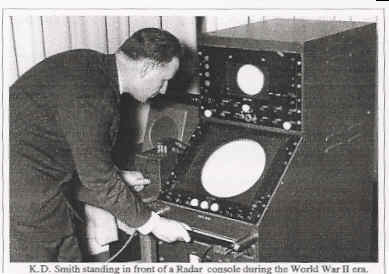
K.D. Smith was working on the development of RADAR at Bell Laboratories during these years, and in 1945. One of his notes references that he was project engineer on the AN/APQ 13 and the AN/APQ 23.


Bombing Radar Fairing Between Bomb Bays
From the Boeing B-29A Superfortress Walkaround
The Shipboard Degaussing System
The Joint Chiefs went to the White House November 1965 to ask LBJ for permission to mine Haiphong and bomb Hanoi.
He threw them out after fifteen minutes of cursing and that was The Day It Became The Longest War.
A mine in LBJ's chest exploded in 1973.
O the humanity.
"It says to these countries and their terrorist pals: ‘We know what you’re cooking in your bathtubs. We don’t know exactly what we’re going to do about it, but if you think we are going to just sit back and take another dose from you, you’re wrong. Meet Don Rumsfeld--he’s even crazier than you are.’"
Tom Friedman
My favorite quote about Rummy.
Did some googling..guess the Navy is not ready to say there is a oiler shortage for the fleets.
Allthought they do comment on heavy lift capability shortage.
On a related note, I recall reading in "Operation Iraqi Freedom" by Walter J Boyne, that the AF has a similar problem with their tanker fleet.
Death Is Lighter Than a Feather
by David Westheimer
List Price: $23.95
Publishers Weekly
The author of My Sweet Charlie envisions the invasion of Japan that might have occured had the atomic bomb not been used in 1945; includes 11 b&w photos.
http://www.amazon.com/exec/obidos/ASIN/0929398904/qid%253D964057740/102-7159313-2552114
FWIW, you're part of the reason my "to read" booklist is so damn long. Thanks pal! ;^)
Alas, we must call it a night, having not FReeped in today's Post with our Foxhole leaders. Goodnight cruel world . . .
You just missed us darn it! We're sorry. We're not away non-chalantly but because we have to be. FR don't pay ya know. ;-)
Thanks Phil. Great post, lots of info.
The FReeper Foxhole Remembers the Invasion of Japan - Operation Olympic(11/1/1945) - Aug. 15th, 2003
Not bad for a week!!
Evening w_over_w. Sorry we missed you this evening. Had a real busy day today and was only able to "check in" and post and run.
We did a thread on the "Invasion That Never Was - Operation Olympic" a while back. It covered what could have happened if the invasion of Japan had taken place.
Death is Lighter than a Feather by David Westheimer
I've been trying to get a hold of that book for years. It's out of print but was supposed to be re-issued. Haven't heard yet if it was or not.
Evevning Phil Dragoo.
Thanks for all the info on Mine and anti-mine warfare.
LBJ's decision to not mine, bomb and invade the North made the final result in Vietnam inevitable. I can't think of any war ever won that didn't include occuppying or at least invading the Country you were at war with.
I like that one. :-)
Thanks Valin. That answers my question.
I have "The Burning Mountain: A Novel of the Invasion of Japan" by Alfred Coppel. If you ignore the sub-plot about an American born translator who was raised in Japan as a child and has his "childhood" sweetheart still there it's not a bad read. It does show the fanatic defense that would have been put up by the Japanese military and civilians.
Disclaimer: Opinions posted on Free Republic are those of the individual posters and do not necessarily represent the opinion of Free Republic or its management. All materials posted herein are protected by copyright law and the exemption for fair use of copyrighted works.


