Click the Pic Thank you, JoeProBono
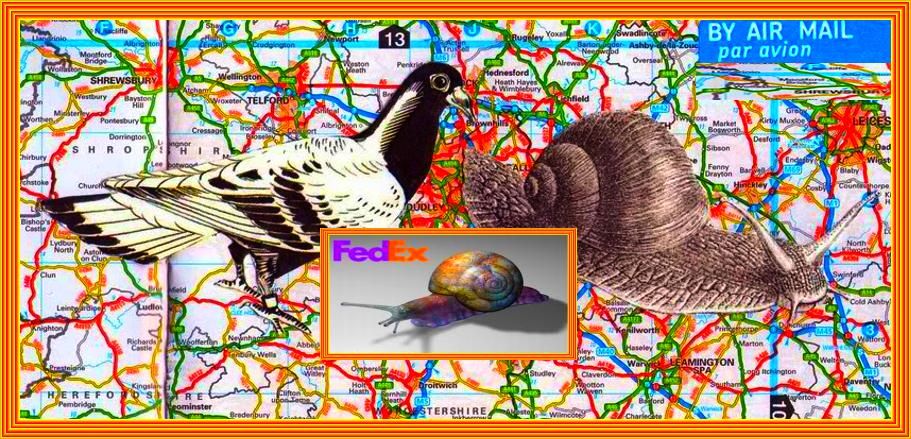
Gary Meets a Pigeon Who Reads Maps and
Recommends That Gary FedEx Himself Home
Follow the Exciting Adventures of Gary the Snail!
Sign up to Donate Monthly
Sponsors will contribute $10
For each New Monthly Donor
Posted on 11/16/2011 9:37:48 AM PST by marshmallow
A rare Arabic inscription from the Crusades has been deciphered, with scientists finding the marble slab bears the name of the Holy Roman Emperor Frederick II, a colorful Christian ruler known for his tolerance of the Muslim world.
Part of the inscription reads: "1229 of the Incarnation of our Lord Jesus the Messiah."
The 800-year-old inscription was fixed years ago in the wall of a building in Tel Aviv, though the researchers think it originally sat in Jaffa's city wall. To date, no other Crusader inscription in the Arabic language has been found in the Middle East.
"He was a Christian king who came from Sicily, the emperor of the Holy Roman Empire, and he wrote his inscription in Arabic," said Moshe Sharon, of the Hebrew University of Jerusalem, adding that it would be like the U.S. president traveling to a region and leaving an inscription in that area's language.
Tricky translation
Until now, others who had examined the inscription had suggested it came from a 19th-century gravestone, not realizing the date in the last line referred to the Christian calendar, according to Sharon.
"It's not so easy to read Arabic inscriptions, and particularly this one, which was written in an unusual script, and it is on stone and it is 800 years old," Sharon said of the difficulty in translating the engraving.
Though Frederick II, who was known to have a deep familiarity with Arabic, may not have directly engraved the stone, "it was written by an artist and this artist decided to create a special script for this royal inscription and it took us a very long time until we were able to find out that, in fact, we were reading a Christian inscription," Sharon said during a telephone interview.
(Excerpt) Read more at livescience.com ...
“Here may be found the last words of Joseph of Aramathia. He who is valiant and pure of spirit may find the holy grail in the Castle of Aaauuuggghhh... “
“If he was dying he wouldn’t have bothered to carve ‘Aaaauuugghhh’, he’d just say it!”
“Perhaps he was dictating?”
perhaps he died while dictating it?
you’ve won this round...
“...well, that’s what’s carved in the rock.”
Frederick II was famous as a CINO heretic.
Frederick II probably came via Constantinople, which had been sacked and occupied just 25 years before by the armies of the 4th crusade.
Frederick II was excommunicated twice, and had a running feud with the Pope. Dante put him in the Sixth Circle of Hell, where the heretics are.
whew...by 21 seconds! Well played, sir, well played.
“Freddy’s dead.”
There is absolutely zero chance Frederick came by Constantinople. Firstly he sailed from Brindisi, which means that stopping by Constantinople on his way to Jerusalem would have taken him 1500 miles out of his way. It would also have meant visiting the Latin Emperor of Constantinople who wanted him dead, since Frederick had taken the title of King of Jerusalem away from him.
well done
|
|
|
| GGG managers are SunkenCiv, StayAt HomeMother & Ernest_at_the_Beach | |

|
|
Thanks marshmallow. |
|
|
|
|
It’s beautiful script.
LOL...or was Gregory IX power mad?
Well, there was a continuing power struggle between Emperors and Popes for centuries, and on the whole that was a good thing. Better than the Constantinian model.
Frederick II was another kettle of fish. Another name for him might be Emperor Obama. Basically, he was more Muslim than Christian, and he tended to fight on the wrong side and to weaken civilization.
And he wasn’t just called a heretic to put him in his place—he was a heretic, and proud of it.
What exactly was his heresy? It seems Frederick recognized that the Papacy had become an instrument not of salvation, but earthly power and treated it as such.
Popes have overlooked a lot of ‘wickedness’ when it was to their benefit. Frederick is certainly not an Emperor Obama.
Bloody Fourth Crusade....
Disclaimer: Opinions posted on Free Republic are those of the individual posters and do not necessarily represent the opinion of Free Republic or its management. All materials posted herein are protected by copyright law and the exemption for fair use of copyrighted works.