Skip to comments.
Superpowers Race to Put Nuclear Reactors on the Moon
The New York Times ^
| Oct. 4, 2026
| Selam Gebrekidan
Posted on 10/05/2026 4:24:51 PM PDT by E. Pluribus Unum
The United States wants a reactor on the moon by 2030. A Russian-Chinese alliance is working on one for 2036. Some leading scientists say the danger is great.
In late August, NASA asked contractors to prepare to build a nuclear reactor that could survive a space voyage and run without maintenance near the moon’s south pole. That may sound like science fiction, but the agency wants it ready to be launched by December 2030.
There is a reason for the rush. Russia aims to have a lunar reactor running by 2036 as part of a secretive partnership with China. NASA has already sped up its schedule to beat its rivals.
The race is for the very future of space exploration. The United States and China want to be first to establish a moon base, to search for resources like frozen water and to launch missions deeper into the solar system. Controlling access to the moon’s assets is vital to this mission. Both superpowers believe a nuclear reactor is the centerpiece of this ambition.
The countries plan to turn on their reactors only after they reach the moon. But some leading scientists caution that governments are moving too quickly in an era of space exploration that has seen some notable disasters. In the last six years, multiple Chinese, American and Russian rockets have failed and exploded, and a Russian lander has crashed into the moon. Space junk regularly tumbles to Earth.
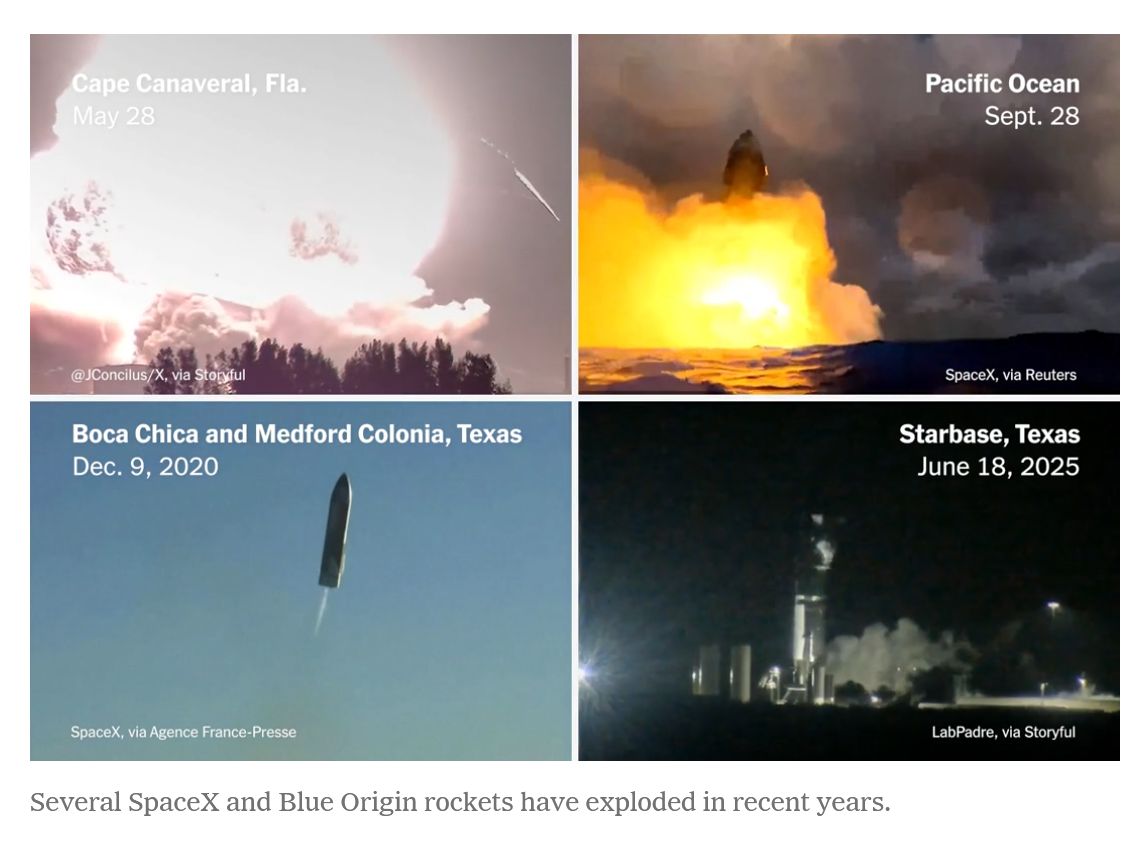
Failures could cause a chain reaction with dire consequences. Falling reactor debris could scatter radioactive material, as happened in Canada in the late 1970s. An explosion or a meltdown on the moon’s surface would risk turning entire regions into no-go zones.
“There will always be...”
(Excerpt) Read more at nytimes.com ...
TOPICS: Foreign Affairs; Government
KEYWORDS: newyorkslimes; newyorktimes; selamgebrekidan
Navigation: use the links below to view more comments.
first 1-20, 21-24 next last
To: E. Pluribus Unum
Not in the EU but on the Moon ,LOL
2
posted on
10/05/2026 4:25:55 PM PDT
by
butlerweave
(Fateh)
To: E. Pluribus Unum

*****
Maybe not such a good idea.
3
posted on
10/05/2026 4:37:54 PM PDT
by
ealgeone
To: E. Pluribus Unum
https://portside.org/2026-10-04/sunday-science-superpowers-race-put-nuclear-reactors-moon
Nuclear power appears to be the only core task that China has delegated to its partner in the lunar project. No country has more experience than Russia in this area. It launched more than 30 reactors into orbit, mostly in the 1970s and 1980s, aboard Cold War-era satellites, and it is a leader in civilian nuclear power. Russia controls the largest supply of what is considered the safest nuclear fuel for space missions. That fuel, uranium that is not highly enriched, is in short supply in the United States.
did we used to have some uranium?
4
posted on
10/05/2026 4:41:45 PM PDT
by
PeterPrinciple
((Thinking Caps are no longer being issued, but there must be a warehouse full of them somewhere))
To: ealgeone
That gif needs an “Also sprach Zarathustra” accompaniment.
5
posted on
10/05/2026 4:43:17 PM PDT
by
E. Pluribus Unum
(The right of the Democrats to embezzle elections shall not be infringed. )
To: PeterPrinciple
did we used to have some uranium? Ask Hillary.
6
posted on
10/05/2026 4:44:38 PM PDT
by
E. Pluribus Unum
(The right of the Democrats to embezzle elections shall not be infringed. )
To: E. Pluribus Unum
Seems strange considering the moon is the ONE place in the solar system that solar power is really easy!
7
posted on
10/05/2026 4:45:35 PM PDT
by
Zathras
To: E. Pluribus Unum
Posting an excerpt to an article behind a pay (registration) wall.
What, exactly, is the point when we only get a fraction of the article?
To: Paal Gulli
9
posted on
10/05/2026 4:49:54 PM PDT
by
E. Pluribus Unum
(The right of the Democrats to embezzle elections shall not be infringed. )
To: Zathras
Two weeks in sunlight, then 2 weeks in darkness. On average, about 440 W/m2.
To: E. Pluribus Unum; SunkenCiv
An explosion or a meltdown on the moon’s surface would risk turning entire regions into no-go zones. Making entire regions of the Moon desolate. That sure would change things. 🤔
11
posted on
10/05/2026 5:11:51 PM PDT
by
Ezekiel
(🆘️ "Come fly with US". 🔴 Ingenuity -- because the Son of David begins with MARS ♂️, aka every man)
To: E. Pluribus Unum
We will soon find out who runs what!!
To: E. Pluribus Unum
“did we used to have some uranium?
Ask Hillary.”
Hillary made sure we gave away at least 25% as SoS. Of course the Clinton Foundation received $140,000,000.
To: PeterPrinciple
“did we used to have some uranium?”
Still do - but unlike Russia, we leave it to Leftists to decide whether we can mine it or use it, and they say HELL NO.
14
posted on
10/05/2026 5:28:26 PM PDT
by
BobL
(Trusting one's doctor is the #1 health mistake one can make.)
To: E. Pluribus Unum
I want to apply for a job running this reactor.
To: Zathras
“Seems strange considering the moon is the ONE place in the solar system that solar power is really easy!”
...for the 330 or so hours of continuous sunlight, not so easy for the 330 or so hours of continuous NIGHT TIME.
16
posted on
10/05/2026 5:31:49 PM PDT
by
BobL
(Trusting one's doctor is the #1 health mistake one can make.)
To: E. Pluribus Unum
be easer to build them here shorter extension cord to the data centers
17
posted on
10/05/2026 5:32:54 PM PDT
by
al baby
(Sarcasm )
To: Ezekiel
Heh... yeah, desolation, unlike the current desolation.
18
posted on
10/05/2026 5:36:49 PM PDT
by
SunkenCiv
(TDS -- it's not just for DNC shills and jihadists anymore -- oh, wait, yeah it is.)
To: Racketeer
19
posted on
10/05/2026 5:42:44 PM PDT
by
E. Pluribus Unum
(The right of the Democrats to embezzle elections shall not be infringed. )
To: Ezekiel
Yeah, but it would be man-made desolation.
20
posted on
10/05/2026 5:46:48 PM PDT
by
Sertorius
(A hayseed with no Greek and dam^ proud of it)
Navigation: use the links below to view more comments.
first 1-20, 21-24 next last
Disclaimer:
Opinions posted on Free Republic are those of the individual
posters and do not necessarily represent the opinion of Free Republic or its
management. All materials posted herein are protected by copyright law and the
exemption for fair use of copyrighted works.
FreeRepublic.com is powered by software copyright 2000-2008 John Robinson
