Posted on 10/22/2026 4:17:32 PM PDT by ebb tide
The Chinese Communist Party Gets Its Bishop. Rome Supplies the Blessing.
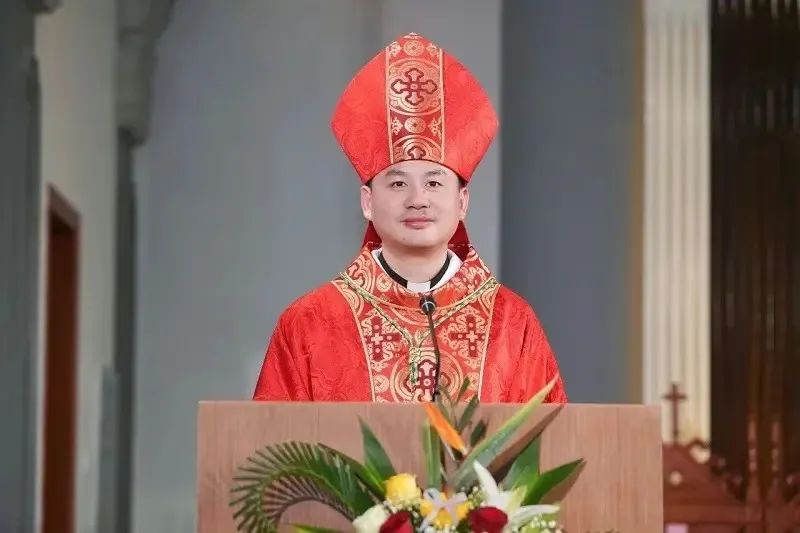
On October 15, the Vatican announced that Ignatius Ding Zuyao, a 40-year-old priest in China’s Jiangsu province, had been consecrated Bishop of Haimen. Leo XIV, according to the Holy See, appointed him on August 24, having approved his candidacy under the secretive agreement between Rome and Beijing.
How reassuring. The successor of Peter has appointed another bishop in Communist China. Everything is proceeding according to plan.
Except that the Chinese authorities had already selected Ding on May 14. One hundred and two days passed before Leo’s alleged appointment.
And when the consecration finally took place, the document publicly read aloud was the approval issued by China’s state-recognized episcopal conference. The official Chinese account made no mention of Leo’s appointment or the Vatican agreement.
Apparently, Beijing and Rome have developed an arrangement in which the Communist authorities select the bishop, Rome approves him, and the Chinese ceremony proceeds as though the ecclesiastical authority of the Roman Pontiff were an administrative detail best left unmentioned.
The Vatican’s official announcement and the AsiaNews investigation establish the essential chronology. The selection preceded Leo’s appointment; the consecration followed it. The precise terms of the 2018 Vatican-China agreement remain unpublished.
That secrecy is part of the scandal. Catholics have never been permitted to examine the complete agreement governing the appointment of their shepherds in Communist China.
The principal consecrator was Bishop Joseph Shen Bin of Shanghai, president of the state-recognized Chinese bishops’ organization and vice-president of the Chinese Catholic Patriotic Association.
Shen Bin has some experience with these arrangements.
In April 2023, the Chinese authorities transferred him to Shanghai without prior Vatican authorization. Rome subsequently accepted the accomplished fact, and Francis regularized the appointment that July.
Beijing acts. Rome accommodates. The arrangement survives to accommodate another day.
Ding himself has occupied offices within China’s government-recognized Catholic structures, including the Jiangsu Provincial Catholic Church Affairs Committee. His earlier leadership in a local Patriotic Association places him squarely within an ecclesiastical system expected to uphold Communist Party leadership and the Sinicization of religion.
AsiaNews observes that four of the five Chinese bishops appointed in 2026 were born after 1980. Ding is now reportedly the youngest bishop in the Catholic Church.
The long-term significance deserves attention. A generation of bishops formed under Communist political supervision is taking responsibility for dioceses whose older clergy remember a different relationship between Church and state.
Compare all this with Pius XII.
In his 1958 encyclical Ad Apostolorum Principis, Pius XII denounced the Chinese Patriotic Association as an instrument for subordinating the Church to civil authority. He defended the rights of the Church against state interference and rejected efforts to separate Chinese Catholics from the authority of the Apostolic See.
The contrast is astonishing.
What Pius XII condemned as a danger to Catholic unity has become the institutional framework within which Rome now announces episcopal appointments.
Defenders of the agreement argue that papal approval preserves an essential connection with Rome and prevents unauthorized consecrations. That argument is silly. The consecrations are authorized simply because Rome approves them all. The public ceremonies and official Chinese announcements continue to present the appointments primarily through the machinery of the state-approved Church.
What sort of victory for papal authority requires the Chinese authorities to avoid mentioning it?
One wonders what Pius XII would make of this extraordinary diplomatic achievement. Probably something considerably less enthusiastic than the Vatican press office.

|
Click here: to donate by Credit Card Or here: to donate by PayPal Or by mail to: Free Republic, LLC - PO Box 9771 - Fresno, CA 93794 Thank you very much and God bless you. |
Except that the Chinese authorities had already selected Ding on May 14. One hundred and two days passed before Leo’s alleged appointment.
And when the consecration finally took place, the document publicly read aloud was the approval issued by China’s state-recognized episcopal conference. The official Chinese account made no mention of Leo’s appointment or the Vatican agreement.
Apparently, Beijing and Rome have developed an arrangement in which the Communist authorities select the bishop, Rome approves him, and the Chinese ceremony proceeds as though the ecclesiastical authority of the Roman Pontiff were an administrative detail best left unmentioned.
Ping
Ping
As long as the check cleared, it’s all good.

The Lie: "What matters canonically is reality, not state press releases: the bishop cannot take office without the Pope’s signature and mandate."
The Truth:
During the papal sede vacante (interregnum) following the death of Pope Francis on April 21, 2025, Chinese authorities unilaterally proceeded with the selection of two Catholic bishops
Disclaimer: Opinions posted on Free Republic are those of the individual posters and do not necessarily represent the opinion of Free Republic or its management. All materials posted herein are protected by copyright law and the exemption for fair use of copyrighted works.