Skip to comments.
Catholic Caucus: Daily Mass Readings 31-July-2026
Universalis/Jerusalem Bible ^
Posted on 07/31/2026 10:35:52 AM PDT by annalex
31 July 2026
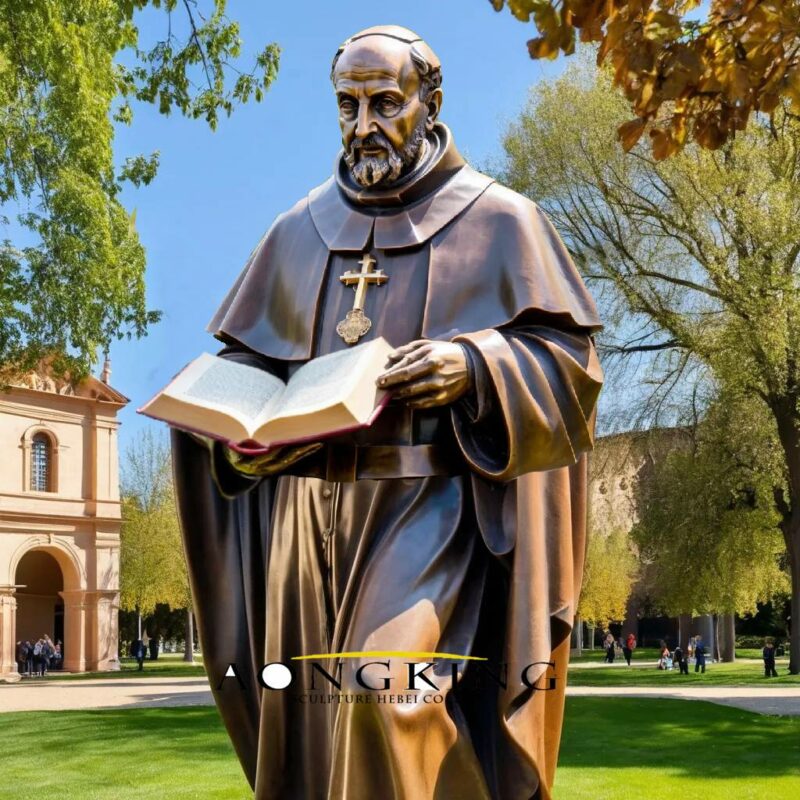
Saint Ignatius Loyola, Priest
on Friday of week 17 in Ordinary Time

Church of St. Ignatius of Loyola in Rome Readings at MassLiturgical Colour: White. Year: A(II). Readings for the feria Readings for the memorial These are the readings for the feria
| First reading | Jeremiah 26:1-9 |
|---|
Jeremiah preaches in the Temple of the Lord and is threatened with deathAt the beginning of the reign of Jehoiakim son of Josiah, king of Judah, this word was addressed to Jeremiah by the Lord, ‘The Lord says this: Stand in the court of the Temple of the Lord. To all the people of the towns of Judah who come to worship in the Temple of the Lord you must speak all the words I have commanded you to tell them; do not omit one syllable. Perhaps they will listen and each turn from his evil way: if so, I shall relent and not bring the disaster on them which I intended for their misdeeds. Say to them, “The Lord says this: If you will not listen to me by following my Law which I put before you, by paying attention to the words of my servants the prophets whom I send so persistently to you, without your ever listening to them, I will treat this Temple as I treated Shiloh, and make this city a curse for all the nations of the earth.”’ The priests and prophets and all the people heard Jeremiah say these words in the Temple of the Lord. When Jeremiah had finished saying everything that the Lord had ordered him to say to all the people, the priests and prophets seized hold of him and said, ‘You shall die! Why have you made this prophecy in the name of the Lord, “This Temple will be like Shiloh, and this city will be desolate, and uninhabited”?’ And the people were all crowding round Jeremiah in the Temple of the Lord.
| Responsorial Psalm |
|---|
| Psalm 68(69):5,8-10,14 |
|---|
In your great love, answer me, O God. More numerous than the hairs on my head are those who hate me without cause. Those who attack me with lies are too much for my strength. How can I restore what I have never stolen? In your great love, answer me, O God. It is for you that I suffer taunts, that shame covers my face, that I have become a stranger to my brothers, an alien to my own mother’s sons. I burn with zeal for your house and taunts against you fall on me. In your great love, answer me, O God. This is my prayer to you, my prayer for your favour. In your great love, answer me, O God, with your help that never fails. In your great love, answer me, O God.
| Gospel Acclamation | cf.1Th2:13 |
|---|
Alleluia, alleluia! Accept God’s message for what it really is: God’s message, and not some human thinking. Alleluia! Alleluia, alleluia! The word of the Lord remains for ever: What is this word? It is the Good News that has been brought to you. Alleluia!
A prophet is only despised in his own countryComing to his home town, Jesus taught the people in their synagogue in such a way that they were astonished and said, ‘Where did the man get this wisdom and these miraculous powers? This is the carpenter’s son, surely? Is not his mother the woman called Mary, and his brothers James and Joseph and Simon and Jude? His sisters, too, are they not all here with us? So where did the man get it all?’ And they would not accept him. But Jesus said to them, ‘A prophet is only despised in his own country and in his own house’, and he did not work many miracles there because of their lack of faith. Continue These are the readings for the memorial
| First reading |
|---|
| 1 Corinthians 10:31-11:1 |
|---|
Take me for your model, as I take ChristWhatever you eat, whatever you drink, whatever you do at all, do it for the glory of God. Never do anything offensive to anyone – to Jews or Greeks or to the Church of God; just as I try to be helpful to everyone at all times, not anxious for my own advantage but for the advantage of everybody else, so that they may be saved. Take me for your model, as I take Christ.
| Responsorial Psalm |
|---|
| Psalm 33(34):2-11 |
|---|
I will bless the Lord at all times. or Taste and see that the Lord is good. I will bless the Lord at all times, his praise always on my lips; in the Lord my soul shall make its boast. The humble shall hear and be glad. I will bless the Lord at all times. or Taste and see that the Lord is good. Glorify the Lord with me. Together let us praise his name. I sought the Lord and he answered me; from all my terrors he set me free. I will bless the Lord at all times. or Taste and see that the Lord is good. Look towards him and be radiant; let your faces not be abashed. This poor man called, the Lord heard him and rescued him from all his distress. I will bless the Lord at all times. or Taste and see that the Lord is good. The angel of the Lord is encamped around those who revere him, to rescue them. Taste and see that the Lord is good. He is happy who seeks refuge in him. I will bless the Lord at all times. or Taste and see that the Lord is good. Revere the Lord, you his saints. They lack nothing, those who revere him. Strong lions suffer want and go hungry but those who seek the Lord lack no blessing. I will bless the Lord at all times. or Taste and see that the Lord is good.
Alleluia, alleluia! How happy are the poor in spirit: theirs is the kingdom of heaven. Alleluia!
Anyone who does not carry his cross and follow me cannot be my discipleGreat crowds accompanied Jesus on his way and he turned and spoke to them. ‘If any man comes to me without hating his father, mother, wife, children, brothers, sisters, yes and his own life too, he cannot be my disciple. Anyone who does not carry his cross and come after me cannot be my disciple. ‘And indeed, which of you here, intending to build a tower, would not first sit down and work out the cost to see if he had enough to complete it? Otherwise, if he laid the foundation and then found himself unable to finish the work, the onlookers would all start making fun of him and saying, “Here is a man who started to build and was unable to finish.” Or again, what king marching to war against another king would not first sit down and consider whether with ten thousand men he could stand up to the other who advanced against him with twenty thousand? If not, then while the other king was still a long way off, he would send envoys to sue for peace. So in the same way, none of you can be my disciple unless he gives up all his possessions.’ Continue You can also view this page with the New Testament in Greek and English. Universalis podcast: The week ahead – from 2 to 8 AugustThe Transfiguration, and theo-drama. Hierarchies and status: there is a saint for everyone. Saint Jean-Baptiste-Marie Vianney, the Curé of Ars. Confession and its power. “Resurrection Is Now” as a printed book. (22 minutes)
Episode notes.Play Christian Art Each day, The Christian Art website gives a picture and reflection on the Gospel of the day. The readings on this page are from the Jerusalem Bible, which is used at Mass in most of the English-speaking world. The New American Bible readings, which are used at Mass in the United States, are available in the Universalis apps, programs and downloads.
You can also view this page with the Gospel in Greek and English. |
TOPICS: Catholic; General Discusssion; Prayer; Worship
KEYWORDS: catholic; mt13; ordinarytime; prayer
For your reading, reflection, faith-sharing, comments, questions, discussion.
1
posted on
07/31/2026 10:35:52 AM PDT
by
annalex
To: All
KEYWORDS: catholic; mt13; ordinarytime; prayer
2
posted on
07/31/2026 10:36:27 AM PDT
by
annalex
(fear them not)
To: nickcarraway; NYer; ELS; Pyro7480; livius; ArrogantBustard; Catholicguy; RobbyS; marshmallow; ...

Alleluia Ping Please FReepmail me to get on/off the Alleluia Ping List.
3
posted on
07/31/2026 10:38:24 AM PDT
by
annalex
(fear them not)
To: annalex
4
posted on
07/31/2026 10:38:49 AM PDT
by
annalex
(fear them not)
To: annalex
| Matthew |
| | English: Douay-Rheims | Latin: Vulgata Clementina | Greek NT: Byzantine/Majority Text (2000) |
| | Matthew 13
|
| 54. | And coming into his own country, he taught them in their synagogues, so that they wondered and said: How came this man by this wisdom and miracles? | Et veniens in patriam suam, docebat eos in synagogis eorum, ita ut mirarentur, et dicerent : Unde huic sapientia hæc, et virtutes ? | και ελθων εις την πατριδα αυτου εδιδασκεν αυτους εν τη συναγωγη αυτων ωστε εκπληττεσθαι αυτους και λεγειν ποθεν τουτω η σοφια αυτη και αι δυναμεις |
| 55. | Is not this the carpenter's son? Is not his mother called Mary, and his brethren James, and Joseph, and Simon, and Jude: | Nonne hic est fabri filius ? nonne mater ejus dicitur Maria, et fratres ejus, Jacobus, et Joseph, et Simon, et Judas ? | ουχ ουτος εστιν ο του τεκτονος υιος ουχι η μητηρ αυτου λεγεται μαριαμ και οι αδελφοι αυτου ιακωβος και ιωσης και σιμων και ιουδας |
| 56. | And his sisters, are they not all with us? Whence therefore hath he all these things? | et sorores ejus, nonne omnes apud nos sunt ? unde ergo huic omnia ista ? | και αι αδελφαι αυτου ουχι πασαι προς ημας εισιν ποθεν ουν τουτω ταυτα παντα |
| 57. | And they were scandalized in his regard. But Jesus said to them: A prophet is not without honour, save in his own country, and in his own house. | Et scandalizabantur in eo. Jesus autem dixit eis : Non est propheta sine honore, nisi in patria sua, et in domo sua. | και εσκανδαλιζοντο εν αυτω ο δε ιησους ειπεν αυτοις ουκ εστιν προφητης ατιμος ει μη εν τη πατριδι αυτου και εν τη οικια αυτου |
| 58. | And he wrought not many miracles there, because of their unbelief. | Et non fecit ibi virtutes multas propter incredulitatem illorum. | και ουκ εποιησεν εκει δυναμεις πολλας δια την απιστιαν αυτων |
5
posted on
07/31/2026 10:41:41 AM PDT
by
annalex
(fear them not)
To: annalex

Catena Aurea by St. Thomas Aguinas
13:53–58
54. And when he was come into his own country, he taught them in their synagogue, insomuch that they were astonished, and said, Whence hath this man this wisdom, and these mighty works?
55. Is not this the carpenter’s son? is not his mother called Mary? and his brethren, James, and Joses, and Simon, and Judas?
56. And his sisters, are they not all with us? Whence then hath this man all these things?
57. And they were offended in him. But Jesus said unto them, A prophet is not without honour, save in his own country, and in his own house.
58. And he did not many mighty works there because of their unbelief.
CHRYSOSTOM. (Hom. xlviii.) By his own country here, He means Nazareth; for it was not there but in Capharnaum that, as is said below, He wrought so many miracles; but to these He shews His doctrine, causing no less wonder than His miracles.
REMIGIUS. He taught in their synagogues where great numbers were met, because it was for the salvation of the multitude that He came from heaven upon earth. It follows; So that they marvelled, and said, Whence hath this man this wisdom, and these many mighty works? His wisdom is referred to His doctrine, His mighty works to His miracles.
JEROME. Wonderful folly of the Nazarenes! They wonder whence Wisdom itself has wisdom, whence Power has mighty works! But the source of their error is at hand, because they regard Him as the Son of a carpenter; as they say, Is not this the carpenter’s son?
CHRYSOSTOM. Therefore were they in all things insensate, seeing they lightly esteemed Him on account of him who was regarded as His father, notwithstanding the many instances in old times of sons illustrious sprung from ignoble fathers; as David was the son of a husbandman, Jesse; Amos the son of a shepherd, himself a shepherd. And they ought to have given Him more abundant honour, because, that coming of such parents, He spake after such manner; clearly shewing that it came not of human industry, but of divine grace.
PSEUDO-AUGUSTINE. (non occ. cf. Serm. 135. App.) For the Father of Christ is that Divine Workman who made all these works of nature, who set forth Noah’s ark, who ordained the tabernacle of Moses, and instituted the Ark of the covenant; that Workman who polishes the stubborn mind, and cuts down the proud thoughts.
HILARY. And this was the carpenter’s son who subdues iron by means of fire, who tries the virtue of this world in the judgment, and forms the rude mass to every work of human need; the figure of our bodies, for example, to the divers ministrations of the limbs, and all the actions of life eternal.
JEROME. And when they are mistaken in His Father, no wonder if they are also mistaken in His brethren. Whence it is added, Is not his mother Mary, and his brethren, James, and Joseph, and Simon, and Judas? And his sisters, are they not all with us?
JEROME. (in Helvid. 14.) Those who are here called the Lord’s brethren, are the sons of a Mary, His Mother’s sister; she is the mother of this James and Joseph, that is to say, Mary the wife of Cleophas, and this is the Mary who is called the mother of James the Less.
AUGUSTINE. (Quæst. in Matt. q. 17.) No wonder then that any kinsmen by the mother’s side should be called the Lord’s brethren, when even by their kindred to Joseph some are here called His brethren by those who thought Him the son of Joseph.
HILARY. Thus the Lord is held in no honour by His own; and though the wisdom of His teaching, and the power of His working raised their admiration, yet do they not believe that He did these things in the name of the Lord, and they cast His father’s trade in His teeth. Amid all the wonderful works which He did, they were moved with the contemplation of His Body, and hence they ask, Whence hath this man these things? And thus they were offended in him.
JEROME. This error of the Jews is our salvation, and the condemnation of the heretics, for they perceived Jesus Christ to be man so far as to think Him the son of a carpenter.
CHRYSOSTOM. Observe Christ’s mercifulness; He is evil spoken of, yet He answers with mildness; Jesus said unto them, A prophet is not without honour, but in his own country, and in his own house.
REMIGIUS. He calls Himself a Prophet, as Moses also declares, when he says, A Prophet shall God raise up unto you of your brethren. (Deut. 18:18.) And it should be known, that not Christ only, who is the Head of all the Prophets, but Jeremiah, Daniel, and the other lesser Prophets, had more honour and regard among strangers than among their own citizens.
JEROME. For it is almost natural for citizens to be jealous towards one another; for they do not look to the present works of the man, but remember the frailties of his childhood; as if they themselves had not passed through the very same stages of age to their maturity.
HILARY. Further, He makes this answer, that a Prophet is without honour in his own country, because it was in Judæa that He was to be condemned to the sentence of the cross; and forasmuch as the power of God is for the faithful alone, He here abstained from works of divine power because of their unbelief; whence it follows, And he did not there many mighty works because of their unbelief.
JEROME. Not that because they did not believe He could not do His mighty works; but that He might not by doing them be condemning His fellow-citizens in their unbelief.
CHRYSOSTOM. But if His miracles raised their wonder, why did He not work many? Because He looked not to display of Himself, but to what would profit others; and when that did not result, He despised what pertained only to Himself that He might not increase their punishment. Why then did He even these few miracles? That they should not say, We should have believed had any miracles been done among us.
JEROME. Or we may understand it otherwise, that Jesus is despised in His own house and country, signifies in the Jewish people; and therefore He did among them few miracles, that they might not be altogether without excuse; but among the Gentiles He does daily greater miracles by His Apostles, not so much in healing their bodies, as in saving their souls.
Catena Aurea Matthew 13
6
posted on
07/31/2026 10:43:39 AM PDT
by
annalex
(fear them not)
To: annalex

The Holy Family
Francesco Albani
c. 1610
Oil on copper, 37,5 x 28,5 cm
Private collection
7
posted on
07/31/2026 10:44:42 AM PDT
by
annalex
(fear them not)
To: annalex
| Luke |
| | English: Douay-Rheims | Latin: Vulgata Clementina | Greek NT: Byzantine/Majority Text (2000) |
| | Luke 14
|
| 25. | And there went great multitudes with him. And turning, he said to them: | Ibant autem turbæ multæ cum eo : et conversus dixit ad illos : | συνεπορευοντο δε αυτω οχλοι πολλοι και στραφεις ειπεν προς αυτους |
| 26. | If any man come to me, and hate not his father, and mother, and wife, and children, and brethren, and sisters, yea and his own life also, he cannot be my disciple. | Si quis venit ad me, et non odit patrem suum, et matrem, et uxorem, et filios, et fratres, et sorores, adhuc autem et animam suam, non potest meus esse discipulus. | ει τις ερχεται προς με και ου μισει τον πατερα αυτου και την μητερα και την γυναικα και τα τεκνα και τους αδελφους και τας αδελφας ετι δε και την εαυτου ψυχην ου δυναται μου μαθητης ειναι |
| 27. | And whosoever doth not carry his cross and come after me, cannot be my disciple. | Et qui non bajulat crucem suam, et venit post me, non potest meus esse discipulus. | και οστις ου βασταζει τον σταυρον αυτου και ερχεται οπισω μου ου δυναται ειναι μου μαθητης |
| 28. | For which of you having a mind to build a tower, doth not first sit down, and reckon the charges that are necessary, whether he have wherewithal to finish it: | Quis enim ex vobis volens turrim ædificare, non prius sedens computat sumptus, qui necessarii sunt, si habeat ad perficiendum, | τις γαρ εξ υμων ο θελων πυργον οικοδομησαι ουχι πρωτον καθισας ψηφιζει την δαπανην ει εχει τα εις απαρτισμον |
| 29. | Lest, after he hath laid the foundation, and is not able ti finish it, all that see it begin to mock him, | ne, posteaquam posuerit fundamentum, et non potuerit perficere, omnes qui vident, incipiant illudere ei, | ινα μηποτε θεντος αυτου θεμελιον και μη ισχυοντος εκτελεσαι παντες οι θεωρουντες αρξωνται εμπαιζειν αυτω |
| 30. | Saying: This man began to build, and was not able to finish. | dicentes : Quia hic homo cœpit ædificare, et non potuit consummare ? | λεγοντες οτι ουτος ο ανθρωπος ηρξατο οικοδομειν και ουκ ισχυσεν εκτελεσαι |
| 31. | Or what king, about to go to make war against another king, doth not first sit down, and think whether he be able, with ten thousand, to meet him that, with twenty thousand, cometh against him? | Aut quis rex iturus committere bellum adversus alium regem, non sedens prius cogitat, si possit cum decem millibus occurrere ei, qui cum viginti millibus venit ad se ? | η τις βασιλευς πορευομενος συμβαλειν ετερω βασιλει εις πολεμον ουχι καθισας πρωτον βουλευεται ει δυνατος εστιν εν δεκα χιλιασιν απαντησαι τω μετα εικοσι χιλιαδων ερχομενω επ αυτον |
| 32. | Or else, whilst the other is yet afar off, sending an embassy, he desireth conditions of peace. | Alioquin adhuc illo longe agente, legationem mittens rogat ea quæ pacis sunt. | ει δε μηγε ετι πορρω αυτου οντος πρεσβειαν αποστειλας ερωτα τα προς ειρηνην |
| 33. | So likewise every one of you that doth not renounce all that he possesseth, cannot be my disciple. | Sic ergo omnis ex vobis, qui non renuntiat omnibus quæ possidet, non potest meus esse discipulus. | ουτως ουν πας εξ υμων ος ουκ αποτασσεται πασιν τοις εαυτου υπαρχουσιν ου δυναται μου ειναι μαθητης |
|
8
posted on
07/31/2026 10:47:06 AM PDT
by
annalex
(fear them not)
To: annalex
Catena Aurea by St. Thomas Aguinas
14:2527
25. And there went great multitudes with him: and he turned, and said unto them,
26. If any man come to me, and hate not his father, and mother, and wife, and children, and brethren, and sisters, yea, and his own life also, he cannot be my disciple.
27. And whosoever doth not bear his cross, and come after me, cannot be my disciple.
GREGORY. (in Hom. 37. in Ev.) The mind is kindled, when it hears of heavenly rewards, and already desires to be there, where it hopes to enjoy them without ceasing; but great rewards cannot be reached except by great labours. Therefore it is said, And there went great multitudes with him: and he turned to them, and said, &c.
THEOPHYLACT. For because many of those that accompanied Him followed not with their whole heart, but lukewarmly, He shews what kind of a man his disciple ought to be.
GREGORY. (in Hom. ut sup.) But it may be asked, how are we bid to hate our parents and our relations in the flesh, who are commanded to love even our enemies? But if we weigh the force of the command we are able to do both, by rightly distinguishing them so as both to love those who are united to us by the bond of the flesh, and whom we acknowledge our relations, and by hating and avoiding not to know those whom we find our enemies in the way of God. For he is as it were loved by hatred, who in his carnal wisdom, pouring into our ears his evil sayings, is not heard.
AMBROSE. For if for thy sake the Lord renounces His own mother, saying, Who is my mother? and who are my brethren? (Matt. 12:48, Mark 3:33.) why dost thou deserve to be preferred to thy Lord? But the Lord will have us neither be ignorant of nature, nor be her slaves, but so to submit to nature, that we reverence the Author of nature, and depart not from God out of love to our parents.
GREGORY. (in Hom. ut sup.) Now to shew that this hatred towards relations proceeds not from inclination or passion, but from love, our Lord adds, yea, and his own life also. It is plain therefore that a man ought to hate his neighbour, by loving as himself him who hated him. For then we rightly hate our own soul when we indulge not its carnal desires, when we subdue its appetites, and wrestle against its pleasures. That which by being despised is brought to a better condition, is as it were loved by hatred.
CYRIL OF ALEXANDRIA. But life must not be renounced, which both in the body and the soul the blessed Paul also preserved, that yet living in the body he might preach Christ. But when it was necessary to despise life so that he might finish his course, he counts not his life dear unto him. (Acts 20:24.)
GREGORY. (in Hom. ut sup.) How the hatred of life ought to be shewn He declares as follows; Whosoever bears not his cross, &c.
CHRYSOSTOM. He means not that we should place a beam of wood on our shoulders, but that we should ever have death before our eyes. As also Paul died daily and despised death. (1 Cor. 15:31.)
BASIL. By bearing the cross also he announced the death of his Lord, saying, The world is crucified to me, and I to the world, (Gal. 6:14.) which we also anticipate at our very baptism, in which our old man is crucified, that the body of sin may be destroyed.
GREGORY. (in Hom. 37. in Ev.) Or because the cross is so called from torturing. In two ways we bear our Lords cross, either when by abstinence we afflict our bodies, or when through compassion of our neighbour we think all his necessities our own. But because some exercise abstinence of the flesh not for Gods sake but for vain-glory, and shew compassion, not spiritually but carnally, it is rightly added, And, cometh after me. For to bear His cross and come after the Lord, is to use abstinence of the flesh, or compassion to our neighbour, from the desire of an eternal gain.
14:2833
28. For which of you, intending to build a tower, sitteth not down first, and counteth the cost, whether he have sufficient to finish it?
29. Lest haply, after he hath laid the foundation, and is not able to finish it, all that behold it begin to mock him,
30. Saying, This man began to build, and was not able to finish.
31. Or what king, going to make war against another king, sitteth not down first, and consulteth whether he be able with ten thousand to meet him that cometh against him with twenty thousand?
32. Or else, while the other is yet a great way off, he sendeth an ambassage, and desireth conditions of peace.
33. So likewise, whosoever he be of you that for-saketh not all that he hath, he cannot be my disciple.
GREGORY. (37. in Ev.) Because He had been giving high and lofty precepts, immediately follows the comparison of building a tower, when it is said, For which of you intending to build a tower does not first count &c. For every thing that we do should be preceded by anxious consideration. If then we desire to build a tower of humility, we ought first to brace ourselves against the ills of this world.
BASIL. (in Esai. 2.) Or the tower is a lofty watch-tower fitted for the guardianship of the city and the discovery of the enemys approach. In like manner was our understanding given us to preserve the good, to guard against the evil. For the building up whereof the Lord bids us sit down and count our means if we have sufficient to finish.
GREGORY OF NYSSA. (lib. de Virg. 17.) For we must be ever pressing onward that we may reach the end of each difficult undertaking by successive increases of the commandments of God, and so to the completion of the divine work. For neither is one stone the whole fabric of the tower, nor does a single command lead to the perfection of the soul. But we must lay the foundation, and according to the Apostle, thereupon must be placed store of gold, silver, and precious stones. (1 Cor. 3:12.) Whence it is added, Lest haply after he hath laid the foundation, &c.
THEOPHYLACT. For we ought not to lay a foundation, i. e. begin to follow Christ, and not bring the work to an end, as those of whom St. John writes, That many of his disciples went backward. (John 6:66.) Or by the foundation understand the word of teaching, as for instance concerning abstinence. There is need therefore of the above-mentioned foundation, that the building up of our works be established, a tower of strength from the face of the enemy. (Ps. 61:3.) Otherwise, man is laughed at by those who see him, men as well as devils.
GREGORY. (ubi sup.) For when occupied in good works, unless we watch carefully against the evil spirits, we find those our mockers who are persuading us to evil. But another comparison is added proceeding from the less to the greater, in order that from the least things the greatest may be estimated. For it follows, Or what king, going to make war against another king, sitteth not down first, and consultelh whether he be able with ten thousand to meet him that cometh against him with twenty thousand?
CYRIL OF ALEXANDRIA. For we fight against spiritual wickedness in high places; (Eph. 6:12.) but there presses upon us a multitude also of other enemies, fleshly lust, the law of sin raging in our members, and various passions, that is, a dreadful multitude of enemies.
AUGUSTINE. Or the ten thousand of him who is going to fight with the king who has twenty, signify the simplicity of the Christian about to contend with the subtlety of the devil.
THEOPHYLACT. The king is sin reigning in our mortal body; (Rom. 6:12.) but our understanding also was created king. If then he wishes to fight against sin, let him consider with his whole mind. For the devils are the satellites of sin, which being twenty thousand, seem to surpass in number our ten thousand, because that being spiritual compared to us who are corporeal, they are come to have much greater strength.
AUGUSTINE. (ut sup.) But as with respect to the unfinished tower, he alarms us by the reproaches of those who say, The man began to build, and was not able to finish, so with regard to the king with whom the battle was to be, he reproved even peace, adding, Or else, while the other is yet a great way off, he sendeth an ambassage, and desireth conditions of peace; signifying that those also who forsake all they possess cannot endure from the devil the threats of even coming temptations, and make peace with him by consenting unto him to commit sin.
GREGORY. (in Hom. ut sup.) Or else, in that awful trial we come not to the judgment a match for our king, for ten thousand are against twenty thousand, two against one. He comes with a double army against a single. For while we are scarcely prepared in deeds only, he sifts us at once both in thought and deed. While then he is yet afar off, who though still present in judgment, is not seen, let us send him an embassy, our tears, our works of mercy, the propitiatory victim. This is our message which appeases the coming king.
AUGUSTINE. Now to what these comparisons refer, He on the same occasion sufficiently explained, when he said, So likewise whosoever he be of you that forsaketh not all that he hath, he cannot be my disciple. The cost therefore of building the tower, and the strength of the ten thousand against the king who has twenty thousand, mean nothing else than that each one should forsake all that he hath. The foregoing introduction tallies then with the final conclusion. For in the saying that a man forsakes all that he hath, is contained also that he hates his father and mother, his wife and children, brothers and sisters, yea and his own wife also. For all these things are a mans own, which entangle him, and hinder him from obtaining not those particular possessions which will pass away with time, but those common blessings which will abide for ever.
BASIL. But our Lords intention in the above-mentioned example is not indeed to afford occasion or give liberty to any one to become His disciple or not, as indeed it is lawful not to begin a foundation, or not to treat of peace, but to shew the impossibility of pleasing God, amidst those things which distract the soul, and in which it is in danger of becoming an easy prey to the snares and wiles of the devil.
BEDE. But there is a difference between renouncing all things and leaving all things. For it is the way of few perfect men to leave all things, that is, to cast behind them the cares of the world, but it is the part of all the faithful to renounce all things, that is, so to hold the things of the world as by them not to be held in the world.
Catena Aurea Luke 14
9
posted on
07/31/2026 10:48:31 AM PDT
by
annalex
(fear them not)
To: annalex
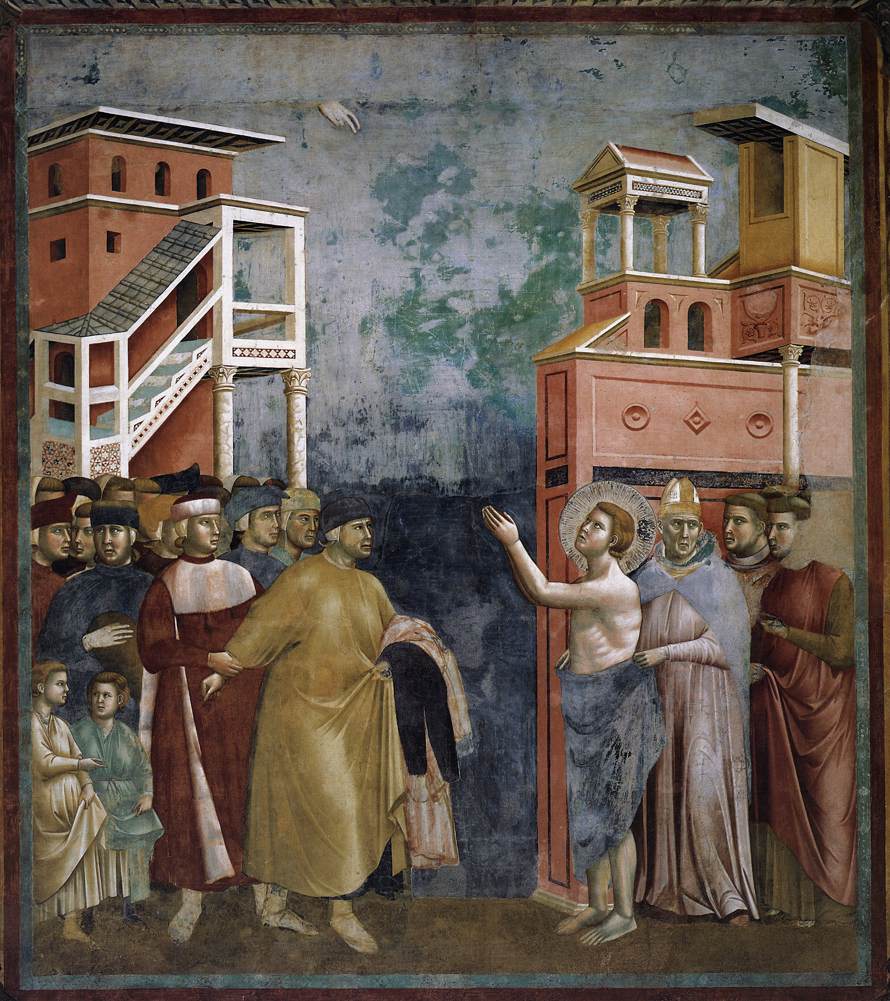
Legend of St Francis: Renunciation of Wordly Goods
Giotto di Bondone
1297-99
Fresco, 270 x 230 cm
Upper Church, San Francesco, Assisi
10
posted on
07/31/2026 10:49:14 AM PDT
by
annalex
(fear them not)
To: annalex
Saint of the Day for July 31
(October 23, 1491 – July 31, 1556)
Saint Ignatius of Loyola’s Story
The founder of the Jesuits was on his way to military fame and fortune when a cannon ball shattered his leg. Because there were no books of romance on hand during his convalescence, Ignatius whiled away the time reading a life of Christ and lives of the saints. His conscience was deeply touched, and a long, painful turning to Christ began.
Having seen the Mother of God in a vision, he made a pilgrimage to her shrine at Montserrat near Barcelona. He remained for almost a year at nearby Manresa, sometimes with the Dominicans, sometimes in a pauper’s hospice, often in a cave in the hills praying. After a period of great peace of mind, he went through a harrowing trial of scruples. There was no comfort in anything—prayer, fasting, sacraments, penance. At length, his peace of mind returned.
It was during this year of conversion that Ignatius of Loyola began to write down material that later became his greatest work, the Spiritual Exercises.
He finally achieved his purpose of going to the Holy Land, but could not remain, as he planned, because of the hostility of the Turks. Ignatius of Loyola spent the next 11 years in various European universities, studying with great difficulty, beginning almost as a child. Like many others, his orthodoxy was questioned; Ignatius was twice jailed for brief periods.
In 1534, at the age of 43, he and six others—one of whom was Saint Francis Xavier—vowed to live in poverty and chastity and to go to the Holy Land. If this became impossible, they vowed to offer themselves to the apostolic service of the pope. The latter became the only choice. Four years later Ignatius of Loyola made the association permanent. The new Society of Jesus was approved by Pope Paul III, and Ignatius was elected to serve as the first general.
When companions were sent on various missions by the pope, Ignatius remained in Rome, consolidating the new venture, but still finding time to found homes for orphans, catechumens, and penitents. He founded the Roman College, intended to be the model of all other colleges of the Society.
Ignatius of Loyola was a true mystic. He centered his spiritual life on the essential foundations of Christianity—the Trinity, Christ, the Eucharist. His spirituality is expressed in the Jesuit motto, Ad majorem Dei gloriam—“for the greater glory of God.” In his concept, obedience was to be the prominent virtue, to assure the effectiveness and mobility of his men. All activity was to be guided by a true love of the Church and unconditional obedience to the Holy Father, for which reason all professed members took a fourth vow to go wherever the pope should send them for the salvation of souls.
Reflection
Luther nailed his theses to the church door at Wittenberg in 1517. Seventeen years later, Ignatius of Loyola founded the Society that was to play so prominent a part in the Catholic Reformation. He was an implacable foe of Protestantism. Yet the seeds of ecumenism may be found in his words: “Great care must be taken to show forth orthodox truth in such a way that if any heretics happen to be present they may have an example of charity and Christian moderation. No hard words should be used nor any sort of contempt for their errors be shown.” One of the greatest ecumenists was the 20th-century German Jesuit, Cardinal Augustin Bea.
Saint Ignatius of Loyola is the Patron Saint of:
Retreats
franciscanmedia.org
11
posted on
07/31/2026 10:52:58 AM PDT
by
annalex
(fear them not)
To: annalex
12
posted on
07/31/2026 10:57:03 AM PDT
by
annalex
(fear them not)
To: annalex
Thank you for including me in these posts.
13
posted on
07/31/2026 11:17:31 AM PDT
by
kawhill
(Dywedwch wrthym + Add translation Welsh-English dictionary 'Tell Us')
To: All
NAVARRE BIBLE COMMENTARY(RSV)
Ad Majorem Dei Gloriam (To the Greater Glory of God)
Today’s First Reading
From: Jeremiah 26:1-9
Jeremiah arraigned
----------------------------
[1] In the beginning of the reign of Jehoiakim the son of Josiah, king of Judah, this word came from the Lord, [2] "Thus says the Lord: Stand in the court of the Lord's house, and speak to all the cities of Judah which come to worship in the house of the Lord all the words that I command you to speak to them; do not hold back a word. [3] It may be they will listen, and every one turn from his evil way, that I may repent of the evil which I intend to do to them because of their evil doings. [4] You shall say to them, 'Thus says the Lord: If you will not listen to me, to walk in my law which I have set before you, [5] and to heed the words of my servants the prophets whom I send to you urgently, though you have not heeded, [6] then I will make this house like Shiloh, and I will make this city a curse for all the nations of the earth.'"
[7] The priests and the prophets and all the people heard Jeremiah speaking these words in the house of the Lord. [5] And when Jeremiah had finished speaking all that the Lord had commanded him to speak to all the people, then the priests and the prophets and all the people laid hold of him, saying, "You shall die! [9] Why have you prophesied in the name of the Lord, saying, 'This house shall be like Shiloh, and this city shall be desolate, without inhabitant'?" And all the people gathered about Jeremiah in the house of the Lord.
***********************************************************************************
Commentary:
26:1-45:4. The first part of the book was a lengthy collection of oracles, usually in verse form, interspersed with narrative passages; this second part consists largely of prose narratives. It is very likely that most of them were written down by Baruch, Jeremiah's secretary, a person who was very close to him from the year 605 on (cf. 32:12, 16; 36:4-20; 45:15 and the Introduction to this book).
They tell us about Jeremiah's preaching and about the difficulties he encountered in the fulfillment of his ministry. The entire account, only occasionally interrupted by the inclusion of oracles, culminates in the so-called "Sufferings of Jeremiah" (37:1-44:30), in which we are told in some detail about what Jeremiah underwent in the period after the first deportation to Babylon, in 597. It was not only that people misunderstood him; he was ill-treated by those still living in the land of Judah and eventually, after the second conquest and deportation in the year 587, he was forcibly taken to Egypt, where he died.
These pages describe his clashes -- first with the people, priests and prophets (26:1-29:32) and then with the kings who occupied the throne during those years of turmoil (34:1-36:32). The episodes are not in chronological order, and they derive from a number of separate collections of documents. One collection contains narratives of events in the reign of Jehoiakim (chaps. 26; 35-36; and 45); another, events in the time of Zedekiah (chaps. 27-29). In the centre of this part comes what is called the "Book of Consolation" (30:1-33:26), highly poetic and theological pages.
26:1-29:32. The connecting thread in the first section of prose accounts of the life of Jeremiah is the prophet's fidelity to the mission entrusted to him by the Lord, despite ever-increasing opposition from his fellow citizens.
26:1-24. This chapter deals with the same incident in the temple that was narrated in 7:1-8:3 (see note), and which occurred in 608 BC. It contains a summary of what the prophet said on that occasion, and people's reactions to it (vv. 7-24). The religious life of the nation hinged on the temple, whose importance had increased further as a result of Josiah's recent reforms; but Jeremiah proclaims that the temple will be destroyed; it will he reduced to rubble, like the old shrine at Shiloh (vv. 2-6). This prophecy so angered people, priests and prophets that they called for Jeremiah's death (vv. 7-9), but the authorities managed to calm them down and Jeremiah escaped with his life (vv. 10-19), probably because his sincerity impressed the rulers: he was a man ready to risk his life in order to be faithful to his prophetic mission. Although one cannot he sure where the New Gate (v. 10) was, the rulers' intervention clearly had a judicial character to it, since legal proceedings took place at the city gates. The New Testament contains clear echoes of this account -- in the deliberations of the Sanhedrin on what to do with Jesus after he was arrested (cf. Mt 26:5-68 and par.), in the sentence handed down by Pilate (cf. Lk 23:22), and also in the account of the martyrdom of St Stephen (cf. Acts 6: 12-14).
This episode dramatically illustrates the sort of clashes that Jeremiah became involved in when carrying out his mission from the Lord. He has harsh things to say, and meets resistance from the people, who have even begun to think that nothing that offends their sensibilities or contradicts their desires can come from God. Even so, Jeremiah does not back down, for the Lord gives him the strength to stay true to his calling (cf. 1:7-10).
14
posted on
07/31/2026 12:39:08 PM PDT
by
fidelis
(Ecce Crucem Domini! Fugite partes adversae! Vicit Leo de tribu Juda, Radix David! Alleluia!)
Today’s Gospel Reading From: Matthew 13:54-58
No One is a Prophet in His Own Country
--------------------------------------
[54] And coming to His (Jesus') own country He taught them in their synagogue, so that they were astonished, and said, "Where did this Man get this wisdom and these mighty works? [55] Is this not the carpenter's son? Is not His mother called Mary? And are not His brethren James and Joseph and Simon and Judas? [56] And are not all His sisters with us? Where then did this Man get all this?" [57] And they took offense at Him. But Jesus said to them, "A prophet is not without honor except in his own country and in his own house." [58] And He did not do many mighty works there, because of their unbelief.
***********************************************************************
Commentary:
53-58. The Nazarenes' surprise is partly due to people's difficulty in recognizing anything exceptional and supernatural in those with whom they have been on familiar terms. Hence the saying, "No one is a prophet in his own country." These old neighbors were also jealous of Jesus. Where did He acquire this wisdom? Why Him rather than us? They were unaware of the mystery of Jesus' conception; surprise and jealousy cause them to be shocked, to look down on Jesus and not to believe in Him: "He came to His own home, and His own people received Him not" (John 1:11).
"The carpenter's son": this is the only reference in the Gospel to St. Joseph's occupation (in Mark 6:3 Jesus Himself is described as a "carpenter"). Probably in a town like Nazareth the carpenter was a general tradesman who could turn his hand to jobs ranging from metalwork to making furniture or agricultural implements.
For an explanation of Jesus' "brethren", see the note on Matthew 12:46-47.
[The note of Matthew 12:46-47 states: 46-47. "Brethren": ancient Hebrew, Aramaic and other languages had no special words for different degrees of relationship, such as are found in more modern languages. In general, all those belonging to the same family, clan and even tribe were "brethren".
In the particular case we have here, we should bear in mind that Jesus had different kinds of relatives, in two groups--some on His mother's side, others on St. Joseph's. Matthew 13:55-56 mentions, as living in Nazareth, James, Joseph, Simon and Judas ("His brethren") and elsewhere there is reference to Jesus' "sisters" (cf. Matthew 6:3). But in Matthew 27:56 we are told that James and Joseph were sons of a Mary distinct from the Blessed Virgin, and that Simon and Judas were not brothers of James and Joseph, but seemingly children of a brother of St. Joseph.
Jesus, on the other hand, was known to everyone as "the son of Mary" (Mark 6:3) or "the carpenter's son" (Matthew 13:55).
The Church has always maintained as absolutely certain that Jesus had no brothers or sisters in the full meaning of the term: it is a dogma that Mary was ever-Virgin (cf. note on Matthew 1:25).]
25. St. John Chysostom, addressing himself to St. Joseph, comments: Christ’s conception was the work of the holy Spirit, but do not think that this divine economy had nothing to do with you. for although it is true you had no part in the generation of Christ, and that the Virgin remained inviolate, nevertheless, what pertains to a father (not injuring the honour of virginity) that do I give you—the naming of the child. “For ‘you shall call his name.’ although you have not generated him, you will act as a father to him. Hence it is that, beginning with giving him his name, I associate you intimately with the one who is to be born.” (“Hom. On St. Matthew”, 4) Following the Greek text strictly, the New Vulgate version says: “et non cognoscebat eam, donec peperit filium.” The literal English translation is: “and he knew her not until she had borne a son.” The word ‘donec’ (until) of itself does not direct our attention to what happened afterwards; it simply points out what has happened up to that moment, that is, the virginal conception of Jesus Christ by a unique intervention of God. We find the same word in John 9:18 where it says that the Pharisees did not believe in the miraculous cure of the man blind from birth “until” (‘donec’) they called his parents. However, neither did they believe afterwards. Consequently, the word “until” does not refer to what happened later.
The Vulgate adds after “filium the words suum primogentium”, which in the Bible simply means “the first son”, without implying that there are any other children (cf, Exodus 13:2). This Latin variant gives no ground whatsoever for thinking that Our Lady had other children later. See the note on Luke 2:7.
[Note on Luke 2:7. "First-born son": it is usual for Sacred Scripture to refer to the first male child as "the first-born" whether or not there were other brothers (cf., for example, Exodus 13:2; 13:13; Numbers 15:8; Hebrews 1:6). The same practice is to be found in ordinary speech; take, for example, this inscription dating from approximately the same time as Christ was born, which was found near Tell-el-Jedvieh (in Egypt) in 1922, which states that a woman named Arsinoe died while giving birth to "her first-born son". Otherwise, as St. Jerome explains in his letter "Adversus Helvidium", 10, "if only He were first-born who was followed by other brothers, He would not deserve the rights of the first-born, which the Law lays down, until the other had been born"--which would be absurd, since the Law ordains that those first-born should be "ransomed" within a month of their birth (Numbers 18:16).
However, Jesus Christ is first-born in a much deeper sense independent of natural or biological considerations--which St. Bede describes in these words, summarizing a long tradition of the Fathers of the Church: "Truly the Son of God, who was made manifest in the flesh, belongs to a more exalted order not only because He is the Only-begotten of the Father by virtue of the excellence of His divinity; He is also first-born of all creatures by virtue of His fraternity with men: concerning this [His primogeniture] it is said: `For those whom He foreknew He also predestined to be conformed to the image of His Son, in order that He might be the first-born among many brethren' (Romans 8:29). And concerning the former [His being the Only-begotten] it is said `we have beheld His glory, glory as of the only Son from the Father' (John 1:14). Thus, He is only-begotten by the substance of the Godhead, and first-born through His assumption of humanity; first-born by grace, only-begotten by nature. This is why He is called brother and Lord; brother, because He is the first-born; Lord, because He is the Only-begotten" ("In Lucae Evangelium Expositio, in loc.").
Christian Tradition teaches, as a truth of faith, that Mary remained a virgin after Christ's birth, which is perfectly in keeping with Christ's status as her first-born. See, for example, these words of the Lateran Council of 649: "If anyone does not profess according to the holy Fathers that in the proper and true sense the holy, ever-Virgin, immaculate Mary is the Mother of God, since in this last age not with human seed but of the Holy Spirit she properly and truly conceived the divine Word, who was born of God the Father before all ages, and gave Him birth without any detriment to her virginity, which remained inviolate even after His birth: let such a one be condemned" (Canon 3).]
The Church has always taught that the perpetual virginity of our Lady is a truth to be held by all Catholics. For example, the following are the words of the Lateran Council of A.D. 649: “If anyone does not profess according to the holy Fathers that in the proper and true sense the holy, ever-virgin, immaculate Mary, is the Mother of God, since in this last age not with human seed but of the Holy Spirit she properly and truly conceived the Divine Word, who was born of God the Father before all ages, and gave him birth without any detriment to her virginity, which remained inviolate even after his birth: let such a one be condemned” (can. 3)
St. Jerome gives the following reasons why it was fitting that the Mother of God, as well as being a virgin, should also be married: first, so that Mary’s child would be clearly a descendent of King David (through the genealogy of St. Joseph); second, to ensure that on having a son her honor would not be questioned nor any legal penalty imposed on her; third, so that during the flight to Egypt she would have the help and protection of St. Joseph. He even points to a fourth possible reason, expressly taken from St. Ignatius Martyr, and to which he seems to give less importance—that the birth of Jesus would go unnoticed by the devil, who would not know about the virginal conception of our Lord (cf, Comm. On St. Matthew, 1, 1).
15
posted on
07/31/2026 12:39:41 PM PDT
by
fidelis
(Ecce Crucem Domini! Fugite partes adversae! Vicit Leo de tribu Juda, Radix David! Alleluia!)
16
posted on
07/31/2026 12:40:33 PM PDT
by
fidelis
(Ecce Crucem Domini! Fugite partes adversae! Vicit Leo de tribu Juda, Radix David! Alleluia!)
To: kawhill
17
posted on
08/01/2026 9:19:25 AM PDT
by
annalex
(fear them not)
Disclaimer:
Opinions posted on Free Republic are those of the individual
posters and do not necessarily represent the opinion of Free Republic or its
management. All materials posted herein are protected by copyright law and the
exemption for fair use of copyrighted works.
FreeRepublic.com is powered by software copyright 2000-2008 John Robinson