
Posted on 07/30/2026 11:52:19 PM PDT by fidelis
Memorial of Saint Ignatius of Loyola, Priest
Jesus came to his native place and taught the people in their synagogue. They were astonished and said, “Where did this man get such wisdom and mighty deeds? Is he not the carpenter’s son? Is not his mother named Mary and his brothers James, Joseph, Simon, and Judas? Are not his sisters all with us? Where did this man get all this?” And they took offense at him. Matthew 13:54–57
Though this passage recounts the sorrowful rejection Jesus experienced in His hometown, it also reveals something deeper: the mystery of the Incarnation and the subtle spiritual danger that can arise from overfamiliarity. It invites us to see ourselves in the people of Nazareth—in our own “native place.”
The Greek word translated as “native place” (patris) signifies more than geography. It denotes one’s homeland and the cultural identity that shapes a person. Both meanings are important. Geographically, Nazareth was where Jesus lived, worked, and was intimately known. The people recognized His mother, Mary, and His extended family—referred to here as His “brothers” and “sisters,” a term which refers to His cousins and relatives. They had watched Him labor as a carpenter, gather with family and friends, and attend synagogue with them.
Just as important was their cultural closeness. In small towns like Nazareth, people shared customs, values, religious traditions, and family histories. They were molded by the same feasts, the same teachers, and the same unspoken rules. This collective memory formed a lens through which everything—and everyone—was interpreted.
When Jesus returned after beginning His public ministry, He no longer appeared to them as the humble craftsman they had always known. He stood before them as a man of divine authority, a miracle worker, and the long-awaited Messiah. To many, this was not merely surprising—it was unsettling. His new identity seemed incompatible with their memories of the boy they had watched grow up. Their vision of Him was too small to contain the mystery He now revealed. Thus, what should have been a moment of grace became instead a moment of resistance.
Spiritually, our “native place” can be understood as all that is familiar to us—our upbringing, relationships, habits, expectations, and experiences. While these can often be good and formative, they can also become obstacles when God calls us beyond them. Like the people of Nazareth, we may cling to the familiar and resist the radical transformation Christ desires to accomplish in us. When He invites us to deeper faith, greater sacrifice, or unexpected mission, we may respond with doubt and hesitation.
God’s call always requires us to step beyond the boundaries of what we know. He draws us out of our comfort zones, out of our “native place,” into a new life in which we are called to carry Christ within us in a wholly new and astonishing way.
Reflect today on what can be, at times, an unsettling truth: God is calling you out of the ordinary and familiar into the extraordinary and new. Holiness always demands change—conversion of heart, transformation of mind, and renewal of life. Embrace that change. Resolve to welcome the unexpected. Be ready for the newness of the Gospel by allowing grace to cleanse every obstacle, every doubt, and every attachment that holds you back. In this way, Christ will gradually reveal the new person He is calling you to become—formed not by the limits of your “native place,” but by the boundless promise of His love and almighty power.
My transformative Lord, I know that You are calling me out of my comfort zone, out of the familiar, and into the realm of the unknown. Please give me courage and trust so that nothing keeps me from doubting Your grace and plan for my life. Use me as You will and make me into a vessel of Your presence in this world. Jesus, I trust in You.
Please keep in mind that this is a Catholic Caucus/Devotional thread for the purpose of prayerful reflection on the Sacred Scriptures and is closed to debate of any kind. Per FR policy on Religion Caucus threads, off-topic, argumentative, and abusive comments are not allowed and will be submitted to the Mods for deletion. Thanks, and God bless you.
Today’s First Reading
From: Jeremiah 26:1-9
Jeremiah arraigned
----------------------------
[1] In the beginning of the reign of Jehoiakim the son of Josiah, king of Judah, this word came from the Lord, [2] "Thus says the Lord: Stand in the court of the Lord's house, and speak to all the cities of Judah which come to worship in the house of the Lord all the words that I command you to speak to them; do not hold back a word. [3] It may be they will listen, and every one turn from his evil way, that I may repent of the evil which I intend to do to them because of their evil doings. [4] You shall say to them, 'Thus says the Lord: If you will not listen to me, to walk in my law which I have set before you, [5] and to heed the words of my servants the prophets whom I send to you urgently, though you have not heeded, [6] then I will make this house like Shiloh, and I will make this city a curse for all the nations of the earth.'"
[7] The priests and the prophets and all the people heard Jeremiah speaking these words in the house of the Lord. [5] And when Jeremiah had finished speaking all that the Lord had commanded him to speak to all the people, then the priests and the prophets and all the people laid hold of him, saying, "You shall die! [9] Why have you prophesied in the name of the Lord, saying, 'This house shall be like Shiloh, and this city shall be desolate, without inhabitant'?" And all the people gathered about Jeremiah in the house of the Lord.
***********************************************************************************
Commentary:
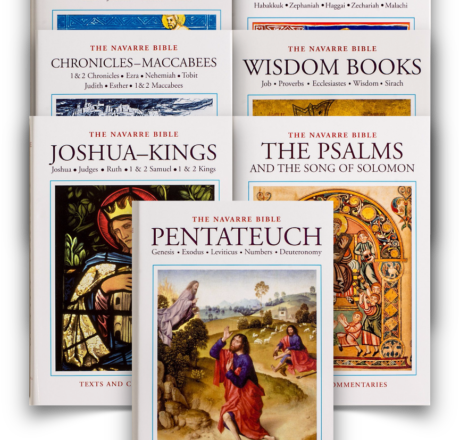
26:1-45:4. The first part of the book was a lengthy collection of oracles, usually in verse form, interspersed with narrative passages; this second part consists largely of prose narratives. It is very likely that most of them were written down by Baruch, Jeremiah's secretary, a person who was very close to him from the year 605 on (cf. 32:12, 16; 36:4-20; 45:15 and the Introduction to this book).
They tell us about Jeremiah's preaching and about the difficulties he encountered in the fulfillment of his ministry. The entire account, only occasionally interrupted by the inclusion of oracles, culminates in the so-called "Sufferings of Jeremiah" (37:1-44:30), in which we are told in some detail about what Jeremiah underwent in the period after the first deportation to Babylon, in 597. It was not only that people misunderstood him; he was ill-treated by those still living in the land of Judah and eventually, after the second conquest and deportation in the year 587, he was forcibly taken to Egypt, where he died.
These pages describe his clashes -- first with the people, priests and prophets (26:1-29:32) and then with the kings who occupied the throne during those years of turmoil (34:1-36:32). The episodes are not in chronological order, and they derive from a number of separate collections of documents. One collection contains narratives of events in the reign of Jehoiakim (chaps. 26; 35-36; and 45); another, events in the time of Zedekiah (chaps. 27-29). In the centre of this part comes what is called the "Book of Consolation" (30:1-33:26), highly poetic and theological pages.
26:1-29:32. The connecting thread in the first section of prose accounts of the life of Jeremiah is the prophet's fidelity to the mission entrusted to him by the Lord, despite ever-increasing opposition from his fellow citizens.
26:1-24. This chapter deals with the same incident in the temple that was narrated in 7:1-8:3 (see note), and which occurred in 608 BC. It contains a summary of what the prophet said on that occasion, and people's reactions to it (vv. 7-24). The religious life of the nation hinged on the temple, whose importance had increased further as a result of Josiah's recent reforms; but Jeremiah proclaims that the temple will be destroyed; it will he reduced to rubble, like the old shrine at Shiloh (vv. 2-6). This prophecy so angered people, priests and prophets that they called for Jeremiah's death (vv. 7-9), but the authorities managed to calm them down and Jeremiah escaped with his life (vv. 10-19), probably because his sincerity impressed the rulers: he was a man ready to risk his life in order to be faithful to his prophetic mission. Although one cannot he sure where the New Gate (v. 10) was, the rulers' intervention clearly had a judicial character to it, since legal proceedings took place at the city gates. The New Testament contains clear echoes of this account -- in the deliberations of the Sanhedrin on what to do with Jesus after he was arrested (cf. Mt 26:5-68 and par.), in the sentence handed down by Pilate (cf. Lk 23:22), and also in the account of the martyrdom of St Stephen (cf. Acts 6: 12-14).
This episode dramatically illustrates the sort of clashes that Jeremiah became involved in when carrying out his mission from the Lord. He has harsh things to say, and meets resistance from the people, who have even begun to think that nothing that offends their sensibilities or contradicts their desires can come from God. Even so, Jeremiah does not back down, for the Lord gives him the strength to stay true to his calling (cf. 1:7-10).
From: Matthew 13:54-58
No One is a Prophet in His Own Country
--------------------------------------
[54] And coming to His (Jesus') own country He taught them in their synagogue, so that they were astonished, and said, "Where did this Man get this wisdom and these mighty works? [55] Is this not the carpenter's son? Is not His mother called Mary? And are not His brethren James and Joseph and Simon and Judas? [56] And are not all His sisters with us? Where then did this Man get all this?" [57] And they took offense at Him. But Jesus said to them, "A prophet is not without honor except in his own country and in his own house." [58] And He did not do many mighty works there, because of their unbelief.
***********************************************************************
Commentary:
53-58. The Nazarenes' surprise is partly due to people's difficulty in recognizing anything exceptional and supernatural in those with whom they have been on familiar terms. Hence the saying, "No one is a prophet in his own country." These old neighbors were also jealous of Jesus. Where did He acquire this wisdom? Why Him rather than us? They were unaware of the mystery of Jesus' conception; surprise and jealousy cause them to be shocked, to look down on Jesus and not to believe in Him: "He came to His own home, and His own people received Him not" (John 1:11).
"The carpenter's son": this is the only reference in the Gospel to St. Joseph's occupation (in Mark 6:3 Jesus Himself is described as a "carpenter"). Probably in a town like Nazareth the carpenter was a general tradesman who could turn his hand to jobs ranging from metalwork to making furniture or agricultural implements.
For an explanation of Jesus' "brethren", see the note on Matthew 12:46-47.
[The note of Matthew 12:46-47 states: 46-47. "Brethren": ancient Hebrew, Aramaic and other languages had no special words for different degrees of relationship, such as are found in more modern languages. In general, all those belonging to the same family, clan and even tribe were "brethren".
In the particular case we have here, we should bear in mind that Jesus had different kinds of relatives, in two groups--some on His mother's side, others on St. Joseph's. Matthew 13:55-56 mentions, as living in Nazareth, James, Joseph, Simon and Judas ("His brethren") and elsewhere there is reference to Jesus' "sisters" (cf. Matthew 6:3). But in Matthew 27:56 we are told that James and Joseph were sons of a Mary distinct from the Blessed Virgin, and that Simon and Judas were not brothers of James and Joseph, but seemingly children of a brother of St. Joseph.
Jesus, on the other hand, was known to everyone as "the son of Mary" (Mark 6:3) or "the carpenter's son" (Matthew 13:55).
The Church has always maintained as absolutely certain that Jesus had no brothers or sisters in the full meaning of the term: it is a dogma that Mary was ever-Virgin (cf. note on Matthew 1:25).]
25. St. John Chysostom, addressing himself to St. Joseph, comments: Christ’s conception was the work of the holy Spirit, but do not think that this divine economy had nothing to do with you. for although it is true you had no part in the generation of Christ, and that the Virgin remained inviolate, nevertheless, what pertains to a father (not injuring the honour of virginity) that do I give you—the naming of the child. “For ‘you shall call his name.’ although you have not generated him, you will act as a father to him. Hence it is that, beginning with giving him his name, I associate you intimately with the one who is to be born.” (“Hom. On St. Matthew”, 4) Following the Greek text strictly, the New Vulgate version says: “et non cognoscebat eam, donec peperit filium.” The literal English translation is: “and he knew her not until she had borne a son.” The word ‘donec’ (until) of itself does not direct our attention to what happened afterwards; it simply points out what has happened up to that moment, that is, the virginal conception of Jesus Christ by a unique intervention of God. We find the same word in John 9:18 where it says that the Pharisees did not believe in the miraculous cure of the man blind from birth “until” (‘donec’) they called his parents. However, neither did they believe afterwards. Consequently, the word “until” does not refer to what happened later.
The Vulgate adds after “filium the words suum primogentium”, which in the Bible simply means “the first son”, without implying that there are any other children (cf, Exodus 13:2). This Latin variant gives no ground whatsoever for thinking that Our Lady had other children later. See the note on Luke 2:7.
[Note on Luke 2:7. "First-born son": it is usual for Sacred Scripture to refer to the first male child as "the first-born" whether or not there were other brothers (cf., for example, Exodus 13:2; 13:13; Numbers 15:8; Hebrews 1:6). The same practice is to be found in ordinary speech; take, for example, this inscription dating from approximately the same time as Christ was born, which was found near Tell-el-Jedvieh (in Egypt) in 1922, which states that a woman named Arsinoe died while giving birth to "her first-born son". Otherwise, as St. Jerome explains in his letter "Adversus Helvidium", 10, "if only He were first-born who was followed by other brothers, He would not deserve the rights of the first-born, which the Law lays down, until the other had been born"--which would be absurd, since the Law ordains that those first-born should be "ransomed" within a month of their birth (Numbers 18:16).
However, Jesus Christ is first-born in a much deeper sense independent of natural or biological considerations--which St. Bede describes in these words, summarizing a long tradition of the Fathers of the Church: "Truly the Son of God, who was made manifest in the flesh, belongs to a more exalted order not only because He is the Only-begotten of the Father by virtue of the excellence of His divinity; He is also first-born of all creatures by virtue of His fraternity with men: concerning this [His primogeniture] it is said: `For those whom He foreknew He also predestined to be conformed to the image of His Son, in order that He might be the first-born among many brethren' (Romans 8:29). And concerning the former [His being the Only-begotten] it is said `we have beheld His glory, glory as of the only Son from the Father' (John 1:14). Thus, He is only-begotten by the substance of the Godhead, and first-born through His assumption of humanity; first-born by grace, only-begotten by nature. This is why He is called brother and Lord; brother, because He is the first-born; Lord, because He is the Only-begotten" ("In Lucae Evangelium Expositio, in loc.").
Christian Tradition teaches, as a truth of faith, that Mary remained a virgin after Christ's birth, which is perfectly in keeping with Christ's status as her first-born. See, for example, these words of the Lateran Council of 649: "If anyone does not profess according to the holy Fathers that in the proper and true sense the holy, ever-Virgin, immaculate Mary is the Mother of God, since in this last age not with human seed but of the Holy Spirit she properly and truly conceived the divine Word, who was born of God the Father before all ages, and gave Him birth without any detriment to her virginity, which remained inviolate even after His birth: let such a one be condemned" (Canon 3).]
The Church has always taught that the perpetual virginity of our Lady is a truth to be held by all Catholics. For example, the following are the words of the Lateran Council of A.D. 649: “If anyone does not profess according to the holy Fathers that in the proper and true sense the holy, ever-virgin, immaculate Mary, is the Mother of God, since in this last age not with human seed but of the Holy Spirit she properly and truly conceived the Divine Word, who was born of God the Father before all ages, and gave him birth without any detriment to her virginity, which remained inviolate even after his birth: let such a one be condemned” (can. 3)
St. Jerome gives the following reasons why it was fitting that the Mother of God, as well as being a virgin, should also be married: first, so that Mary’s child would be clearly a descendent of King David (through the genealogy of St. Joseph); second, to ensure that on having a son her honor would not be questioned nor any legal penalty imposed on her; third, so that during the flight to Egypt she would have the help and protection of St. Joseph. He even points to a fourth possible reason, expressly taken from St. Ignatius Martyr, and to which he seems to give less importance—that the birth of Jesus would go unnoticed by the devil, who would not know about the virginal conception of our Lord (cf, Comm. On St. Matthew, 1, 1).
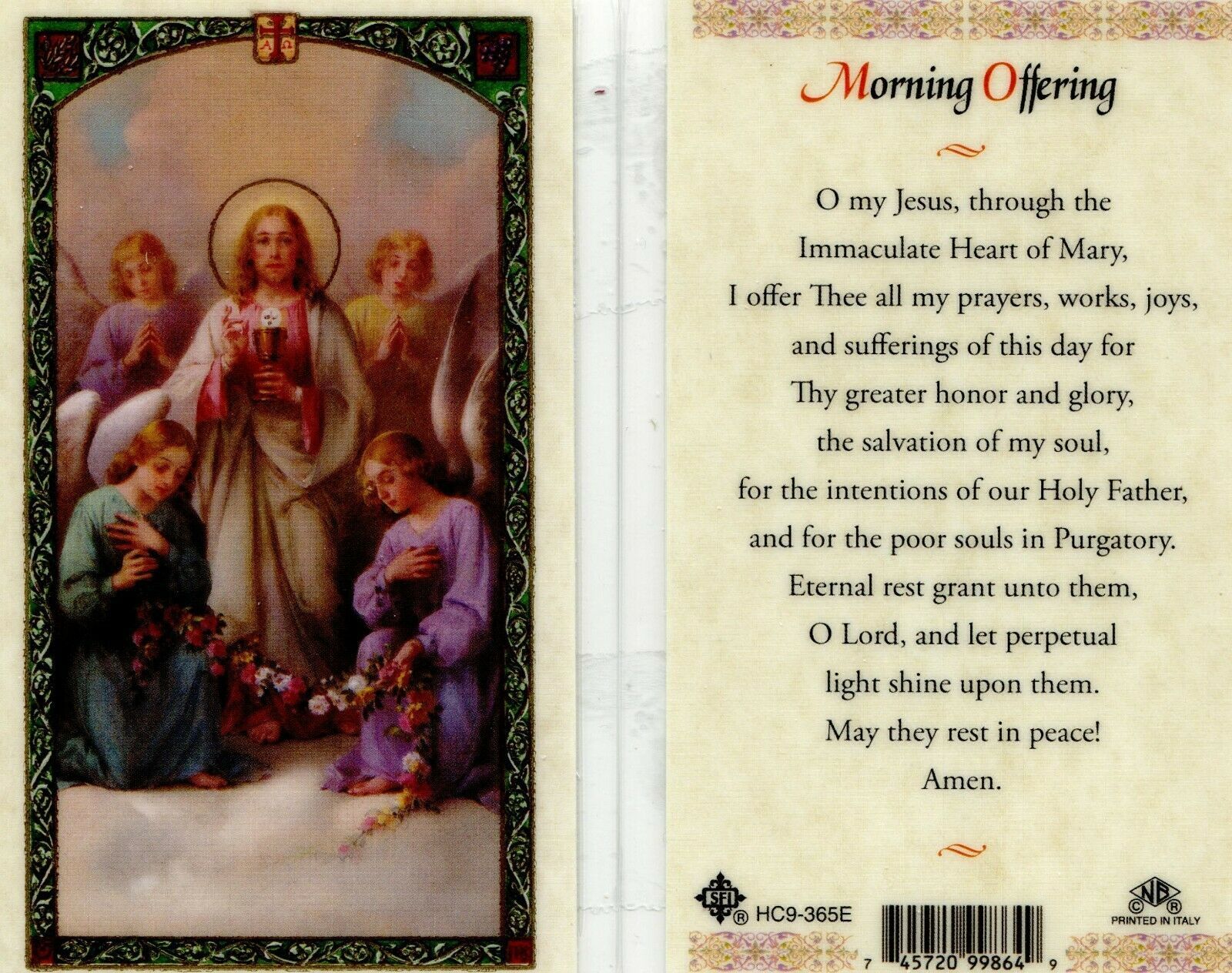
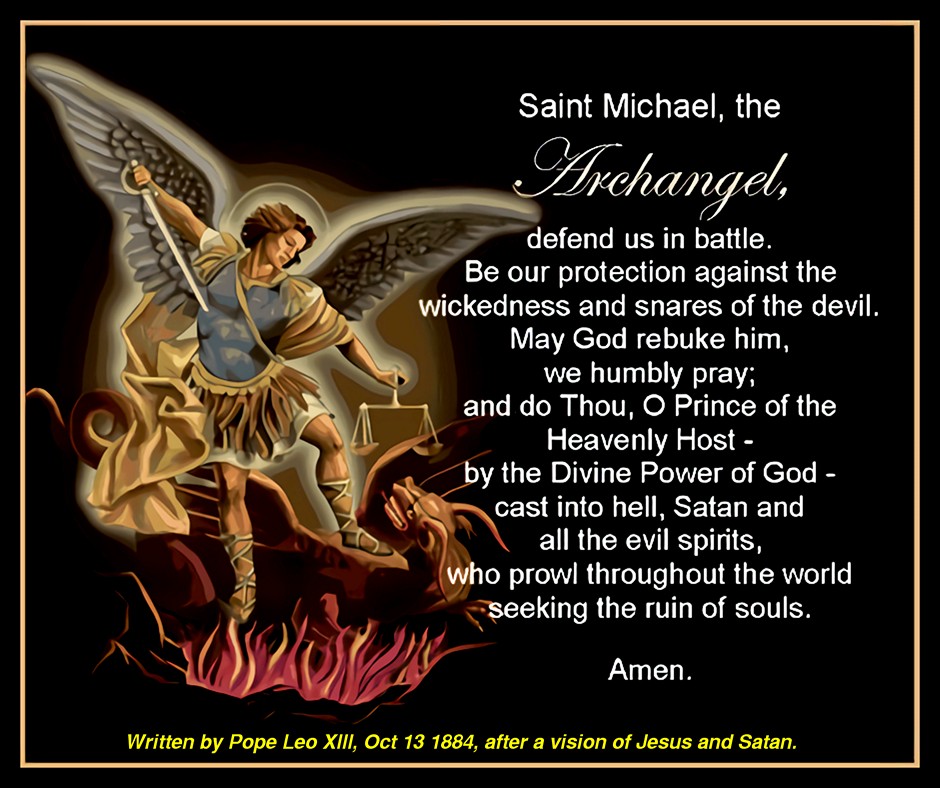
The Month of July is Dedicated to the Precious of Jesus

“They triumphed over the devil by the blood of the Lamb and by the word of their testimony; they did not love their lives so much as to shrink from death.” (Revelation 12:11)

Pope Leo XIV’s prayer intention for the month of July, 2026:
For respect for human life
Let us pray for the respect and protection of human life in all its stages, recognizing it as a gift from God.

Disclaimer: Opinions posted on Free Republic are those of the individual posters and do not necessarily represent the opinion of Free Republic or its management. All materials posted herein are protected by copyright law and the exemption for fair use of copyrighted works.


