Posted on 05/26/2026 3:02:39 PM PDT by ebb tide
Archbishop Vincenzo Paglia said Pope Francis deliberately sought to “recreate” the Pontifical Academy for Life and the John Paul II Institute in order to move Catholic theology beyond what he described as a “moralistic” framework based on natural law.
On May 21, in an interview published by the Italian outlet Settimana News, Paglia gave an extensive account of the reforms he carried out under Pope Francis at the Pontifical Academy for Life and the Pontifical John Paul II Theological Institute for Marriage and Family Sciences, arguing that both institutions had to be transformed in order to align with the theological and pastoral direction promoted during Francis’ pontificate, especially after the Synods on the Family and the publication of Amoris Laetitia in 2016.
READ: SSPX bishops-elect hail from big families
“One of the nerve centers of the whole operation,” Paglia said, “was the rethinking of the concept of nature, which stood at the foundation of a static and immutable vision of natural law, and with it the questioning of the essentialist and ahistorical paradigm on which all sexual and family moral theology developed until now had rested.”
Paglia added that critics of the reforms understood their implications correctly. “Here the opponents understood well: a very profound reform was at stake,” he admitted.
Paglia retraces in his interview the entire revolutionary process carried forward by Francis in the moral and bioethical field since his election. Immediately after the 2013 election, Pope Francis convened the two assemblies of the Synod on the Family. “Meanwhile, the anniversary of Humanae Vitae [in 2018] was also approaching, and Pope Francis felt the need to adapt doctrine to the new times,” he candidly admits, particularly regarding homosexuality and divorced and “remarried” Catholics.
“He [Francis] asked me to prepare a text that would highlight [Humanae Vitae’s] prophetic character, while also showing some necessary updates. I prepared a text drafted with the collaboration of a group of theologians. He appreciated it very much.”
Paglia also said this work later flowed into broader theological projects connected to moral theology and family ethics. After the publication of Amoris Laetitia in 2018, Pope Francis summoned Paglia and told him: “I would like to entrust you with the reorganization of the John Paul II Institute and the Pontifical Academy for Life.”
“He said it precisely meaning that both these institutions of the Holy See had to be rethought within this broadening of perspective: still not adequately matured theologically and culturally equipped within today’s Catholic sensibility,” the archbishop explained.
Describing the pre-reform culture of the two Vatican institutions, Paglia argued that both were excessively centered on abstract moral reasoning detached from lived experience. He said they operated through “the application of a doctrinal algorithm of morality and discipline” and reduced human experience to rigid categories of moral judgment.
He also criticized Pope Benedict XVI’s defense of “non-negotiable values,” describing it as part of a “strong moralistic accent” based on “abstract principles.” According to Paglia, however, “the Pontifical Academy and the John Paul II Institute had become places of pronounced doctrinal resistance to the papal teaching, which claimed to be more coherent with Christian truth than the perspective outlined by Amoris Laetitia.”
Regarding the Pontifical Academy for Life, Paglia said he sought to redefine the concept of “life” itself. Rather than treating life primarily as a matter connected to abortion or euthanasia, he argued that the academy had to adopt a wider – “even cosmic” – anthropological and social understanding in which “life” became “a totalizing category.”
Paglia said this broader perspective required a “plural, diversified and non-essentialist” approach capable of engaging modern culture and social developments. “The real turning point was actually codified by Pope Francis himself on the occasion of the 25th anniversary of the Pontifical Academy for Life, in a letter he sent me entitled Humana Communitas. In it, Francis outlines the fundamental lines of its development. I’m not sure how many have actually read it, but it is a remarkably clear manifesto of the new vision the pope was encouraging,” Paglia added.
As part of that shift, the academy expanded its membership beyond Catholic moral theologians to include experts in robotics, engineering, economics and artificial intelligence, as well as non-Catholics and non-believers. Paglia cited the academy’s collaboration with Microsoft and IBM on the 2020 “Rome Call for AI Ethics” as an example of the institution’s new direction.
READ: Bishop Strickland: Pope Leo XIV’s new encyclical centers on a theology of man, not God
The archbishop also defended the controversial appointment of pro-abortion economist Mariana Mazzucato to the academy, saying opposition to her nomination was used to attack the entire reform project. He said Francis personally intervened to support the decision, publicly declaring: “I chose her.”
Paglia also identified the 2024 book, The Joy of Life: A Journey of Theological Ethics, as the clearest expression of the theological project developed during these reforms. He said the volume proposed “a new paradigm of the ethics of human life and existence” and incorporated reflections concerning the “updating of Humanae Vitae.”
Regarding the reform of the John Paul II Institute, Paglia described it as so extensive that Francis decided not merely to modify the existing structure but to establish an entirely new institution. “We needed to recreate it.” The original institute, founded under Pope John Paul II, had focused heavily on conjugal morality and sexual ethics, according to Paglia, while paying insufficient attention to wider “social dimensions” of family life.
The replacement institution – the Pontifical John Paul II Theological Institute for Marriage and Family Sciences – introduced new academic disciplines and new faculty members. Paglia said the goal was to create a broader “theology of the family” rather than a narrow concentration on marriage and sexual morality.
“Among the most delicate issues was the very harsh confrontation with several figures who had led and shaped the institution in its previous phase. It was a small group, marked by a precise and scholastic moral perspective, which had effectively taken over the institute. John Paul II had become more a symbol of resistance to Francis…. Not surprisingly, on certain points, they defended positions even more restrictive than those of Pius XII,” Paglia said.
“It was also our initiative to suggest to Pope Francis the theme of fraternity as a central theological‑political category. He embraced it: the encyclical Fratelli tutti (2020) was born within this horizon. After Laudato si’ (2015), which identifies the ecological problem in the common home, the inevitable question becomes: who inhabits this home? The poor are all brothers. This is the thread that connects the two documents,” Paglia concluded.
...
"We needed to recreate it.”
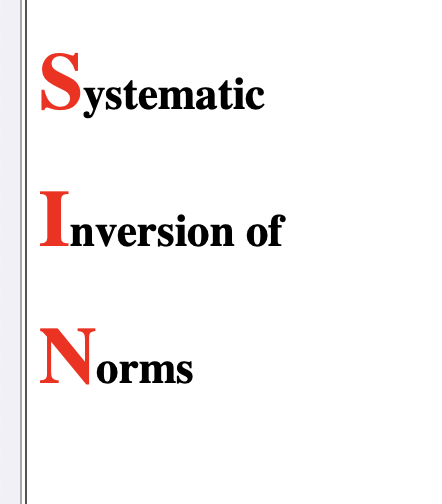
Which is exactly what Francis tried to do his "Sin-Nodal" Church.
Ping
They think they’ve discovered something new.
Biblical doctrine is for all time.
Please say a prayer for Yarden Garzon.
Being gay is something created by modern man.
Not the people in the Old Testament such as those in Sodom.
I think what happened to Sodom and Gomorrah pretty much adapted the doctrine to the presiding times.
Frances is a Muslim sympathizer, and a Communist. Last of all, he thought he was a Catholic. I disagree with him on that point.
He was a political operative for the Marxists.
just like the evil men Paul r
wrote about in Romans, where he condemned not just the wicked perverts, but especially those who approved and advocated for their “modern” perversions.
Disclaimer: Opinions posted on Free Republic are those of the individual posters and do not necessarily represent the opinion of Free Republic or its management. All materials posted herein are protected by copyright law and the exemption for fair use of copyrighted works.