
Free Republic
Browse · Search
Religion
Topics · Post Article

Skip to comments.

Catholic Caucus: Daily Mass Readings 11-April-2026
Universalis/Jerusalem Bible ^

Posted on 04/11/2026 7:27:49 AM PDT by annalex

11 April 2026

Easter Saturday


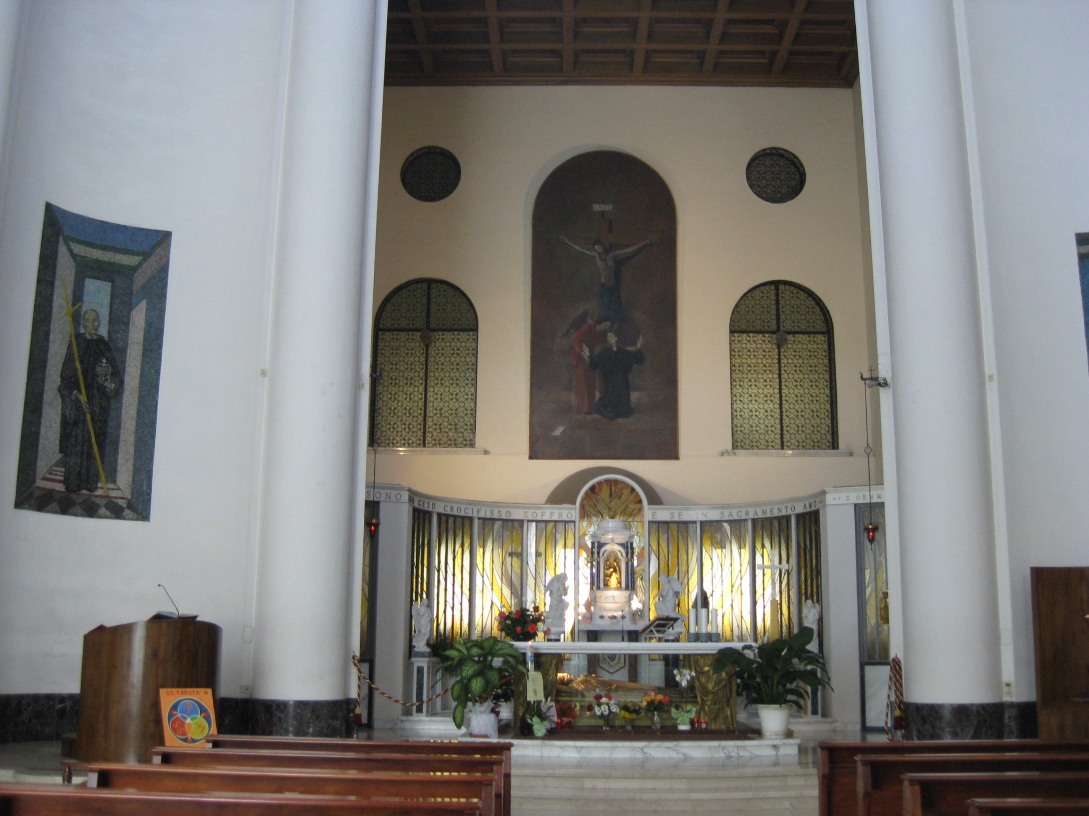
St Gemma Galgani Sanctuary, Lucca, Italy

Readings at Mass

Liturgical Colour: White. Year: A(II).


First readingActs 4:13-21

We cannot promise to stop proclaiming what we have seen and heard

The rulers, elders and scribes were astonished at the assurance shown by Peter and John, considering they were uneducated laymen; and they recognised them as associates of Jesus; but when they saw the man who had been cured standing by their side, they could find no answer. So they ordered them to stand outside while the Sanhedrin had a private discussion. ‘What are we going to do with these men?’ they asked. ‘It is obvious to everybody in Jerusalem that a miracle has been worked through them in public, and we cannot deny it. But to stop the whole thing spreading any further among the people, let us caution them never to speak to anyone in this name again.’
  So they called them in and gave them a warning on no account to make statements or to teach in the name of Jesus. But Peter and John retorted, ‘You must judge whether in God’s eyes it is right to listen to you and not to God. We cannot promise to stop proclaiming what we have seen and heard.’ The court repeated the warnings and then released them; they could not think of any way to punish them, since all the people were giving glory to God for what had happened.


Responsorial Psalm
Psalm 117(118):1,14-21
I will thank you, Lord, for you have given answer.
or
Alleluia, alleluia, alleluia!
Give thanks to the Lord for he is good,
  for his love has no end.
The Lord is my strength and my song;
  he was my saviour.
There are shouts of joy and victory
  in the tents of the just.
I will thank you, Lord, for you have given answer.
or
Alleluia, alleluia, alleluia!
The Lord’s right hand has triumphed;
  his right hand raised me up.
I shall not die, I shall live
  and recount his deeds.
I was punished, I was punished by the Lord,
  but not doomed to die.
I will thank you, Lord, for you have given answer.
or
Alleluia, alleluia, alleluia!
Open to me the gates of holiness:
  I will enter and give thanks.
This is the Lord’s own gate
  where the just may enter.
I will thank you for you have answered
  and you are my saviour.
I will thank you, Lord, for you have given answer.
or
Alleluia, alleluia, alleluia!
Sequence

Victimae Paschali Laudes

Christians, to the Paschal Victim
  offer sacrifice and praise.
The sheep are ransomed by the Lamb;
and Christ, the undefiled,
hath sinners to his Father reconciled.
Death with life contended:
  combat strangely ended!
Life’s own Champion, slain,
  yet lives to reign.
Tell us, Mary:
  say what thou didst see
  upon the way.
The tomb the Living did enclose;
I saw Christ’s glory as he rose!
The angels there attesting;
shroud with grave-clothes resting.
Christ, my hope, has risen:
he goes before you into Galilee.
That Christ is truly risen
  from the dead we know.
Victorious king, thy mercy show!

Gospel AcclamationPs117:24
Alleluia, alleluia!
This day was made by the Lord:
we rejoice and are glad.
Alleluia!

GospelMark 16:9-15

Go out to the whole world and proclaim the Good News

Having risen in the morning on the first day of the week, Jesus appeared first to Mary of Magdala from whom he had cast out seven devils. She then went to those who had been his companions, and who were mourning and in tears, and told them. But they did not believe her when they heard her say that he was alive and that she had seen him.
  After this, he showed himself under another form to two of them as they were on their way into the country. These went back and told the others, who did not believe them either.
  Lastly, he showed himself to the Eleven themselves while they were at table. He reproached them for their incredulity and obstinacy, because they had refused to believe those who had seen him after he had risen. And he said to them, ‘Go out to the whole world; proclaim the Good News to all creation.’

You can also view this page with the New Testament in Greek and English.

Universalis podcast: The week ahead – from 12 to 18 April

Back to normal, but keeping up the Easter joy. The hands and the side: nothing abolished but everything healed. The same thing in our own lives. Dante, Lethe and Eunoë. What Thomas needed to know. Faith and reason are not opposites: a mathematical example. The first steps of the baby Church. The Easter Alleluias in Universalis. (23 minutes)Play

Christian Art

Illustration

Each day, The Christian Art website gives a picture and reflection on the Gospel of the day.

The readings on this page are from the Jerusalem Bible, which is used at Mass in most of the English-speaking world. The New American Bible readings, which are used at Mass in the United States, are available in the Universalis apps, programs and downloads.

You can also view this page with the Gospel in Greek and English.


TOPICS: Catholic; General Discusssion; Prayer; Worship
KEYWORDS: catholic; easter; mk16; prayer
Message from Jim Robinson:

Dear FRiends,

We need your continuing support to keep FR funded. Your donations are our sole source of funding. No sugar daddies, no advertisers, no paid memberships, no commercial sales, no gimmicks, no tax subsidies. No spam, no pop-ups, no ad trackers.

If you enjoy using FR and agree it's a worthwhile endeavor, please consider making a contribution today:

Click here: to donate by Credit Card

Or here: to donate by PayPal

Or by mail to: Free Republic, LLC - PO Box 9771 - Fresno, CA 93794

Thank you very much and God bless you,

Jim

For your reading, reflection, faith-sharing, comments, questions, discussion.

1 posted on 04/11/2026 7:27:49 AM PDT by annalex
[ Post Reply | Private Reply | View Replies]

To: All

KEYWORDS: catholic; easter; mk16; prayer


2 posted on 04/11/2026 7:28:26 AM PDT by annalex (fear them not)
[ Post Reply | Private Reply | To 1 | View Replies]

To: nickcarraway; NYer; ELS; Pyro7480; livius; ArrogantBustard; Catholicguy; RobbyS; marshmallow; ...


Alleluia Ping

Please FReepmail me to get on/off the Alleluia Ping List.


3 posted on 04/11/2026 7:29:42 AM PDT by annalex (fear them not)
[ Post Reply | Private Reply | To 2 | View Replies]

To: annalex
Chris Robinson: My Dad [our Jim Robinson] Passed Away Peacefully Monday Night (October 27th) In Our Home.
Jim still needs our prayers. Thread 2
Prayer thread for Salvation's recovery
Pray for Ukraine
Prayer thread for Fidelis' recovery
Update on Jim Robinson's health issues
4 posted on 04/11/2026 7:30:31 AM PDT by annalex (fear them not)
[ Post Reply | Private Reply | To 3 | View Replies]

To: annalex
Mark
 English: Douay-RheimsLatin: Vulgata ClementinaGreek NT: Byzantine/Majority Text (2000)
 Mark 16
9But he rising early the first day of the week, appeared first to Mary Magdalen, out of whom he had cast seven devils. Surgens autem mane prima sabbati, apparuit primo Mariæ Magdalene, de qua ejecerat septem dæmonia.αναστας δε πρωι πρωτη σαββατου εφανη πρωτον μαρια τη μαγδαληνη αφ ης εκβεβληκει επτα δαιμονια
10She went and told them that had been with him, who were mourning and weeping. Illa vadens nuntiavit his, qui cum eo fuerant, lugentibus et flentibus.εκεινη πορευθεισα απηγγειλεν τοις μετ αυτου γενομενοις πενθουσιν και κλαιουσιν
11And they hearing that he was alive, and had been seen by her, did not believe. Et illi audientes quia viveret, et visus esset ab ea, non crediderunt.κακεινοι ακουσαντες οτι ζη και εθεαθη υπ αυτης ηπιστησαν
12And after that he appeared in another shape to two of them walking, as they were going into the country. Post hæc autem duobus ex his ambulantibus ostensus est in alia effigie, euntibus in villam :μετα δε ταυτα δυσιν εξ αυτων περιπατουσιν εφανερωθη εν ετερα μορφη πορευομενοις εις αγρον
13And they going told it to the rest: neither did they believe them. et illi euntes nuntiaverunt ceteris : nec illis crediderunt.κακεινοι απελθοντες απηγγειλαν τοις λοιποις ουδε εκεινοις επιστευσαν
14At length he appeared to the eleven as they were at table: and he upbraided them with their incredulity and hardness of heart, because they did not believe them who had seen him after he was risen again. Novissime recumbentibus illis undecim apparuit : et exprobravit incredulitatem eorum et duritiam cordis : quia iis, qui viderant eum resurrexisse, non crediderunt.υστερον ανακειμενοις αυτοις τοις ενδεκα εφανερωθη και ωνειδισεν την απιστιαν αυτων και σκληροκαρδιαν οτι τοις θεασαμενοις αυτον εγηγερμενον ουκ επιστευσαν
15And he said to them: Go ye into the whole world, and preach the gospel to every creature. Et dixit eis : Euntes in mundum universum prædicate Evangelium omni creaturæ.και ειπεν αυτοις πορευθεντες εις τον κοσμον απαντα κηρυξατε το ευαγγελιον παση τη κτισει

5 posted on 04/11/2026 7:35:48 AM PDT by annalex (fear them not)
[ Post Reply | Private Reply | To 4 | View Replies]

To: annalex

Catena Aurea by St. Thomas Aguinas

16:9–13

9. Now when Jesus was risen early the first day of the week, he appeared first to Mary Magdalene, out of whom he had cast seven devils.

10. And she went and told them that had been with him, as they mourned and wept.

11. And they, when they had heard that he was alive, and had been seen of her, believed not.

12. After that he appeared in another form unto two of them, as they walked, and went into the country.

13. And they went and told it unto the residue: neither believed they them.

AUGUSTINE. (de Con. Evan. iii. 25) Now we must consider how the Lord appeared after the resurrection. For Mark says, Now when Jesus was risen early the first day of the week, he appeared first to Mary Magdalene, out of whom he had cast seven devils.

BEDE. (ubi sup.) John tells us most fully how and when this appearance took place. But the Lord rose in the morning from the sepulchre in which He had been laid in the evening, that those words of the Psalm might be fulfilled, Heaviness may endure for a night, but joy cometh in the morning. (Ps. 30:5)

THEOPHYLACT. Or else put a stop at, Now when Jesus was risen, and then read, early the first day of the week he appeared, &c.

GREGORY. (ubi sup.) For as Samson at midnight not only left Gaza, but also carried away the gates of it, so also our Redeemer rising before the light, did not only come out free from hell, but destroyed also the very gates of hell. 1But Mark here testifies that seven devils were cast out of Mary; and what is meant by seven devils save all vices? for as by seven days is understood all time, so by the number seven 2 a whole is fitly figured.

THEOPHYLACT. But Mary had seven devils, because she was filled with all vices. Or else, by seven devils are meant seven spirits contrary to the seven virtues, as a spirit without fear, without wisdom, without understanding, and whatsoever else is opposed to the gifts of the Holy Ghost.

PSEUDO-JEROME. Again, He is shewn to her, out of whom He had cast seven devils, because harlots and publicans shall go before the synagogue into the kingdom of heaven, as the thief reached it before the Apostles.

BEDE. (ubi sup.) In the beginning also woman brought man into sin, now she, who first tasted death, first sees the resurrection, lest she should have to bear the reproach of perpetual guilt amongst men; and she who had been the channel of guilt to man, now has become the first channel of grace. For it goes on: And she went and told them that had been with him as they mourned and wept.

PSEUDO-JEROME. They mourn and weep because they had not yet seen, but after a short time they shall receive a consolation. For blessed are they that weep now, for they shall be comforted.

BEDE. (ubi sup.) Fitly too is this woman, who was the first to announce the joy of our Lord’s resurrection, said to have been cured of seven devils, lest any one worthily repenting of his sins should despair of pardon for what he had done, and that it might be shewn that where sin abounded, grace did much more abound. (Rom. 5:20)

SEVERIANUS. (Chrysologus ubi sup.) Mary brings the news, not now as a woman, but in the person of the Church, so that, as above woman was silent, here as the Church she might bring tidings and speak. There follows, And they when they heard that he was alive and had been seen by her, believed not.

GREGORY. (Hom. in Evan. xxix.) That the disciples were slow in believing our Lord’s resurrection was not so much a weakness of theirs as it is our strength. For the resurrection itself through their doubts was manifested by many proofs; and whilst we read and acknowledge them, what do we but become firmer through their doubting? There follows, After this he appeared in another form unto two of them as they walked and went to a farm house.

AUGUSTINE. (ubi sup.) Luke relates the whole story respecting these two, one of whom was Cleophas, but Mark here touches but slightly upon it. That village of which Luke speaks may without absurdity be supposed to be what is here called a farm house, and indeed in some Greek manuscripts it is called the country. But by this name are understood not only villages, but also boroughs and country towns, because they are without the city, which is the head and mother of all the rest. That which Mark expresses by the Lord’s appearance in another form, is what Luke means by saying that their eyes were holden that they could not know him. For something was upon their eyes, which was allowed to remain there, until the breaking of bread.

SEVERIANUS. (Chrysologus ubi sup.) But let no one suppose that Christ changed the form of His face by His resurrection, but the form is changed when of mortal it becomes immortal, so that this means that He gained a glorious countenance, not that He lost the substance of His countenance. But He was seen of two; because faith in the resurrection is to be preached and shewn to two people, that is, the Gentiles and the Jews. There follows, And they went and told it unto the residue, neither believed they them. How are we to understand the words of Mark compared with the account of Luke, that they then said, The Lord hath risen indeed, and hath appeared unto Simon, (Luke 24:34) if we do not suppose that there were some there who would not believe?

THEOPHYLACT. For he does not say this of the eleven, but of some others, whom He calls the residue.

PSEUDO-JEROME. But in a mystic sense we may understand that faith here labours, leading the active life, but there it reigns secure in the contemplative vision. Here we see His face through a glass, there we shall see the truth face to face, wherefore He was shewn to them as they were walking, that is, labouring, in another form. And when it was told, the disciples did not believe, because they saw, like Moses, that which was not enough for them, for he said, Shew me thyself; (Exod. 33:18. Sept.) forgetting his flesh, he prays in this life for that which we hope for in the life to come.

16:14–18

14. Afterward he appeared unto the eleven as they sat at meat, and upbraided them with their unbelief and hardness of heart, because they believed not them which had seen him after he was risen.

15. And he said unto them, Go ye into all the world, and preach the Gospel to every creature.

GLOSS. (non occ.) Mark, when about to finish his Gospel, relates the last appearance of our Lord to His disciples after His resurrection, saying,1 For the last time he appeared unto the eleven as they sat at meat. (Acts 1:4, 9)

GREGORY. (ubi sup.) We should observe that Luke says in the Acts, As he2 was eating with them he commanded that they should not depart from Jerusalem, and shortly afterwards, while they beheld he was taken up. For He ate, and then ascended, that by the act of eating, the truth of the flesh might be declared; wherefore it is also here said, that he appeared to them for the last time as they sat at meat.

PSEUDO-JEROME. But He appeared when all the eleven were together, that all might be witnesses, and relate to all men what they had seen and heard in common. It goes on: And upbraided them with their unbelief and hardness of heart, because they believed not them who had seen him after his resurrection.

AUGUSTINE. (ubi sup.) But how was this done the last time? The last occasion on which the Apostles saw the Lord upon earth happened forty days after the resurrection; but would He then have upbraided them for not believing those who had seen Him risen, when they themselves had so often seen Him after His resurrection? It remains therefore that we should understand that Mark wished to say it in few words, and said for the last time, because it was the last time that He shewed Himself that day, as night was coming on, when the disciples returned from the country into Jerusalem, and found, as Luke says (Luke 24:33.), the eleven and those who were with them, speaking together concerning the resurrection of our Lord. But there were some there who did not believe; when these then were sitting at meat, (as Mark says,) and were still speaking, (as Luke relates,) The Lord stood in the midst of them, and saith unto them, Peace be unto you; (Luke 24:36) as Luke and John say. (John 20:19) The rebuke therefore which Mark here mentions, must have been amongst those words, which Luke and John say, that the Lord at that time spoke to the disciples. But another question is raised, how Mark says that He appeared when the eleven sat at meat, if the time was the first part of the night on the Lord’s day, when John plainly says that Thomas was not with them, who, we believe, had gone out, before the Lord came in to them, after those two had returned from the village, and spoken with the eleven, as we find in Luke’s Gospel. But Luke in his relation leaves room for supposing that Thomas went out first, while they spoke these things, and that the Lord entered afterwards; Mark however from his saying, for the last time he appeared to the eleven as they sat at meat, forces us to believe that he was there, unless indeed, though one of them was absent, he chose to call them the eleven, because the company of the Apostles was then called by this number, before Matthias was chosen into the place of Judas. Or if this be a harsh way of understanding it, let us understand that it means that after many appearances, He shewed Himself for the last time, that is, on the fortieth day, to the Apostles, as they sat at meat, and that since He was about to ascend from them, He rather wished on that day to reprove them for not having believed those who had seen Him risen before seeing Him themselves, because after His ascension even the Gentiles on their preaching were to believe a Gospel, which they had not seen. And so the same Mark immediately after that rebuke says, And he said unto them, Go ye into all the world, and preach the Gospel to every creature. And lower down, He that believeth not shall be condemned. Since then they were to preach this, were not they themselves to be first rebuked, because before they saw the Lord they had not believed those to whom He had first appeared?

GREGORY. (ubi sup.) Another reason also why our Lord rebuked His disciples, when He left them as to His bodily presence, was, that the words which He spoke on leaving them might remain more deeply impressed upon the hearts of His hearers.

PSEUDO-JEROME. But He rebukes their want of faith, that faith might take its place; He rebukes the hardness of their stony heart, that the fleshy heart, full of love, might take its place.

GREGORY. (ubi sup.) After rebuking the hardness of their hearts, let us hear the words of advice which He speaks. For it goes on: Go ye into all the world, and preach the Gospel to every creature. Every man must be understood by every creature; for man partakes something of every creature; he has existence as have stones, life as trees, feeling as animals, understanding as have Angels. For the Gospel is preached to every creature, because he is taught by it, for whose sake all are created, whom all things are in some way like, and from whom therefore they are not alien. By the name of every creature also every nation of the Gentiles may be meant. For it had been said before, Go not into the way of the Gentiles. (Matt. 10:5) But now it is said, Preach the Gospel to every creature, so that the preaching of the Apostles which was thrust aside by Judæa, might be an assistance to us, since Judæa had haughtily rejected it, thus witnessing to her own damnation.

THEOPHYLACT. Or else; to every creature, that is, whether believing or unbelieving. It goes on: He that believeth and is baptized shall be saved. For it is not enough to believe, for he who believeth and is not baptized, but is a catechumen, has not yet attained to perfect salvation.

Catena Aurea Mark 16

6 posted on 04/11/2026 7:38:59 AM PDT by annalex (fear them not)
[ Post Reply | Private Reply | To 5 | View Replies]

To: annalex


Resurrection

Piero della Francesca

1463-65
Mural in fresco and tempera, 225 x 200 cm
Pinacoteca Comunale, Sansepolcro

7 posted on 04/11/2026 7:41:50 AM PDT by annalex (fear them not)
[ Post Reply | Private Reply | To 6 | View Replies]

To: annalex

Who Was St. Gemma Galgani and What Is the Significance of Her Mystical Experiences?

CATHOLIC ARTICLE, CATHOLIC PRAYER / Catholic History and Tradition, Catholicism and Health, Mary and the Saints, Problem of Evil and Suffering, The Pope and Papacy / By / 18 minutes of reading

Brief Overview

Detailed Response

Early Life and Family Tragedies

St. Gemma Galgani, born on March 12, 1878, in Camigliano, Italy, was the fifth of eight children in a devout Catholic family. Her father, Enrico Galgani, was a prosperous pharmacist, and her mother, Aurelia, instilled a deep faith in her children. The family relocated to Lucca shortly after Gemma’s birth to provide better educational opportunities. At the age of two and a half, Gemma faced the devastating loss of her mother to tuberculosis, a disease that would later claim other family members. This early tragedy profoundly shaped her spiritual outlook, as she later recalled hearing a voice during Mass asking her to surrender her mother to God. Gemma’s response, offering her mother but asking to be taken to heaven as well, reflected her early inclination toward self-sacrifice. Her mother’s death at age eight marked the beginning of a series of losses, including her brother Gino, who died while studying for the priesthood, and her sister Giulia. These events deepened her reliance on prayer and her devotion to the Blessed Virgin Mary, whom she saw as a maternal figure. Despite her grief, Gemma excelled at a Catholic boarding school run by the Sisters of St. Zita, showing particular aptitude in French, arithmetic, and music. Her early life set the stage for a spiritual journey characterized by suffering and an intense desire for holiness.

Education and Early Spiritual Development

Gemma’s education at the Sisters of St. Zita school in Lucca fostered her intellectual and spiritual growth. She was known for her intelligence and devotion, particularly in religious studies, and developed a strong attachment to the Rosary and the Blessed Virgin Mary. At age nine, she received her First Communion, an event she described as igniting a “fire” within her, signaling her deep Eucharistic devotion. Her teachers noted her piety, as she often expressed a desire to avoid sin and grow closer to Jesus. Gemma’s spiritual director, Monsignor Giovanni Volpi, initially hesitated to allow her Communion due to her young age, but she received special permission on the Feast of the Sacred Heart in 1887. This moment solidified her commitment to a life of prayer and sacrifice. Despite her academic success, Gemma faced ongoing health challenges, including a painful foot infection that required surgery without anesthesia, which she endured by focusing on a crucifix. Her resilience in the face of physical suffering mirrored her growing spiritual conviction. She also began to experience mystical phenomena, such as hearing divine voices, which set her apart even as a child. These early experiences laid the foundation for her later mystical life and her identification with Christ’s suffering.

Personal Losses and Responsibilities

The death of Gemma’s father in 1896 left the family in financial ruin, forcing her to take on significant responsibilities at age 18. Orphaned, she became the primary caregiver for her younger siblings, assisted by her aunt Carolina. Despite the burden, she continued her charitable works, making altar linens, teaching children catechism, and visiting the sick. Gemma’s faith sustained her through these challenges, as she saw her hardships as opportunities to unite with Christ’s suffering. She declined two marriage proposals, choosing instead to dedicate herself to God, a decision that reflected her vow of chastity made during a serious illness. Her health continued to deteriorate, and at age 20, she developed spinal meningitis, a condition that nearly claimed her life. Gemma attributed her miraculous recovery to the intercession of St. Margaret Mary Alacoque and St. Gabriel of Our Lady of Sorrows, to whom she had a strong devotion. This healing strengthened her resolve to pursue a religious vocation, though her poor health prevented her from entering a convent. Instead, she lived as a laywoman, adopting the spirituality of the Passionists, a religious order focused on meditating on Christ’s Passion. Her life during this period was marked by simplicity, prayer, and a growing sense of divine purpose.

Mystical Experiences and the Stigmata

On June 8, 1899, the eve of the Feast of the Sacred Heart, Gemma experienced one of the most significant events of her life: the appearance of the stigmata. She described feeling intense sorrow for her sins, followed by a vision of the Virgin Mary and Jesus, whose wounds emitted flames that touched her hands, feet, and heart. The wounds bled from Thursday evening to Friday afternoon each week, a phenomenon witnessed by her confessor, Venerable Germano Ruoppolo, a Passionist priest. Gemma’s stigmata were not permanent; the wounds would heal without scars by Friday, only to reappear the following week. She also reported conversations with Jesus, Mary, and her guardian angel, who delivered messages about spiritual matters and future events. These experiences were accompanied by ecstasies, during which she was sometimes found levitating or in deep prayer. Her confessor documented these events meticulously, noting her humility and obedience in praying for the stigmata to cease when instructed. Skeptics, including a physician named Pietro Pfanner, suggested her wounds might be self-inflicted or hysterical, but her spiritual director and others close to her affirmed their supernatural origin. Gemma’s mystical life was deeply tied to her meditation on John 19:34, the piercing of Christ’s side, which she saw as a call to share in His redemptive suffering. Her experiences underscored the Catholic teaching on the value of suffering for the salvation of souls, as referenced in CCC 1505.

Life with the Giannini Family

Unable to join a convent due to her health, Gemma found a spiritual home with the Giannini family in Lucca, who welcomed her as an adopted daughter. The Gianninis, devout Catholics, provided a supportive environment where she could practice her faith freely. Gemma contributed to the household through domestic tasks like crocheting and caring for the sick, all while maintaining a rigorous prayer life. She adopted the Passionist spirituality, wearing a Passionist emblem and reciting the Divine Office daily, as if living as a nun outside the cloister. Her time with the Gianninis allowed her to deepen her devotion to the Passion of Christ, often spending hours in prayer before the Blessed Sacrament. Gemma’s presence in the household was a source of inspiration, though some family members, including her sister Angelina, occasionally mocked her mystical experiences. Despite this, she remained patient and forgiving, embodying the Christian call to love one’s enemies (Matthew 5:44). Her spiritual director, Fr. Germano, continued to guide her, documenting her visions and ensuring her obedience to Church authority. The Giannini home became a place where Gemma’s sanctity shone, as she balanced ordinary tasks with extraordinary spiritual encounters. This period of her life highlighted the Catholic ideal of living holiness in everyday circumstances, as discussed in CCC 2013.

Spiritual Trials and Demonic Attacks

Gemma’s mystical life was not without intense spiritual trials, including reported demonic persecutions. She described frequent attacks by the devil, who sought to disrupt her prayer and tempt her to despair. These experiences, documented in her diary and by her confessor, included physical disturbances, such as being thrown from her bed, and psychological torments. Gemma’s resilience in these trials was rooted in her trust in God and her reliance on her guardian angel, whom she claimed appeared to her regularly. Her spiritual director instructed her to resist these attacks through prayer and obedience, which she did with unwavering faith. These struggles align with the Catholic understanding of spiritual warfare, as outlined in CCC 409, which acknowledges the reality of evil and the need for perseverance in faith. Gemma’s experiences of demonic opposition were seen by her contemporaries as evidence of her holiness, as the devil often targets those closest to God. She also faced human opposition, including calumnies from those who doubted her visions or stigmata. Despite these challenges, Gemma remained focused on her mission to suffer for the salvation of souls, offering her trials as a sacrifice. Her endurance of spiritual and physical suffering reflects the Catholic call to carry one’s cross (Luke 9:23).

Final Illness and Death

In 1902, Gemma was struck by a mysterious illness, later diagnosed as tuberculosis, which caused severe physical pain and weight loss. Despite her suffering, she continued her daily Mass attendance and Holy Communion, supported by her adoptive mother, Cecilia Giannini. Her condition worsened during Holy Week of 1903, and by Good Friday, she entered a prolonged ecstasy, describing herself as “nailed to the Cross” with Jesus. On Holy Saturday, April 11, 1903, at age 25, Gemma died peacefully in a rented room across from the Giannini home, where she had been moved due to fears of contagion. Those present at her death noted her serene expression, which belied the intensity of her final sufferings. Her spiritual director and the Giannini family mourned her loss but recognized her profound sanctity. Gemma’s death was seen as the culmination of her life of redemptive suffering, a concept central to Catholic theology (CCC 618). Her body was later enshrined in the Passionist monastery in Lucca, fulfilling her prediction that such a convent would be established. Her heart was enshrined in a Passionist church in Madrid, Spain, a testament to her widespread veneration. Gemma’s death marked the beginning of her enduring legacy as a saint and mystic.

Canonization and Legacy

Gemma’s life was thoroughly examined by the Church, leading to her beatification by Pope Pius XI on May 14, 1933, and canonization by Pope Pius XII on May 2, 1940. Her canonization recognized her heroic virtue, mystical experiences, and dedication to Christ’s Passion. Her feast day is celebrated on April 11, though the Passionists honor her on May 16. Gemma is a patron saint for students, pharmacists, paratroopers, and those suffering from back pain, headaches, or loss of parents. Her writings, including her diary and letters, reveal a soul consumed by love for Christ and a desire to suffer for others’ salvation. These writings continue to inspire Catholics seeking to deepen their spiritual lives. Her life exemplifies the Catholic teaching on the communion of saints, where the faithful on earth are united with those in heaven (CCC 957). Gemma’s influence extends globally, with devotionals and prayers dedicated to her intercession. Her relics in Lucca and Madrid remain pilgrimage sites, drawing those seeking her powerful intercession. Her canonization underscores the Church’s recognition of mystical phenomena as signs of God’s grace when accompanied by humility and obedience.

The Significance of Her Stigmata

The stigmata Gemma bore are among the most striking aspects of her mystical life, symbolizing her deep union with Christ’s Passion. The wounds, appearing weekly from Thursday to Friday, were seen as a physical manifestation of her spiritual participation in Galatians 2:20, “I have been crucified with Christ.” Her confessor, Fr. Germano, verified the authenticity of these wounds, noting their appearance and disappearance without medical explanation. While skeptics like Dr. Pfanner attributed them to hysteria, the Church’s investigation affirmed their supernatural character, consistent with other stigmatics like St. Francis of Assisi and St. Padre Pio. The stigmata were not merely a physical phenomenon but a theological sign, pointing to the redemptive power of Christ’s sacrifice (CCC 1505). Gemma’s experience of the stigmata was always accompanied by intense prayer and sorrow for sin, reflecting her role as a victim soul offering herself for others. Her wounds were a source of both suffering and consolation, as she felt united with Jesus in His agony. The Church teaches that such mystical phenomena, when genuine, serve to draw the faithful closer to Christ’s love and sacrifice. Gemma’s stigmata remain a powerful witness to the Catholic belief in the transformative power of suffering. Her experiences continue to inspire those facing physical or spiritual trials to unite their sufferings with Christ.

Union with Christ’s Passion

Gemma’s spirituality was deeply rooted in the Passionist charism, which emphasizes continuous meditation on Christ’s suffering and death. Her title, “Daughter of the Passion,” reflects her profound imitation of Christ’s sacrifice, as she sought to share in His redemptive work. She frequently meditated on Isaiah 53:5, which speaks of the Suffering Servant wounded for humanity’s sins. Her mystical experiences, including visions of Jesus showing His wounds, taught her that suffering is a path to love, as she recorded in her autobiography. This aligns with the Catholic understanding of redemptive suffering, where personal trials can be offered for the salvation of souls (CCC 1521). Gemma’s ecstasies often involved entering into Christ’s agony in the Garden of Gethsemane, experiencing sorrow for the sins of the world. Her spiritual director noted that these moments brought her both intense pain and profound peace. Her life illustrates the Catholic teaching that union with Christ’s Passion transforms suffering into an act of love. Gemma’s example encourages believers to embrace their crosses as a means of growing closer to God. Her devotion to the Passion remains a model for Catholics seeking to live out their faith through sacrifice and prayer.

Role as a Victim Soul

Gemma’s identification as a victim soul is central to understanding her spiritual mission. In Catholic theology, a victim soul voluntarily offers their sufferings for the salvation of others, participating in Christ’s redemptive work (CCC 618). Gemma embraced this role, praying for sinners and offering her physical and spiritual trials as a sacrifice. Her diary reveals her intense desire to love Jesus and atone for humanity’s sins, often at great personal cost. She believed that her sufferings, including her stigmata and illnesses, were a means of sharing in Christ’s Passion. Her experiences of demonic attacks further underscored her role, as she saw these as attempts to deter her from her mission. Gemma’s confessor affirmed her calling, noting her obedience and humility in accepting God’s will. Her life reflects the Catholic teaching that suffering, when united with Christ, has salvific value (Colossians 1:24). Her example inspires Catholics to see their own hardships as opportunities for spiritual growth and intercession. Gemma’s role as a victim soul continues to resonate with those seeking to offer their lives for others’ salvation.

Devotion to the Sacred Heart

Gemma’s devotion to the Sacred Heart of Jesus was a cornerstone of her spirituality, influencing her mystical experiences and stigmata. She saw the Sacred Heart as the source of Christ’s infinite love, as depicted in John 19:34, where blood and water flowed from His pierced side. Her miraculous cure from spinal meningitis in 1899 was attributed to her novena to St. Margaret Mary Alacoque, a key figure in promoting Sacred Heart devotion. Gemma’s stigmata first appeared on the eve of the Feast of the Sacred Heart, underscoring its significance in her life. She often spoke of feeling “consumed” by Christ’s love during Eucharistic adoration, a sentiment echoed in her writings. This devotion aligns with the Catholic emphasis on the Sacred Heart as a symbol of divine mercy and love (CCC 478). Gemma’s experiences of ecstasy before the Blessed Sacrament deepened her union with Christ, whom she saw as her “irresistible lover.” Her spiritual director encouraged this devotion, recognizing its role in her sanctity. Her life exemplifies the Catholic call to respond to Christ’s love with total self-giving. Today, her devotion inspires Catholics to cultivate a personal relationship with Jesus through the Eucharist and prayer.

Influence on the Passionist Order

Gemma’s connection to the Passionist Order profoundly shaped her spirituality and legacy. Although she could not join the Passionists as a nun due to her health, she lived their charism as a tertiary, adopting their focus on Christ’s Passion. Her spiritual director, Fr. Germano, a Passionist priest, guided her through her mystical experiences and documented her life. Gemma predicted the establishment of a Passionist convent in Lucca, a prophecy fulfilled after her death. Her life and writings have inspired countless Passionists to deepen their commitment to meditating on Christ’s suffering. The Passionist spirituality, centered on Philippians 2:8, emphasizes Christ’s obedience unto death, a theme Gemma embodied through her own sacrifices. Her relics, housed in the Passionist monastery in Lucca, continue to draw devotees seeking her intercession. The enshrining of her heart in a Passionist church in Madrid further reflects her global influence within the order. Gemma’s life serves as a model for Passionists and lay Catholics alike to live out their faith through contemplation of the Cross. Her legacy within the order underscores the enduring relevance of her spirituality.

Skepticism and Church Validation

Gemma’s mystical experiences, particularly her stigmata, faced skepticism during her lifetime, even from those close to her. Dr. Pietro Pfanner, who examined her wounds, concluded they might be self-inflicted or the result of hysteria, citing the lack of permanent marks. Her sister Angelina occasionally mocked her ecstasies, reflecting the mixed reception she received in Lucca. Despite this, her confessor and spiritual director, Fr. Germano, conducted thorough investigations, affirming the authenticity of her experiences. The Church’s rigorous canonization process, culminating in 1940, validated her mystical phenomena as genuine signs of God’s grace. The Catholic Church teaches that such extraordinary experiences must be scrutinized carefully to ensure they align with faith and morals (CCC 801). Gemma’s humility and obedience, even when instructed to pray for the cessation of her stigmata, supported her credibility. The Church’s approval of her life and writings dispelled doubts, establishing her as a model of sanctity. Her canonization process overcame initial obstacles, reflecting the Church’s confidence in her holiness. Gemma’s validated experiences continue to inspire Catholics to trust in God’s mysterious workings.

Theological Significance of Her Suffering

Gemma’s life offers profound insights into the Catholic theology of suffering, particularly the concept of redemptive suffering. The Church teaches that suffering, when united with Christ’s Passion, can contribute to the salvation of souls (CCC 1521). Gemma’s voluntary acceptance of physical and spiritual trials exemplified this teaching, as she offered her pain for sinners. Her stigmata and ecstasies were seen as signs of her participation in Christ’s sacrifice, as described in Romans 8:17. Her writings emphasize that suffering taught her to love, a lesson she attributed to Jesus Himself. This aligns with the Catholic understanding that love is perfected through sacrifice (John 15:13). Gemma’s endurance of demonic attacks and human opposition further highlighted her role as a victim soul. Her life challenges Catholics to view suffering not as a punishment but as an opportunity for spiritual growth. The Church’s recognition of her sanctity affirms the transformative power of suffering when offered to God. Gemma’s theological legacy continues to guide Catholics in embracing their crosses with faith and love.

Devotion and Intercession Today

St. Gemma Galgani’s legacy endures through widespread devotion and her role as a powerful intercessor. Pilgrims visit her relics in Lucca and Madrid, seeking her aid for various needs, including healing from physical ailments and spiritual struggles. Her patronage of students, pharmacists, and those suffering from back pain or headaches reflects her broad appeal. Devotional practices, such as the Novena to St. Gemma, draw on her writings and prayers, emphasizing her love for Christ. Her diary and letters, published after her death, offer spiritual insights that resonate with modern Catholics. The Catholic Church encourages devotion to saints as a means of growing closer to God (CCC 957). Gemma’s example of humility, obedience, and redemptive suffering inspires believers to persevere in faith. Her intercession is particularly sought by those facing temptations or seeking purity of heart, as she is a patron in these areas. Online communities and Catholic websites continue to promote her life and teachings, ensuring her relevance today. Her enduring devotion underscores the timelessness of her spiritual message.

Lessons for Contemporary Catholics

Gemma’s life offers valuable lessons for Catholics today, particularly in navigating suffering and spiritual challenges. Her unwavering faith in the face of loss, illness, and skepticism demonstrates the power of trust in God’s providence. Her devotion to the Eucharist and the Sacred Heart encourages Catholics to deepen their sacramental life. The Catholic Church teaches that the Eucharist is the source and summit of Christian life (CCC 1324), a truth Gemma lived out through her frequent adoration. Her example of offering suffering for others challenges believers to see hardships as opportunities for grace. Her obedience to her spiritual director reflects the importance of guidance within the Church, as emphasized in CCC 87. Gemma’s resilience against demonic attacks reminds Catholics of the reality of spiritual warfare and the need for prayerful vigilance (Ephesians 6:12). Her life also highlights the value of lay holiness, as she lived her vocation outside the cloister. Contemporary Catholics can draw inspiration from her to live faithfully in their daily circumstances. Her story encourages a renewed commitment to prayer, sacrifice, and trust in God’s love.

Her Writings and Spiritual Insights

Gemma’s diary and letters, preserved by her confessor, provide a window into her spiritual life and mystical experiences. These writings, published posthumously, reveal her intense love for Jesus and her desire to suffer for sinners. She described her ecstasies, visions, and conversations with Christ in vivid detail, offering insights into the mystery of divine love. Her autobiography, written under obedience, emphasizes the importance of suffering as a path to holiness, echoing 1 Peter 4:13. Her words, such as “It is by suffering that one learns how to love,” encapsulate her theology of the cross. These writings have been a source of consolation for countless Catholics, as noted by her confessor, Fr. Germano. The Church recognizes the value of such spiritual writings for fostering devotion and understanding (CCC 133). Gemma’s humility in sharing her experiences, despite initial reluctance, reflects her obedience to God’s will. Her writings continue to be studied by theologians and spiritual seekers alike. They serve as a testament to the power of a life wholly dedicated to Christ.

Conclusion: A Model of Holiness

St. Gemma Galgani’s life, though brief, was a powerful witness to the Catholic faith, marked by her mystical union with Christ’s Passion. Her stigmata, visions, and redemptive suffering highlight the Church’s teaching on the salvific value of sharing in Christ’s cross. Her devotion to the Sacred Heart and the Eucharist offers a model for deepening one’s sacramental life. Despite skepticism and personal trials, her obedience and humility earned her the Church’s recognition as a saint. Her legacy, preserved in her writings and the devotion of the faithful, continues to inspire Catholics worldwide. Gemma’s life challenges believers to embrace suffering, trust in God’s love, and seek holiness in everyday life. Her intercession remains a source of strength for those facing physical, spiritual, or emotional challenges. As a “Daughter of the Passion,” she exemplifies the call to live fully for Christ, as taught in CCC 2013. Her story invites Catholics to reflect on their own vocation to holiness and sacrifice. St. Gemma Galgani remains a radiant example of faith, love, and perseverance in the modern era.

Disclaimer: This article presents Catholic teaching for educational purposes. For official Church teaching, consult the Catechism and magisterial documents. For personal spiritual guidance, consult your parish priest or spiritual director. Questions? Contact editor@catholicshare.com


catholicshare.com

8 posted on 04/11/2026 7:47:52 AM PDT by annalex (fear them not)
[ Post Reply | Private Reply | To 7 | View Replies]

To: annalex

9 posted on 04/11/2026 7:50:15 AM PDT by annalex (fear them not)
[ Post Reply | Private Reply | To 8 | View Replies]

To: annalex
Beautiful Scripture

The rulers, elders and scribes were astonished at the assurance shown by Peter 
and John, considering they were uneducated laymen; and they recognised them 
as associates of Jesus; but when they saw the man who had been cured 
standing by their side, they could find no answer. So they ordered them to 
stand outside while the Sanhedrin had a private discussion. ‘What are we going 
to do with these men?’ they asked. ‘It is obvious to everybody in Jerusalem that 
a miracle has been worked through them in public, and we cannot deny it. But 
to stop the whole thing spreading any further among the people, let us caution 
them never to speak to anyone in this name again.’
  So they called them in and gave them a warning on no account to make 
statements or to teach in the name of Jesus. But Peter and John retorted, ‘You 
must judge whether in God’s eyes it is right to listen to you and not to God. We 
cannot promise to stop proclaiming what we have seen and heard.’ The court 
repeated the warnings and then released them; they could not think of any way 
to punish them, since all the people were giving glory to God for what had 
happened.

10 posted on 04/11/2026 8:11:34 AM PDT by af_vet_1981 ( The bus came by and I got on, That's when it all began.)
[ Post Reply | Private Reply | To 1 | View Replies]

To: annalex

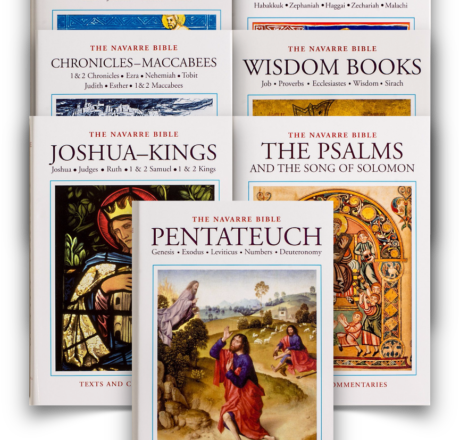
NAVARRE BIBLE COMMENTARY(RSV)

Ad Majorem Dei Gloriam (To the Greater Glory of God)

Today’s First Reading

From: Acts 4:13-21

Address To the Sanhedrin (Continuation)
---------------------------------------
[13] Now when they (the Sanhedrin) saw the boldness of Peter and John, and perceived that they were uneducated, common men, they wondered; and they recognized that they had been with Jesus. [14] But seeing the man that had been healed standing beside them, they had nothing to say in opposition. [15] But when they had commanded them to go aside out of the council, they conferred with one another, [16] saying, "What shall we do with these men? For that a notable sign has been performed through them is manifest to all the inhabitants of Jerusalem, and we cannot deny it. [17] But in order that it may spread no further among the people, let us warn them to speak no more to any one in this Name." [18] So they called them and charged them not to speak or teach at all in the name of Jesus. [19] But Peter and John answered them, "Whether it is right in the sight of God to listen to you rather than to God you must judge; [20] for we cannot but speak of what we have seen and heard." [21] And when they had further threatened them, they let them go, finding no way to punish them, because of the people; for all men praised God for what had happened.

***********************************************************************
Commentary:

13. The members of the Sanhedrin are surprised by Peter's confidence and by the way these men, who are not well versed in the Law, are able to use Sacred Scripture. "Did not the Apostles," (St. John) Chrysostom asks in admiration, "poor and without earthly weapons, enter into battle against enemies who were fully armed [...]? Without experience, without skill of the tongue, they fought against experts in rhetoric and the language of the academies" ("Hom. on Acts", 4).

18-20. In one of his homilies Pope St John Paul II gives us a practical commentary on this passage, which help us see the right order of priorities and give pride of place to the things of God: "Whereas the elders of Israel charge the Apostles not to speak about Christ, God, on the other hand, does not allow them to remain silent. [...] In Peter's few sentences we find a full testimony to the Resurrection of the Lord. [...] The word of the living God addressed to men obliges us more than any other human commandment or purpose. This word carries with it the supreme eloquence of truth, it carries the authority of God Himself. [...]

"Peter and the Apostles are before the Sanhedrin. They are completely and absolutely certain that God Himself has spoken in Christ, and has spoken definitely through His Cross and Resurrection. Peter and the Apostles to whom this truth was directly given--as also those who in their time received the Holy Spirit--must bear witness TO IT.

Believing means accepting with complete conviction the truth that comes from God, drawing support from the grace of the Holy Spirit 'whom God has given to those who obey Him' (Acts 5:32) to accept what God has revealed and what comes to us through the Church in its living transmission, that is, in Tradition. The organ of this Tradition is the teaching of Peter and of the Apostles and of their successors.

"Over the centuries the sanhedrins change which seek to impose silence, abandonment or distortion of this truth. The "sanhedrins of the contemporary world" are many and of all types. These sanhedrins are each and every person who rejects divine truth; they are systems of human thought, of human knowledge; they are various "conceptions of the world" and also the various programs of human behavior; they are also the different "forms of pressure" used by so-called public opinion, mass civilization, media of social communication, which are materialist or secular agnostic or anti-religious; they are, finally, certain contemporary "systems of government" which--if they do not totally deprive citizens of scope to profess the faith--at least limit that scope in different ways, marginalize believers and turn them into second-class citizens...and against all these modern types of the Sanhedrin of that time, the response of faith is always the same: 'We must obey God rather than men' (Acts 5:29)" ("Homily", 20 April 1980).

11 posted on 04/11/2026 8:33:17 AM PDT by fidelis (Ecce Crucem Domini! Fugite partes adversae! Vicit Leo de tribu Juda, Radix David! Alleluia!)
[ Post Reply | Private Reply | To 9 | View Replies]

Today’s Gospel Reading

From: Mark 16:9-15

Jesus Appears to Mary Magdalene and to Two Disciples
----------------------------------------------------
[9] Now when He (Jesus) rose early on the first day of the week, He appeared first to Mary Magdalene, from whom He had cast our seven demons. [10] She went and told those who had been with Him, as they mourned and wept. [11] But when they heard that He was alive and had been seen by her, they would not believe it.

[12] After this He appeared in another form to two of them, as they were walking into the country. [13] And they went back and told the rest, but they did not believe them.

Jesus Appears to the Eleven. The Apostles' Mission
---------------------------------------------------
[14] Afterwards He appeared to the Eleven themselves as they sat at table; and He upbraided them for their unbelief and hardness of heart, because they had not believed those who saw Him after He had risen. [15] And He said to them, "Go into all the world and preach the Gospel to the whole creation."

***********************************************************************
Commentary:

11-14. When reporting these first appearances of the risen Jesus, St. Mark stresses the disciples' disbelief and their reluctance to accept the fact of the Resurrection, even though Jesus foretold it (cf. Mark 8:31; 9:31; 10:34). This resistance shown by the Apostles is a further guarantee of the truth of Jesus' resurrection; they were to be direct, specially-appointed witnesses to the risen Christ, yet they were reluctant to accept this role. They had personal, direct proof of the truth of the Resurrection.

However, our Lord will say: "Blessed are those who have not seen and yet believe" (John 20:29). In the Apostles' case, they needed, in addition to faith in the risen Christ, clear evidence of His resurrection, for they were to be the eye-witnesses, key witnesses who would proclaim it as an irrefutable fact. In this connection [Pope] St. Gregory the Great comments: "The reason why the disciples were slow to believe in the Resurrection was not so much due to their weakness as to our future firmness in the faith; what other purposes does this have (the very Resurrection being demonstrated by many arguments to those who were in doubt) than that our faith should be strengthened by their doubt?" ("In Evangelia Homilae", 16).

12. Our Lord's appearance to these two disciples is reported more fully by St. Luke (cf. 24:13-35).

15. This verse contains what is called the "universal apostolic mandate" (paralleled by Matthew 28:19-20 and Luke 24:46-48). This is an imperative command from Christ to His Apostles to preach the Gospel to the whole world. This same apostolic mission applies, especially to the Apostles' successors, the bishops in communion with Peter's successor, the Pope.

But this mission extends further: the whole "Church was founded to spread the Kingdom of Christ over all the earth for the glory of God the Father, to make all men partakers in redemption and salvation....Every activity of the Mystical Body with this in view goes by the name of `apostolate'; the Church exercises it through all its members, though in various ways. In fact, the Christian vocation is, of its nature, a vocation to the apostolate as well. In the organism of a living body no member plays a purely passive part, sharing in the life of the body it shares at the same time in its activity. The same is true for the body of Christ, the Church: `the whole body achieves full growth in dependence on the full functioning of each part' (Ephesians 4:16). Between the members of this body there exists, further, such a unity and solidarity (cf. Ephesians 4:16) that a member who does not work at the growth of the body to the extent of his possibilities must be considered useless both to the Church and to himself.

"In the Church there is diversity of ministry but unity of mission. To the apostles and their successors Christ has entrusted the office of teaching, sanctifying and governing in His name and by His power. But the laity are made to share in the priestly, prophetical and kingly office of Christ; they have therefore, in the Church and in the world, their own assignment in the mission of the whole people of God" (Vatican II, "Apostolicam Actuositatem", 2).

It is true that God acts directly on each person's soul through grace, but it must also be said that it is Christ's will (expressed here and elsewhere) that men should be an instrument or vehicle of salvation for others.

Vatican II also teaches this: "On all Christians, accordingly, rests the noble obligation of working to bring all men throughout the whole world to hear and accept the divine message of salvation" ("ibid.", 3).

12 posted on 04/11/2026 8:33:35 AM PDT by fidelis (Ecce Crucem Domini! Fugite partes adversae! Vicit Leo de tribu Juda, Radix David! Alleluia!)
[ Post Reply | Private Reply | To 11 | View Replies]

Click here to go to the My Catholic Life! Devotional thread for a meditation on today’s Gospel Reading.

13 posted on 04/11/2026 8:34:33 AM PDT by fidelis (Ecce Crucem Domini! Fugite partes adversae! Vicit Leo de tribu Juda, Radix David! Alleluia!)
[ Post Reply | Private Reply | To 12 | View Replies]

Disclaimer: Opinions posted on Free Republic are those of the individual posters and do not necessarily represent the opinion of Free Republic or its management. All materials posted herein are protected by copyright law and the exemption for fair use of copyrighted works.

Free Republic
Browse · Search
Religion
Topics · Post Article

FreeRepublic, LLC, PO BOX 9771, FRESNO, CA 93794
FreeRepublic.com is powered by software copyright 2000-2008 John Robinson