
Posted on 03/04/2026 10:07:19 PM PST by fidelis
When the poor man died, he was carried away by angels to the bosom of Abraham. The rich man also died and was buried, and from the netherworld, where he was in torment, he raised his eyes and saw Abraham far off and Lazarus at his side. Luke 16:22–23
Money is dangerous, as are power, notoriety, physical beauty, and exceptional talent. All of these are often desired, sought after, and envied. In and of themselves, each has the potential for great good. But because of that, they also have the potential for great sin.
The Gospel passage above presents us with the eternal consequences of a rich man and a poor man named Lazarus. The rich man lived in luxury, dressed in fine clothes, ate sumptuously every day, and hoarded his wealth. Lazarus, in stark contrast, was dirt poor, covered with sores, and longed to eat the scraps of food often given to dogs.
The story’s crux is that their lifestyles were reversed when they died. From the netherworld, a place of great torment, the rich man begged Abraham for relief and to raise Lazarus from the dead to warn the rich man’s five brothers. Abraham replies with perfect truth and justice: “If they will not listen to Moses and the prophets, neither will they be persuaded if someone should rise from the dead.” With that, the story ends.
Which person would you rather be? If we removed everything from the story that took place after their deaths, most people would likely choose the life of the rich man. Only when we add the eternal consequences to the story does the choice become clear.
Is it possible to be rich and still attain Heaven? Or is it possible to have earthly power, beauty, and natural talents that lead to great success and notoriety in this life and still attain Heaven? Certainly it is, but only if the Gospel is embraced, regardless of your state. Whether a person is rich or poor, successful or not, beautiful, talented, or lacking in these, the question is the same for us all: Have I generously and wholeheartedly placed all that I am and all that I have at the service of God? Or have I made a god of passing things?
Even those who lack the “good” things mentioned above run the risk of seeing their lack of them as the source of their earthly misery. This is just as dangerous. The bottom line is that God must be our God, no matter who we are, what we have, how we are perceived, how we look, or what natural gifts we possess. Furthermore, our God-given virtues become the means by which we exercise God’s will in this world, in preparation for the next.
Money, power, notoriety, beauty, and talent are “dangerous” in that they tempt us to make them gods. They become true blessings when they are fully dedicated to the exclusive service of God and His will. Poverty and every worldly misfortune have the same potential for danger and blessing. When poverty or misfortunes in life are embraced and offered to God as a sacrifice for His glory, they produce abundant blessings. When they are disdained and perceived as obstacles to happiness, then we have turned that which we desire into a false god.
Reflect today on how fully you have dedicated your life to God and His holy will. Whether you are more like the rich man or poor Lazarus, hold nothing back from God’s grace. Your entire life, the good and the bad, must be united to Christ for the glory of God the Father. That is the one and only path to true eternal riches.
Lord of superabundance, every good thing comes from You. Please free me from my attachments and desires for the passing things of this world so that my life may become more selfless and sacrificial. I rededicate myself to You and the service of Your holy will so that my eternity will be one of unimaginable blessings. Jesus, I trust in You.
Please keep in mind that this is a Catholic Caucus/Devotional thread for the purpose of prayerful reflection on the Sacred Scriptures and is closed to debate of any kind. Per FR policy on Religion Caucus threads, off-topic, argumentative, and abusive comments are not allowed and will be submitted to the Mods for deletion. Thanks, and God bless you.
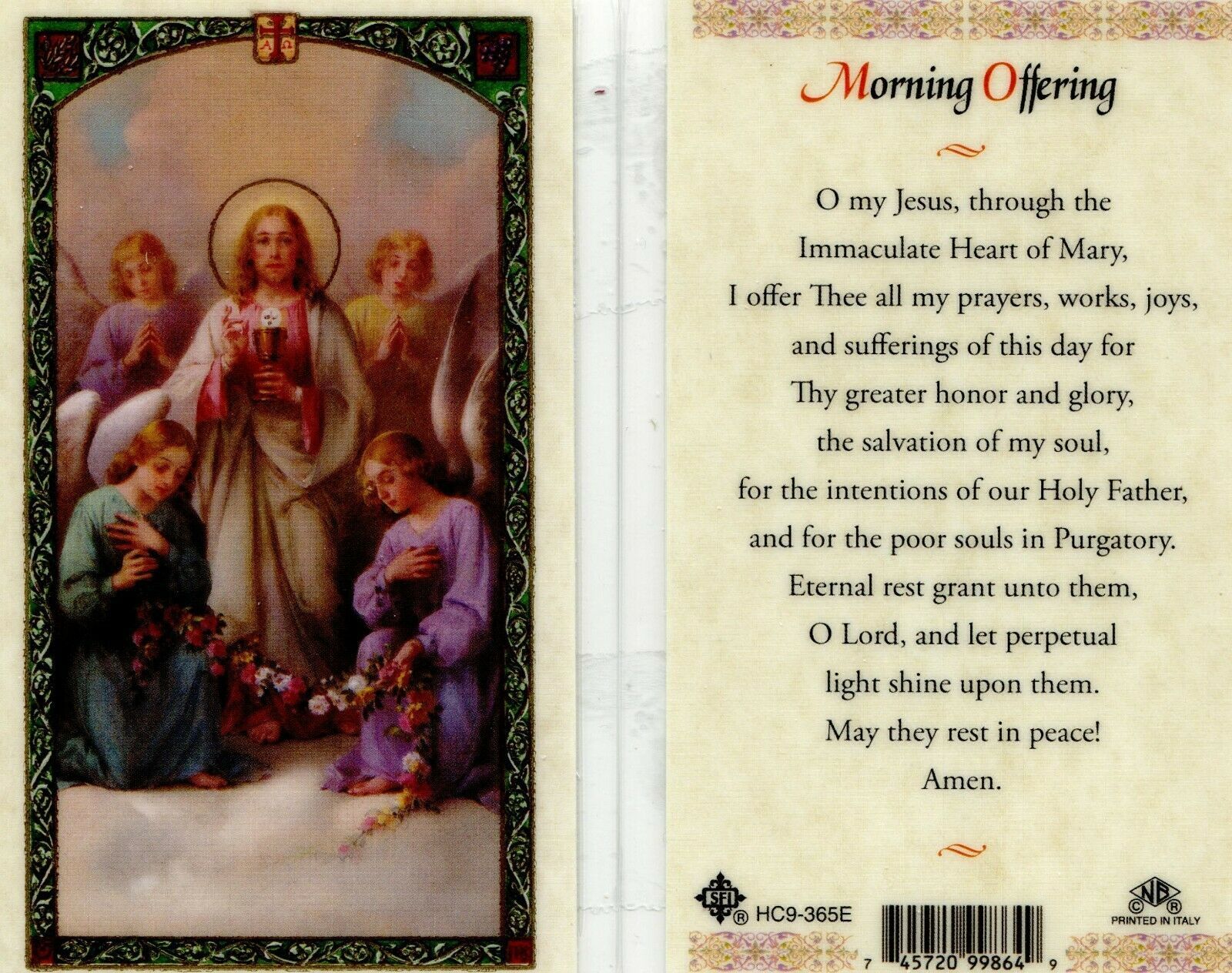
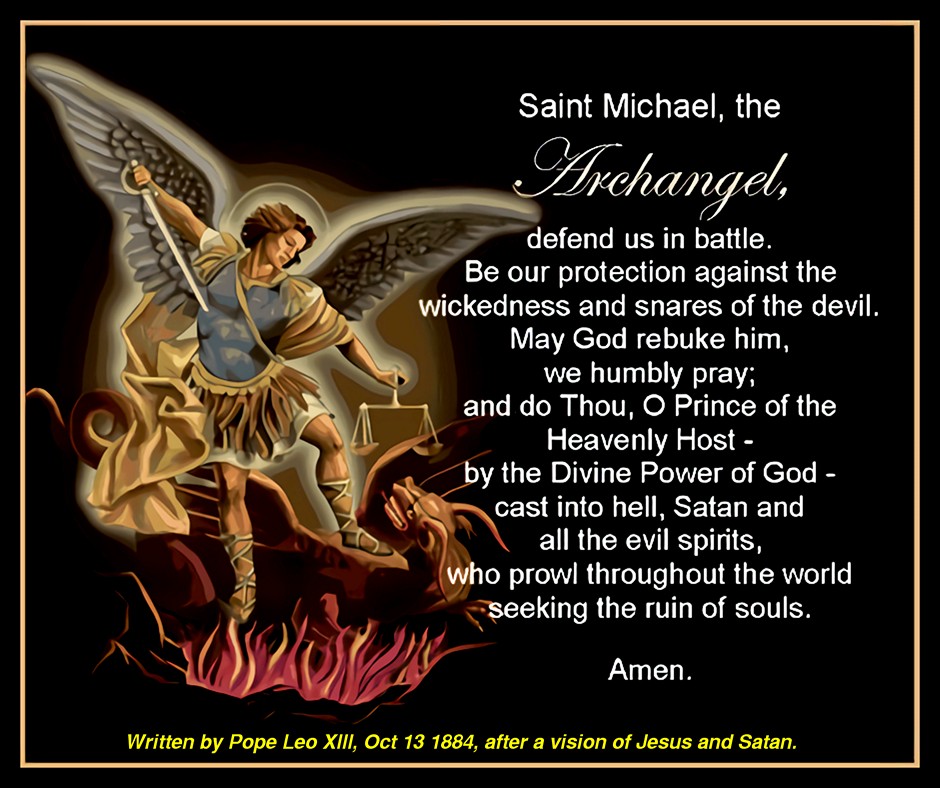
The Month of March is Dedicated to St. Joseph
“And he went down with them and came to Nazareth, and was obedient to them; and his mother kept all these things in her heart. And Jesus increased in wisdom and in stature, and in favor with God and man.” (Luke 2:51-52)

Pope Leo XIV’s prayer intention for the month of March, 2026:
For disarmament and peace
Let us pray that nations move toward effective disarmament, particularly nuclear disarmament, and that world leaders choose the path of dialogue and diplomacy instead of violence.

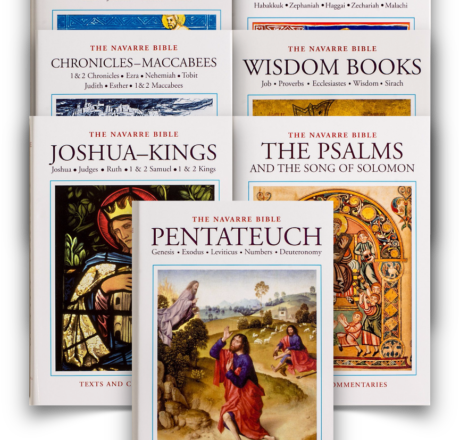
Today’s First Reading
From: Jeremiah 17:5-10
God Rewards People as They Deserve (Continuation)
-----------------------------------------------------------------
[5] Thus says the LORD: “Cursed is the man who trusts in man and makes flesh his arm, whose heart turns away from the LORD. [6] He is like a shrub in the desert, and shall not see any good come. He shall dwell in the parched places of the wilderness, in an uninhabited salt land.
[7] “Blessed is the man who trusts in the LORD, whose trust is the LORD. [8] He is like a tree planted by water, that sends out its roots by the stream, and does not fear when heat comes, for its leaves remain green, and is not anxious in the year of drought, for it does not cease to bear fruit."
[9] The heart is deceitful above all things, and desperately corrupt; who can understand it? [10] "I the LORD search the mind and try the heart, to give to every man according to his ways, according to the fruit of his doings."
***********************************************************************
Commentary:
17:1-13. This passage includes a number of short oracles in the style of wisdom writing, graphically expressing themes that were constant in Jeremiah’s preaching. Judah’s sin of idolatry was quite obvious: anyone travelling the country could see people frequenting the places where Canaanite gods were worshipped; they were everywhere one went (vv. 1-3a). That is why the Lord will abandon the Israelites, who will be uprooted from their land and enslaved (vv. 3b-4).
Using words similar to those of Psalm 1, the prophet describes the misfortune that will befall those who trust in themselves, as against the prosperity of those who trust in God (vv. 5-8). St Thomas Aquinas’ commentary on Psalm 1 fits in nicely with the simile here of the tree planted beside water (v. 8): “We are asked to consider three things in the image of the tree--its being well-rooted, its fruitfulness, and the sustaining of its life. To be well-rooted, the tree must be well-watered, otherwise it will dry up and wither away; thus, we are told that the tree is planted beside running waters, which symbolize the currents of grace. ‘He who believes in me...out of his heart shall flow rivers of living water’ (Jn 7:38). The one whose roots draw on the living waters will bear much fruit in all the good works that he does, and fruitfulness is the second aspect of the image that we are asked to contemplate. ‘But the fruit of the Spirit is love, joy, peace, patience, kindness, goodness, faithfulness’, etc. (Gal 5:22). The tree does not wither away: it is sustained in life. Some trees lose their leaves, but others never lose their leaves; and thus it is with righteous men [...]; they will not be forgotten by God even in their tiniest and least significant actions. ‘The righteous will flourish like a green leaf’ (Prov 11:28)” ("Postilla super Psalmos", 1, 3).
God cannot be deceived; he sees right into a person’s heart, and he will judge each on his merits (vv. 9-11). The hope of Israel is the Lord (vv. 12-13), the fount of water (ef. 2:13; Ps 42:2; Jn 4:10) without which none can live (cf. v. 8). To show that those who forsake God will be judged and condemned, Jeremiah uses an image (they “shall be written in the earth”: v. 13) that is reminiscent of Jesus’ gesture when he “judges” the men who accuse the woman caught in adultery (Jn 8:6). The wind will blow their names away: they will have no place in the book of life.
From: Luke 16:19-31
Lazarus and the Rich Man
------------------------
(Jesus told them this parable:) [19] "There was a rich man, who was clothed in purple and fine linen and who feasted sumptuously every day. [20] And at his gate lay a poor man named Lazarus, full of sores, [21] who desired to be fed with what fell from the rich man's table; moreover the dogs came and licked his sores. [22] The poor man died and was carried by the angels to Abraham's bosom. The rich man also died and was buried; [23] and in Hades, being in torment, he lifted up his eyes, and saw Abraham far off and Lazarus in his bosom. [24] And he called out, `Father Abraham, have mercy upon me, and send Lazarus to dip the end of his finger in water and cool my tongue; for I am in anguish in this flame.' [25] But Abraham said, `Son, remember that you in your lifetime received your good things, and Lazarus in like manner evil things, but now he is comforted here, and you are in anguish. [26] And besides in all this, between us and you a great chasm has been fixed, in order that those who would pass from here to you may not be able, and none may cross from there to us.' [27] And he said, `Then I beg you, father, to send him to my father's house, [28] for I have five brothers, so that he may warn them, lest they also come into this place of torment.' [29] But Abraham said, `They have Moses and the prophets; let them hear them.' [30] And he said, `No, father Abraham; but if some one goes to them from the dead, they will repent.' [31] He said to him, `If they do not hear Moses and the prophets, neither will they be convinced if some one should rise from the dead.'"
***********************************************************************
Commentary:
19-31. This parable disposes of two errors--that of those who denied the survival of the soul after death and, therefore, retribution in the next life; and that of those who interpreted material prosperity in this life as a reward for moral rectitude, and adversity as punishment. This parable shows that, immediately after death, the soul is judged by God for all its acts--the "particular judgment"--and is rewarded or punished; and that divine revelation is by itself sufficient for men to be able to believe in the next life.
In another area, the parable teaches the innate dignity of every human person, independently of his social, financial, cultural or religious position. And respect for this dignity implies that we must help those who are experiencing any material or spiritual need: "Wishing to come down to topics that are practical and of some urgency, the Council lays stress on respect for the human person: everyone should look upon his neighbor (without any exception) as another self, bearing in mind above all his life and the means necessary for living it in a dignified way lest he follow the example of the rich man who ignored Lazarus, the poor man" (Vatican II, "Gaudium Et Spes", 27).
Another practical consequence of respect for others is proper distribution of material resources and protection of human life, even unborn life, as Paul VI pleaded with the General Assembly of the United Nations: "Respect for life, even with regard to the great problem of the birth rate, must find here in your assembly its highest affirmation and its most reasoned defense. You must strive to multiply bread so that it suffices for the tables of mankind, and not rather favor an artificial control of birth, which would be irrational, in order to diminish the number of guests at the banquet of life" ("Address to the UN", 4 October 1965).
21. Apparently this reference to the dogs implies not that they alleviated Lazarus' sufferings but increased them, in contrast with the rich man's pleasure: to the Jews dogs were unclean and therefore were not generally used as domestic animals.
22-26. Earthly possession, as also suffering, are ephemeral things: death marks their end, and also the end of our testing-time, our capacity to sin or to merit reward for doing good; and immediately after death we begin to enjoy our reward or to suffer punishment, as the case may be. The Magisterium of the Church has defined that the souls of all who die in the grace of God enter Heaven, immediately after death or after first undergoing a purging, if that is necessary. "We believe in eternal life. We believe that the souls of all those who die in the grace of Christ--whether they must still make expiation in the fire of Purgatory, or whether from the moment they leave their bodies they are received by Jesus into Paradise like the Good Thief—go to form that people of God which succeeds death, death which will be totally destroyed on the day of the resurrection when these souls are reunited with their bodies" (Paul VI, "Creed of the People of God", 28).
The expression of "Abraham's bosom" refers to the place or state "into which the souls of the just, before the coming of Christ the Lord were received, and where, without experiencing any sort of pain, but supported by the blessed hope of redemption, they enjoyed peaceful repose. To liberate these holy souls, who, in the bosom of Abraham were expecting the Savior, Christ the Lord descended into hell" ("St. Pius V Catechism", I, 6, 3).
22. "Both the rich man and the beggar died and were carried before Abraham, and there judgment was rendered on their conduct. And the Scripture tells us that Lazarus found consolation, but that the rich man found torment. Was the rich man condemned because he had riches, because he abounded in earthly possessions, because he `dressed in purple and linen and feasted sumptuously every day'? No, I would say that it was not for this reason. The rich man was condemned because he did not pay attention to the other man, because he failed to take notice of Lazarus, the person who sat at his door and who longed to eat the scraps from his table. Nowhere does Christ condemn the mere possession of earthly goods as such. Instead, He pronounces very harsh words against those who use their possessions in a selfish way, without paying attention to the needs of others[...]."
The parable of the rich man and Lazarus must always be present in our memory; it must form our conscience. Christ demands openness to our brothers and sisters in need--openness from the rich, the affluent, the economically advantaged; openness to the poor, the underdeveloped and the disadvantaged. Christ demands an openness that is more than benign attention, more than token actions or half-hearted efforts that leave the poor as destitute as before or even more so [...].
"We cannot stand idly by, enjoying our riches and freedom, if, in any place, the Lazarus of the Twentieth Century stands at our doors. In the light of the parable of Christ, riches and freedom mean a special responsibility. Riches and freedom create a special obligation. And so, in the name of the solidarity that binds us all together in a common humanity, I again proclaim the dignity of every human person: the rich man and Lazarus are both human beings, both of them equally created in the image and likeness of God, both of them equally redeemed by Christ, at a great price of the `precious blood of Christ' (1 Peter 1:19)" (Pope John Paul II, "Homily in Yankee Stadium", 2 October 1979).
24-31. The dialogue between the rich man and Abraham is a dramatization aimed at helping people remember the message of the parable: strictly speaking, there is no room in Hell for feelings of compassion toward one's neighbor: in Hell hatred presides. "When Abraham said to the rich man `between us and you a great chasm has been fixed...' he showed that after death and resurrection there will be no scope for any kind of penance. The impious will not repent and enter the Kingdom, nor will the just sin and go down into Hell. This is the unbridgeable abyss" (Aphraates, "Demonstratio", 20; "De Sustentatione Egenorum", 12). This helps us to understand what St. John Chrysostom says: "I ask you and I beseech you and, falling at your feet, I beg you: as long as we enjoy the brief respite of life, let us repent, let us be converted, let us become better, so that we will not have to lament uselessly like that rich man when we die and tears can do us no good. For even if you have a father or a son or a friend or anyone else who have influence with God, no one will be able to set you free, for your own deeds condemn you" ("Hom. on 1 Cor.").



God bless and keep you, fidelis.
Thank you for posting the Word of God every single day.
I am very grateful to you!
I hope you are doing well, and that your medical issues
are getting better.
Wishing you all the best,
Ms.B
I'm still recovering from my recent surgery to help improve my condition and besides some discomfort, I am doing well. Thank you again and God bless you always.
Disclaimer: Opinions posted on Free Republic are those of the individual posters and do not necessarily represent the opinion of Free Republic or its management. All materials posted herein are protected by copyright law and the exemption for fair use of copyrighted works.


