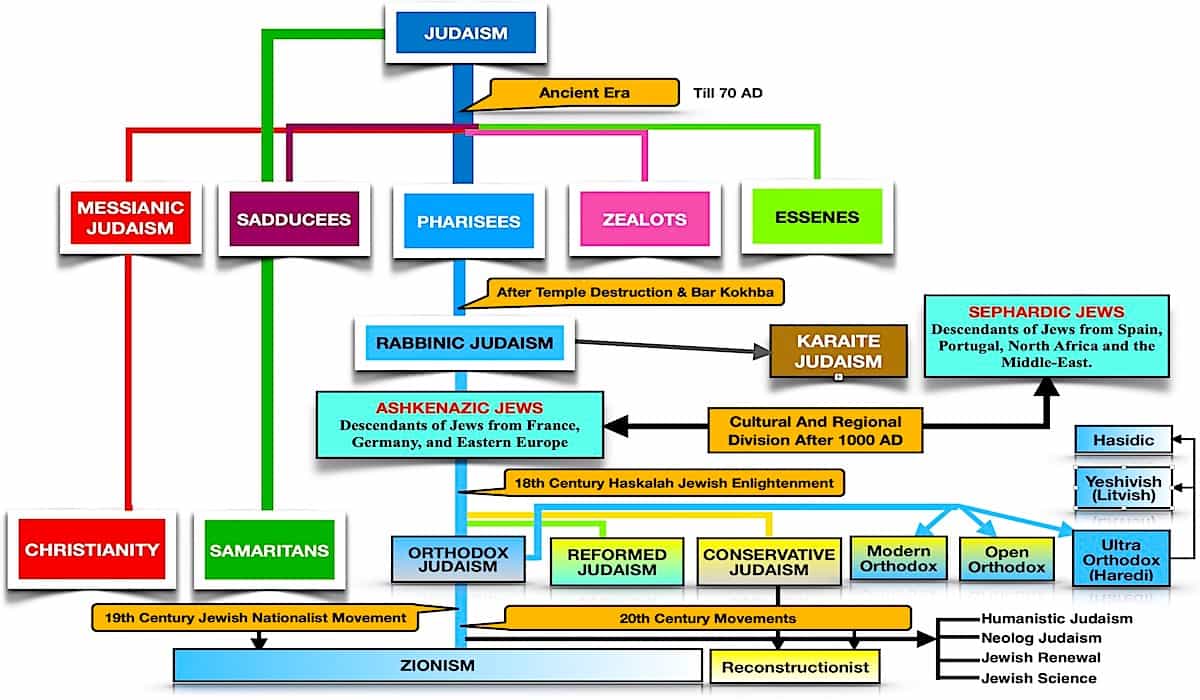
Posted on 01/22/2021 1:10:31 AM PST by Cronos
...Israel’s first king, Saul, only governs some of these people. His successor, David, pulls all the tribes together under him. David’s son, Solomon, does little to hold them in place. When Solomon dies in 930 B.C.E., the kingdom fractures into big northern Israel and meager southern Judah. The north names its capital Samaria. The southern kings retain David’s capital at Jerusalem.
As scholar Raymond Brown points out, the distance between Samaria and Jerusalem was 35 miles—closer than Baltimore and Washington, D.C., which share an airport. But proximity doesn’t equal intimacy.
Eventually, Samaria becomes a catchword for the entire northern region. Neither the city nor the region known as Samaria denotes the land of “Samaritans,” however. They come later. Meanwhile, for 200 years skirmishes ensue between the north and south, with tiny episodes of cooperation.
Keep in mind, the folks on both sides of the border claim Abraham as father and Moses as liberator. They all worship the God of Jacob. They’re all children of Israel. Initially, their differences are political. But they become cultural too, as time apart renders these two kingdoms increasingly estranged.
In fact, Judeans don’t have anything nice to say about the folks up north, and since Judeans write most of the Bible as we have it, it’s hard to know if their criticisms are accurate or exaggerated. This is the problem with having enemies: After a while, it’s hard to know where objectivity ends and hate takes over.
By 722 B.C.E., Assyria swallows the northern kingdom of Israel, deporting 27,290 people from Samaria to far-flung places
... When the first-generation church sends Philip to evangelize in Samaria, it’s a bold and shattering proposition. And it results in “great joy in that city” (Acts 8:8).
(Excerpt) Read more at uscatholic.org ...
Karate Jews?
Cool.
After David’s death, his son Solomon succeeded him to the throne over Israel. He taxed people excessively and lived in a glorous spelnder. He also married Gentile wives from outside nations and because of them, he burned incense and sacrificed to Moloch and other idols.
As a result of this, Israel was taken captive because they broke God’s Covenant.
“The [Eternal] said unto Solomon, Forasmuch as this is done of thee, and thou hast not kept my covenant and my statutes, which I have commanded thee, I will surely rend the kingdom from thee, and will give it to thy servant. Notwithstanding in thy days I will not do it for David thy father’s sake: but I will rend it out of the hand of thy son. Howbeit I will not rend away all the kingdom; but will give one tribe to thy son for David my servant’s sake, and for Jerusalem’s sake which I have chosen” (1 Kings 11:11-13). (Judah)
Similar but not the same.
The Karaites take the Jewish Torah only.
The Karaites are in my opinion the ideological inheritors of the Sadducees. The Sadducees were a group that rejected rabbinical Judaism. They believed in the Torah and Prophets and Writings (The Tanakh), but they rejected the oral tradition. Karaites also fully attribute to Jewish history, they consider Jerusalem and the Temple on it to be the holiest locations, they pray similar prayers throughout the day and celebrate almost the same holidays (except for Hannukah).
central to Samartian ritual life is the Passover sacrifice on Mt. Gerizim, something that Karaites of course do not commemorate ever since the Jewish Temple in Jerusalem was sacked by the Romans.
well, Solomon’s mother Bathsheba was most likely a non-Israelite - perhaps a Hittite (so related to northern Indians and Iranians)
I was just reading.
The chart is interesting.
Jesus also rejected the Pharisees and their complex rules of the oral Torah.
Yes, you are probably right. All I can find is her father was Eliam, and she was probably of noble birth. She conspired with the prophet Nathan to block Adonijah’s succession to the throne and to win it for Solomon. She occupied an influential position as the queen mother.
https://www.britannica.com/biography/Bathsheba-biblical-figure
Karate.
Theologically, they are very similar to what is called Sadducces in this chart, in that they reject the Talmud.
That said, they sprung up independently probably 1000 years later. (I don’t n or the timeline without looking, but a long time after the Diaspora.)
Cool.
Good to know that I'm not the only one with bad eyes.
That reminded me of when I was a kid watching Kung Fu movies. Many of the fighters were "monks" at "monasteries". Since I knew nothing of Buddhism, the only monks and monasteries I knew about were brown-robed brothers who occasionally spoke at our church asking for a special donation. I tried to imagine one of them giving a spinning backkick.
It is fascinating. About 4 years ago I took the plunge and starting reading the Talmud - I haven’t “completed” it (and who can, really?) nor understood all of it - it is complex and written by brilliant minds.
then I started reading about Rabbi Ben Zakkai, then the early Church Fathers, then Josephus (again, not completed his War of the Jews) and then diving into the mutual influences of Halakha vs Shariah and the Talmud on Islamic thought - one can trace these discussion in the Babylonian part of the Talmud dating post 600 AD.
To me the fascinating part is how we think of Judaism as this one monolith and that Christianity is somehow separate. But it isn’t
Then reading about the various Jewish Messiah figures - like Judas of Galilee — killed by Herod the Great in around 6 BC who was the founder of the Zealots and the first of the Jewish Messianic figures. Linking Him to both
Jesus Bar-abbas (Bar Abba - son of the Father)
and
Simon Bar-Kochkba (son of the star)
And to the Daniel prophecy which filled 2nd Temple Judaism so that everyone KNEW that the Messiah would come somewhere in the 1st century.
It’s all quite fascinating.
I’m going to try (and fail) and put my Christian hat aside for responding to you SoM.
Some writers and scholars - Jewish AND Christian - point out the similarities in Jesus-movement and Pharisee Judaism. Both with a concept of an after-life, both with changes in interpretation of the Torah and both later with a Golden Rule that doesn’t involve the sacrifices at the temple.
Perhaps Jesus and the Pharisees disputed with each other as they were similar?
The Jewish Talmud claims that Jesus was a failed Pharisee rabbi. The Jesus-movement claimed that the Pharisees were the bad guys.
Trying to be impartial here :)
And both sects (Christianity and modern Judaism) were vying for the general “2nd temple Jewish” population AND converts - remember that Galilee was half pagan and at the Pentecost there were many acolyte converts to Judaism (later one of the Flavian emperor’s cousins converted to Rabbinical Judaism)
Perhaps a lot of the arguments were fraternal - they were too close to overlook the differences?
I’m deviating here, but the talk of the Talmud claiming Jesus suffering in Hell and the Christian talk about Pharisees etc. reminds me of the Mandaens.
The Mandaens are a religion in southern Iraq that is highly, highly secretive. They are an ethnoreligious group like Jews or Parsis or Druze or Yazidis or Alawites.
The Mandaens have as their prophets Adam, Seth and the highest is John the Baptist.
But the relevant part here is that they claim that there were 3 false prophets - Moses, Jesus and Mohammad :)
Talk of pissing off ALL of your neighbours — AT THE SAME TIME :-D
It’s pretty simple. The Samaritans didn’t have “pure” Jewish heritage.
That “lack of pure heritage” is from Jewish sources. But genetically the Samaritans have the Cohen genes and are indistinguishable from their neighbours
Thank you. Bookmarking.
That didn’t matter to the Jews. The Jews considered them “half breeds” at best. The true genetics you mention is likely so, but again...the Jews didn’t know about that back then and my guess is it wouldn’t have mattered to them anyway.
When the first-generation church sends Philip to evangelize in Samaria, it’s a bold and shattering proposition.
Actually while plausible, there is no record of this sending, and what is recorded is that of deacon Philip evangelizing in Samaria as part of the dispersion resulting from Saul making "havock of the church, entering into every house, and haling men and women committed them to prison. Therefore they that were scattered abroad went every where preaching the word. Then Philip went down to the city of Samaria, and preached Christ unto them. (Acts 8:3-5) But when they believed Philip preaching the things concerning the kingdom of God, and the name of Jesus Christ, they were baptized, both men and women. (Acts 8:12) Later the Holy Spirit does record that apostles did send Peter and John to lay their their hands on them to receive the Holy Ghost. (Acts 8:17)
Philip in Samaria. 4 Now those who had been scattered went about preaching the word. 5 Thus Philip went down to [the] city of Samaria and proclaimed the Messiah to them. 6 With one accord, the crowds paid attention to what was said by Philip when they heard it and saw the signs he was doing. 7 For unclean spirits, crying out in a loud voice, came out of many possessed people, and many paralyzed and crippled people were cured. 8 There was great joy in that city.as you see above there is evidence that Philip preached to the Samaritans.
Philip went to preach to the Samaritans - later we have Thaddeus and Bartholomew preaching among the Iranians and the peoples of what is now Iraq, while Thomas went to the Jews and Hindus of southern India
When we come to discuss the Samaritans, we are immediately plagued by the problem of sources. While the Bible describes the origins of Samaritanism, we must remember that the Scriptures were handed down by Jewish groups that were fundamentally anti-Samaritan. It is therefore probable that there is some bias in these materials. Second, all the Samaritans’ own traditions appear in writings which are of very late date, and many of them have been clearly influenced by Islamic sources. Finally, the material in rabbinic literature and in Josephus is also subject to the claim of bias.
From these various sources, we can reconstruct the following account. The Samaritans were a mixed people made up of strains of Northern Israelites who had not been exiled in 722 B.C.E. and the various foreign nations that the Assyrians had brought into the area in an attempt to ensure that national aspirations could not again come to the fore. This mixed group, the Samaritans, had adopted a syncretistic form of Judaism. They seem to have maintained the old Northern traditions and to have combined them with those of the nations settled among them. More important, however, was the genealogical problem.
In First Temple times it was possible for foreigners to join the Jewish people in an informal way by moving physically and socially into the land and adhering to its religion and laws. During the exile, Judaism had been transformed from a nationality dependent on connection to the land and culture to a religion which depended upon descent. For how else could Judaism ensure its continuity when deprived of its homeland? The returning Jews from Babylonia could not accept the questionable genealogy of the Samaritans. On the other hand, there was not yet a system for religious conversion as developed later on in the Second Temple period. Hence, there was no choice but to reject the Samaritans, even had they agreed to abandon their syncretistic practices.
This issue had political overtones as well. The Samaritans attempted, although with limited success, to influence the Persian authorities to stop the building of the Temple and to limit the powers of the priestly and temporal government of the Jews. This split between the Samaritans and the Jews was final, the Samaritans remaining a separate community to this day.
The Samaritan problem was, no doubt, complicated by another long-smoldering issue. There can be no question that as far back as the earliest days of the monarchy, there was division between North and South. It was this division that eventually led, after Solomon’s death, to the split of the kingdom.
The issue of the Samaritans in the Second Temple period may be viewed, to some extent, as a continuation of the North-South schism of the First Temple. Like their Northern predecessors, the Samaritans insisted on the right to sacrifice outside of Jerusalem. Evidence seems to point to their adoption of Aramaic at an earlier stage than their Judean counterparts. Under Persian rule, the Judeans had rejected the Samaritans due to their syncretistic worship and the presence among them of non-Israelite elements. Clearly, the Judeans had chosen to follow in the footsteps of those who believed that only the God of Israel was to be worshipped, and that this worship was to be done only according to the ancient traditions of Israel. The same question was to arise again in the Hellenistic period.
Disclaimer: Opinions posted on Free Republic are those of the individual posters and do not necessarily represent the opinion of Free Republic or its management. All materials posted herein are protected by copyright law and the exemption for fair use of copyrighted works.