Free Republic
Browse · Search
Religion
Topics · Post Article

Skip to comments.

Catholic Caucus: Daily Mass Readings, 08-08-19, M, St. Dominic, Priest
USCCB.org/RNAB ^ | 08-08-19 | Revised New American Bible

Posted on 08/07/2019 9:35:03 PM PDT by Salvation

August 8 2019

Memorial of Saint Dominic, Priest

Reading 1 Nm 20:1-13

The whole congregation of the children of Israel
arrived in the desert of Zin in the first month,
and the people settled at Kadesh.
It was here that Miriam died, and here that she was buried.

As the community had no water,
they held a council against Moses and Aaron.
The people contended with Moses, exclaiming,
"Would that we too had perished with our kinsmen in the LORD's presence!
Why have you brought the LORD's assembly into this desert
where we and our livestock are dying?
Why did you lead us out of Egypt,
only to bring us to this wretched place
which has neither grain nor figs nor vines nor pomegranates?
Here there is not even water to drink!"
But Moses and Aaron went away from the assembly
to the entrance of the meeting tent, where they fell prostrate.

Then the glory of the LORD appeared to them,
and the LORD said to Moses,
"Take your staff and assemble the community,
you and your brother Aaron,
and in their presence order the rock to yield its waters.
From the rock you shall bring forth water for the congregation
and their livestock to drink."
So Moses took his staff from its place before the LORD, as he was ordered.
He and Aaron assembled the community in front of the rock,
where he said to them, "Listen to me, you rebels!
Are we to bring water for you out of this rock?"
Then, raising his hand, Moses struck the rock twice with his staff,
and water gushed out in abundance for the people
and their livestock to drink.
But the LORD said to Moses and Aaron,
"Because you were not faithful to me
in showing forth my sanctity before the children of Israel,
you shall not lead this community into the land I will give them."

These are the waters of Meribah,
where the children of Israel contended against the LORD,
and where the LORD revealed his sanctity among them.

Responsorial Psalm Ps 95:1-2, 6-7, 8-9

R.(8) If today you hear his voice, harden not your hearts.
Come, let us sing joyfully to the LORD;
let us acclaim the Rock of our salvation.
Let us come into his presence with thanksgiving;
let us joyfully sing psalms to him.
R. If today you hear his voice, harden not your hearts.
Come, let us bow down in worship;
let us kneel before the LORD who made us.
For he is our God,
and we are the people he shepherds, the flock he guides.
R. If today you hear his voice, harden not your hearts.
Oh, that today you would hear his voice:
"Harden not your hearts as at Meribah,
as in the day of Massah in the desert,
Where your fathers tested me;
they tested me though they had seen my works."
R. If today you hear his voice, harden not your hearts.

Alleluia Mt 16:18

R. Alleluia, alleluia.
You are Peter, and upon this rock I will build my Church,
and the gates of the netherworld shall not prevail against it.
R. Alleluia, alleluia.

Gospel Mt16:13-23

Jesus went into the region of Caesarea Philippi
and he asked his disciples,
"Who do people say that the Son of Man is?"
They replied, "Some say John the Baptist, others Elijah,
still others Jeremiah or one of the prophets."
He said to them, "But who do you say that I am?"
Simon Peter said in reply,
"You are the Christ, the Son of the living God."
Jesus said to him in reply, "Blessed are you, Simon son of Jonah.
For flesh and blood has not revealed this to you, but my heavenly Father.
And so I say to you, you are Peter,
and upon this rock I will build my Church,
and the gates of the netherworld shall not prevail against it.
I will give you the keys to the Kingdom of heaven.
Whatever you bind on earth shall be bound in heaven;
and whatever you loose on earth shall be loosed in heaven."
Then he strictly ordered his disciples
to tell no one that he was the Christ.

From that time on, Jesus began to show his disciples
that he must go to Jerusalem and suffer greatly
from the elders, the chief priests, and the scribes,
and be killed and on the third day be raised.
Then Peter took Jesus aside and began to rebuke him,
"God forbid, Lord! No such thing shall ever happen to you."
He turned and said to Peter,
"Get behind me, Satan! You are an obstacle to me.
You are thinking not as God does, but as human beings do."

For the readings of the Memorial of Saint Dominic, please go here.


TOPICS: Catholic; General Discusssion; Prayer; Worship
KEYWORDS: catholic; mt16; ordinarytime; prayer; saints
Navigation: use the links below to view more comments.
first 1-2021-35 next last
For your reading, reflection, faith-sharing, comments, questions, discussion.

1 posted on 08/07/2019 9:35:03 PM PDT by Salvation
[ Post Reply | Private Reply | View Replies]

To: All

KEYWORDS: catholic; mt16; ordinarytime; prayer; saints;


2 posted on 08/07/2019 9:40:49 PM PDT by Salvation ("With God all things are possible." Matthew 19:26)
[ Post Reply | Private Reply | To 1 | View Replies]

To: nickcarraway; NYer; ELS; Pyro7480; livius; ArrogantBustard; Catholicguy; RobbyS; marshmallow; ...
Alleluia Ping

Please FReepmail me to get on/off the Alleluia Ping List.


3 posted on 08/07/2019 9:41:58 PM PDT by Salvation ("With God all things are possible." Matthew 19:26)
[ Post Reply | Private Reply | To 2 | View Replies]

To: All

From: Numbers 20:1-13

Moses Brings Water from the Rock


[1] And the people of Israel, the whole congregation, came into the wilderness
of Zin in the first month, and the people stayed in Kadesh; and Miriam died there,
and was buried there.

[2] Now there was no water for the congregation; and they assembled them-
selves together against Moses and against Aaron. [3] And the people contended
with Moses, and said, “Would that we had died when our brethren died before
the LORD! [4] Why have you brought the assembly of the LORD into this wilder-
ness, that we should die here, both we and our cattle? [5] And why have you
made us come up out of Egypt, to bring us to this evil place? It is no place for
grain, or figs, or vines, or pomegranates; and there is no water to drink.” [6] Then
Moses and Aaron went from the presence of the assembly to the door of the tent
of meeting, and fell on their faces. And the glory of the LORD appeared to them,
[7] and the LORD said to Moses, ‘”Take the rod, and assemble the congregation,
you and Aaron your brother, and tell the rock before their eyes to yield its water;
so you shall bring water out of the rock for them; so you shall give drink to the
congregation and their cattle.” [9] And Moses took the rod from before the LORD,
as he commanded him.

[10] And Moses and Aaron gathered the assembly together before the rock, and
he said to them, “Hear now, you rebels; shall we bring forth water for you out of
this rock?” [11] And Moses lifted up his hand and struck the rock with his rod
twice; and water came forth abundantly, and the congregation drank, and their
cattle. [12] And the LORD said to Moses and Aaron, “Because you did not be-
lieve in me, to sanctify me in the eyes of the people of Israel, therefore you shall
not bring this assembly into the land which I have given them.” [13] These are the
waters of Meribah,’ where the people of Israel contended with the LORD, and he
showed himself holy among them.

*********************************************************************************************
Commentary:

20:1-19. When the spies sent to explore the land of Canaan returned to base,
people of Israel were in the desert of Paran, in Kadesh (13:26). The desert of Zin,
which is referred to here, and which is different from that of a very similar name
(Sin) mentioned in Exodus 16:1 and 17:1, was the north-west part of the wilder-
ness of Paran, to which the cloud had led the Israelites from Sinai (cf. 10:12).
Kadesh was not really a town but an area containing leafy oases. It was a key
point of reference for the people of Israel’s route towards Canaan. From Kadesh
they will leave for the plains of Moab (cf. 22:1). Kadesh marks the end of the de-
sert trek (cf. chaps. 33-38); from now on the land is inhabited and the Israelites
will have contact with those who live there.

As they make their way, the people encounter both external and internal difficul-
ties, but that does not stop their advance to the promised Land, because God is
their guide and he is helping them. In this sense the people of Israel prefigures
the Church, for “as Israel according to the flesh which wandered in the desert
was already called the Church of God (cf. Num 20:4; etc.), so too, the new Isra-
el which advances in this present era in search of a future and permanent city
(cf. Heb 13:14), is called also the Church of Christ (cf. Mt 16:18). It is Christ in-
deed who had purchased it with his own blood (cf. Acts 20:28); he has filled it
with his Spirit; he has provided means adapted to its visible and social union”
(Vatican II, “Lumen Gentium”, 9).

20:2-13. Unlike Exodus 17:1-17, here it is Aaron who accompanies Moses, so
that both of them share in the sin of mistrusting God (cf. v. 12). The text does
not say what their sin was exactly: presumably it was because they struck the
rock twice due to lack of faith, instead of once (cf. vv. 11-12) or in the fact that
they struck the rock whereas God had told them to speak to the rock (cf. v. 8) —
although in Exodus 17:6 Moses was in fact told to hit it. In v. 24 we are told it
was a sin of rebellion, and in Psalm 106:32-33 it says that Moses “spoke words
that were rash”. In Deuteronomy 1:37 and elsewhere, the punishment inflicted
on Moses is, however, attributed to the people’s disobedience. At any event, the
event is recounted here, just before the narrating of the death of Aaron (as it will
also be mentioned in Deuteronomy 32:51 before the account of Moses’ death).
Here the episode is connected with two place-names—Kadesh, which means in
fact “holiness” and which would remind people of the holiness of God (cf. v. 13),
and Meribah, which means “rebellion” and would evoke Moses’ sin. The two
names appear linked (Meri-bath-kadesh) in Deuteronomy 32:51 and Exodus 47:
19.

This rock prefigured Christ, according to 1 Corinthians 10:4-5. The Fathers gave
an allegorical interpretation: the rock is Jesus, and the water the grace which
flows from the open side of our Lord; the double strike stands for the two beams
of the cross. Moses stands for the Jews, because just as Moses doubted and
struck the rock, the Jewish people crucified Christ, not believing that he was the
Son of God (cf. St Augustine, “Contra Faustum”, 16, 15; “Questiones In Hepta-
teuchurn”, 35).

*********************************************************************************************
Source: “The Navarre Bible: Text and Commentaries”. Biblical text from the
Revised Standard Version and New Vulgate. Commentaries by members of
the Faculty of Theology, University of Navarre, Spain.

Published by Four Courts Press, Kill Lane, Blackrock, Co. Dublin, Ireland, and
by Scepter Publishers in the United States.


4 posted on 08/07/2019 9:42:58 PM PDT by Salvation ("With God all things are possible." Matthew 19:26)
[ Post Reply | Private Reply | To 3 | View Replies]

To: All

From: Matthew 16:13-23

Peter’s Profession of Faith and His Primacy


[13] Now when Jesus came into the district of Caesarea Philippi, He asked His
disciples, “Who do men say that the Son of Man is?” [14] And they said, “Some
say John the Baptist, others say Elijah, and others Jeremiah or one of the pro-
phets.” [15] He said to them, “But who do you say that I am?” [16] Simon Peter
replied, “You are the Christ, the Son of the living God.” [17] And Jesus answered
him, “Blessed are you, Simon Bar-Jona! For flesh and blood has not revealed this
to you, but My Father who is in Heaven. [18] And I tell you, you are Peter, and on
this rock I will build My Church, and the powers of death shall not prevail against
it. [19] I will give you the keys of the Kingdom of Heaven, and whatever you bind
on earth shall be bound in Heaven, and whatever you loose on earth shall be
loosed in Heaven.”[20] Then He strictly charged the disciples to tell no one that
He was the Christ.

Jesus Foretells His Passion and Resurrection


[21] From that time Jesus began to show His disciples that He must go to Jeru-
salem and suffer many things from the elders and chief priests and scribes, and
be killed, and on the third day be raised. [22] And Peter took Him and began to
rebuke Him, saying, “God forbid, Lord! This shall never happen to You.” [23] But
He turned and said to Peter, “Get behind Me, Satan! You are a hindrance to Me;
for you are not on the side of God, but of men.”

*********************************************************************************************
Commentary:

13-20. In this passage St. Peter is promised primacy over the whole Church, a
primacy which Jesus will confer on him after His Resurrection, as we learn in the
Gospel of St. John (cf. John 21:15-18). This supreme authority is given to Peter
for the benefit of the Church. Because the Church has to last until the end of time,
this authority will be passed on to Peter’s successors down through history. The
Bishop of Rome, the Pope, is the successor of Peter.

The solemn Magisterium of the Church, in the First Vatican Council, defined the
doctrine of the primacy of Peter and his successors in these terms: “We teach
and declare, therefore, according to the testimony of the Gospel that the primacy
of jurisdiction over the whole Church was immediately and directly promised to
and conferred upon the blessed Apostle Peter by Christ the Lord. For to Simon,
Christ had said, ‘You shall be called Cephas’ (John 1:42). Then, after Simon had
acknowledged Christ with the confession, ‘You are the Christ, the Son of the li-
ving God’ (Matthew 16:16), it was to Simon alone that the solemn words were
spoken by the Lord: ‘Blessed are you, Simon Bar-Jona. For flesh and blood has
not revealed this to you, but My Father who is in Heaven. And I tell you, you are
Peter, and on this rock I will build My Church, and the powers of Hell shall not
prevail against it. I will give you the keys of the Kingdom of Heaven, and whatever
you bind on earth shall be bound in Heaven, and what you loose on earth shall
be loosed in Heaven’ (Matthew 16:17-19). And after His Resurrection, Jesus con-
ferred upon Simon Peter alone the jurisdiction of supreme shepherd and ruler
over His whole fold with the words, ‘Feed My lambs....Feed My sheep’ (John 21:
15-17) [...]

“Now, what Christ the Lord, Supreme Shepherd and watchful guardian of the
flock, established in the person of the blessed Apostle Peter for the perpetual
safety and everlasting good of the Church must, by the will of the same, endure
without interruption in the Church which was founded on the rock and which will
remain firm until the end of the world. Indeed, ‘no one doubts, in fact it is obvious
to all ages, that the holy and most blessed Peter, Prince and head of the Apos-
tles, the pillar of faith, and the foundation of the Catholic Church, received the
keys of the kingdom from our Lord Jesus Christ, the Savior and the Redeemer
of the human race; and even to this time and forever he lives,’ and governs, ‘and
exercises judgment in his successors’ (cf. Council of Ephesus), the bishops of
the holy Roman See, which he established and consecrated with his blood.
Therefore, whoever succeeds Peter in this Chair holds Peter’s primacy over the
whole Church according to the plan of Christ Himself [...]. For this reason, ‘be-
cause of its greater sovereignty,’ it was always ‘necessary for every church, that
is, the faithful who are everywhere, to be in agreement’ with the same Roman
Church [...]

“We think it extremely necessary to assert solemnly the prerogative which the
only-begotten Son of God deigned to join to the highest pastoral office. “And so,
faithfully keeping to the tradition received from the beginning of the Christian faith,
for the glory of God our Savior, for the exaltation of the Catholic religion, and for
the salvation of Christian peoples, We, with the approval of the sacred council,
teach and define that it is a divinely revealed dogma: that the Roman Pontiff,
when he speaks “ex cathedra”, that is, when, acting in the office of shepherd
and teacher of all Christians, he defines, by virtue of his supreme apostolic au-
thority, doctrine concerning faith or morals to be held by the universal Church,
possesses through the divine assistance promised to him in the person of St.
Peter, the infallibility with which the divine Redeemer willed His Church to be
endowed in defining doctrine concerning faith or morals; and that such defini-
tions of the Roman Pontiff are therefore irreformable because of their nature,
but not because of the agreement of the Church.

“(Canon) But if anyone presume to contradict this our definition (God forbid that
he do so): let him be condemned” (Vatican I, “Pastor Aeternus”, chaps. 1, 2
and 4).

23. Jesus rejects St. Peter’s well-intentioned protestations, giving us to under-
stand the capital importance of accepting the cross if we are to attain salvation
(cf. 1 Corinthians 1:23-25). Shortly before this (Matthew 16:17) Jesus had pro-
mised Peter: “Blessed are you, Simon”; now He reproves him: “Get behind me,
Satan.” In the former case Peter’s words were inspired by the Holy Spirit, where-
as what he says now comes from his own spirit which he has not yet sloughed
off.

*********************************************************************************************
Source: “The Navarre Bible: Text and Commentaries”. Biblical text from the
Revised Standard Version and New Vulgate. Commentaries by members of
the Faculty of Theology, University of Navarre, Spain.

Published by Four Courts Press, Kill Lane, Blackrock, Co. Dublin, Ireland, and
by Scepter Publishers in the United States.


5 posted on 08/07/2019 9:43:48 PM PDT by Salvation ("With God all things are possible." Matthew 19:26)
[ Post Reply | Private Reply | To 4 | View Replies]

To: Salvation
Scripture readings from the Jerusalem Bible by Darton, Longman & Todd

Readings at Mass

Liturgical Colour: White.

These are the readings for the feria


First reading Numbers 20:1-13 ©
Moses makes water flow from the rock at Meribah
The sons of Israel, the whole community, arrived in the first month at the desert of Zin. The people settled at Kadesh. It was there that Miriam died and was buried.
  There was no water for the community, and they were all united against Moses and Aaron. The people challenged Moses: ‘We would rather have died,’ they said ‘as our brothers died before the Lord! Why did you bring the assembly of the Lord into this wilderness, only to let us die here, ourselves and our cattle? Why did you lead us out of Egypt, only to bring us to this wretched place? It is a place unfit for sowing, it has no figs, no vines, no pomegranates, and there is not even water to drink!’
  Leaving the assembly, Moses and Aaron went to the door of the Tent of Meeting. They threw themselves face downward on the ground, and the glory of the Lord appeared to them. The Lord spoke to Moses and said, ‘Take the branch and call the community together, you and your brother Aaron. Then, in full view of them, order this rock to give water. You will make water flow for them out of the rock, and provide drink for the community and their cattle.’
  Moses took up the branch from before the Lord, as he had directed him. Then Moses and Aaron called the assembly together in front of the rock and addressed them, ‘Listen now, you rebels. Shall we make water gush from this rock for you?’ And Moses raised his hand and struck the rock twice with the branch; water gushed in abundance, and the community drank and their cattle too.
  Then the Lord said to Moses and Aaron, ‘Because you did not believe that I could proclaim my holiness in the eyes of the sons of Israel, you shall not lead this assembly into the land I am giving them.’
  These are the waters of Meribah, where the sons of Israel challenged the Lord and he proclaimed his holiness.

Responsorial Psalm
Psalm 94(95):1-2,6-9 ©
O that today you would listen to his voice! ‘Harden not your hearts.’
Come, ring out our joy to the Lord;
  hail the rock who saves us.
Let us come before him, giving thanks,
  with songs let us hail the Lord.
O that today you would listen to his voice! ‘Harden not your hearts.’
Come in; let us bow and bend low;
  let us kneel before the God who made us:
for he is our God and we
  the people who belong to his pasture,
  the flock that is led by his hand.
O that today you would listen to his voice! ‘Harden not your hearts.’
O that today you would listen to his voice!
  ‘Harden not your hearts as at Meribah,
  as on that day at Massah in the desert
when your fathers put me to the test;
  when they tried me, though they saw my work.’
O that today you would listen to his voice! ‘Harden not your hearts.’

Gospel Acclamation Ps144:13
Alleluia, alleluia!
The Lord is faithful in all his words
and loving in all his deeds.
Alleluia!
Or: Mt16:18
Alleluia, alleluia!
You are Peter,
and on this rock I will build my Church.
And the gates of the underworld can never hold out against it.
Alleluia!

Gospel
Matthew 16:13-23 ©
You are Peter and on this rock I will build my Church
When Jesus came to the region of Caesarea Philippi he put this question to his disciples, ‘Who do people say the Son of Man is?’ And they said, ‘Some say he is John the Baptist, some Elijah, and others Jeremiah or one of the prophets.’ ‘But you,’ he said ‘who do you say I am?’ Then Simon Peter spoke up, ‘You are the Christ,’ he said, ‘the Son of the living God.’ Jesus replied, ‘Simon son of Jonah, you are a happy man! Because it was not flesh and blood that revealed this to you but my Father in heaven. So I now say to you: You are Peter and on this rock I will build my Church. And the gates of the underworld can never hold out against it. I will give you the keys of the kingdom of heaven: whatever you bind on earth shall be considered bound in heaven; whatever you loose on earth shall be considered loosed in heaven.’ Then he gave the disciples strict orders not to tell anyone that he was the Christ.
  From that time Jesus began to make it clear to his disciples that he was destined to go to Jerusalem and suffer grievously at the hands of the elders and chief priests and scribes, to be put to death and to be raised up on the third day. Then, taking him aside, Peter started to remonstrate with him. ‘Heaven preserve you, Lord;’ he said ‘this must not happen to you.’ But he turned and said to Peter, ‘Get behind me, Satan! You are an obstacle in my path, because the way you think is not God’s way but man’s.’

These are the readings for the memorial


First reading
1 Corinthians 2:1-10 ©
The wisdom that Gos predestined to be for our glory
Brothers, when I came to you, it was not with any show of oratory or philosophy, but simply to tell you what God had guaranteed. During my stay with you, the only knowledge I claimed to have was about Jesus, and only about him as the crucified Christ. Far from relying on any power of my own, I came among you in great ‘fear and trembling’ and in my speeches and the sermons that I gave, there were none of the arguments that belong to philosophy; only a demonstration of the power of the Spirit. And I did this so that your faith should not depend on human philosophy but on the power of God.
  But still we have a wisdom to offer those who have reached maturity: not a philosophy of our age, it is true, still less of the masters of our age, which are coming to their end. The hidden wisdom of God which we teach in our mysteries is the wisdom that God predestined to be for our glory before the ages began. It is a wisdom that none of the masters of this age have ever known, or they would not have crucified the Lord of Glory; we teach what scripture calls: the things that no eye has seen and no ear has heard, things beyond the mind of man, all that God has prepared for those who love him.
  These are the very things that God has revealed to us through the Spirit.

Responsorial Psalm
Psalm 95(96):1-3,7-8,10 ©
Proclaim the wonders of the Lord among all the peoples.
O sing a new song to the Lord,
  sing to the Lord all the earth.
  O sing to the Lord, bless his name.
Proclaim the wonders of the Lord among all the peoples.
Proclaim his help day by day,
  tell among the nations his glory
  and his wonders among all the peoples.
Proclaim the wonders of the Lord among all the peoples.
Give the Lord, you families of peoples,
  give the Lord glory and power;
  give the Lord the glory of his name.
Proclaim the wonders of the Lord among all the peoples.
Proclaim to the nations: ‘God is king.’
  The world he made firm in its place;
  he will judge the peoples in fairness.
Proclaim the wonders of the Lord among all the peoples.

Gospel Acclamation Jn8:12
Alleluia, alleluia!
I am the light of the world, says the Lord;
anyone who follows me will have the light of life.
Alleluia!

Gospel Luke 9:57-62 ©
'I will follow you wherever you go'
As Jesus and his disciples travelled along they met a man on the road who said to him, ‘I will follow you wherever you go.’ Jesus answered, ‘Foxes have holes and the birds of the air have nests, but the Son of Man has nowhere to lay his head.’
  Another to whom he said, ‘Follow me’, replied, ‘Let me go and bury my father first.’ But he answered, ‘Leave the dead to bury their dead; your duty is to go and spread the news of the kingdom of God.’
  Another said, ‘I will follow you, sir, but first let me go and say goodbye to my people at home.’ Jesus said to him, ‘Once the hand is laid on the plough, no one who looks back is fit for the kingdom of God.’

6 posted on 08/07/2019 9:47:37 PM PDT by Salvation ("With God all things are possible." Matthew 19:26)
[ Post Reply | Private Reply | To 5 | View Replies]

To: Salvation

The link for the memorial of St. Dominic is broken... :-(


7 posted on 08/08/2019 4:55:43 AM PDT by grey_whiskers (The opinions are solely those of the author and are subject to change with out notice.)
[ Post Reply | Private Reply | To 1 | View Replies]

To: Salvation
Matthew
  English: Douay-Rheims Latin: Vulgata Clementina Greek NT: Byzantine/Majority Text (2000)
  Matthew 16
13 And Jesus came into the quarters of Cesarea Philippi: and he asked his disciples, saying: Whom do men say that the Son of man is? Venit autem Jesus in partes Cæsareæ Philippi : et interrogabat discipulos suos, dicens : Quem dicunt homines esse Filium hominis ? ελθων δε ο ιησους εις τα μερη καισαρειας της φιλιππου ηρωτα τους μαθητας αυτου λεγων τινα με λεγουσιν οι ανθρωποι ειναι τον υιον του ανθρωπου
14 But they said: Some John the Baptist, and other some Elias, and others Jeremias, or one of the prophets. At illi dixerunt : Alii Joannem Baptistam, alii autem Eliam, alii vero Jeremiam, aut unum ex prophetis. οι δε ειπον οι μεν ιωαννην τον βαπτιστην αλλοι δε ηλιαν ετεροι δε ιερεμιαν η ενα των προφητων
15 Jesus saith to them: But whom do you say that I am? Dicit illis Jesus : Vos autem, quem me esse dicitis ? λεγει αυτοις υμεις δε τινα με λεγετε ειναι
16 Simon Peter answered and said: Thou art Christ, the Son of the living God. Respondens Simon Petrus dixit : Tu es Christus, Filius Dei vivi. αποκριθεις δε σιμων πετρος ειπεν συ ει ο χριστος ο υιος του θεου του ζωντος
17 And Jesus answering, said to him: Blessed art thou, Simon Bar-Jona: because flesh and blood hath not revealed it to thee, but my Father who is in heaven. Respondens autem Jesus, dixit ei : Beatus es Simon Bar Jona : quia caro et sanguis non revelavit tibi, sed Pater meus, qui in cælis est. και αποκριθεις ο ιησους ειπεν αυτω μακαριος ει σιμων βαρ ιωνα οτι σαρξ και αιμα ουκ απεκαλυψεν σοι αλλ ο πατηρ μου ο εν τοις ουρανοις
18 And I say to thee: That thou art Peter; and upon this rock I will build my church, and the gates of hell shall not prevail against it. Et ego dico tibi, quia tu es Petrus, et super hanc petram ædificabo Ecclesiam meam, et portæ inferi non prævalebunt adversus eam. καγω δε σοι λεγω οτι συ ει πετρος και επι ταυτη τη πετρα οικοδομησω μου την εκκλησιαν και πυλαι αδου ου κατισχυσουσιν αυτης
19 And I will give to thee the keys of the kingdom of heaven. And whatsoever thou shalt bind upon earth, it shall be bound also in heaven: and whatsoever thou shalt loose upon earth, it shall be loosed also in heaven. Et tibi dabo claves regni cælorum. Et quodcumque ligaveris super terram, erit ligatum et in cælis : et quodcumque solveris super terram, erit solutum et in cælis. και δωσω σοι τας κλεις της βασιλειας των ουρανων και ο εαν δησης επι της γης εσται δεδεμενον εν τοις ουρανοις και ο εαν λυσης επι της γης εσται λελυμενον εν τοις ουρανοις
20 Then he commanded his disciples, that they should tell no one that he was Jesus the Christ. Tunc præcepit discipulis suis ut nemini dicerent quia ipse esset Jesus Christus. τοτε διεστειλατο τοις μαθηταις αυτου ινα μηδενι ειπωσιν οτι αυτος εστιν ιησους ο χριστος
21 From that time Jesus began to shew to his disciples, that he must go to Jerusalem, and suffer many things from the ancients and scribes and chief priests, and be put to death, and the third day rise again. Exinde cœpit Jesus ostendere discipulis suis, quia oporteret eum ire Jerosolymam, et multa pati a senioribus, et scribis, et principibus sacerdotum, et occidi, et tertia die resurgere. απο τοτε ηρξατο ο ιησους δεικνυειν τοις μαθηταις αυτου οτι δει αυτον απελθειν εις ιεροσολυμα και πολλα παθειν απο των πρεσβυτερων και αρχιερεων και γραμματεων και αποκτανθηναι και τη τριτη ημερα εγερθηναι
22 And Peter taking him, began to rebuke him, saying: Lord, be it far from thee, this shall not be unto thee. Et assumens eum Petrus, cœpit increpare illum dicens : Absit a te, Domine : non erit tibi hoc. και προσλαβομενος αυτον ο πετρος ηρξατο επιτιμαν αυτω λεγων ιλεως σοι κυριε ου μη εσται σοι τουτο
23 Who turning, said to Peter: Go behind me, Satan, thou art a scandal unto me: because thou savourest not the things that are of God, but the things that are of men. Qui conversus, dixit Petro : Vade post me Satana, scandalum es mihi : quia non sapis ea quæ Dei sunt, sed ea quæ hominum. ο δε στραφεις ειπεν τω πετρω υπαγε οπισω μου σατανα σκανδαλον μου ει οτι ου φρονεις τα του θεου αλλα τα των ανθρωπων

8 posted on 08/08/2019 5:11:13 AM PDT by annalex (fear them not)
[ Post Reply | Private Reply | To 1 | View Replies]

To: annalex
13. When Jesus came into the coasts of Cesarea Philippi, he asked his disciples, saying, Whom do men say that I the Son of man am?
14. And they said, Some say that you are John the Baptist, some, Elias; and others, Jeremiah, or one of the prophets.
15. He said to them, But whom say you that I am?
16. And Simon Peter answered and said, You are the Christ, the Son of the living God.
17. And Jesus answered and said to him, Blessed are you, Simon Bar-jona: for flesh and blood has not revealed it to you, but my Father which is in heaven.
18. And I say also to you, That you are Peter and upon this rock I will build my Church: and the gates of hell shall not prevail against it.
19. And I will give to you the keys of the kingdom of heaven: and whatsoever you shall bind on earth shall be bound in heaven: and whatsoever you shall loose on earth shall be loosed in heaven.

GLOSS; As soon as the Lord had taken His disciples out of the teaching of the Pharisees, He then suitably proceeds to lay deep the foundations of the Gospel doctrine; and to give this the greater solemnity, it is introduced by the name of the place, When Jesus came into the coasts of Cesarea Philippi.

CHRYS; He adds 'of Philip,' to distinguish it from the other Cesarea, of Strato. And He asks this question in the former place, leading His disciples far out of the way of the Jews, that being set free from all fear, they might say freely what was in their mind.

JEROME; This Philip was the brother of Herod, the tetrarch of Ituraea, and the region of Trachonitis, who gave to the city, which is now called Paneas the name of Cesarea in honor of Tiberius Cesar.

GLOSS; When about to confirm the disciples in the faith, He would first take away from their minds the errors and opinions of others, whence it follows, And he asked his disciples, saying, Whom do men say that the Son of Man is?

ORIGEN; Christ puts this question to His disciples, that from their answer we may learn that there were at that time among the Jews various opinions concerning Christ; and to the end that we should always investigate what opinion men may form of us; that if any ill be said of us, we may cut off the occasions of it; or if any good, we may multiply the occasions of it.

GLOSS; So by this instance of the Apostles, the followers of the Bishops are instructed, that whatever opinions they may hear out of doors concerning their Bishops, they should tell them to them.

JEROME; Beautifully is the question put, Whom do men say that the Son of Man is? For they who speak of the Son of Man, are men: but they who understood His divine nature are called not men but Gods.

CHRYS; He says not, Whom do the Scribes and Pharisees say that I am? but, Whom do men say that I am? searching into the minds of the common people, which were not perverted to evil. For though their opinion concerning Christ was much below what it ought to have been, yet it was free from willful wickedness; but the opinion of the Pharisees concerning Christ was as full of much malice.

HILARY; By asking, Whom do men say that the Son of Man is? He implied that something ought to be thought respecting Him beyond what appeared, for He was the Son of Man. And in thus inquiring after men's opinion respecting Himself, we e are not to think that He made confession of Himself; for that which He asked for was something concealed, to which the faith of believers ought to extend itself. We must hold that form of confession, that we so mention the Son of God as not to forget the Son of Man, for the one without the other offers us no hope of salvation; and therefore He said emphatically, Whom do men say that the Son of Man is?

JEROME; He says not, Whom do men say that I am? but, Whom do men say that the Son of Man is? that He should not seem to ask ostentatiously concerning Himself. Observe, that wherever the Old Testament has 'Son of Man,' the phrase in the Hebrew is 'Son of Adam.'

ORIGEN; Then the disciples recount the divers opinions of the Jews relating to Christ; And they said, Some say John the Baptist, following Herod's opinion; others Elias, supposing either that Elias had gone through a second birth, or that having continued alive in the body, He had at this time appeared; others Jeremiah, whom the Lord had ordained to be Prophet among the Gentiles, not understanding that Jeremiah was a type of Christ; or one of the Prophets, in a like way, because of those things which God spoke to them through the Prophets, yet they were not fulfilled in them, but in Christ.

JEROME; It was as easy for the multitudes to be wrong in supposing Him to be Elias and Jeremiah, as Herod in supposing Him to be John the Baptist; whence I wonder that some interpreters should have sought for the causes of these several errors.

CHRYS; The disciples having recounted the opinion of the common people, He then by a second question invites them to higher thoughts concerning Him; and therefore it follows, Jesus said to them, Whom say you that I am? You who are with Me always, and have seen greater miracles than the multitudes, ought not to agree in the opinion of the multitudes. For this reason He did not put this question to them at the commencement of His preaching, but after He had done many signs; then also He spoke many things to them concerning His Deity.

JEROME; Observe how by this connection of the discourse the Apostles are not styled men but God's. For when He had said, Whom say you that the Son of Man is? He adds, Whom say you that I am, as much as to say, They being men think of Me as man, you who are God's, whom do you think Me?

RABAN; He inquires the opinions of His disciples and of those without, not because He was ignorant of them; His disciples He asks, that He may reward with due reward their confession of a right faith; and the opinions of those without He inquires, that having the wrong opinions first set forth, it might be proved that the disciples had received the truth of their confession not from common opinion, but out of the hidden treasure of the Lord's revelation.

CHRYS; When the Lord inquires concerning the opinion of the multitudes, all the disciples answer; but when all the disciples are asked, Peter as the mouth and head of the Apostles answers for all, as it follows, Simon Peter answered and said, you are Christ, the Son of the living God.

ORIGEN; Peter denied that Jesus was any of those things which the Jews supposed, by his confession, You are the Christ, which the Jews were ignorant of; but he added what was more, the Son of the living God, who had said by his Prophets, I live, said the Lord. And therefore was He called the living Lord, but in a more especial manner as being eminent above all that had life; for He alone has immortality, and is the fount of life, wherefore He is rightly called God the Father; for He is life as it were flowing out of a fountain, who said, I am the life.

JEROME; He calls Him the living God, in comparison of those gods who are esteemed gods, but are dead; such, I mean, as Saturn, Jupiter, Venus, Hercules, and the other monsters of idols.

HILARY; This is the true and unalterable faith, that from God came forth God the Son, who has eternity out of the eternity of the Father. That this God took to Him a body and was made man is a perfect confession. Thus He embraced all in that He here expresses both His nature and His name, in which is the sum of virtues.

RABAN; And by a remarkable distinction it was that the Lord Himself puts forward the lowliness of the humanity which He had taken upon Him, while His disciple shows us the excellence of His divine eternity.

HILARY; This confession of Peter met a worthy reward, for that he had seen the Son of God in the man. Whence it follows, Jesus answered and said to him, Blessed are you, Simon Bar-jonas, and blood has not revealed this to you, but my Father who is in heaven.

JEROME; This return Christ makes to the Apostle for the testimony which Peter had spoken concerning Him, You are Christ, the Son of the living God. The Lord said to him, Blessed are you, Simon Bar-jonas. Why? Because flesh and blood has not revealed this to you, but My Father. That which flesh and blood could not reveal, was revealed by the grace of the Holy Spirit. By his confession then he obtains a title, which should signify that he had received a revelation from the Holy Spirit, whose son he shall also be called; for Bar-Jonas in our tongue signifies the son of a dove. Others take it in the simple sense, that Peter is the son of John, according to that question in another place, Simon, son of John, do you love me? affirming that it is an error of the copyists in writing here Bar-Jonas for Bar-joannas, dropping one syllable. Now Joanna is interpreted 'The grace of God.' But either name has its mystical interpretation; the dove signifies the Holy Spirit; and the grace of God signifies the spiritual gift.

CHRYS; It would be without meaning to say, you are the son of Jonas, unless he intended to show that Christ is as naturally the Son of God, as Peter is the son of Jonas, that is, of the same substance as him that begot him.

JEROME; Compare what is here said, flesh and blood 'has not revealed' it to you, with the Apostolic declaration, Immediately I was not content with flesh and blood, meaning there by this expression the Jews; so that here also the same thing is shown in different words, that not by the teaching of the Pharisees, but by the grace of God, Christ was revealed to him the Son of God.

HILARY; Otherwise; He is blessed, because to have looked and to have seen beyond human sight is matter of praise, not beholding that which is of flesh and blood, but seeing the Son of God by the revelation of the heavenly Father; and he was held worthy to be the first to acknowledge the divinity which was in Christ.

ORIGEN; It must be inquired in this place whether, when they were first sent out, the disciples knew that He was the Christ. For this speech shows that Peter then first confessed Him to be the Son of the living God. And look whether you can solve a question of this sort, by saying that to believe Jesus to be the Christ is less than to know Him; and so suppose that when they were sent to preach they believed that Jesus was the Christ and afterwards as they made progress they knew Him to be so. Or must we answer thus; That then the Apostles had the beginnings of a knowledge of Christ, and knew some little concerning Him; and that they made progress afterwards in the knowledge of Him, so that they were able to receive the knowledge of Christ revealed by the Father, as Peter, who is here blessed, not only for that he says, You are the Christ, but much more for that he adds, the Son of the living God.

CHRYS; And truly if Peter had not confessed that Christ was in a peculiar sense born of the Father, there had been no need of revelation; nor would he have been worthy of this blessing for confessing Christ to be one of many adopted sons; for before this they who were with Him in the ship had said, Truly you are the Son of God. Nathanael also said, Rabbi, you are the Son of God. Yet were not these blessed because they did not confess such sonship as does Peter here, but thought Him one among many, not in the true sense a son; or, if chief above all, yet not the substance of the Father. But see how the Father reveals the Son, and the Son the Father; from none other comes it to confess the Son than of the Father, and from none other to confess the Father than of the Son; so that from this place even it is manifest that the Son is of the same substance, and to be worshipped together with the Father. Christ then proceeds to show that many would hereafter believe what Peter had now confessed, whence He adds, And I say to you, that you are Peter.

JEROME; As much as to say, You have said to me, You are Christ the Son of the living God, therefore I say to you, not in a mere speech, and that goes not on into operation; but I say to you, and for Me to speak is to make it so, that you are Peter. For as from Christ proceeded that light to the Apostles, whereby they were called the light of the world, and those other names which were imposed upon them by the Lord, so upon Simon who believed in Christ the Rock, He bestowed the name of Peter (Rock.)

AUG; But let none suppose that Peter received that name here; he received it at no other time than where John relates that it was said to him, you shall be called Cephas, which is interpreted, Peter.

JEROME; And pursuing the metaphor of the rock, it is rightly said to him as follows: And upon this rock I will build my Church.

CHRYS; That is, On this faith and confession I will build my Church. Herein showing that many should believe what Peter had confessed, and raising his understanding, and making him His shepherd.

AUG; I have said in a certain place of the Apostle Peter, that it was on him, as on a rock, that the Church was built. But I know that since that I have often explained these words of the Lord, you are Peter, and on this rock will I build my Church, as meaning upon Him whom Peter had confessed in the words, You are Christ, the Son of the living God; and so that Peter, taking his name from this rock, would represent the Church, which is built upon this rock. For it is not said to him, you art the rock, but, you are Peter. But the rock was Christ, whom because Simon thus confessed, as the whole Church confesses Him, he was named Peter. Let the reader choose whether of these two opinions seems to him the more probable.

HILARY; But in this bestowing of a new name is a happy foundation of the Church, and a rock worthy of that building, which should break up the laws of hell, burst the gates of Tartarus, and all the shackles of death. And to show the firmness of this Church thus built upon a rock, He adds, And the gates of hell shall not prevail against it.

GLOSS; That is, shall not separate it from the love and faith of Me.

JEROME; I suppose the gates of hell to mean vice and sin, or at least the doctrines of heretics by which men are ensnared and drawn into hell.

ORIGEN; But in heavenly things every spiritual sin is a gate of hell, to which are opposed the gates of righteousness.

RABAN; The gates of hell are the torments and promises of the persecutors. Also, the evil works of the unbelievers, and vain conversation, are gates of hell, because they show the path of destruction.

ORIGEN; He does not express what it is which they shall not prevail against, whether the rock on which He builds the Church, or the Church which He builds on the rock; but it is clear that neither against the rock nor against the Church will the gates of hell prevail.

CYRIL; According to this promise of the Lord, the Apostolic Church of Peter remains pure and spotless from all leading into error, or heretical fraud, above all Heads and Bishops, and Primates of Churches and people, with its own Pontiffs, with most abundant faith, and the authority of Peter. And while other Churches have to blush for the error of some of their members, this reigns alone immovably established, enforcing silence, and stopping the mouths of all heretics; and we, not drunken with the wine of pride, confess together with it the type of truth, and of the holy apostolic tradition.

JEROME; Let none think that this is said of death, implying that the Apostles should not be subject to the condition of death, when we see their martyrdoms so illustrious.

ORIGEN; Wherefore if we, by the revelation of our Father who is in heaven, shall confess that Jesus Christ is the Son of God, having also our conversation in heaven, to us also shall be said, you are Peter; for every one is a Rock who is an imitator of Christ. But against whomsoever the gates of hell prevail, he is neither to be called a rock upon which Christ builds His Church; neither a Church, or part of the Church, which Christ builds upon a rock.

CHRYS; Then He speaks of another honor of Peter, when He adds, And I will give you the keys of the kingdom of heaven; as much as to say, As the Father has given you to know Me, I also will give something to you, namely, the keys of the kingdom of heaven.

RABAN; For as with a zeal beyond the others he had confessed the King of heaven, he is deservedly entrusted more than the others with the keys of the heavenly kingdom, that it might be clear to all, that without that confession and faith none ought to enter the kingdom of heaven. By the keys of the kingdom He means discernment and power; power, by which he binds and looses; discernment, by which he separates the worthy from the unworthy.

GLOSS; It follows, And whatsoever you shall bind; that is, whomsoever you shall judge unworthy of forgiveness while he lives, shall be judged unworthy with God; and whatsoever you shall loose, that is, whomsoever you shall judge worthy to be forgiven while he lives, shall obtain forgiveness of his sins from God.

ORIGEN; See how great power has that rock upon which the Church is built, that its sentences are to continue film as though God gave sentence by it.

CHRYS; See how Christ leads Peter to a high understanding concerning himself. These things that He here promises to give him, belong to God alone, namely to forgive sins, and to make the Church immovable amidst the storms of so many persecutions and trials.

RABAN; But this power of binding and loosing, though it seems given by the Lord to Peter alone, is indeed given also to the other Apostles, and is even now in the Bishops and Presbyters in every Church. But Peter received in a special manner the keys of the kingdom of heaven, and a supremacy of judicial power, that all the faithful throughout the world might understand that all who in any manner separate themselves from the unity of the faith, or from communion with him, such should neither be able to be loosed from the bonds of sin, nor to enter the gate of the heavenly kingdom.

GLOSS; This power was committed specially to Peter, that we might thereby be invited to unity. For He therefore appointed him the head of the Apostles, that the Church might have one principal Vicar of Christ, to whom the different members of the Church should have recourse, if ever they should have dissensions among them. But if there were many heads in the Church, the bond of unity would be broken. Some say that the words upon earth denote that power was not given to men to bind and loose the dead, but the living; for he who should loose the dead would do this not upon earth, but after the earth.

SECOND COUNCIL OF CONSTANTINOPLE; How is it that some do presume to say that these things are said only of the living? Know they not that the sentence of anathema is nothing else but separation? They are to be avoided who are held of grievous faults, whether they are among the living, or not. For it is always necessary to fly from the wicked. Moreover there are diverse letters read of Augustine of religious memory, who was of great renown among the African bishops, which affirmed that heretics ought to be anathematized even after death. Such an ecclesiastical tradition other African Bishops also have preserved. And the Holy Roman Church also has anathematized some Bishops after death, although no accusation had been brought against their faith in their lifetimes.

JEROME; Bishops and Presbyters, not understanding this passage, assume to themselves something of the lofty pretensions of the Pharisees, and suppose that they may either condemn the innocent, or absolve the guilty; whereas what will be inquired into before the Lord will be not the sentence of the Priests, but the life of him that is being judged. We read in Leviticus of the lepers, how they are commanded to show themselves to the Priests; and if they have the leprosy, then they are made unclean by the Priest; not that the Priest makes them leprous and unclean, but that the Priest has knowledge of what is leprosy and what is not leprosy, and can discern who is clean, and who is unclean. In the same way then as there the Priest makes the leper unclean, here the Bishop or Presbyter binds or looses not those who are without sin, or guilt, but in discharge of his function when he has heard the varieties of their sins, he knows who is to be bound, and who loosed.

ORIGEN; Let him then be without blame who binds or looses another, that he may be found worthy to bind or loose in heaven. Moreover, to him who shall be able by his virtues to shut the gates of hell, are given in reward the keys of the kingdom of heaven. For every kind of virtue when any has begun to practice it; as it were opens itself before Him, the Lord, namely, opening it through His grace, so that the same virtue is found to be both the gate, and the key of the gate. But it may be that each virtue is itself the kingdom of heaven.

20. Then he charged his disciples that they should tell no man that he was Jesus the Christ.
21. From that time forth Jesus began to show to his disciples, how that he must go to Jerusalem, and suffer many things of the elders and Chief Priests and Scribes, and be killed, and be raised again the third day.

ORIGEN; Seeing Peter had confessed Him to be Christ the Son of the living God, because He would not have them preach this in the mean time, He adds, Then he charged his disciples that they should tell no man that he was Jesus the Christ.

JEROME; When then above He sends His disciples to preach, and commands them to proclaim His advent, this seems contrary to His command here, that they should not say that He is Jesus the Christ. To me it seems that it is one thing to preach Christ, and another to preach Jesus the Christ. Christ is a common title of dignity, Jesus the proper name of the Savior.

ORIGEN; Or they then spoke of Him in lowly words, as only a great and wonderful man, but as yet proclaimed Him not as the Christ. Yet if any will have it that He was even at the first proclaimed to be Christ, he may say that now He chose that first short announcement of His name to be left in silence and not repeated, that that little which they had heard concerning Christ might be digested into their minds. Or the difficulty may be solved thus: that the former relation concerning their preaching Christ does not belong to the time before His Resurrection, but to the time that should be after the Resurrection; and that the command now given is meant for the time present; for it were of no use to preach Him, and to be silent concerning His cross. Moreover, He commanded them that they should tell no man that He was the Christ, and prepared them that they should afterwards say that He was Christ who was crucified, and who rose again from the dead.

JEROME; But that none should suppose that this is only my explanation, and not an evangelic interpretation, what follows explains the reasons of His forbidding them to preach Him at that time; Then Jesus began to show to his disciples that he must needs go to Jerusalem, and suffer many things of the elders and Scribes, and Chief Priests, and be put to death, and rise again the third day. The meaning is; then preach Me when I shall have suffered these things, for it will be of no avail that Christ be preached publicly, and His Majesty spread abroad among the people, when after a little time they shall see Him scourged and crucified.

CHRYS; For what having once had root has afterwards been torn up, if it is again planted, is with difficulty retained among the multitude; but what having been once rooted has continued ever after unmoved, is easily brought on to a further growth. He therefore dwells on these sorrowful things, and repeats His discourse upon them, that He may open the minds of His disciples.

ORIGEN; And observe that it is not said, 'He began to say,' or 'to teach,' but to show; for as things are said to be shown to the sense, so the things which Christ spoke are said to be shown by Him. Nor indeed do I think, that to those who saw Him suffering many things in the flesh, were those things which they saw so shown as this representation in words showed to the disciples the mystery of the passion and resurrection of Christ. At that time, indeed, He only began to show them, and afterwards when they were more able to receive it, He showed them more fully; for all that Jesus began to do, that He accomplished. He must needs go to Jerusalem, to be put to death indeed in the Jerusalem which is below, but to rise again and reign in the heavenly Jerusalem.

But when Christ rose again, and others were risen with Him, they no longer sought the Jerusalem which is beneath, or the house of prayer in it, but that which is above. He suffers many things from the elders of the earthly Jerusalem, that He may be glorified by those heavenly elders who receive His mercies. He rose again from the dead on the third day, that He may deliver from the evil one, and purchase for such as are so delivered this gift, that they be baptized in spirit, soul, and body, in the name of the Father, and the Son, and the Holy Spirit, who are three days perpetually present to those that through them have been made children of light.

22. Then Peter took him, and began to rebuke him, saying, Be it far from you, Lord: this shall not be to you.
23. But he turned, and said to Peter, Get you behind me, Satan: you are an offense to me: for you savor not the things that be of God, but those that be of men.

ORIGEN; While Christ was yet speaking the beginnings of the things which He was showing to them, Peter considered them unworthy of the Son of the living God. And forgetting that the Son of the living God does nothing, and acts in no way worthy of blame, he began to rebuke Him; and this is what is said, And Peter took him, and began to rebuke him.

JEROME; We have often said that Peter had too hot a zeal, and a very great affection towards the Lord the Savior. Therefore after that his confession, and the reward of which he had heard from the Savior, he would not have that his confession destroyed, and thought it impossible that the Son of God could be put to death, but takes Him to him affectionately, or takes Him aside that he may not seem to be rebuking his Master in the presence of his fellow disciples, and begins to chide Him with the feeling of one that loved Him, and to contradict Him, and say, Be it far from you, Lord; or as it is better in the Greek, that is, Be propitious to Thyself, Lord, this shall not be to you.

ORIGEN; As though Christ Himself had needed a propitiation. His affection Christ allows, but charges him with ignorance; as it follows, He turned and said to Peter, Get you behind me, Satan, you art an offense to me.

HILARY; The Lord, knowing the suggestion of the craft of the devil, says to Peter, Get you behind me; that is, that he should follow the example of His passion; but to him by whom this expression was suggested, He turns and says, Satan, you are an offense to me. For we cannot suppose that the name of Satan, and the sin of being an offense, would be imputed to Peter after those so-great declarations of blessedness and power that had been granted him.

JEROME; But to me this error of the Apostle, proceeding from the warmth of his affection, will never seem a suggestion of the devil. Let the thoughtful reader consider that that blessedness of power was promised to Peter in time to come, not given him at the time present; had it been conveyed to him immediately, the error of a false confession would never have found place in him.

CHRYS; For what wonder is it that this should befall Peter, who had never received a revelation concerning these things? For that you may learn that that confession which he made concerning Christ was not spoken of himself, observe how in these things which had not been revealed to him, he is at a loss. Estimating the things of Christ by human and earthly principles, he judged it mean and unworthy of Him that He should suffer. Therefore the Lord added, For you savor not the things that be of God, but the things that be of men.

JEROME; As much as to say; It is of My will, and of the Father's will, that I should die for the salvation of men; you considering only your own will would not that the grain of wheat should fall into the ground, that it may bring forth much fruit; therefore as you speak what is opposed to My will, you ought to be called My adversary. For Satan is interpreted 'adverse' or 'contrary.'

ORIGEN; Yet the words in which Peter and those in which Satan are rebuked, are not, as is commonly thought, the same; to Peter it is said, Get you behind me, Satan; that is, follow me, you that are contrary to my will; to the Devil it is said, Go your way, Satan, understanding not 'behind me,' but 'into everlasting fire.' He said therefore to Peter, Get you behind me, as to one who through ignorance was ceasing to walk after Christ. And He called him Satan, as one, who through ignorance had somewhat contrary to God. But he is blessed to whom Christ turns, even though He turn in order to rebuke him. But why said He to Peter, you are an offense to me, when in the Psalm it is said, Great peace have they that love your law, and there is no offense to them? It must be answered, that not only is Jesus not offended, but neither is any man who is perfect in the love of God; and yet he who does or speaks any thing of the nature of an offense, may be an offense even to one who is incapable of being offended. Or he may hold every disciple that sins as an offense, as Paul speaks, Who is offended, and I burn not?

Catena Aurea Matthew 16
9 posted on 08/08/2019 5:12:11 AM PDT by annalex (fear them not)
[ Post Reply | Private Reply | To 8 | View Replies]

To: annalex


Christ Giving the Keys to St Peter

Giovanni Battista Castello

1598
Illumination on vellum, 384 x 292 mm
Musée du Louvre, Paris

10 posted on 08/08/2019 5:12:46 AM PDT by annalex (fear them not)
[ Post Reply | Private Reply | To 9 | View Replies]

To: grey_whiskers

August 8 - Memorial of Saint Dominic, priest

Saint Dominic’s Story

If he hadn’t taken a trip with his bishop, Dominic would probably have remained within the structure of contemplative life; after the trip, he spent the rest of his life being a contemplative in active apostolic work.

Born in old Castile, Spain, Dominic was trained for the priesthood by a priest-uncle, studied the arts and theology, and became a canon of the cathedral at Osma, where there was an attempt to revive the apostolic common life described in Acts of the Apostles.

On a journey through France with his bishop, Dominic came face to face with the then virulent Albigensian heresy at Languedoc. The Albigensians–or Cathari, “the pure ones”–held to two principles—one good, one evil—in the world. All matter is evil—hence they denied the Incarnation and the sacraments. On the same principle, they abstained from procreation and took a minimum of food and drink. The inner circle led what some people regarded as a heroic life of purity and asceticism not shared by ordinary followers.

Dominic sensed the need for the Church to combat this heresy, and was commissioned to be part of the preaching crusade against it. He saw immediately why the preaching crusade was not succeeding: the ordinary people admired and followed the ascetical heroes of the Albigenses. Understandably, they were not impressed by the Catholic preachers who traveled with horse and retinues, stayed at the best inns and had servants. Dominic therefore, with three Cistercians, began itinerant preaching according to the gospel ideal. He continued this work for 10 years, being successful with the ordinary people but not with the leaders.

His fellow preachers gradually became a community, and in 1215 Dominic founded a religious house at Toulouse, the beginning of the Order of Preachers or Dominicans.

Dominic’s ideal, and that of his Order, was to organically link a life with God, study, and prayer in all forms, with a ministry of salvation to people by the word of God. His ideal: contemplata tradere: “to pass on the fruits of contemplation” or “to speak only of God or with God.”


Reflection

The Dominican ideal, like that of all religious communities, is for the imitation, not merely the admiration, of the rest of the Church. The effective combining of contemplation and activity is the vocation of truck driver Smith as well as theologian Aquinas. Acquired contemplation is the tranquil abiding in the presence of God, and is an integral part of any full human life. It must be the wellspring of all Christian activity.


Saint Dominic is the Patron Saint of:

Astronomers
Dominican Republic


franciscanmedia.org
11 posted on 08/08/2019 5:20:00 AM PDT by annalex (fear them not)
[ Post Reply | Private Reply | To 7 | View Replies]

To: annalex

12 posted on 08/08/2019 5:23:57 AM PDT by annalex (fear them not)
[ Post Reply | Private Reply | To 11 | View Replies]

To: grey_whiskers

http://usccb.org/bible/readings/0808-memorial-dominic.cfm


13 posted on 08/08/2019 4:43:49 PM PDT by Salvation ("With God all things are possible." Matthew 19:26)
[ Post Reply | Private Reply | To 7 | View Replies]

To: All

Pray for Pope Francis.


14 posted on 08/08/2019 4:47:16 PM PDT by Salvation ("With God all things are possible." Matthew 19:26)
[ Post Reply | Private Reply | To 13 | View Replies]

To: All
It's time to kneel down and pray for our nation (Sacramental Marriage)
15 posted on 08/08/2019 4:48:08 PM PDT by Salvation ("With God all things are possible." Matthew 19:26)
[ Post Reply | Private Reply | To 14 | View Replies]

To: All
Perpetual Novena for the Nation (Ecumenical)
Novena asking for St Michael The Archangel to stand with us and bring us victory
16 posted on 08/08/2019 4:48:42 PM PDT by Salvation ("With God all things are possible." Matthew 19:26)
[ Post Reply | Private Reply | To 15 | View Replies]

To: All
Prayers for The Religion Forum (Ecumenical)
17 posted on 08/08/2019 4:49:15 PM PDT by Salvation ("With God all things are possible." Matthew 19:26)
[ Post Reply | Private Reply | To 16 | View Replies]

To: All
7 Powerful Ways to Pray for Christians Suffering in the Middle East
18 posted on 08/08/2019 4:49:47 PM PDT by Salvation ("With God all things are possible." Matthew 19:26)
[ Post Reply | Private Reply | To 17 | View Replies]

To: All
Pray the Rosary!

50 Boko Haram Islamic Radicals Killed; 1,000 Hostages, Women and Children, Rescued in Nigeria
Nigeria: In the Face of Ongoing Islamist Attacks, the Faith is Growing
US Promises to Help Nigeria Exterminate Boko Haram
Is This Bishop Right about the Rosary Conquering Boko Haram? [Catholic Caucus]
Why Boko Haram and ISIS Target Women
Report reveals scale of Boko Haram violence inflictef on Nigerian Catholics
Military evacuating girls, women rescued from Boko Haram
Echos of Lepanto Nigerian bishop says rosary will bring down Boko Harm
After vision of Christ, Nigerian bishop says rosary will bring down Boko Haram (Catholic Caucus)
Nigerian Bishop Says Christ Showed Him How to Beat Islamic Terror Group
19 posted on 08/08/2019 4:50:44 PM PDT by Salvation ("With God all things are possible." Matthew 19:26)
[ Post Reply | Private Reply | To 18 | View Replies]

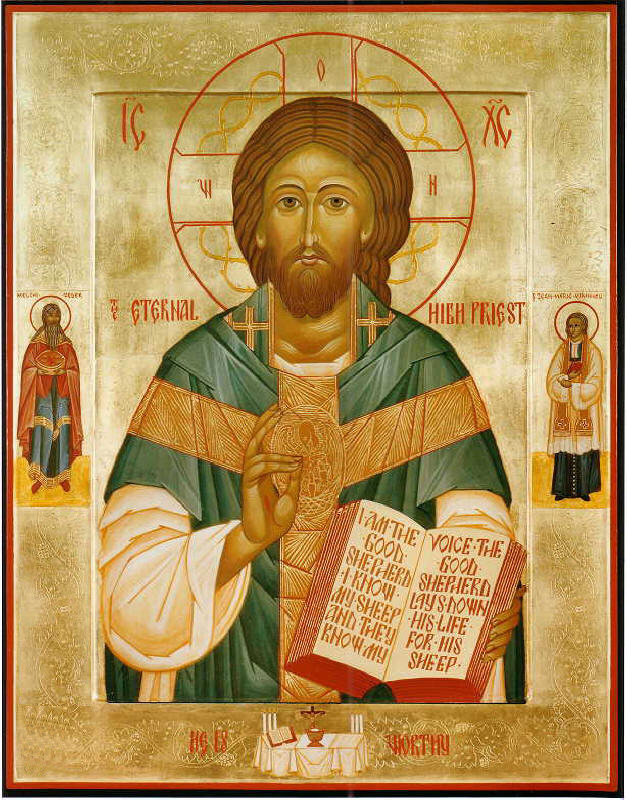
To: All

 
Jesus, High Priest
 

We thank you, God our Father, for those who have responded to your call to priestly ministry.

Accept this prayer we offer on their behalf: Fill your priests with the sure knowledge of your love.

Open their hearts to the power and consolation of the Holy Spirit.

Lead them to new depths of union with your Son.

Increase in them profound faith in the Sacraments they celebrate as they nourish, strengthen and heal us.

Lord Jesus Christ, grant that these, your priests, may inspire us to strive for holiness by the power of their example, as men of prayer who ponder your word and follow your will.

O Mary, Mother of Christ and our mother, guard with your maternal care these chosen ones, so dear to the Heart of your Son.

Intercede for our priests, that offering the Sacrifice of your Son, they may be conformed more each day to the image of your Son, our Lord and Savior, Jesus Christ. Amen.

Saint John Vianney, universal patron of priests, pray for us and our priests

This icon shows Jesus Christ, our eternal high priest.

The gold pelican over His heart represents self-sacrifice.

The border contains an altar and grapevines, representing the Mass, and icons of Melchizedek and St. Jean-Baptiste Vianney.

Melchizedek: king of righteousness (left icon) was priest and king of Jerusalem.  He blessed Abraham and has been considered an ideal priest-king.

St. Jean-Baptiste Vianney is the patron saint of parish priests.


20 posted on 08/08/2019 7:13:54 PM PDT by Salvation ("With God all things are possible." Matthew 19:26)
[ Post Reply | Private Reply | To 19 | View Replies]


Navigation: use the links below to view more comments.
first 1-2021-35 next last

Disclaimer: Opinions posted on Free Republic are those of the individual posters and do not necessarily represent the opinion of Free Republic or its management. All materials posted herein are protected by copyright law and the exemption for fair use of copyrighted works.

Free Republic
Browse · Search
Religion
Topics · Post Article

FreeRepublic, LLC, PO BOX 9771, FRESNO, CA 93794
FreeRepublic.com is powered by software copyright 2000-2008 John Robinson