Posted on 08/02/2019 9:59:18 AM PDT by Salvation
The word family had a wider meaning in both Aramaic and Hebrew than it does in English today. The Hebrew ah and the Aramaic aha could be used to refer to those who were brothers, half-brothers, cousins, and even other near relations. Extended family networks were both insisted upon and essential for survival. To have these ties and be dependent upon them was every Jewish person’s duty.
Marriage – Of course, marriage is the heart of family. The very first order that God gave Adam and Eve was that a man should leave his father and mother cling to his wife, that the two of them should become one flesh, and that they should be fruitful and multiply. Ancient rabbis said that a man really wasn’t a man until he did so. However, especially by the time of Christ, there were some men and women who lived celibate lives so as to be particularly free to serve God, whether by studying the Torah, teaching, or engaging in some great work for God’s people. Paul seems to have been in this category. Jesus praised those who did so in Matthew 19 as did Paul in 1 Corinthians 7.
In the earliest years of Israel there was some tolerance for polygamy even though it was a departure from what God had set forth. Many overlooked it given the urgent need to grow the family of God, the chosen people. Men were often killed in war, leading to an abundance of women who needed husbands. Generally, only wealthier men could afford to have more than one wife. Although the Bible does not explicitly condemn polygamists, it does show that polygamy led to intractable troubles, sometimes between the women but more often between the sons over inheritance rights. By the time of Jesus, polygamy among the Jews had greatly decreased if not altogether vanished; there is simply no mention of it in the New Testament. Jesus summoned each man to love his wife and prohibited other Mosaic leniencies in marriage. He re-proposed God’s original plan of one man and one woman until death.
The call to marriage and engagement – Marriage took place at a very young age for the ancient Jews. Most rabbis proposed age 18 as most appropriate for men, though often a bit younger especially when war was less common. Young women married almost as soon as they were physically ready, generally around age 13 or 14.
In most cases, marriages were arranged by the parents. There were exceptions, however, and arranged marriages were seldom forced on young people who had absolutely no interest in each other. Nevertheless, the view in the ancient world, and even in many places today, was that marriage was more about survival than romantic feelings. Further, it was not merely the individuals who married; the families came together in mutual support. Beauty and romance, while considered pleasant things, were known to be passing; life and survival had to be based on sturdier foundations.
Once a future bride had been chosen for a young man, there followed a one-year period of betrothal. During this time the couple still lived apart while delicate, often-protracted negotiations occurred between the families, especially regarding the dowry. The groom or his family paid the dowry to the father of the bride in recognition of the loss incurred by the bride’s family as a result of her departure as a working member of the household. It was also understood that some money should be set aside for the woman in the event that her husband died prematurely.
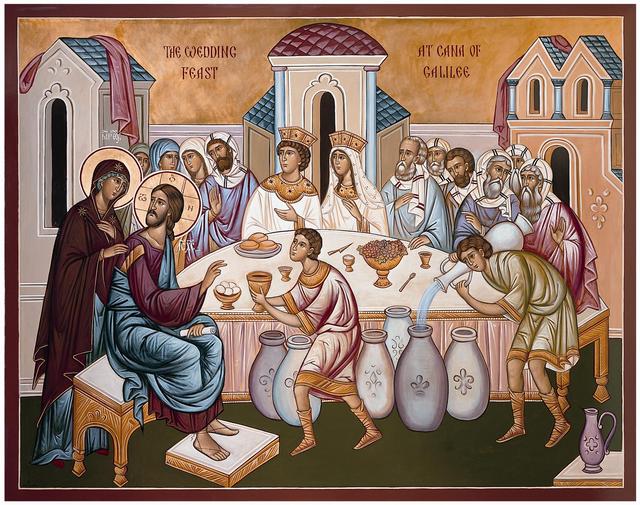
Marriage ceremonies – After the period of betrothal was finished and all the agreements had been reached, the wedding could take place. Weddings typically extended over a period of five to seven days. Autumn was the best time for marriage because the harvest was in, the vintage over, minds were free, and hearts were at rest. It was a season when the evenings were cool, and it was comfortable to sit up late at night. Usually the entire village gathered for a wedding.
At the beginning of the wedding celebration, in the evening, the bridegroom, accompanied by his friends, went to fetch his betrothed from her father’s house. He would wear particularly splendid clothing and sometimes even a crown. A procession was formed under the direction of one of the bridegroom’s friends, who acted as the master of ceremonies and remained by his side throughout the rejoicing.
The beautifully dressed bride was carried in a litter and in procession. Along the way people sang traditional wedding songs largely drawn from the Song of Songs in the Bible: Who is this coming up from the wilderness like a column of smoke, perfumed with myrrh and incense made from all the spices of the merchant? (Song of Songs 3:6) When the procession reached the bridegroom’s house, his parents bestowed a traditional blessing, drawn from Scripture and other sources. After the prayers, the evening was passed in games and dancing, and the bridegroom took part in the festivities. The bride, however, withdrew with her bridesmaids and friends to another room.
The next day was the wedding feast and once again there was general rejoicing and a sort of holiday in the village. Toward the end of the day there was a meal at which the men and women were served separately. This was the time for the giving of presents. The bride, dressed in white, was surrounded by her bridesmaids, usually ten of them. She sat under a canopy while traditional songs and blessings were sung and recited. During this time, in the evening, the groom arrived. While the exact ritual words are not known, there seems to have been a dialogue between bride and groom. This is recorded in the Song of Songs. The bride says, Let him kiss me with the kisses of his mouth—for your love is more delightful than wine. Pleasing is the fragrance of your perfumes; your name is like perfume poured out. No wonder the young women love you! Take me away with you—let us hurry! Let the king bring me into his chambers (Song 1:2-4). The groom responds, Arise, come, my darling; my beautiful one, come with me. My dove in the clefts of the rock, in the hiding places on the mountainside, show me your face, let me hear your voice; for your voice is sweet, and your face is lovely (Song 2:13-14).
Now that the couple was together, all the other men and women also came together. It would seem that synagogue or other religious leaders imparted blessings to the couple, who were together under the canopy. The words of these blessings and rituals are not definitively known and seem to have varied. After these came the evening feast.
Later that first evening the couple would vanish to consummate the marriage. They did not go on a “honeymoon” but rather remained for the rest of the celebration, which often went on for several more days, sharing in the songs, dancing, and general merriment.
Below is a recording of Palestrina’s composition of Surge, Propera Amica Mea (Arise My Love). There is a wonderful musical onomatopoeia in the opening word, “surge,” as the notes run up the scale. Enjoy!
Monsignor Pope Ping!
Painful......just like today.
free wine ... made from water!!
So, weddings sucked back then, too.
Why does this talk of marriage as a man and a woman? There’s that presumption that man married woman?
Jimmy Carter said he thought Jesus would be ok with same sex marriage. Yet we didn’t see such marriages then?
Wine-lots of wine. :)
And a *LOT* of it, too!
I thought it was interesting the bridegroom’s family paid a dowry to the bribe’s family. Technically the term bride price should be used. Dowry is defined as a transfer of wealth from the bride’s family to the husband.
Poligamy played a bigger part of the picture than most people realize, it brought the 12 tribes
from which many Americans came from, benjamites for example although they became some pretty
bad people they came from Rachel the wife Jacob loved.
The 12 tribes brought us Gods holy word and Preserved it over thousands of years, I think there
is much more good than bad came from it.
You can pretty much know what to think on any topic by asking Jimmy Carter, and then going with the opposite opinion.
I call BS! This is just plain not true.
Both 1 Timothy 3, and Titus 1 require deacons and elders to be the husband of only one wife. Clearly mentions of polygamy. And not just mentions, but acceptance for believers who are not church leaders.
Jewish sources are pretty clear that polygamy was out of favor and not practiced by the Second Temple period. 1 Tm 3 and Titus were written primarily to Greek converts anyway. Formal polygamy was unknown in Greco-Roman culture as well.
A body of scholarly opinion exists that "husband of only one wife" meant "having been married only once." That is, if he had been married before, and then became single (whether by divorce or death of a spouse), he was not to be married again.
Widowers or divorced men would not be eligible to be bishops, if they wanted to remarry.
If he was single at the time of becoming a bishop, he was not to marry.
The point was that, once a bishop, he was under no circumstances to be looking for a wife.
I can't cite a scholarly source, but you can google it.
And what non-Catholic "body of scholarly opinion exists that" teaches this Catholic invention? Paul nowhere states this, and "husband of only one wife" is in the context of being a father of a family (having his children in subjection with all gravity) - in case he best have a wife. And rather then being unable to marry, Paul stated as regards he and Barnabas, "Have we not power to lead about a sister, a wife, as well as other apostles, and as the brethren of the Lord, and Cephas?" (1 Corinthians 9:5)
The reality is not that your RC doctrine is actually warranted, but that required clerical celibacy was a later development .
The reality is that celibacy is a discipline not a requirement. Otherwise there would be no married priests, and there are married priests.
I do believe Scripture says that divorced people who marry another while that prior spouse is alive commit adultery, making them unfit as an elder or deacon.
Now there you go again...Trying to interpret something that doesn't need interpreting...Your scholars don't like what it says so they 'interpret' it to mean something else...Or they must figure Paul didn't know how to say 'having beeen married only once'...
Disclaimer: Opinions posted on Free Republic are those of the individual posters and do not necessarily represent the opinion of Free Republic or its management. All materials posted herein are protected by copyright law and the exemption for fair use of copyrighted works.