Posted on 08/03/2010 1:13:37 PM PDT by bronxville
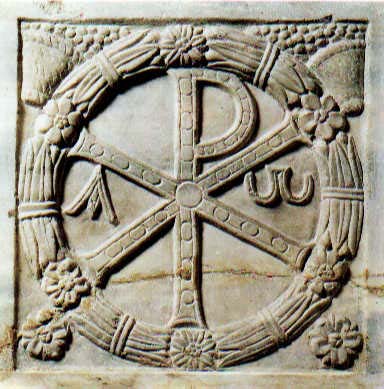
Lessons In Iconography : The Chi Rho - Christ
The Chi Rho may well be one of the most recognized of Christian symbols, and it represents Christ himself. This simple symbol is made up of a superimposed "X" (chi) and a "P" (rho), the first two letters of Christ's name in Greek.
Used from the earliest days of Christianity on lamps, liturgical objects, sarcophagi, and in catacomb painting, and still in wide use today, the Chi Rho is linked to the conversion of the Roman empire in the fourth century. In 312 AD, on the eve of his battle against Maxentius at the Milvian Bridge, Constantine received a vision of this very sign blazing in the sky accompanied by a voice which assured him, "In this sign you will conquer." Constantine had this symbol put on his imperial standard and was, in fact, victorious.
While there are certainly many other symbols that represent the Resurrection, none embodies it as completely as this symbol of Christ himself. Our Lord told Saint Martha, "I AM the Resurrection and the life." Christ is the guarantor of the Christian hope in the resurrection of the body and life everlasting. As was promised to Constantine, it is in the name of Christ that we achieve victory. May we live confident in the Victor, the Risen Christ, this Easter season and always.
Rachel Ross Curator of Art
I thought it was the fish which predates the cheerio.
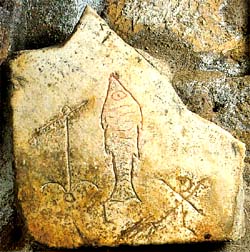 Anchor, fish, and Chi-Rho symbols from the Catacombs of St. Sebastian.
...I still have a dog-eared copy from my college days and I frequently consult it when painting, and it's worth having with you on those museum visits.
Early Christian Symbols in the Catacombs
by Dr. Ralph F. Wilson
Anchor, fish, and Chi-Rho symbols from the Catacombs of St. Sebastian.
Easter week of 2002 I visited the Catacombs of St. Callixtus in Rome, burial place of tens of thousands of early Christians. Our group descended from the warm air above, down a steep stairway into the cool and musty catacombs several levels beneath the surface. Here were thousands of niches hollowed out in the walls, used for burial from about 150 - 410 AD. Violent persecution of Christians came from time to time. Here lay also the revered tombs of the martyrs.
This underground funereal labyrinth contains some of the very earliest artifacts of Christianity we have. Here Christians mourning their loved ones would express their faith in Christ and his promises. Much of this is done in symbols — first in words and crude drawings inscribed into soft marble tombstones, later in colorful fresco paintings that adorned special areas. From the fourth century you can see a few elaborately carved sarcophagi commissioned by wealthy believers.
I was fascinated to learn that the symbol of the cross itself was only rarely used in the catacombs. Rather, other symbols are inscribed into thousands of marble tombstones as a testimony to the early Christians’ faith in Christ their Savior.
http://www.jesuswalk.com/christian-symbols/early-christian-symbols.htm
Thanks Joe I’ll check it out.
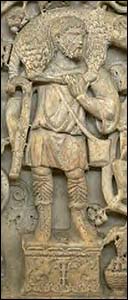 Detail of the central shepherd from the intricately carved marble Sarcophagus of the Good Shepherd , Catacomb of Praetextatus, Rome, 390s AD. (Sorry there were paragraphs in the above post prior to posting)
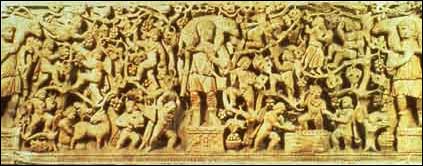 Full sarcophagus.
I am ignorant of all this symbolism, and when I first read the title of the article I thought it referred to Korean Catholics.
The old painters used symbols that their viewers were familiar with. Do you paint for targeted audiences? If not what is your reason for using symbols the typical viewer won’t understand? Just curious.
I dabble in medieval manuscript illumination, miniatures and icons. In that day and age, painters were not so much celebrated for their "creativity" so much as they were their ability to adhere to rigid iconography and adherence to themes. In order to look "authentic" you have to borrow heavily from the illuminators and scribes of that age as they did from one another.
Neat. Got any examples up anywhere?
You can click on my screen name and look about halfway down my homepage :-)
Pretty fancy “dabbling”. You’re too modest.
This is what it looks like when the pros do it...
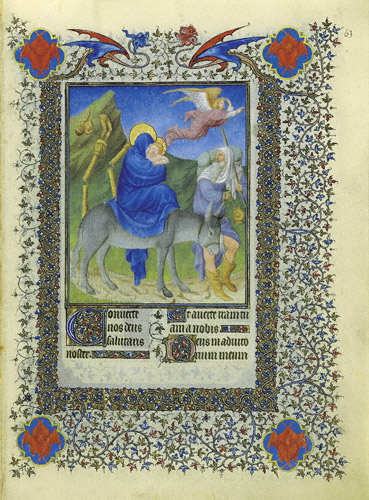
Have you heard about the St. John’s Bible?
http://www.saintjohnsbible.org/
They sent some pages of it around to various churches in the region including our (Lutheran) church. Unbelievable beautiful.
GREAT POST!
In a similar but hopefully unrelated vein, Microsoft has recently announced it will no longer support its popular Chi-Rho (XP) operating system, focusing instead on 7, the perfect and complete OS.
Jubilee Medal of St. Benedict [Catholic/Orthodox Caucus}
Being Catholic: Sacred Things, Scapulars [Ecumenical]
Being Catholic: Sacred Things, The Miraculous Medal [Ecumenical]
'Holy Things To The Holy': Sacred Things, Places, and Times [Ecumenical]
Purification of Sacred Vessels in U.S. (and more on the Purification of our Lord)
Being Catholic: Sacred Things, Relics and the Incorruptibles
Being Catholic: Sacred Things, Ashes
Being Catholic: Sacred Things, Palm Branches
Being Catholic: Sacred Things, Incense
Why We Need Sacred Art
Being Catholic: Sacred Things, Sacred Images: Statues and Other Icons
Being Catholic: Sacred Things, Crucifixes and Crosses
Being Catholic: Sacred Things, [New] Fire, Paschal Candle
Being Catholic: Sacred Things, Holy Oils
Being Catholic: Sacred Things, [Holy] Water
Disclaimer: Opinions posted on Free Republic are those of the individual posters and do not necessarily represent the opinion of Free Republic or its management. All materials posted herein are protected by copyright law and the exemption for fair use of copyrighted works.