Posted on 10/09/2026 9:41:39 AM PDT by packrat35
Any doubt to her identity was washed away when her name appeared emblazoned across her stern in raised letters: JUNEAU.
Several thousand yards ahead of the cruiser, the sky was awash with searchlights, tracers and muzzle flashes exploding on the inky-black night sky like brilliant, violent lightning strikes. In the lead of the second column of American vessels, Seaman Allen Heyn sat in his 1.1 anti-aircraft mount and watched as the ships ahead shot each other to pieces. Through all the muzzle flashes Heyn could see that the Japanese ships were getting closer, yet his ship, the USS Juneau (CL-52) remained undetected, cruising along in the night, headed straight for the pyrotechnic show dead ahead.
In an instant, the black night became as bright as noon on a desert. A Japanese star shell exploded directly above Juneau and shone on the anti-aircraft cruiser from stem to stern. Juneau’s captain, Lyman Swenson wasted no time and ordered his gun crews to open fire. Juneau’s rapid-fire 5-inch gun turrets trained to port and opened fire on the nearest target. The nearest target to Juneau was the massive Japanese battleship Hiei, burning like a bonfire from all of the small caliber shell hits her superstructure had taken from the other American ships. Heyn and his fellow gunners opened fire on the massive Japanese battleship from close in. He later recalled, “We fired right into the topside of their ship trying to knock off some of their guns on their deck.” Further forward on Juneau, Joseph Hartney opened fire with his water-cooled .50 caliber machine gun, raking the battleship up and down with his weapon, attempting to kill as many enemy sailors as he could with his fire.
As Juneau cleared Hiei she began to pass the heavy cruiser San Francisco (CA-38). Radio transmission from San Francisco to Juneau indicated that the latter ship was blocking the former from firing a full broadside at an enemy target. Captain Swenson ordered flank speed, cut his ship across Frisco’s bow and took station on her port side. As Juneau slid into position, she and her larger friend San Francisco attracted the attention of the Japanese destroyer Murasame. The Japanese destroyer opened fire on Juneau, who answered in kind. The two ships traded shell fire briefly when Juneau was seemingly lifted out of the sea with a tremendous jolt. Murasame had fired a spread of torpedoes at San Francisco just before Juneau had taken station alongside her. A single torpedo meant for the American flagship struck Juneau nearly amidships, on the port side in the forward fire room.
Dear FRiends,
We need your continuing support to keep FR funded. Your donations are our sole source of funding. No sugar daddies, no advertisers, no paid memberships, no commercial sales, no gimmicks, no tax subsidies. No spam, no pop-ups, no ad trackers.
If you enjoy using FR and agree it's a worthwhile endeavor, please consider making a contribution today:
Click here: to donate by Credit Card
Or here: to donate by PayPal
Or by mail to: Free Republic, LLC - PO Box 9771 - Fresno, CA 93794
Thank you very much and God bless you,
Jim
Tragic for that family, and ALL the families of the sailors…
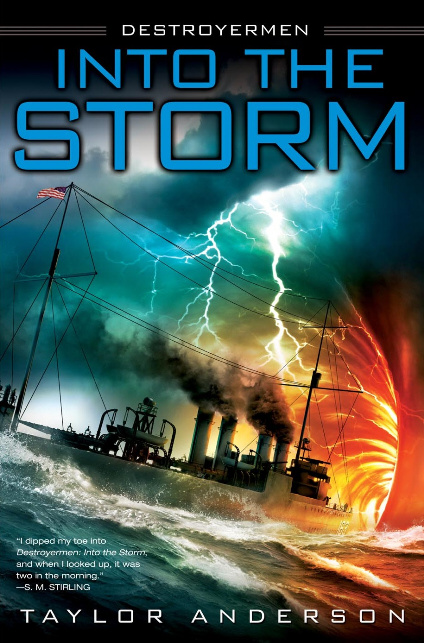
Great fictional book series about WW II destroyers:
Into The Storm: by Taylor Anderson
https://www.taylorandersonauthor.com/into-the-storm-2/
The waters around Savo island north of Guadalcanal took some of America’s great young men. Naval engagements in those waters during the battles for Guadalcanal were bloody affairs.
I just read Heyn’s survival story the other night with my kids. It’s incredible — similar to the story of the survivors of the Indianapolis.
https://en.wikipedia.org/wiki/Ironbottom_Sound
“Ironbottom Sound” (alternatively Iron Bottom Sound or Ironbottomed Sound or Iron Bottom Bay) is the name given by Allied sailors to the stretch of water at the southern end of The Slot between Guadalcanal, Savo Island, and Nggela Islands of the Solomon Islands, because of the many ships and planes that sank there during the naval actions comprising the Battle of Guadalcanal during 1942–1943. Before the war, it was called Savo Sound. Every year on the battle’s anniversary, a US ship cruises into the waters and drops a wreath to commemorate the men who lost their lives
It’s called “Iron Bottom Sound’’ for good reason.
Yep. Neptunus Rex is a book describing the action there during the Guadalcanal action I believe and Last Stand of the Tin Can Sailors is a good account of the Leyte battle and Group Taffy 3. I worked when I was a kid with an old Tin Can sailor who dodged Kama kazi’s at Okinawa.
Entertaining fantasy series.
Neptune’s Inferno
Taylor Anderson is a good author.
Thanks for the book tip!
An uncle of mine served as a gunners mate, 3rd class aboard the U.S.S. Santa Fe.
He survived the war only to be killed in a construction accident in 1959 leaving my aunt a widow with four young boys to raise.
He was the uncle I never knew.
A lot of the guys I worked with as a construction laborer were ex WW2 men. They blew things all to hell, then came home and started building things. Sorry about your uncle. May they all RIP. I joined the Navy in 1970 they told me I wouldn’t like it. They also told me how I’d find my girl friend when I got home. They were right on both counts.
Disclaimer: Opinions posted on Free Republic are those of the individual posters and do not necessarily represent the opinion of Free Republic or its management. All materials posted herein are protected by copyright law and the exemption for fair use of copyrighted works.
