Posted on 09/18/2026 6:35:37 PM PDT by DoodleBob
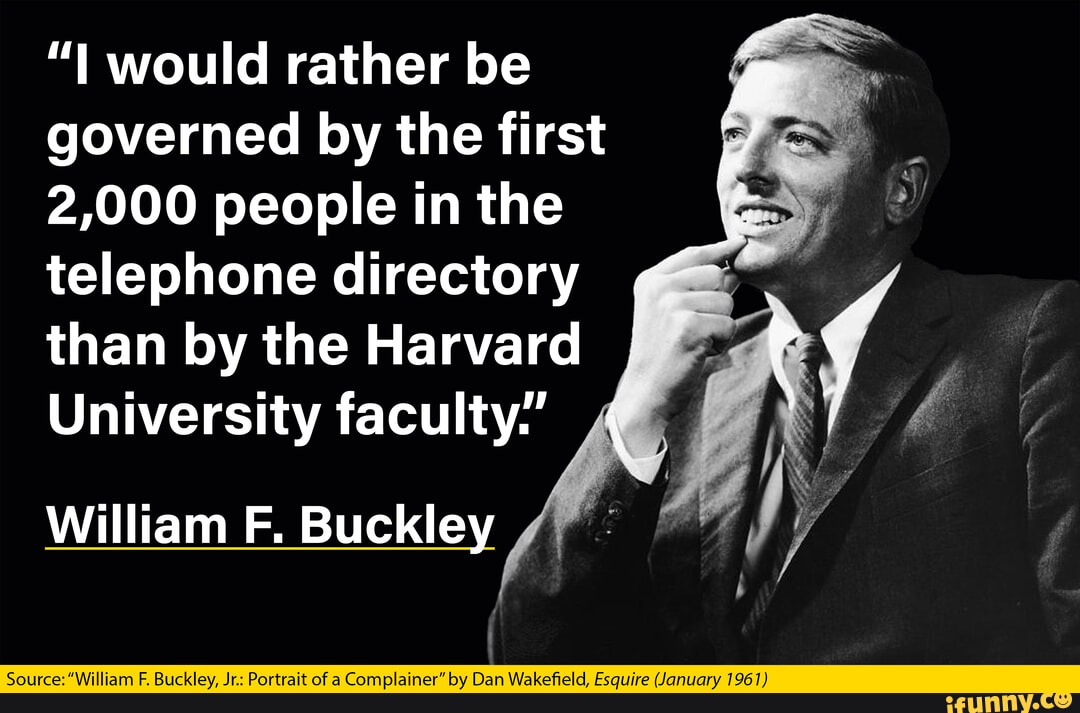
Ninety-five percent of faculty who responded to The Crimson’s annual Faculty of Arts and Sciences survey said they were dissatisfied with U.S. President Donald Trump’s second term in office, more than a year into Harvard’s battle with the White House.
Roughly ninety-two percent of respondents said they were “very dissatisfied” with the president’s second term, and another roughly four percent said they were “somewhat dissatisfied.” The combined figure marked a slight dip from last year’s survey, when 96 percent of faculty expressed dissatisfaction with the Trump.
Trump quickly zeroed in on Harvard after taking office in January 2025, attempting to pull nearly $3 billion in federal funding and taking aim at the university’s ability to enroll international studentsover claims that the University failed to respond properly to antisemitism on campus.
The White House sued Harvard directly this spring over similar accusations. A federal judge in Boston later dismissed the lawsuit, but the government has appealed the decision.
And while Harvard has launched a legal battle against the White House — suing over the frozen funds and restrictions to international student enrollment — faculty expressed frustration with quiet changes that appear to have been made under federal pressure.
In the months after rejecting the Trump administration’s demands, schools across the University shuttered their diversity offices and with programming on Israel and Palestine. Faculty argued that those changes represented preemptive concessions to the White House. Fifty-six percent of respondents said they were “very” or “somewhat” dissatisfied with Harvard’s decisions to close its diversity offices, while 28 percent said they were satisfied.
Roughly 80 percent of faculty said they did not believe Harvard should attempt an agreement with Trump, up from 71 percent last year.
A spokesperson for Harvard’s Faculty of Arts and Sciences did not respond to a request for comment.
Faculty also broadly favored stronger protections for the affiliates most exposed to federal action. Eighty-four percent of respondents agreed that Harvard should take more action to protect international students, and 85 percent of respondents said the same of international faculty and staff.
Fifty-two percent of respondents “somewhat” or “strongly” agreed that the Trump administration’s actions had discouraged them from expressing their political views, while 33 percent disagreed.
The Crimson distributed the survey to more than 1,400 faculty members across the FAS’ three academic divisions and the School of Engineering and Applied Sciences from April 29 to May 22. Respondents were tenure- and non-tenure-track faculty pulled from the school’s public masthead. The Crimson received 463 responses to the emailed survey, 292 complete and 171 partially complete.
This is the fourth in a series of articles analyzing the results of The Crimson’s 2026 faculty survey, previous stories investigated faculty opinions on FAS leadership, viewpoint diversity efforts, and campus antisemitism.
A majority of surveyed faculty felt negatively about the state of academic freedom at both Harvard and U.S. universities in general. Seventy-nine percent of faculty reported feeling “very” or “somewhat” negatively about academic freedom at colleges and universities across the country, while 52 percent felt similarly about academic freedom at Harvard.
The figures continue trends from last year’s survey, when 49 percent of faculty expressed dissatisfaction with academic freedom at Harvard and another 71 percent were dismayed by the state of academic freedom across American educational institutions.
Asked whether the political left or the political right posed a greater threat to academic freedom, 76 percent named the political right — nearly identical to the 77 percent who did so last year.
Harvard’s faculty has historically leaned liberal, and this year’s respondents were no exception: Just 2 percent of respondents were registered to vote as Republicans, while 58 percent said they were registered Democrats.
The split fell sharply along those lines. Of faculty who identified as liberal, 90 percent believed the political right posed a larger threat to academic freedom, while half of faculty who identified as conservative — a group that made up just 7 percent of respondents — instead named the political left. Moderates divided more evenly: 51 percent pointed to the right and 24 percent to the left.
When asked about academic freedom at Harvard specifically, faculty named pressure from the government, selected by 85 percent, followed by self-censorship and pressure from donors, named by 63 and 63 percent, respectively.
The results mirror last year’s survey, where 85 percent of respondents named pressure from the government as a threat to academic freedom at the University. Self-censorship and pressure from donors were also frequent answers on last year’s survey.
Faculty voiced the same concern about the University’s independence more broadly. Eighty-six percent agreed that national politicians had too much influence over the actions of the University. Answers to the question split along ideological lines with 92 percent of liberals saying the politicians had too much influence while only 64 percent of conservatives said the same.
Most faculty respondents also reported refraining from sharing their political views in the classroom: 68 percent said they “always” or “frequently” refrained in the classroom, compared to 26 percent in the public sphere.
The results come as Harvard University President Alan M. Garber ’76 said he believed that the school “went wrong” by allowing faculty to espouse their personal political views in the classroom in a podcast released in January, blaming faculty in part for a larger trend of chilled discourse on campus.
Forty-two percent of faculty who answered the survey said that they “always” refrain from expressing political stances in the classroom, and another 26 percent answered that they “often” refrain from sharing their opinions. This year’s percentages fall slightly below last year’s numbers, where 48 percent of faculty said they always refrain and 26 percent saying they often withhold opinions in the classroom.
Faculty seem slightly more comfortable talking to their colleagues. Thirty-seven percent of faculty said they rarely or never refrain from expressing their political views with colleagues while 23 percent reported often or always withheld their stances and 40 percent sometimes refrained.
Conservative faculty were more likely to report “always” or “often” refraining in all three situations: 82 percent in the classroom, 45 percent among colleagues, and 41 percent in public, compared to 63 percent, 15 percent, and 20 percent for liberal faculty.
I would bet that Trump is 100% dissatisfied with Harvard faculty.
Gee. What a surprise!
Well Harvard is full of Jew haters so I honestly dont give a flying F about what they think. These colleges, they indoctrinate young people into believing the crap they believe its no wonder young people today are so screwed up
https://en.wikipedia.org/wiki/Harvard_University_endowment
“The Harvard University endowment, valued at $56.9 billion as of June 30, 2025, is the largest academic endowment in the world.”
Harvard’s School of Public Health has privately weighed asking UnitedHealthcare, Tenet, and CVS Aetna to fund its research as it works to replace money lost to federal funding cuts, according to a person familiar with the matter.
…
the school’s funding picture shifted sharply last year after the Trump administration cut off nearly $2.7 billion in Harvard’s research grants. HSPH — which relied on private and federal sponsors for 59 percent of its operating budget in fiscal year 2025 — was hit particularly hard.
Last spring, the school cut budgets across its departments, laid off staff and researchers whose projects lost funding, and slashed Ph.D. admissions in several programs. The Biostatistics department, which lost out on a large NIH grant midway through the review process, halved its number of admitted students for the cycle.
Total undergrads at Harvard is 7,300. At $100,000 tuition per year, that makes $730,000,000. The endowment could pay for that out of its interest alone. Why even have an endowment that large?
I recall an ivy league school president being asked why only 2% of faculty were Republican. He smirked as he explained that Republicans just aren’t interested in intellectual pursuits. *smirk*
Anyone who was intending to vote against Republicans in November now has an excellent reason to reconsider.
Why even have an endowment that large?
Harvard administrators and faculty are paid very, very well. Lots of perks and benefits too.
Everyone wants to be well endowed.
Ping.
Like anybody cares. 😉
“Obviously a Yale man.”
Thurston Howell III
Sounds like Harvard has a diversity issue...
harverd is far left as one can go.They hve money originally given to help needy students.They hoard it for themselves.They will be judged one day.
DEI admissions.
Grade inflation.
The fall of an institution once recognized for superior academic standards down to that of a high school handing degrees to work-release students from half-way houses.
A previously-esteemed and envied Harvard degree spiraled down to giveaway status with no value other than a certificate of unearned entitlement and unjustified self-importance.
Disclaimer: Opinions posted on Free Republic are those of the individual posters and do not necessarily represent the opinion of Free Republic or its management. All materials posted herein are protected by copyright law and the exemption for fair use of copyrighted works.