Skip to comments.
Georgia Was Not the Beginning
Robert Lansing Institute ^
| August 11, 2026
| Irina Tsukerman
Posted on 08/16/2026 4:42:44 AM PDT by tlozo
Every August, the anniversary of Russia’s invasion of Georgia is accompanied by familiar reflections about missed warning signs, intelligence failures, and a supposedly unexpected turning point in European security. The language has become so standardized that it obscures a far more uncomfortable reality. Georgia did not reveal a new Russia. It exposed a Russia that had been behaving consistently for nearly two decades while much of the West continued searching for evidence that Moscow had fundamentally changed after the collapse of the Soviet Union. Describing the failure to recognize this trajectory as a collection of mistakes understates what actually occurred. The intelligence existed. The historical record existed. The operational patterns existed. The political leadership in many Western capitals simply preferred a different interpretation because that interpretation aligned more comfortably with prevailing assumptions about globalization, economic integration, and the supposed end of geopolitical rivalry in Europe.
The tendency to treat 2008 as the beginning of Russian revisionism depends upon examining each conflict in isolation instead of recognizing the continuity connecting them. The Soviet Union disappeared as a political entity in 1991, but its security culture did not disappear with it. Institutions were renamed, ministries reorganized, political slogans changed, and a market economy emerged in varying degrees, yet the intelligence services retained much of their institutional memory, the military continued adapting doctrines rooted in Soviet strategic thinking, and many of the officials who shaped Russia’s security policy had spent their careers inside Soviet structures. There was never a clean break between Soviet geopolitical assumptions and those that guided the Russian Federation. There were adaptation, modernization, and changing methods, but the underlying objective of preserving dominance over the former Soviet space remained remarkably consistent.
That continuity became visible almost immediately after the Soviet collapse. Moscow’s role in Armenia’s occupation of Azerbaijani territories during the early 1990s demonstrated that Russia had no intention of allowing the South Caucasus to develop independently of its influence. Officially presenting itself as mediator while simultaneously providing military, political, and logistical support that sustained Armenian control over occupied territories established a template that would reappear elsewhere. Frozen conflicts were not unfortunate diplomatic failures from Moscow’s perspective. They created permanent leverage. States burdened by unresolved territorial disputes found NATO membership more difficult, foreign investment became more complicated, political development slowed, and Russia could repeatedly present itself as the indispensable security broker despite having helped create the instability in the first place. This was not crisis management. It was long term geopolitical engineering designed to ensure that no neighboring state could fully escape Moscow’s orbit.
A similar pattern emerged in Moldova, where the conflict in Transnistria effectively preserved a Russian military presence long after the Soviet Union had ceased to exist. Once again, Moscow demonstrated that maintaining unresolved disputes served broader strategic objectives. The territorial dimension mattered less than the political consequences. An unresolved conflict allowed Russia to retain influence over Moldova’s domestic politics, constrain its foreign policy choices, and preserve military leverage disproportionate to the size of the territory involved. The same strategic logic later appeared in Georgia through Abkhazia and South Ossetia before expanding into eastern Ukraine. Rather than viewing these conflicts as separate regional crises, they should have been understood collectively as evidence of an enduring doctrine that treated instability as a strategic asset rather than an unfortunate byproduct of failed diplomacy.
The Chechen wars reinforced this picture in ways that received surprisingly little attention outside specialists studying Russian military affairs. During both campaigns, Moscow demonstrated an extraordinary willingness to employ overwhelming force against civilian infrastructure while presenting the operations as legitimate counterterrorism measures. Grozny was reduced to ruins through methods that foreshadowed tactics later employed in Syria and Ukraine. Indiscriminate bombardment, deliberate destruction of civilian infrastructure, extensive information control, and the cultivation of loyal proxy authorities all became recurring features of Russian military operations. The campaigns also illustrated how legal narratives, information management, and military violence could be integrated into a single political strategy. Rather than provoking sustained concern that Russia’s armed forces were developing an increasingly coercive operational culture, many governments treated Chechnya as a uniquely domestic security issue with limited implications for future interstate conflict. That assumption ignored the reality that military institutions rarely confine successful operational methods to one theater. Armies learn from experience, refine techniques, and apply them wherever political leaders believe similar objectives exist.
By the time Russian forces crossed into Georgia in August 2008, none of these developments should have been surprising. The legal justifications, information campaigns, claims of humanitarian intervention, cyber operations, diplomatic messaging, and rapid military advances reflected concepts that had been developing for years. Russia argued that it was protecting vulnerable populations, defending peacekeepers, and responding to aggression initiated by others. Similar language would later accompany the annexation of Crimea and the intervention in eastern Ukraine. Observers frequently describe these as examples of hybrid warfare, yet even that label risks implying novelty where continuity is the more accurate description. Military force, intelligence activity, political influence, economic pressure, legal argumentation, media manipulation, and cyber capabilities had already become mutually reinforcing components of Russian statecraft well before the term “hybrid warfare” entered common use.
The problem was not that these indicators remained hidden. Intelligence services throughout NATO possessed substantial information about Russian military modernization, intelligence activities, organized crime networks, cyber capabilities, and political influence operations. Open-source reporting documented many of the same developments. Journalists, regional specialists, military analysts, and former Soviet experts repeatedly warned that Russia’s actions did not resemble those of a country gradually integrating into the post-Cold War security order. Those warnings often struggled to influence policy because they collided with a broader political narrative that had become deeply embedded across Europe and North America. The prevailing assumption held that economic integration would eventually moderate Russian behavior, making geopolitical rivalry increasingly irrational in an interconnected global economy. This belief influenced governments, financial institutions, multinational corporations, universities, and policy think tanks alike.
That assumption proved remarkably resilient because it generated tangible economic benefits. European dependence on Russian energy expanded steadily. Western banks welcomed Russian capital. Major corporations viewed Russia as one of the world’s most promising emerging markets. Energy partnerships generated billions of dollars in investment, while political leaders increasingly measured successful diplomacy by the expansion of commercial ties. Accepting that Russia regarded many of these relationships as instruments of strategic leverage rather than evidence of genuine integration would have required acknowledging that decades of policy rested upon deeply flawed assumptions. The financial costs of changing course appeared immediate and measurable. The security risks seemed distant, uncertain, and easier to postpone. Political systems naturally gravitated toward the path of least resistance, particularly when influential commercial interests argued that continued engagement would eventually encourage moderation in Moscow.
Russia interpreted those same developments through an entirely different framework. Economic interdependence was never viewed as an alternative to geopolitical competition. It expanded the range of tools available to pursue that competition. Energy exports became instruments of political pressure. Investment created influence within Western business communities. Financial openness offered opportunities for corruption, intelligence collection, and elite cultivation. Organized crime networks frequently intersected with state interests in ways that complicated law enforcement while advancing broader geopolitical objectives. Each element reinforced the others. Commercial engagement strengthened rather than constrained Moscow’s ability to shape political outcomes abroad because Russian policymakers never accepted the liberal assumption that markets would gradually replace power politics.
The historical record leaves little room for the argument that Western intelligence services simply lacked sufficient information about Russia’s direction after the collapse of the Soviet Union. By the 1990s and early 2000s, governments across NATO were already tracking Russian military modernization, the evolution of the security services, the rebuilding of conventional capabilities after the Chechen wars, the use of cyber operations, the spread of Russian organized crime through international financial networks, and the growing political role of energy exports. Much of this information circulated not only through classified channels but also through academic research, investigative journalism, military assessments, congressional testimony, and open source reporting. The failure developed through the way these developments were interpreted. Russian activity was divided into separate policy files, handled by different bureaucracies, and repeatedly assessed according to the immediate problem in front of decision makers. Cyber operations became a technical security issue, Russian capital flows became a financial regulation issue, political influence became a domestic governance issue, energy pressure became a commercial dispute, and military coercion in the former Soviet space became a regional security problem. The strategic connection among these activities was repeatedly diluted by institutional compartmentalization, even though Moscow itself treated them as mutually reinforcing instruments of state power.
That analytical habit grew out of assumptions that had become deeply embedded in Western policymaking after 1991. Russia was widely expected to move through a difficult transition toward some version of market-oriented, internationally integrated statehood, and that expectation shaped how new evidence was interpreted. Military modernization was often presented as a natural attempt to recover from the collapse of the 1990s. Intelligence activity was treated as familiar great-power behavior. The wars in Chechnya were categorized as domestic counterterrorism campaigns. Russian support for Armenia during the occupation of Azerbaijani territories remained trapped inside the language of post-Soviet conflict management. Moldova was treated as a peripheral frozen conflict. Georgia was eventually placed into another narrow regional file. Each episode was processed on its own terms, and the accumulated pattern remained politically inconvenient because recognizing it would have required a much earlier reassessment of the entire post-Cold War policy toward Moscow. That reassessment would also have carried immediate economic costs, disrupted energy relationships, threatened commercial investments, and forced European governments to spend far more seriously on defense at a time when much of the continent had become accustomed to reducing military expenditures.
Yuri Bezmenov’s warnings deserve renewed attention precisely because he described the long-term shaping of political environments as a central function of Soviet active measures. In one of his most frequently cited formulations, he said: “The highest art of warfare is not to fight at all, but to subvert anything of value in the country of your enemy until such time that the perception of reality of your enemy is screwed up to such an extent that he does not perceive you as an enemy.” The relevance of that warning extends far beyond Cold War propaganda. It describes a method in which the adversary’s political culture, social divisions, media environment, institutions, and elite networks become part of the battlefield long before conventional military force is used. Bezmenov also warned about the psychological effect of sustained ideological conditioning when he said: “A person who is demoralized is unable to assess true information. The facts tell him nothing.” He continued by explaining that even authentic evidence could be rejected once a person’s framework for interpreting reality had been sufficiently distorted. Those ideas map closely onto the later Russian use of disinformation, political financing, corrupt business relationships, proxy organizations, state media, social media manipulation, cyber operations, and the exploitation of domestic grievances in Western societies. The objective has often been to produce confusion, distrust, fragmentation, and political paralysis, creating an environment in which coherent responses to Russian actions become slower and more difficult.
Bezmenov also drew attention to how little of intelligence work, in his description of Soviet practice, involved the familiar image of espionage. He said: “Only about 15 percent of time, money and manpower is spent on espionage as such. The other 85 percent is a slow process which we call either ideological subversion or active measures.” That distinction helps explain why Western governments often struggled to recognize the scale of the challenge. Traditional counterintelligence structures were designed to identify spies, protect classified information, and disrupt covert operations. Russian influence activity frequently moved through areas that did not look like conventional espionage at all. Business partnerships, media narratives, political donations, academic relationships, cultural organizations, energy contracts, legal advocacy, lobbying networks, and criminal financial channels could all contribute to the same strategic purpose while remaining distributed across different sectors of society. A government looking only for classic intelligence operations would therefore capture a fraction of the picture. Russia inherited from the Soviet system a much broader understanding of influence, one in which intelligence services, commercial interests, political intermediaries, criminal networks, media institutions, and diplomatic structures could all be used in support of long-term geopolitical goals.
The uneven reception of Bezmenov’s warnings also developed within an intelligence environment that had been shaped by decades of disputes over Soviet defectors and deception. Yuri Nosenko’s case became one of the most divisive episodes in CIA history because his defection produced prolonged disagreement over whether he was genuine or part of a Soviet effort to mislead American intelligence. The internal controversy surrounding him affected how later defectors and sweeping claims about Soviet strategy were evaluated. Nosenko was eventually accepted as authentic, yet the broader institutional legacy of the case encouraged caution toward analyses that emphasized large-scale deception, long-term ideological warfare, and strategic continuity. Bezmenov entered that environment with claims that were expansive, politically uncomfortable, and difficult to fit into the prevailing optimism of the late Cold War and post-Soviet periods. His warnings suggested that the collapse of the USSR would not automatically erase the habits, networks, and assumptions of the Soviet security establishment. That conclusion had major implications for policy because it implied that political liberalization and market reform could coexist with continuing strategic hostility toward the West.
The desire to believe in Russia’s eventual normalization became stronger as commercial opportunities expanded. Western companies sought access to Russian markets, European governments became increasingly dependent on Russian energy, financial institutions welcomed Russian capital, and political leaders built entire policy frameworks around the assumption that deeper economic ties would create a more predictable relationship with Moscow. Security concerns repeatedly lost political priority because acting on them would have meant imposing costs on influential domestic constituencies. Banks, energy companies, industrial firms, consultants, law firms, universities, and political intermediaries all developed interests in maintaining access to Russian money or Russian markets. The resulting environment rewarded reassurance and penalized strategic pessimism. Analysts who warned that commercial integration could itself become a channel for leverage faced resistance because their conclusions threatened profitable arrangements and challenged the dominant narrative that economic interdependence would gradually restrain Russian behavior.By 2008, enough evidence had accumulated to make the pattern difficult to dismiss. Russia had already demonstrated its willingness to sustain frozen conflicts, support territorial occupations, use overwhelming force in Chechnya, weaponize energy relationships, employ cyber tools against neighboring states, cultivate political and business networks abroad, and preserve substantial continuity within its security establishment. The invasion of Georgia brought these strands together in a single military crisis and showed how quickly Moscow could move from political pressure and proxy relationships to open force. Treating the war as an isolated event therefore required ignoring the broader record that preceded it. The subsequent response also sent a message to Moscow. Economic relations recovered, energy cooperation continued, commercial ties deepened, and Western governments gradually returned to engagement. That experience became part of the Kremlin’s assessment of future risk, shaping expectations about how much aggression could be absorbed before the West imposed consequences severe enough to alter Russian calculations.
TOPICS: Foreign Affairs; Russia; Ukraine
KEYWORDS: 1990s; 1991; 2008; 200808; 202608; 55monthsoffailure; agitatedbidenbois; aigenerated; angryborisbots; angrymrbeanbots; angryvindmanclones; armenia; axisofevil; azerbaijan; bezmenov; bitterborisbots; bogeymeneverywhere; complacency; conflict; cybersecurity; dailycalltoprayer; demoralization; disinformation; donetskblackhole; energy; everywarisourwar; failedinvasion; heyletsstartww3; interventionistbs; isolationistbs; kremlinmonster; landgrabs; maplesyrup; moldova; mrbeanoncrackfans; normalization; nosenko; nousvitalinterests; omgomgpoootleromgomg; organizedcrime; putin; putinswar; rudezeeperbots; russia; russianimperialism; russianmafia; russianmob; russiarussiarussia; russiastillosing; russophrenicsonfr; siryapsalot; spendanothertrillion; stillnotourwar; subversion; tbozo; transnistria; ukraine; usaworldpolice; ussr; war; yuribezmenov; yurinosenko; zeepersarerinosdude
Navigation: use the links below to view more comments.
first 1-20, 21-40, 41-60, 61-80 ... 101-104 next last
"First the reality, Russia, before, during, and after the Soviet Union was and remains a brutal imperialist dictatorship. So Russia is back to where it has always been, with the Russian compulsion for brute force bullying as its way of dealing with the world. The only thing Russians in the Kremlin understand and respect is superior force and the willingness to use it against them." Dr. Jack Wheeler
1
posted on
08/16/2026 4:42:44 AM PDT
by
tlozo
To: tlozo
I agree with the author. Putin cried when the Soviet Union failed and vowed to remake it and exceed its largest glory. He spiritual advisor, Alexandr Dugin counseled him to achieve greatness through that goal. It has guided him since the beginning.
2
posted on
08/16/2026 4:48:13 AM PDT
by
Eli Kopter
(B''H We are given a new day today, with new choices. Choose wisely!)
To: tlozo
If Irina Tsukerman wants anyone to take her viewpoint on Russia seriously, she should say so in her own words instead of using obvious AI slop.
3
posted on
08/16/2026 4:59:50 AM PDT
by
Ultra Sonic 007
(There is nothing new under the sun.)
To: Ultra Sonic 007
Russia will be Russia. Czarist Russia is no different than Communist Russia or the Russia of today. History has proven that .
To: tlozo
the West continued searching for evidence that Moscow had fundamentally changed after the collapse of the Soviet Union.
______
There was a fundamental change.
The Communism in Russia is gone!
However, Russia basically returned to the old, Tzarist Russia, militaristic, oppressive, despotic and aggressive.
Putin, deep inside, does not want to be communist party first secretary, but Tzar Vladimir (III).
5
posted on
08/16/2026 5:12:39 AM PDT
by
AZJeep
(sane )
To: tlozo
Secutity is a two-waty street. NATO was threatening the security of Russia with NATO expansion on its border, which much like the former Soviet Union trying to arm Cuba with nuclear weapons 90 mile off of the U.S. coast, is a ggenuine threat to now Russia, as it was to then the U.S..
This whole conflict was created on purpose, and it served no one well.
To: Robert DeLong
NATO was threatening the security of Russia with NATO expansion on its border. NATO was never going to invade a nuclear armed Russia and with the breakup of the Soviet Union heavily reduced its military, showing it was NOT a threat.
The ONLY threat NATO posed to Russia is that it stopped Russian threatening/bullying(Findlandization) of its much smaller neighboring countries, like the Baltics.
7
posted on
08/16/2026 5:26:31 AM PDT
by
tlozo
(“Russia war-Either money today or blood tomorrow," Polish Prime Minister Donald Tusk )
To: AZJeep
Communism in Russia is NOT gone.
Putin wouldn’t even be in office now we’re in not for the communist party support he receives in the Duma… his party is in coalition with it.
That is why he has been so determined to reinstate Stalin in the collective memory as some kind of hero.
8
posted on
08/16/2026 5:30:10 AM PDT
by
piasa
(Attitude adjustments offered here free of charge)
To: Robert DeLong
NATO wasn’t “threatening” Russia. It isn’t any business of Russia’s whether NATO expands or not because that is between NATO and some other sovereign country. Russia can cry and complain about it, and use public debate to persuade or economic offers and diplomacy to influence others but no country has a right to just invade and annex chunks of another non aggressive country just because Russia is paranoid and refuses to respect the sovereignty of its neighbors.
Nobody is interested in invading and annexing Russia, least of all Georgia or Ukraine.
Russia’s invasion AND *annexation* of territory outside of its borders is 100% unjustified, nothing more than pure greed and obvious empire-building, and has nothing to do with protecting Russia’s borders or her citizens. It’s all about money and power for the elite.
9
posted on
08/16/2026 5:48:55 AM PDT
by
piasa
(Attitude adjustments offered here free of charge)
To: Destroyer Sailor
Russia will be Russia. Czarist Russia is no different than Communist Russia or the Russia of today. History has proven that .Russia has long held to a degree of paranoia. It comes with being invaded so many times in its history.
Somebody should inform them that the Mongol hordes aren't coming anymore.
To: tlozo
To: piasa
The Soviet Union never announced that the placing of nuclear weapons in Cuba was a threat too the U.S., that was what the U.S. took it as being. In the eues of the Soviet Union they were just offering a small nisland nation protection against the world's major superpower, much like they were doing in Vietnam at that time as well.
That's called an implied threat, and a threat it was in reality. NATO expansion on the border of Russia was a naked implied threat to Russia, for they knew exactly how Russia would take it.
Sorry paisa, you are wrong. Both acts, Soviet Union in 1962 missile crisis in Cuba, amnd the U.S. NATO expansion threat into Ukraine that started in 1994 were meant as threats, and the drum beat was growing stronger as time went on. We knew exactly how Russia would react, because Putin stated in 2008 that NATO expansion into any nation bordering Russia whould not be tolerated and would be taken as a threat to their national secutrity.
Stop being naive. It was an intentional threat to Russia, and had been a long running threat, that Russia had spent tr years trying to defuse to no avail, because we wanted the threat to be felt in hopes that it would eventually lead t the invasion that finally occurred, because they had a brilliant plan where Ukraine would be the battlefield, and the U.S. would just supply the money to wahe the war aganst Russia, only Ukraine was never allowed to execute offensive attacks against Russia, becausae we didn't want Russia to attack Europe or the U.S.
It was the perfect plan don't you know. Nothing could go wrong, except for Russia.
To: Ultra Sonic 007
---- "If
Irina Tsukerman wants anyone to take her viewpoint on Russia seriously...."
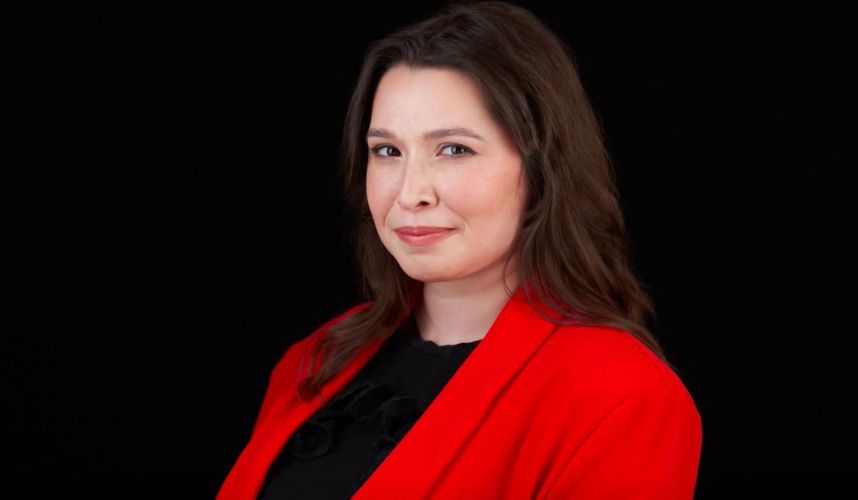
It is interesting that this author, an American lawyer, her "institute" and other websites works diligently on her own self-promotion. Some info with sources:
The "institute" is in Dover, Delaware, in a "Single Family Residence." The website was begun in 2021. The "institute" seems to have been begun in 2019, and is not an LLC, but a private domain.whois query on lansinginstitute.org
Domain: lansinginstitute.org
Registered On: 2021-03-16
Registrar: Bluehost Inc.
Registrant Contact Name: PERFECT PRIVACY, LLC
City: Jacksonville
State: Florida
Headquarter: 19 Holly Cove Ln., Dover, Kent, Del., 19901.
Phone: +1 302.499.20.07
The "institute" home page X-Twitter link returns "Hmm...this page doesn't exist. Try searching for something else."
As to the author, here is some public information:
Irina Tsukerman. "BA in Middle East and International/Intercultural Studies - Fordham College at Lincoln Center (2006) , JD - Fordham University School of Law (2009)" and "Licensed in New York," according to her website, registered in 2022 by GoDaddy.com, LLC. Source: Boutique National Security Law Firm
So a lawyer running her own office, and apparently her own "insitute" along with a number of other websites.
Another of her websites is Scarab Rising, Inc. of which she is president. The "company" is located at a small private home -- 582 Nichols Ave, Stratford, Connecticut. ( OpenGovUS )
When one reads promoted op-eds as if news, it is informative to know something of the opinion writer.
To: Robert DeLong; AZJeep
14
posted on
08/16/2026 7:09:54 AM PDT
by
higgmeister
(In the Shadow of The Big Chicken! )
To: Robert DeLong
because Putin stated in 2008 that NATO expansion into any nation bordering Russia whould not be tolerated
Yah sure, Pootin apologist.
Pootin's failed invasion spooked Finland into joining NATO, and Finland borders Russia.
So what has Pootin done about it?
Squat.
Because Russia doesn't control what other countries do.
To: Worldtraveler once upon a time; Kazan
To: canuck_conservative
Your ignorance here is legend. I am not a Putin apologist. I am a truth teller. Sometimes te truth does not fit the narrative that has been engineered.
Sadly, people such as yourself, have real problems accepting the truth, because ytou are easily gaslighted into accepting the lies you are being spoon-fed, because you lack critical thinking skills that are nneeded to see the truth.
My sympathies lie with the Ukrainian people who were used & abused, for they are the true victims of this proxy war whose arcitects knew exactly what they were doing, and that the outcome would eventually come into reality. Russia would invade Ukraine.
Now that Ukraine's hands have been untied with the U.S. not funding thier fight, they finally have a real chance of doing damage to Russia. Europe keeps promising aid for Ukraine, but alas, that aid never really materializes at all.Because they do not want to be targeted by Russia.
You should be focusing on what your Canadain leadership is doing to your nation, from within.
To: canuck_conservative
What an amusing comment.
I documented information about the author, Irina Tsukerman. There is much more info, from public sources, such as her many roles. An example, "Editor in Chief of The Washington Outsider." Another example: " a member of the American Bar Association's Energy and Environment and Science and Technology Sections." Another: "Fellow at the Arabian Peninsula Institute and a Fellow at the Jerusalem Center for Security and Foreign Affairs." Another: "...an affiliate member of the Foreign & Comparative Law Committee."
Here as another article by her, a very busy media individual with her own YouTube channel:
PERSPECTIVE: The West is Losing the Cognitive War Russia Never Stopped Fighting By Irina Tsukerman July 1, 2026
Have you a problem with knowing more of those whose words are promoted in these threads?
Here is a snapshot of her view about President Trump:
"Irina Tsukerman, a New-York based human rights and national security lawyer, told The Mirror US that Trump's 'authoritarian language' on elections is concerning, not due to the threat of 'immediate dictatorship,' but because it gradually degrades democratic norms. " 'The rhetoric is concerning because it reframes democratic administration as a personal grievance rather than a shared civic process,' Tsukerman explained. 'When a president speaks about elections as something that should be seized, overridden, or centrally controlled by the executive, it signals a worldview in which legitimacy flows from authority rather than consent.'
"Tsukerman noted that Trump's repeated calls for the federal government to take over 'normalizes the idea that losing control over elections is a failure of power rather than a feature of constitutional design.'
" 'Authoritarian language matters because it sets public expectations,' she explained. 'Repeated claims that elections are illegitimate unless controlled by a strong central authority weaken trust in decentralized institutions and cast state and local officials as adversaries rather than neutral administrators'."
Source: Expert sounds alarm over real 'danger' of Trump's 'concerning' election rhetoric The Mirror, 15 Feb 2026
Ask another question or pose another comment about Irina Tsukerman and her view of my President Trump. Or you can add in with some views of your Mark Carney, prime minister of Canada since 2025. Or perhaps your own Canadian, Paul Kahnert, who mentions Tsukerman in a recent Leftist piece....
To: Robert DeLong
Saying that “NATO was threatening the security of Russia with expansion on its border” is not telling the truth
NATO has been “on Russia’s borders” since 1949 ... Look on a map, Robert - Alaska is part of the US, a founding member of NATO ... Russia didn’t seem threatened by that, did they?
So that line is merely bogus Russian propaganda that gullible people willingly swallow. Russia uses it to try make it look like they’re some kind of victim.
RUSSIA IS NO VICTIM
Look, it’s not complicated, Pootin wanted to steal some land and show what a “great conqueror” he was
(and he’s failed at both)
To: Eli Kopter
Get off yer high horse. There is nothing wrong with trying to reclaim a country, a heritage. So long as it is not communist I am willing to stand by and watch.
All the rest of this is like the lies out of the mouth of the HilaryHag — to explain why she did not get her turn in the WHouse.
20
posted on
08/16/2026 8:05:28 AM PDT
by
bobbo666
Navigation: use the links below to view more comments.
first 1-20, 21-40, 41-60, 61-80 ... 101-104 next last
Disclaimer:
Opinions posted on Free Republic are those of the individual
posters and do not necessarily represent the opinion of Free Republic or its
management. All materials posted herein are protected by copyright law and the
exemption for fair use of copyrighted works.
FreeRepublic.com is powered by software copyright 2000-2008 John Robinson