Posted on 03/31/2026 4:37:09 AM PDT by tlozo
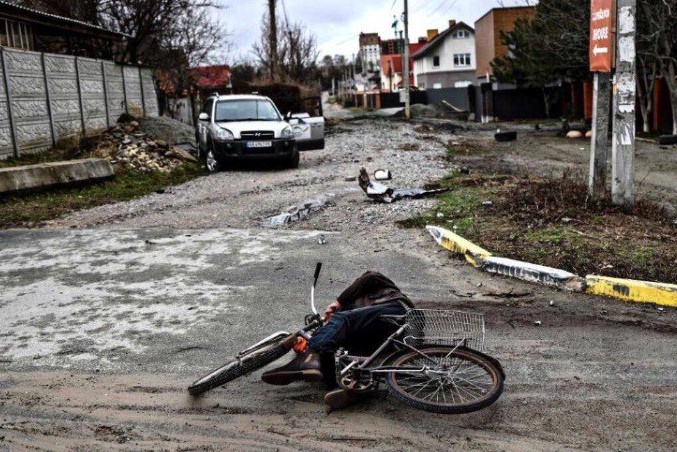
Four years after the liberation of Bucha, the town remains a central reference point for understanding the nature of the war in Ukraine and the limits of current diplomatic efforts. The events that followed the withdrawal of Russian forces in March 2022, when hundreds of civilians were found dead across the Kyiv suburb and the wider region, continue to shape how Ukraine defines both security and peace.
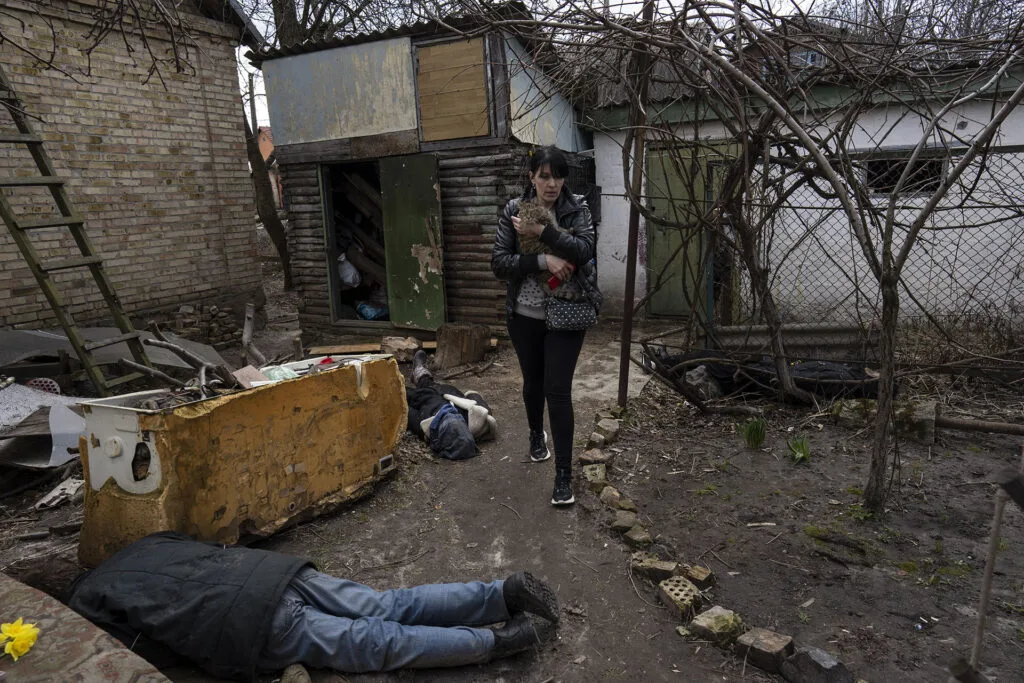
Bucha has become more than a historical episode. It functions as a political and moral benchmark in discussions about any future settlement. Ukrainian authorities report over 400 civilian deaths in the town itself and more than 1,300 across the broader Kyiv area during the Russian retreat phase, including cases of apparent execution-style killings. The scale and circumstances of those deaths remain a key factor in Kyiv’s rejection of proposals it views as undermining sovereignty.
Against this backdrop, ongoing diplomatic contacts involving Ukraine, Russia, and the United States have not produced a coherent framework for ending the war. Instead, the process remains fragmented, with parallel discussions failing to converge into a structured negotiation. The lack of outcomes has reinforced the perception in Kyiv that diplomacy alone is insufficient under current conditions.
Russia’s position, as reflected in repeated negotiating signals, continues to center on territorial concessions and restrictions on Ukrainian sovereignty. From Ukraine’s perspective, these demands are not a starting point for compromise but a form of political dismantling. That gap defines why Bucha remains so relevant: it is viewed as evidence of what Russian control has already produced on the ground.
At the same time, limited but tangible humanitarian results have emerged from indirect contacts. Since early 2026, around 650 Ukrainian military personnel and seven civilians have been returned through exchanges involving multiple parties, including the United States. While these returns are significant for affected families, they do not alter the broader absence of a settlement path.
The wider international environment has also influenced the war’s trajectory. Shifts in global attention, including crises outside Europe and pressure on energy markets, have reduced sustained political focus on Ukraine at moments when it remains dependent on external support. This uneven attention has created conditions in which the conflict continues without decisive diplomatic breakthrough.
On the battlefield, Ukraine has demonstrated partial recovery and adaptation. Ukrainian forces have regained control over roughly 470 square km in the south, according to military leadership. Alongside this, expanded drone capabilities and long-range strike operations have increased pressure on Russian logistics and infrastructure, extending the war beyond the immediate front line and raising operational costs for Moscow.
Russia, meanwhile, continues to conduct sustained offensive operations in eastern and southern sectors while absorbing significant losses. Despite this, its strategic calculation appears unchanged, relying on endurance and the expectation that prolonged pressure will eventually produce political exhaustion in Ukraine and its partners.
This military and diplomatic balance feeds directly into the meaning of Bucha in contemporary Ukrainian thinking. The town is not treated solely as a site of past atrocities, but as a reference point for what unchecked occupation and imposed settlement terms could mean in practice. For Ukrainian policymakers, it reinforces the view that any “peace” built on coercive conditions risks repeating the logic of occupation rather than resolving it.
The symbolic weight of Bucha is further reinforced by continued European political engagement. Visits by EU foreign ministers and senior officials to commemorate the victims underline the extent to which the events remain embedded in European security discourse. These commemorations are tied to broader commitments to military support, reconstruction planning, and legal accountability for war crimes, including efforts to document evidence and explore tribunal mechanisms.
European officials have also framed Bucha within a wider obligation to ensure accountability, linking remembrance with legal and political initiatives aimed at prosecuting alleged crimes committed during the invasion. This approach reflects an understanding that the consequences of the war extend beyond the battlefield and into the structure of post-war international law.
Ultimately, Bucha functions as a dividing line in how the war is interpreted. For Ukraine, it represents evidence that conditions on the ground cannot be separated from political negotiations. For its partners, it reinforces the stakes of continued support. And for the broader diplomatic process, it remains a reminder that any settlement framework disconnected from these realities is unlikely to be viewed as legitimate or sustainable.
Bucha has come to symbolise the cruelty of Russia’s war.
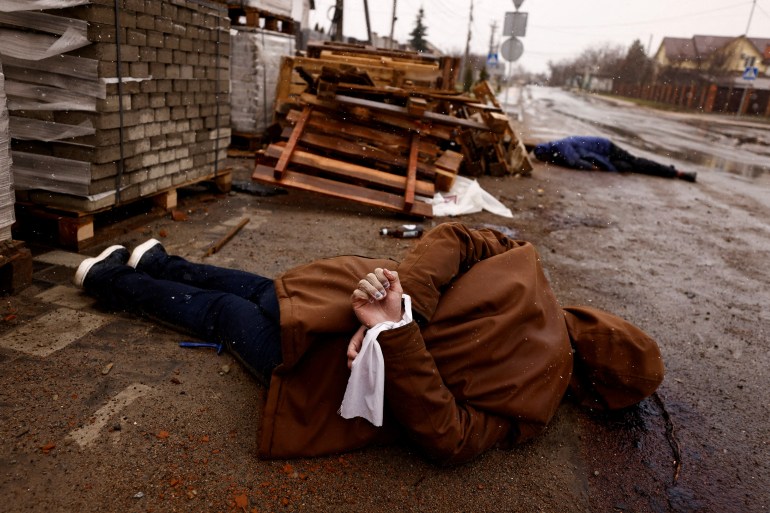
Of the civilians killed, many were shot at close range. Some with their hands tied behind their backs.
Four years after these mass killings, we remember the victims.
What happened here cannot be denied.
like i said two years ago
draw the line, split the mineral rights
end the killing
time to wrap all this sh&$ up and worry about the U.S. We have enough troubles of our own
A resident of the Ukrainian town of Bucha, on the outskirts of Kyiv, said Russian soldiers came to her house professing to be liberators and then killed her husband in front of her.
After being controlled by Russian forces for weeks, Bucha was recently reclaimed by Ukraine, with authorities later saying that Russian troops had killed more than 300 civilians while there.
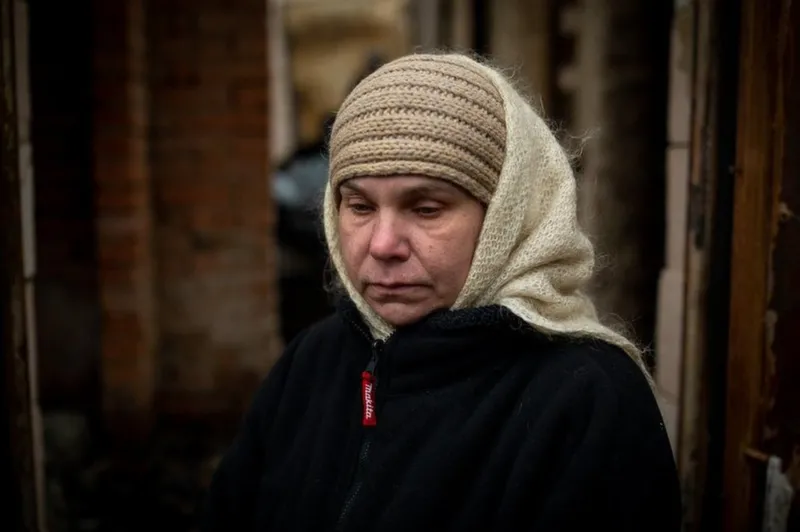
In a video interview shared by Ukraine's Ministry of Culture and in a separate interview with the BBC, Iryna Abramov, a Bucha resident, said Russian troops stormed her home on March 5 and dragged her husband, Oleg, into the street. "They didn't ask anything or say anything, they just killed him," she told the BBC. "They only told him to take off his shirt, kneel down, and they shot him."
According to a translation of the interview posted to social media, Abramov said the Russian troops had first told them: "We are the liberators. We have come to liberate you."
Abramov told the BBC that after shooting Oleg, the soldiers told her and her 72-year-old father, Volodymyr, that they had three minutes to leave the house, meaning they had to leave Oleg's dead body on the street.
She said the body was on the street for a month while they sheltered nearby, before Ukrainian forces collected it and took it away, the BBC reported. Volodymyr Abramov told the BBC he does not know where his son-in-law's body is.
Iryna Abramov said her husband's blood still stained the street on the spot where he was killed, the BBC reported.
Iryna Abramov stands outside her destroyed home in Bucha, where her husband was killed. 'I wish they had killed me too,' she said.
https://www.bbc.com/news/world-europe-61003878
Something looks fake about these pics...
Whatever could it be?
UN report details summary executions of civilians by Russian troops in northern Ukraine 07 December 2022
In the initial weeks of the invasion of Ukraine, Russian armed forces summarily executed or carried out attacks on individuals leading to the deaths of hundreds of civilians, the Head of the UN Human Rights Monitoring Mission in Ukraine, Matilda Bogner said today. A UN Human Rights report based on the work of the Mission details how Russian troops killed civilians in Ukrainian towns and villages across the Kyiv, Chernihiv and Sumy regions of Ukraine from 24 February until 6 April 2022.
Bogner said the summary executions examined in the report may constitute a war crime. “There are strong indications that the summary executions documented in this report may constitute the war crime of willful killing,” she said.
The report explains how killings of civilians were not confined to specific locations, although some areas were more affected than others. In the town of Bucha near Kyiv, which was under the control of Russian troops from 5 to 30 March, the Mission documented the killing of 73 civilians (54 men, 16 women, 2 boys and 1 girl) and is in the process of corroborating an additional 105 alleged killings.
Summary executions often followed security checks by Russian armed forces. “A mere text message, a piece of camouflage clothing, or a record of previous military service could have fatal consequences,” Bogner said.
The report states that the UN has, so far, documented the violent deaths of 441 civilians (341 men, 72 women, 20 boys and 8 girls) in the three regions in the initial 6 weeks of the Russian invasion alone. The report cautions that the actual figures are likely to be considerably higher as work is still ongoing to corroborate an additional 198 killings that occurred in the Kyiv, Chernihiv and Sumy regions of Ukraine occupied by Russia in the initial stages of the ongoing armed attack against Ukraine.
Apart from the summary execution of civilians, the report covers cases when Russian troops launched attacks that did not respect the principle of distinction between military objectives and civilians, and failed to take all feasible precautions to spare civilians. “Civilians were targeted on roads while moving within or between settlements, including while attempting to flee the hostilities,” Bogner said.
The report examines 100 killings in more detail. Of the number, according to the report’s assessment, 57 amounted to summary executions (48 men, 7 women and 2 boys). Thirty of those took place in places of detention while the remaining 27 victims were killed on the spot, shortly after coming under the control of Russian forces.
“Russian soldiers brought civilians to makeshift places of detention and then executed them in captivity. Many of the victims’ bodies were found with their hands tied behind their backs and gunshot wounds to their heads,” said Bogner.
https://www.ohchr.org/en/press-releases/2022/12/un-report-details-summary-executions-civilians-russian-troops-northern
“Something looks fake about these pics...
Whatever could it be?”
Yep, the timeline basically debunked it years ago. This is just more Neocon propaganda.
LOL, RussiaBob here to excuse all Russian atrocities, no surprise.
Feel free to post your source for the "debunked timeline".
Iryna Filkina had big plans for the year. She was turning 53 in April and planned to start focusing on herself after spending the past three decades working tirelessly and raising her two daughters between the towns of Bucha and Irpin, in the suburbs of Ukraine’s capital Kyiv.
On March 5, Filkina tried to get a seat in one of the cars that was evacuating people from the shopping center out of the town. But when there was no room, she decided to cycle home.
Chilling footage shared this week appears to have captured the moment of Filkina’s death. A drone video taken before March 10 showed a person pushing a black bicycle onto Yablunska Street in Bucha before being gunned down by Russian soldiers. At least four puffs of smoke emit from a Russian military vehicle after the cyclist rounds the corner.


Russian forces shot her as she cycled home
https://www.cnn.com/2022/04/07/europe/ukraine-mother-shot-russian-forces-bucha-intl-cmd/index.html
People can simply lookup “Bucha Timeline” on Yandex.Com and they’ll get both sides of the story. It’s the timeline that gives it away - Neocon claims that they saw bodies in the street from satellite photos for a month...but never said a word about it to the media - dead silence. Then Ukraine takes over on March 31, 2022 - 3 days later, repeat 3 days later, the Western media begins reporting on the massacre. Lots of time for a rouge Ukrainian mayor to exact revenge on “Russian Collaborators” (i.e., people who worked with the Russians to try to keep life livable during that time).
Anyway, I cannot stop the propaganda on this site...so the source of many articles, BOTH SIDES, is listed above. Adios.
LOL, not surprised you cannot point to ONE credible source. There is plenty of video evidence showing Russians indiscriminately shooting civilians and plenty of surviving witnesses who ALL corroborate the Russian killings.
"Peace" may well sound like "surrender" to both -- well, actually all -- sides in this war. Time will tell.
Peace is the interval between wars.
The war must be won before there can be peace.
Russia is disintegrating and thus losing
What happened that day in Bucha was what Russian soldiers on intercepted phone conversations called “zachistka” — cleansing. The Russians hunted people on lists prepared by their intelligence services and went door to door to identify potential threats. Those who didn’t pass this filtration, including volunteer fighters and civilians suspected of assisting Ukrainian troops, were tortured and executed, surveillance video, audio intercepts and interviews show.
The Associated Press and FRONTLINE obtained surveillance camera footage from Bucha that shows, for the first time, what a cleansing operation looks like. This was organized brutality that would be repeated at scale in Russian-occupied territories across Ukraine — a strategy to neutralize resistance and terrorize locals into submission that Russian troops have used in past conflicts, notably Chechnya.
Crime Scene Bucha: How Russian Soldiers Ran a "Cleansing" Operation in Ukraine
https://www.pbs.org/wgbh/frontline/documentary/crime-scene-bucha/
It doesn’t matter how it looks to Ukraine because it’s not our war. Neither side is our real enemy.
Sure, its why Russia is helping Iran.
Russia is providing Iran intelligence to target U.S. forces, officials say March 6, 2026
The targeting information has included the locations of American warships and aircraft in the Middle East, the officials said.
https://www.washingtonpost.com/national-security/2026/03/06/russia-iran-intelligence-us-targets/
Disclaimer: Opinions posted on Free Republic are those of the individual posters and do not necessarily represent the opinion of Free Republic or its management. All materials posted herein are protected by copyright law and the exemption for fair use of copyrighted works.