Posted on 01/08/2020 5:35:53 AM PST by Kaslin
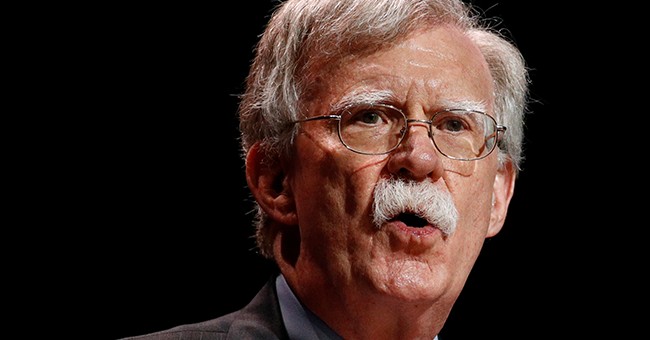
Former national security adviser John Bolton shook up the Trump impeachment standoff recently with his announcement that, if subpoenaed, he is "prepared to testify" before a Senate trial. It's still not clear, of course, when or even if a trial might occur, since House Speaker Nancy Pelosi is withholding the articles of impeachment. But if there is a trial, and if the Senate subpoenas Bolton, he won't fight it.
Senate Minority Leader Charles Schumer has demanded the trial include witnesses. Schumer specifically wants the Senate to hear testimony from Bolton, current White House chief of staff Mick Mulvaney, and two other White House officials, Robert Blair and Michael Duffey.
To testify or not to testify? The potential witnesses have a lot of thinking to do. Their situation is unprecedented. There is no guidebook to tell them what to do. So here are some of the factors that Bolton, Mulvaney and other possible witnesses have to weigh:
House vs. Senate
Neither Bolton nor Mulvaney testified before the House impeachment inquiry. Bolton did not receive a subpoena. Mulvaney defied one, at the direction of the White House. Bolton's former deputy, Charles Kupperman, was subpoenaed and asked a court to decide whether he would be required to testify. At that point, House Democrats abruptly withdrew the subpoena. Pelosi, impeachment leader Rep. Adam Schiff, and others claimed that a court fight would take too long, given the urgency that Trump be removed from office as soon as possible. So they dropped the issue.
A judge later declared the matter moot.
Now, the questions surrounding potential testimony remain unanswered. If there was a problem requiring judicial resolution in the House, wouldn't there also be a problem when the Senate seeks testimony?
The answer is yes, but possibly in different ways. First, it seems extremely unlikely that a court would rule that the president's aides have a blanket immunity that would prevent them from even appearing before the Senate. But at the same time it seems likely that some, or perhaps all, of the conversations between Bolton and the president, or Mulvaney and the president, would be covered by executive privilege.
It is not clear whether the White House will assert the privilege. But there seems little doubt that the White House, should it seek to bar the president's closest advisers from answering at least some questions, would have some legal options to pursue. It's not clear that they would be winning options, but they could involve some fighting in court as the Senate trial gets underway.
The Roberts Factor
ouse and Senate impeachment proceedings are entirely different from each other, and one of the biggest differences is the presence in the Senate trial of a representative of the judicial branch of government, in the person of the chief justice of the Supreme Court. The Constitution says the chief justice will "preside" over the Senate trial. On the other hand, the Constitution gives the Senate the "sole power" to try the impeachment. So it is highly unlikely that Chief Justice John Roberts will take charge of the Trump impeachment trial. Of the Bill Clinton trial in 1999, then-Chief Justice William Rehnquist wrote, "I did nothing in particular, and I did it very well." Roberts probably won't do much more.
But he will be there, even if he is just a rubber stamp -- in other words, he will give the imprimatur of the judicial branch to the Senate's actions. So, say the Senate, with the chief justice presiding, voted to issue a subpoena to Bolton, or Mulvaney or anyone else. And say the recipient of the subpoena challenged it in court. How exactly would that work? Federal judges are not in the business of overruling the chief justice of the Supreme Court. If an impeachment dispute ends up in court, Roberts' role could make the decisions of lower court judges -- in other words, the entire federal judiciary -- awkward at best.
Show Up, Yes. Answer Questions, No.
Finally, even if Bolton or Mulvaney or others were subpoenaed, and even if they challenged the subpoena in court, and even if they lost, there is a difference between showing up to testify and actually answering questions. There is no doubt that both men, and perhaps others, could honor a subpoena, appear and then decline to answer a number of questions on the basis of executive privilege.
If executive privilege covers anything, it is a president's deliberations with his chief of staff and his national security adviser on the issue of foreign policy. The privilege is the president's, not Bolton's or Mulvaney's or anyone else's. Bolton's brief statement said that he is "prepared to testify," but it did not get into details of whether he would answer all questions or whether he would follow White House directions, if there were any, or what else he might or might not do.
That will be critical if Bolton, Mulvaney or other witnesses appear before the Senate. Each will be allowed to have a lawyer present, and it seems likely that White House lawyers will be present, too. Those lawyers could raise privilege issues repeatedly, depending on what is asked. Testimony that is billed as dramatic, and even explosive, might be somewhat less exciting in reality.
Bolton's statement is an important development. But there is a lot more to the question of how testimony would work in a Senate impeachment trial. It might not even happen -- at least four Republican senators would have to join minority Democrats' call for witnesses. And even if it does, it could quickly turn into a very complicated affair.
——Show Up, Yes. Answer Questions, No.-—
win, win = win
“Cuck” Schumer, (D-Iran)...
The Rats getting excited thinking that Bolton is gonna hate Trump so much he will crap on Trump failing to realize Bolton hates them more than Trump.
Any positive spin on Bolton is ridiculous wishful thinking. He handed the rats a huge PR club the selfish little prick knew exactly what his was doing. On the threshold of the rules vote he gives Mitt and Schmukie exactly what they needed. He’s a back stabbing POS.
Bolton was dismissed for zealotry
It does not actually follow that he hates the President. The fact he is a zealot is actually and indicator of agreement rather than hatred
Just saying. If the Rats think Bolton is gonna give them ammo against Trump I highly doubt that will ever happen.
I don’t trust Bolton one bit. He’s is a caustic, vindictive personality. The proverbial loose cannon on deck.
I don’t trust the Republican senate either since they haven’t exactly been great supporters of Trump. Make no mistake about it, they have no love for the “Outsider”.
Totally agree. Bolton is a dangerous viper.
Our national politics are so sick & twisted that it’s possible that Bolton will be less harsh on Trump because he took out Soleimani, thereby inching America closer to his long held goal of war with Iran.
He will testify “if subpoenaed” likely means he isn’t showing up unless forced by law to appear. That’s required by everyone.
Do we assume this paraphrase applies to Bolton, “Hell knows no wrath like a Nation Security Advisor fired?”
Yes. I really don’t understand these articles. A subpoena — a real one — is not lightly dismissed. You get a subpoena, you show up and testify (unless the Executive Privilege card is played and that would come after the actual subpoena). Right now, Bolton’s statement seems pretty bland — “If subpoenaed, I will testify”. That’s not really interesting.
Byron, The Turtle already stated he has the votes to go forward without any witness preconditions. He’d be willing to hear a debate about witnesses after Pelosi sends the articles, but that in itself would be subject to a straight up and down vote of 51.
The balls back in Pelosi’s court.
I really don’t think there’s anything Bolton could say that would convince 67 Senators to convict. It’s just not there.
$#!+ or get off the pot.
I don’t see any discussion in the article about what motivated Bolton to say he would testify.
The strategy seems to be to put the onus on republicans, as always.
By making the senate call witnesses, if they don’t, the democrats claim obstruction and the media attacks republicans. THe media gives democrats a pass for not fighting this in the house.
If they call the witnesses, the republicans now have to go to court. If they win, any blowback from destroying executive privilege falls on the republicans, not the house democrats. If they lose, the democrats blame the republicans for not fighting, and the media goes along.
It’s not a great strategy, but it is the best the democrats have at this point.
McConnell could help a bit, if he would just at his next presser point out that NOTHING prevents the house from doing oversight hearings, OR additional impeachment inquiry if they want, so they could call every witness they want to the house, and issue subpoenas, and fight.
THe message I would be using is that the senate is the jury . Prosecutors don’t ask the jury to call and question witnesses, it is the job of the prosecutors to obtain the witness testimony they need. The house should be issueing the subpoenas for the witnessesthey want, and the senate democrats have no say, as jurors, in calling additional witnesses, that is the purveiw of the prosecutors (the house), and the defense (Trump, if he wants, should be allowed to call ANY witness he asks for).
A couple points. First, "by law" can have differing meanings in this context. It could me an subpoena issued by the Senate, or it could mean on order of a court. I think you know and agree that generally speaking, in the vernacular, "forced by law" implies a court order.
I take Bolton's remark as he won't require a court order, rather he'd comply (meaning he'd show up at the appointed time and place) if the senate issues a subpoena.
The second point is that the senate issuing a subpoena in this instance will require a majority of senators to vote to subpoena Bolton. That isn't going to happen.
Byron is off chasing a phantom, and even there he is making up issues that wouldn't exist even if the phantom comes to be.
We know what BOlton will say, it was in the new york times article. Bolton did NOT object to some “quid pro quo”, he was upset that Ukraine wasn’t getting war weapons quick enough, and objected to the attempt to find a legal justification for cancelling the aid.
WHen he says that under oath, it will be clear that the Trump administration was doing things legally, and was looking into legal justifications for continuing to withhold the aid — and then decided to release it because their concerns about the money being misused were assuaged.
The NYTs story destroyed impeachment, but the democrats have been lying about it ever since.
That is a really interesting angle. One thing for sure, his statement has ginned up the non-violent sedition apparatus in the press and in Congress.
Bolton said in his statement that "the House has concluded its Constitutional responsibility by adopting Articles of Impeachment related to the Ukraine matter. It now falls to the Senate to fulfill its Constitutional obligation to try impeachments, and it does not appear possible that a final judicial resolution of the still-unanswered Constitutional questions can be obtained before the Senate acts."Bolton's lawyer has said that the former national security adviser has information about the Ukraine issue that had not been disclosed publicly or to the House Intelligence Committee during its impeachment investigation.
Bolton willing to testify in Senate impeachment trial if subpoenaed NBC - Jan. 6
The statement appears to come out of blue, and is posted at Bolton's personal website.
STATEMENT OF JOHN R. BOLTON - Posted on January 6, 2020
During the present impeachment controversy, I have tried to meet my obligations both as a citizen and as former National Security Advisor. My colleague, Dr. Charles Kupperman, faced with a House committee subpoena on the one hand, and a Presidential directive not to testify on the other, sought final resolution of this Constitutional conflict from the Federal judiciary. After my counsel informed the House committee that I too would seek judicial resolution of these Constitutional issues, the committee chose not to subpoena me. Nevertheless, I publicly resolved to be guided by the outcome of Dr. Kupperman's case.But both the President and the House of Representatives opposed his effort on jurisdictional grounds, and each other on the merits. The House committee went so far as to withdraw its subpoena to Dr. Kupperman in a deliberate attempt to moot the case and deprive the court of jurisdiction. Judge Richard Leon, in a carefully reasoned opinion on December 30, held Dr. Kupperman's case to be moot, and therefore did not reach the separation-of-powers issues.
The House has concluded its Constitutional responsibility by adopting Articles of Impeachment related to the Ukraine matter. It now falls to the Senate to fulfill its Constitutional obligation to try impeachments, and it does not appear possible that a final judicial resolution of the still-unanswered Constitutional questions can be obtained before the Senate acts.
Accordingly, since my testimony is once again at issue, I have had to resolve the serious competing issues as best I could, based on careful consideration and study. I have concluded that, if the Senate issues a subpoena for my testimony, I am prepared to testify.
It’s called “executive privilege”, if the White house doesn’t want him to testify they will block the subpoena and let the supremes decide. However I don’t think they will block it.
Disclaimer: Opinions posted on Free Republic are those of the individual posters and do not necessarily represent the opinion of Free Republic or its management. All materials posted herein are protected by copyright law and the exemption for fair use of copyrighted works.