
Posted on 09/08/2009 8:45:20 AM PDT by AreaMan
Urban revival, globalization, and some world-class chefs have created one of the world’s great culinary scenes.
Summer 2009
In a 1769 letter to the naturalist John Bartram, Benjamin Franklin observed that while lots of people like accounts of old buildings and monuments, “I confess that if I could find in any Italian travels a receipt for making Parmesan cheese, it would give me more satisfaction than a transcript of any inscription from any old stone whatsoever.”
Had Old Ben written this letter 50 years ago, in 1959, it’s doubtful that many Americans would have agreed. Back then, a gourmet American dinner might have included tomato aspic (gelatin with canned tomato juice), crab casserole (canned crab with canned cream-of-mushroom soup and canned fried onions), and cherries jubilee (canned cherries heated in a chafing dish with brandy and sugar, “flambéed,” and poured over vanilla ice cream). Or maybe the entrée would have been beef Wellington (beef tenderloin and pâté, usually steamed gray in a gooey blanket of dough) or oysters Rockefeller (oysters broiled with melted cheese and bread crumbs). Ethnic food came in two varieties: Americanized Italian (spaghetti with meatballs and red sauce, with grated “Parmesan” cheese from a green cylindrical box) and Americanized Chinese (fried rice and shrimp with lobster sauce). For the everyman, there was steak (well done) and mashed potatoes and canned peas, fried chicken and mashed potatoes and canned peas, and meatloaf and mashed potatoes and canned peas. Or the newfangled but repulsive TV dinner.
Sure, there were a few notable exceptions, like the Four Seasons in New York and Le Trianon in San Francisco. Opened by JFK’s former chef, René Verdon, Le Trianon offered traditional French haute cuisine (escargot in garlic butter, sautéed sweetbreads, sole meunière, and so on), along with a mostly French wine list that few diners understood. And there was some good regional cooking in the South. But for the most part, food didn’t matter in America, and being a chef was like being a plumber—a perfectly respectable vocation but no road to stardom. American food was pretty simple, on par with Britain’s in its blandness.
These days, American food is far more complicated and infinitely better. The U.S. has revolutionized its culinary culture over the last 40-odd years. No longer is it the developed world’s worst food nation; in fact, it’s perhaps the best. And it’s largely thanks to the (currently disputed) genius of America’s entrepreneurial capitalism.
There’s a downside to every improvement, of course, so let’s get it out of the way. When I was a kid, my parents taught me that if someone invites you over for dinner, you eat what they serve and—however disgusting it is—you clean your plate and compliment the host. Or if someone takes you to a restaurant, even Dutch treat, you say it’s terrific, even if it stinks.
These days, not so much. Before a conference I attended recently, for example, I had to fill out and mail a form on which I was instructed to disclose not just my mailing address and Social Security number but any “dietary requirements,” too. In a mischievous mood, I declared that I didn’t eat red or white meat; fish or seafood; dairy, wheat, or other starches; legumes, fruits, or sweets; and green, yellow, or red vegetables. I added that I only drank one kind of bottled water. A secretary wrote back, concerned: What was my preferred water?
Just try having a dinner party today. You’ll have to contend with perfervid vegans, virtuous vegetarians, persistent pescatarians, lamb-phobics, tongue-phobics, veal-rights advocates, the gluten-intolerant, the lactose-intolerant, the shellfish-intolerant, the peanut-intolerant, the spicy-intolerant, and on and on in an ever-fragmenting array. For God’s sake, don’t serve foie gras; a guest might show up wearing a suicide vest and blow the whole party to kingdom come. All this has a lot to do with the decline of traditional manners and the rise of personal assertiveness and the yuppie belief that we can engineer our own immortality. Food matters so much now that it can make tyrants of our dearest friends and neighbors.
So much for the downside. On the upside—and it’s a big upside—American chefs are now celebrities, and if you’ve eaten their food, you know that they deserve their fame. Charlie Trotter, Mario Batali, Bobby Flay, Thomas Keller, José Andrés, Suzanne Goin, Rick Bayless, Grant Achatz—the list of other greats and lesser-known but gifted talents is long and growing.
These chefs and their kitchens are at work across the United States, especially in our big cities—even Las Vegas has great food these days—but also well off the beaten path. Near the tiny village of Ellsworth in northwest Michigan, for instance, is a restaurant called Tapawingo. The menu includes an amuse-bouche of lemon-mint hummus, fig, apricot, and phyllo; a salad of crispy artichokes, cucumber, beets, Parmigiano-Reggiano, white balsamic, and locally grown greens and tomatoes; a rabbit consommé with foie gras ravioli, chanterelles, local mushrooms, and Boursin; and a rack of lamb with ratatouille, fennel potato galette, arugula coulis, and lamb jus.
How did we go from tomato aspic to Tapawingo? Surely rising incomes, the revitalization of great cities, globalization, and the culinary imports of vast waves of immigrants have much to do with it. But I prefer the Great Man theory of history here—or, better, the Great Woman theory. The first wedding gift my wife and I received, in 1965, was a copy of Mastering the Art of French Cooking, by Julia Child (with Simone Beck and Louisette Bertholle). It still sits on a shelf in our kitchen, bound now by tape, with almost every page earmarked and blotched. Published in 1961, Child’s book brought the techniques of French haute cuisine to the American kitchen, teaching us how to soak and sauté sweetbreads, how to make soufflé au Grand Marnier, how to cut up a duck—all within the limits of the American supermarket of the period. But it was Child’s later TV show, Boston PBS’s The French Chef, that really changed things. It was unintimidating French cooking: the chef was a goofy-talking giant who dumped in the butter and occasionally spilled things and whacked stuff with mallets and sometimes burned the sauce.
But Julia taught us how to master French cooking, not American. American food had to be invented before it could be mastered. And the inventor was another Great Woman, this one on the opposite coast. In 1971, Alice Waters opened Chez Panisse in Berkeley, California. This was the great transformative event in American culinary history. Chez Panisse grew out of Waters’s experience not with the butter and fat of Parisian haute cuisine, but with the foods of Mediterranean Provence (based on olive oil, the fresh fruits of the earth and sea, and the general habit of going to the market with a string bag every day). The principle of Chez Panisse was that food—both animal and vegetable—should be absolutely fresh, and that meant absolutely local. So it’s not quite right to say that Waters had to invent American food; what she did was rediscover and then elaborate on pre-canned, pre-supermarket, pre-tomatoes-all-year-round regional American food.
Were they to read the Chez Panisse “creed,” most conservatives would be amused by its blather about “sustainable practices” and “farmers who know their seeds and soil” and even “wine makers who know what their grapes have known.” But the basic culinary insights embedded in the blather are important: really good food can’t be thought up in a chain-food corporate boardroom where shareholders must come first; a menu should have only so many items on it; the ingredients can’t all be available 365 days a year; and they are always best when local.
Finally, great cooking is only possible when done in a small business. Why? Because the good chef-owner needs to be as close as possible to the production of the food, close enough to exert almost tyrannical control over the kitchen. The last time I dined at Charlie Trotter’s in Chicago—it was a transcendent experience—I saw Trotter standing just inside the kitchen door, watching every single dish that went into the dining room. Even food “empires” run by celebrity chefs like Emeril Lagasse and Wolfgang Puck are relatively small and remain based on the small-business model, with each satellite restaurant ruled by a single head chef trained by the master. And the master keeps tabs on what goes on.
The chef may be a tyrant, but he (or she) is also a slave. The restaurant business is exceedingly hard, even in good times. Almost 60 percent of independent restaurants close in their first year. Many of the failures result not from bankruptcy but from the stresses to family life that start-up restaurateurs must endure. Our great chefs are artists and entrepreneurs, and both roles require total dedication and tolerance for risk. Nor does the business get much easier after Year One. Great restaurants, like human beings, have life cycles: first they’re young and brash, then they mature, and then they get old and tired and eventually die. The chef must strive as hard as possible to fight this natural progression. As with all great art, innovation is key: the way to keep beating the competition is to keep coming up with new ideas. But new isn’t enough; the ideas also have to be good.
The food revolution has spread in part thanks to urbanization. Especially in the bigger cities with freewheeling economies, good restaurants and cooking tend to proliferate. One young chef works for a star and then, lured by the promise of fame, money, or self-expression, ventures out on his own in the same town. And as urbanites are spoiled by ever more first-rate restaurants, the demand for good food grows and spills over to suburban and even exurban areas.
Take Washington, D.C., where I now live, and which was a laggard in the American food revolution until relatively recently. Power-lunch steak houses and stodgy food dominated the scene until Jeff Buben broke through with Vidalia (named after a Southern onion) in 1993 and introduced the city to his brilliant interpretations of regional, and especially Southern, American food: wild gulf shrimp and grits with andouille sausage and sweet onion ravigote; veal sweetbreads with hand-cut pumpkin cavatelli, chanterelles, Honeycrisp apples, and cider-brown butter emulsion; red-tail venison tartar and carpaccio with wild horseradish, pickled Hungarian peppers, red vein sorrel, and cranberry-olive sauce; and lots more. Just a year later, Michel Richard came to town and opened the marvelous Citronelle, and then José Andrés arrived from Spain and started his local empire of wonders: Café Atlántico (New Latin style), Jaleo (tapas), Oyamel (Mexican), and Zaytinya (mezze). The revolution had arrived.
Washington now has a burgeoning, innovative restaurant scene, filled with brilliant chefs. And there are excellent establishments for every price niche. Not a ten-minute walk from my house on Capitol Hill, for instance, is a new restaurant, Locanda, whose kitchen is run by a young man, Brian Barszcz, who started working in restaurants at 15, never went to culinary school, and learned his craft under the tutelage mostly of local chefs. Locanda serves “Meditalian food,” and the menu includes braised rabbit (from a local farm, of course), a wonderful beet and goat cheese salad, and a divine squash-filled ravioli. A bill for two, including drinks, dessert, and a decent bottle of Sangiovese, comes to a reasonable $100. And Locanda’s owner just opened an even less expensive place, Café 8, with excellent Turkish food and a lengthy wine list, all from the Middle East.
It’s worth noting that some of America’s culinary superstars have come from abroad. Once the food revolution began with Alice Waters, the small-business climate and relatively open free market in America—I can’t imagine how hard it must be to open a restaurant in Italy or France—became a powerful draw for ambitious culinary talent from all over the planet. The principle applies to small-scale restaurateurs as well. A few blocks away from Café 8 is a tiny bistro, Montmartre, run by two French immigrants. Again for $100, you can get marvelous tuna tartar and a hanger steak, or a trio of sweet scallops with couscous and grapes and dried apricots, along with a bottle of wine and dessert.
Another exciting aspect of the American food revolution is the mom-and-pop ethnic restaurant. On U Street in Washington, often referred to as “Little Ethiopia,” are a dozen Ethiopian restaurants, all run by recent immigrants fiercely competing to serve the best Ethiopian food. Most are terrific and cheap. And that’s in the city. Surrounding Washington are sprawling suburbs where immigrant communities live: Salvadorans, Africans, Indians, Pakistanis, and other Asians of all stripes. There are hundreds of storefront restaurants in these ’burbs, many serving ethnic food as ridiculously inexpensive as it is wondrously delicious. Tyler Cowen, who keeps tabs on these joints on his website Ethnic Dining Guide, rightly says that all food, including American, is ethnic. But whatever we call them, these places often prove fantastic purveyors of the undiluted foods of the world.
Recently, my wife and I dined in a hole-in-the-wall Chinese restaurant, Tacoma Szechuan, in a strip mall on the outskirts of Tacoma, Washington. Szechuan food has been common in America since the 1980s, and a lot of it isn’t much good. But this little place served the best Chinese food I’ve eaten in America—as good as I’ve had in Hong Kong. There was fire and savory and salty and subtle garlic and rich fermented beans and wonderful balance and layers and layers of flavor.
The immigrants are dense in Washington, D.C., but they spread out across the country and take great food with them wherever they go. And they won’t be alone: it’s not quite true that Bubba has never heard of arugula or cares how much it costs at Whole Foods. Yes, Bubba usually prefers the goop at Bob Evans, but there’s a restaurant in Des Moines called Bistro Montage that serves a salad of sliced Bosc pear with roasted beets, Fourme d’Ambert blue cheese and mixed greens tossed with a sherry-walnut vinaigrette, and a “burger” made of two four-ounce Sheeder Farms and Niman Ranch patties served on toasted brioche poppy-seed buns with lettuce, tomato, and white truffle mayo, with Parmesan pommes frites and homemade ketchup. White truffle mayo in Des Moines! And I’ve dined well (let’s not get carried away; “well” means good, not great) in Syracuse, Albany, Denver, Columbus, Memphis, and Indianapolis. I’ll bet there’s a decent restaurant in Bakersfield.
The fact is that American food nation is democratic, not elitist. Our great chefs aren’t born to money and usually come up the hard way in a tough and physically demanding business. The wonderful ethnic mom-and-pops are often as cheap as McDonald’s. True, at the very pinnacle you can spend an arm and a leg. But really great food has gotten cheaper than the best food of the 1960s. One-hundred-dollar Locanda is more inventive and better than Le Trianon was, and back in 1965, dinner for two at Le Trianon cost $25. In inflation-adjusted terms, that’s $163.
And then there is wine and beer. In 1959, Americans could claim a few decent wineries in Napa Valley, but most good wine was French, and most wine produced and consumed in America came in gallon jugs. Slowly, helped by improvements in wine science and technology (thanks, UC Davis; thanks, capitalist investors!), the same small-business dynamics that gave us Tapawingo produced an explosion of good wine in California. In 1970, a Straussian political philosophy prof, Warren Winiarski, gave up Machiavelli, moved to California, and started the Stags’ Leap vineyard and winery.
In 1976, to the enduring chagrin of the French, his cabernet sauvignon won first prize at that year’s Paris wine tasting. Since then, great and innovative wines have been produced all over America (not to mention all over the world).
As for beer, just 30 years ago, Americans were in the grip of industrial purveyors of watery, tasteless swill that eventually became the still-flowing river of even worse Bud Light. Go into any good liquor store today, by contrast, and you can find craft-beer (another term for small-business) gems like Weyerbacher’s Double Simcoe India Pale Ale, the Brooklyn Brewery’s elegant Local One, and Dogfish Head’s rich, complex, dry-hopped 90-minute IPA. There’s a beer culture in America; there are beer exhibitions pairing craft beers with artisanal cheese and chocolate; there’s an East Coast–West Coast hops war (East prefers balance; West prefers blast). We live in beer heaven, where American brewers regularly beat Belgians, Germans, and Czechs in blind taste tests conducted by the New York Times.
Now, there’s still lots of bad food in America, almost all of it purveyed by the god-awful chains. And boy, do they ever purvey, with such marvels as Olive Garden’s “endless pasta bowl”—a bottomless tub of what tastes like Cream of Wheat with ketchup on top. I once ordered a club sandwich at a chain sports bar, and the monstrosity overlapped a platter as big as a surfboard. Recently, in Michigan, I sat in my car outside a store, Playmakers, which sells expensive running gear. Right next to it was another store, Old Country Buffet, where for under $10, you can eat a mountain of macaroni salad, piles of “spoon tender” pot roast, and acres of “pizza.” Beemer after Beemer disgorged tanned anorexics, striding in search of their essentials for athletic self-torture. Beater after beater disgorged pallid humongoids, sporting steamer-trunk rumps, waddling in search of the latest in cream pies.
The obesity epidemic has at least something to do with—probably a lot to do with—the ubiquity of cheap, supersized low-end food in America. Once, you got gas and a Coke at a gas station; now, you can get gas and a Coke and pizza and hot dogs and Ding Dongs and 20 kinds of chips. Ditto for the drugstore, the movies, and the convenience store on every other corner. It can’t be good for America to become Lard-Ass Nation. It’s going to cost us a lot in medical care, for starters. But it’s the bad food that makes people fat. You just can’t consume the good stuff by the ton, since the purpose of great cookery is artistry and taste, not repletion, and too much of a good thing ruins the good thing.
C. P. Snow famously argued that modernity results in a hopeless divide between the culture of modern science and technology and the culture of the arts and humanities. Maybe that’s true on campus. But it’s not true in the hurly-burly world of modern capitalism, where science and technology and the artistic human spirit fuse to delightful effect. Were Shakespeare alive today, he’d doubtless be making movies and cable TV series with computer-aided special effects. And if you don’t think that a chef could know or care about science, you haven’t experienced the latest culinary twist: molecular gastronomy, first thought up in Europe by a physical chemist (Hervé This) and a physicist (Nicholas Kurti). This new approach figures out what goes on chemically when we boil milk or steam a stalk of asparagus, and then applies that know-how to improving old techniques and inventing new ones. The result: dishes that are just out of this world. Chef-entrepreneurs like Grant Achatz in Chicago and Wylie Dufresne in the Big Apple have introduced molecular gastronomy to these shores with great success.
And there’s even what I’ll call metamolecular or transmolecular cuisine, influenced by molecular gastronomy’s concern for gustatory structure but still building from classical forms. The brilliant Paul Liebrandt of Corton is the reigning master of this newest style. At a recent visit to Corton, I started with a dish called “Violet Hill Egg: Salt Cod, Baby Squid, Pheasant Consommé.” The egg floated just beneath the surface of a salt cod espuma, with only the bright orange yolk visible. Beneath the egg, the baby squid rested invisibly at the bottom of the bowl, and an ethereal ring of pheasant consommé was poured deftly around the circumference. A delicate feast for the eyes as well as a symphony for the palate, it was a perfect combination of organic purity and synthetic preparation and structure.
If you tire of all the razzle-dazzle, though, visit Joe and Osman’s Steak ’n’ Egg Kitchen, a greasy-spoon diner run by two immigrants from Sierra Leone in Tenleytown in D.C. The food is great, though not so good for your heart. If you’re lucky, the middle-aged Asian cook will be working the griddle. His scarred and burned arms flying, and never saying a word, he puts on a veritable short-order ballet, tossing and cracking and flipping eggs and bacon and pancakes and home fries, gliding from side to side and spinning from the counter to the stove and back. The ergonomic perfection matches that of the two over easy.
From Alice Waters to molecular gastronomy to Joe and Osman’s joint—has America got it all? Impossible, because nobody can predict what new culinary delights the small-business heroes of food will create next. True, economic times are tough right now. But it’s important to remember that the good times will roll again and that—boom or bust—we’ll be left not only with Kindles and MP3 players the size of postage stamps but with a culinary landscape unimaginable 50 years ago. I’d like to go on, but I’ve got to make some reservations.
Jerry Weinberger is a professor of political science at Michigan State University, director of the LeFrak Forum at Michigan State, and an adjunct fellow at the Hudson Institute. His most recent book is Benjamin Franklin Unmasked.
Americans have traditionally taken pride in their work and tried to be better than the next guy. There seems to be a diminishing number of areas where this is still valued.
In the middle of the business district there's a McDonalds that used to be a Roy Rogers. It used to be located in a building that now supports a Pho (Vietnamese soup restaurant).
Everybody, even the professional matre de from Columbia has the coupons handy.
While it is true, as the Chinse have noted, Americans poison their foods with dairy products, it is also true that everybody poisons food with wheat gluten.
Still both the Chinese and I can manage to find something to eat almost everywhere!
And that's definitely a food revolution.
Not a dish there I can eat without serious modification. So why did I gain so much weight?
No actually I don't have to contend with people like that. People ... meet DOOR. Go inflict your flawed morality on someone else.
Good post, enjoyed the article and even the website link. I found the historical perspective of how we got to where we are in the development of American cuisine to be interesting. The author’s best point needs to be emphasized: a driving force behind all of it has been capitalism and the opportunity to succeed in America. This is especially evident in his stories about the ethnic dining establishments around DC.
.....(with Simone Beck and Louisette Bertholle).......
My wife took me to the movies last week, first time in so long we couldn’t actually remember. Julie & Julia is about a New Yorker who cooked all 524 of Julia Child’s French recipes in 365 days.
From the movie we learned that Simone was a slacker and Julia and Louisette did all the work.
“Just try having a dinner party today. You’ll have to contend with perfervid vegans, virtuous vegetarians, persistent pescatarians, lamb-phobics, tongue-phobics, veal-rights advocates, the gluten-intolerant, the lactose-intolerant, the shellfish-intolerant, the peanut-intolerant, the spicy-intolerant, and on and on in an ever-fragmenting array”.
Priceless.
Agreed, even though restaurants have a high failure rate this (America) is the place to be if you want to follow a culinary dream.
It's a big country and there are many regions to explore as well as an influx of emigres and their cuisines.
But, most important, is the FREEDOM, political and economic to either deep fry a Snickers bar or follow your own food-porn/mad scientist concoction based menu.
Freedom baby! Eat up.
Wow, i’m going to try to duplicate some of these at home :)
Yea! Finally, a good chinese restaurant in the Tacoma area! I haven’t found one I like yet in the whole Seattle/Tacoma area since I moved from NJ. Too many Thai ones out here.
I think I’m gonna hurl.
If it is any consolation I believe most of the pictures on that website are staged for shock value only.
Do you really think there is a restaurant serving "Meatinis?"
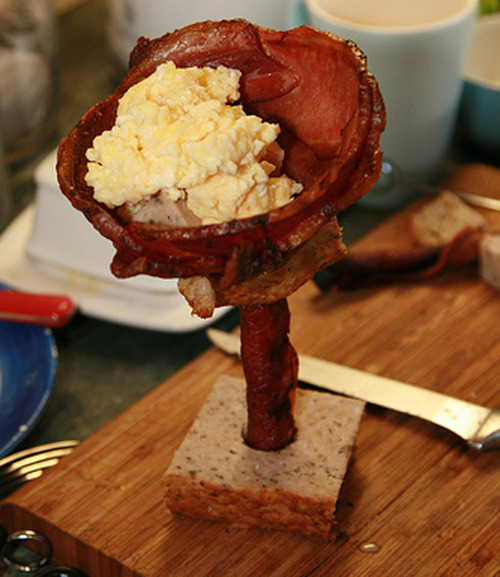
In other news: Capitalism still works.
Sometimes you have to keep repeating the truth to overcome the lies and propaganda of the left.
Disclaimer: Opinions posted on Free Republic are those of the individual posters and do not necessarily represent the opinion of Free Republic or its management. All materials posted herein are protected by copyright law and the exemption for fair use of copyrighted works.