The ruins of Thera, perched high on the cliffs of Santorini, span a millennium and a half of Greek history.The Spectacular Ruins of Thera | 5:01
Scenic Routes to the Past | 62.9K subscribers | 8,196 views | November 20, 2026
Posted on 11/23/2026 8:58:29 PM PST by SunkenCiv
The ruins of Thera, perched high on the cliffs of Santorini, span a millennium and a half of Greek history.
The Spectacular Ruins of Thera | 5:01
Scenic Routes to the Past | 62.9K subscribers | 8,196 views | November 20, 2026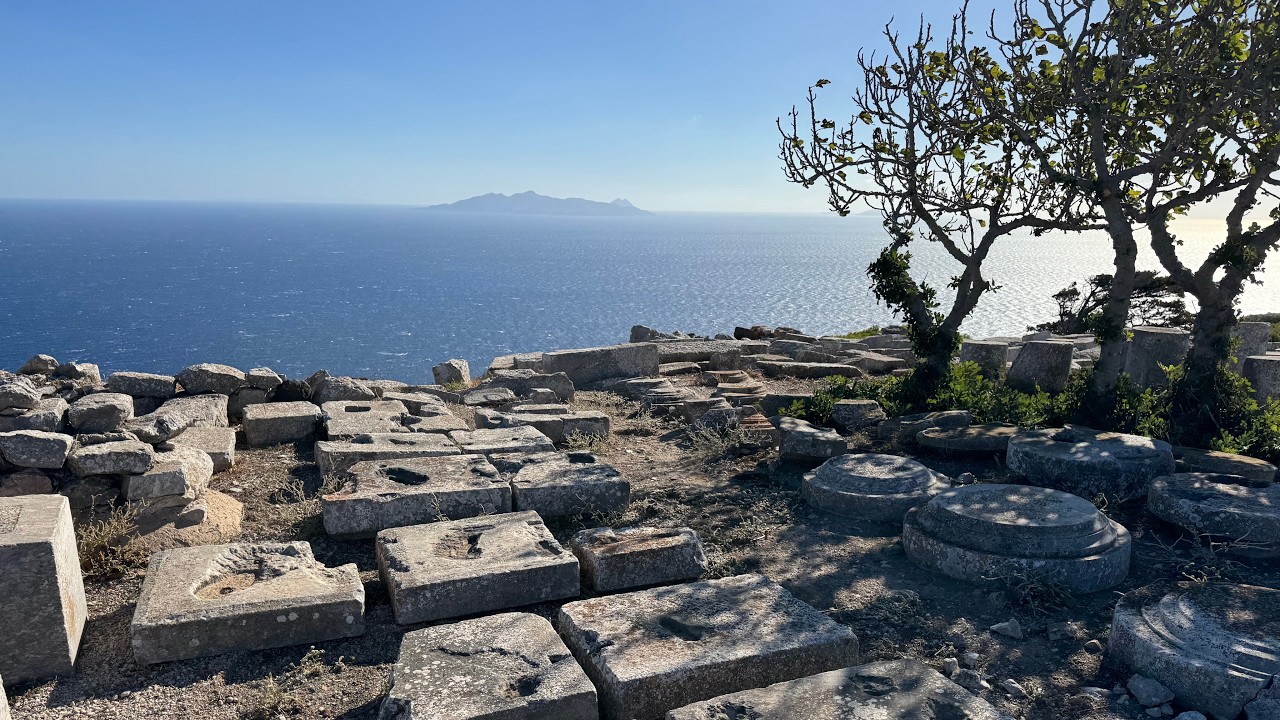
(Excerpt) Read more at youtube.com ...

|
Click here: to donate by Credit Card Or here: to donate by PayPal Or by mail to: Free Republic, LLC - PO Box 9771 - Fresno, CA 93794 Thank you very much and God bless you. |
The YouTube transcript was processed with my fine country craftsmanship, and *may* follow.
Transcript
Chapter 1: History of ancient Thera
After the cataclysmic eruption that destroyed Akrotiri, the island of Thera, modern Santorini was abandoned for centuries. In the 9th or 8th century BC, colonists from the Greek mainland established a city on the spur of a mountain more than a thousand ft above the sea. Like the island, the city was called Thera. It flourished most in the early hellistic period when the Aegean fleet of the Ptolemies was stationed here and much of the city center was rebuilt. Thera remained modestly prosperous through the Roman imperial era and was only abandoned in the middle Byzantine period.
Chapter 2: Approaching the city ruins
The first building we see on approaching the site is the Byzantine church of Hagios Stefanos. Built in the 8th or 9th century on the ruins of an early Christian basilica dedicated to the Archangel Michael. The walls are made entirely of spolia scavenged from the ancient city. Just beyond is the shrine of Artemodorus of Perga built by an admiral of the Ptolemaic fleet. Although most of the superstructure has vanished, the scale is still apparent. The monument honored several Greek gods, and not incidentally, Artemodorus himself, who had his image carved on the rocks behind the shrine beside the dolphin of Poseidon.
Chapter 3: City center and public life
Thera did not have a regular street plan, and its agura was an elongated space that straggled along the ridge. Shops crowded along the downslope side. Houses climbed the slope above. The most prominent structure was the Basilica Stoa, an enclosed hall divided into two aisles by rows of columns. Under the Romans, the northern end was closed off and became a sanctuary of the imperial cult. The statues of several deified emperors, including Marcus Aurelius, stood here. Many of the houses lowered down the slope still preserve their sistns and some still feature traces of the mosaics and red painted plaster with which they were decorated.
Chapter 4: Theater and religious sites
The theater built in the 3rd century BC was remodeled several times, achieving its definitive form with an enlarged stage building in the reign of Tiberius. Just beyond is the Temple of Pythian Apollo converted into a church in the sixth century. You can see the apse added at that time. Beneath the houses, lower down the slope is the sanctuary of the Egyptian gods, Isis, Serapus, and Anubis, which was probably always open to the sky. The site still features a multitude of rock cut niches.
Chapter 5: Garrison and final overview
A Ptolemaic garrison was stationed on the hilltop, and this gymnasium may have been built for its use. The once imposing mansion known as the governor’s residence may have been occupied by the garrison’s commanding officer. From here we have a view over the whole ridge on which the was built and stood poised for 15 centuries between the pale blue sky and wine dark sea.
[wrapup redacted]
I missed visiting this both times I was on Santorini. I blame the tavernas and wine.
Disclaimer: Opinions posted on Free Republic are those of the individual posters and do not necessarily represent the opinion of Free Republic or its management. All materials posted herein are protected by copyright law and the exemption for fair use of copyrighted works.
