Skip to comments.
First ‘space elevator’ — a 66,000-mile cable to the cosmos— closer than ever before as scientists make breakthrough
NY Post ^
| 8/31/26
| Chadwick Moore
Posted on 09/01/2026 5:02:14 AM PDT by Libloather
On a visit to NASA’s Johnson Space Center in Houston last week, President Trump promised American astronauts would establish a permanent presence on the Moon before pushing forward to Mars.
“Our nation will conquer … this vast frontier that we have before us … We will explore it, we will tame it, and we will win it,” he said of America’s present “golden age” of space exploration.
But researchers thinking of truly big ideas say we’ll never get there with today’s inefficient chemical rocket technology. And they point to an important breakthrough.
“We’re really pushing for permanent infrastructure, like a bridge replacing ferries to cross a river,” Pete Swan, president of the International Space Elevator Consortium (ISEC), a nonprofit research and advocacy hub, told The Post.
It’s a simple yet mind-bending concept: an ultra-strong electrified cable running from a point on the ground at Earth’s equator, extended out beyond geostationary orbit (GEO), where a counterweight will float in space keeping it taut. Vessels then climb the cable to deliver goods, people and machines, passing through the atmosphere and into space.
“The beauty is that raising it with electricity saves our atmosphere from pollution, it doesn’t leave any debris along the way and it will be routine, daily, inexpensive, safe. It’s gonna be a bridge to space.”
Crazy as it sounds, the engineering checks out, according to researchers who spoke to The Post.
However, the bottleneck to the space elevator idea has always been the tether material, because it must be scalable, 100 times stronger than steel, exceptionally lightweight and capable of efficient spooling in order to get the whole thing in place.
Next month, the ISEC is set to announce they have their most promising candidate yet—a two-dimensional material called polycrystalline graphene, already widely used in the consumer electronics industry.
(Excerpt) Read more at nypost.com ...
TOPICS: Business/Economy; Outdoors; Science; Travel
KEYWORDS: breakthrough; cable; scientists; space; spaceelevator
Message from Jim Robinson:
Dear FRiends,
We need your continuing support to keep FR funded. Your donations are our sole source of funding. No sugar daddies, no advertisers, no paid memberships, no commercial sales, no gimmicks, no tax subsidies. No spam, no pop-ups, no ad trackers.
If you enjoy using FR and agree it's a worthwhile endeavor, please consider making a contribution today:
Click here: to donate by Credit Card
Or here: to donate by PayPal
Or by mail to: Free Republic, LLC - PO Box 9771 - Fresno, CA 93794
Thank you very much and God bless you,
Jim
Navigation: use the links below to view more comments.
first previous 1-20, 21-40, 41-60, 61-80, 81-95 next last
To: Libloather
International Space Elevator Consortium selects polycrystalline graphene for 66,000-mile elevator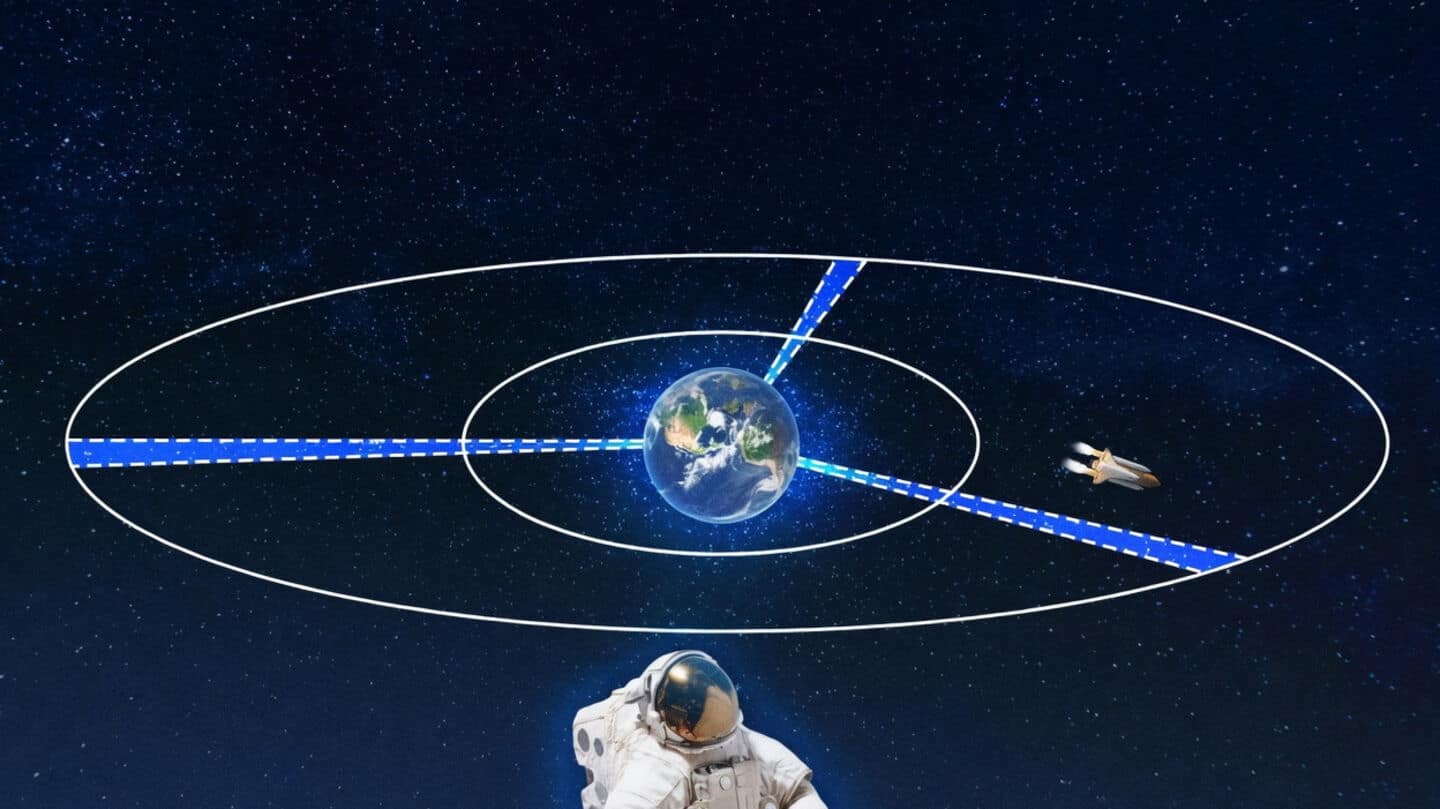
Engineers in South Korea just made a 1,000-meter segment of this graphene tether, a huge step forward.
If completed, the elevator could send cargo to orbit using electric climbers in about two weeks and even cut Mars travel time down to just 61 to 120 days depending on planetary positions at launch time.
But there are still big hurdles: protecting the tether from space junk and gathering $15 billion in funding.
Pete Swan is hopeful but says it will be decades before we see this sci-fi idea become reality.
21
posted on
09/01/2026 6:16:45 AM PDT
by
Pontiac
(The welfare state must fail because it is contrary to human nature and diminisheRs the human spirit.)
To: RainMan
Then what would happen if the poles shifted and the cable was no longer on the equator ...
The (magnetic) poles can shift all they want but the Equator will not change at all. You would have to change the axis of the Earth’s rotation to do that. Do that, and the Space Elevator is the least of your problems.
22
posted on
09/01/2026 6:19:03 AM PDT
by
Ditto
To: mikey_hates_everything
Yes! That was quite a scene. Episode One, I believe, or Episode Two maybe ….
I’m still waiting for a Ringworld movie. The Mandalorian tv series has already depicted one.
23
posted on
09/01/2026 6:22:04 AM PDT
by
telescope115
(Ad Astra, Ad Deum…)
To: Libloather
Good news, they just hired the first intern...

To: TonyM
The idea of space elevators has been around for a long time. When carbon nanofibers were discovered, the possibility became a bit more real.
The biggest problem will be location. Last I read anything on it, they were positing off of the west cost of South America as the most ideal location due to the relatively calm weather conditions.
I’m sure the eggheads are crunching the numbers, but I’m curious about the implications on the rotation of the planet. We’ve been spinning the same for millenia. If you add a weight on one side of a spinning globe, you will naturally skew the point of rotation. It might not impact our orbit, but I suspect it will play some role on the planet’s core.
25
posted on
09/01/2026 6:23:46 AM PDT
by
rarestia
(“A nation which can prefer disgrace to danger is prepared for a master, and deserves one.” -Hamilton)
To: Libloather
26
posted on
09/01/2026 6:26:21 AM PDT
by
caddie
(Going forward we all need to become Trump, and also Captain Obvious, and Charlie Kirk too. )
To: Libloather
“ a two-dimensional material ”
Yeah, I’m calling BS.
To: telescope115
The Mandalorian series in one of its episodes shows a Ringworld, not a space elevator. Just wanted to clarify. Haste makes for sloppy sentences. Not that I’m any expert, lol.
28
posted on
09/01/2026 6:28:52 AM PDT
by
telescope115
(Ad Astra, Ad Deum…)
To: Libloather
What happens if the cable breaks and someone is going up/down the “elevator”?
29
posted on
09/01/2026 6:30:15 AM PDT
by
I want the USA back
(Blue Lives Matter! White lives matter. Remember Iryna Zarutska and Justine Damond.)
To: montag813
He looks constipated…..the explosives strapped around his body will clear that up.
30
posted on
09/01/2026 6:31:12 AM PDT
by
telescope115
(Ad Astra, Ad Deum…)
To: Sicon
Arthur C. Clarke wrote about this idea in “The Fountains of Paradise” in 1979.
—
I remember reading a story with this idea, but forgot when and by who. Thank you
To: Sicon
Yes the idea has been around in pop science for decades. The engineering problems sound insurmountable with present technology, but we’ll see.
To: RainMan
The constant friction on the “cable” would be crazy as well.
The whole thing is an interesting mind exercise, but I think we are a long ways from doing this. I imagine I will be watching it happen from the “high ground.”
To: Libloather
The cable idea is as phony as the ads interlaced on conservative news websites.
34
posted on
09/01/2026 6:44:31 AM PDT
by
Carl Vehse
(Make Austin Texas Again!)
To: Libloather
Think about it , it’s an impossible a myth sounds very stupid ,LOL
To: Libloather
This couple is excited for the space elevator

To: Libloather
The weight of the machine works in the gravity zone would be too ‘heavy’ to make this work. We dont have anything that could handle that load. This would require new technology fer sher. Maybe a couple dozen federal contracts.
37
posted on
09/01/2026 6:59:48 AM PDT
by
Delta 21
(None of us are descendants of fearful men!)
To: Libloather
What happens when its run into by an airplane? Ops?
Also would not want a 65,000 mile cable whipping around in the atmosphere after it broke lose!
38
posted on
09/01/2026 7:01:49 AM PDT
by
Swirl
To: RainMan
This would be geostationary; a counterweight above the main station would hold the main station in orbit. The physics of this workout just fine; except obviously the ability of creating a material that could be so many miles above the Earth, and yet not weigh enough to pull itself apart. And that’s the whole point of the article is their closing the gap on creating such a material. Of course unspooling such a material back down to earth, making it weatherproof, and so many other challenges are actually much more a short-range problem then worrying about the poles drifting. And to be clear we are talking about poles very very slowly drifting on geological time scales, not to be confused with the magnetic pole reversals.
39
posted on
09/01/2026 7:05:16 AM PDT
by
dangus
To: Libloather
I’ve known about this idea for at least 30 years now, and the issue has always been about the material used for the cable - its chemical composition, its strength, and its weight. If they’ve figured out the right material to use, it’s a step in the right direction.
40
posted on
09/01/2026 7:05:22 AM PDT
by
mjustice
(Apparently common sense isn't so common.)
Navigation: use the links below to view more comments.
first previous 1-20, 21-40, 41-60, 61-80, 81-95 next last
Disclaimer:
Opinions posted on Free Republic are those of the individual
posters and do not necessarily represent the opinion of Free Republic or its
management. All materials posted herein are protected by copyright law and the
exemption for fair use of copyrighted works.
FreeRepublic.com is powered by software copyright 2000-2008 John Robinson