Transcript
History Chap In Malta
On a recent visit to Malta, in the Mediterranean, I came across an unusual story that I thought you might enjoy. Well, I’ve come to Kalkara Naval Cemetery, the resting place of over one thousand servicemen from the First and Second World Wars. But the actual story I want to share with you is of a different group of servicemen from the First World War, a strange set of allies who you probably didn’t even realize were serving in the Mediterranean. Come with me… And here as you walk through the cemetery amongst the graves of those who fell in the First World War, there’s a group of allies who we tend to forget because of history were actually on the British side in the First World War because we remember them being the enemy in the Second. Because here in Kalkara Naval Cemetery, there’s this monument… honouring the seventy members of the Imperial Japanese Navy who gave their lives in the First World War in the Mediterranean fighting on the allied side. So what on earth were Japanese sailors doing here, so far from home, in 1917?
Japan - Britain’s Ally
It all has to do with an alliance that they signed with the United Kingdom back in 1902. In fairness, it was never supposed to drag Japan into a European conflict, but was a way for the British to counter, what they saw, as Russian imperial aims in the Far East, without having to use the Royal Navy. That in turn, allowed the Royal Navy to be deployed in home waters to counter a growing naval threat from Germany. And in 1914, that German threat came to pass, with the First World War.
World War 1
Three days after Britain declared war, they approached Tokyo asking for their assistance to hunt down German armed merchant ships in Chinese, and only Chinese, waters. However, the Japanese had other ideas. They saw the war as an opportunity to assert themselves as a Great Power, both by gaining a seat at the victory conference and expanding their own empire at the expense of the Germans’ Asian and Pacific colonies. They declared war on the 23rd of August and within a few weeks over 23,000 Japanese troops (alongside a small British contingent from the South Wales Borderers) were besieging the German concession at Tsingtao on the Chinese mainland. By the time the port capitulated in November, they had also seized Germany’s islands in the North Pacific.
The Imperial Japanese Navy assisted the Royal Navy trying to corner Admiral von Spee’s fleet that was sailing towards the American continent. They also provided warships to escort Australian and New Zealand troops across the Indian Ocean whilst the German raider, the Emden, was at large.
But by the end of 1914, with von Spee and his fleet sunk off the Falkland Islands by the Royal Navy, and the Emden sunk by the Australian cruiser, HMAS Sydney, the immediate needs for Japanese assistance dried up. The Japanese spent the next couple of years trying to extend their influence and control in China, something that neither the British or US governments (let alone the Chinese) were keen on.
By 1917, however, the war in Europe was taking its toll on the allies. The USA still had entered the conflict, the Russians looked increasingly likely to drop out, and German U-boats were forcing the Royal Navy to spend more and more of their resources escorting convoys in the Atlantic.
Whilst most British folk tend to remember the First World War as the Western Front, with its trenches, barbed wire, and mud, the British (and their allies) were fighting in other theatres too. Not least, Northern Italy, Salonika (in northern Greece against the Germans and Bulgarians), and the Middle East against the Ottomans. And all those theatres required troops and material to be shipped to them, through the Mediterranean, a sea where enemy U-boats were operating.
Japanese At Malta
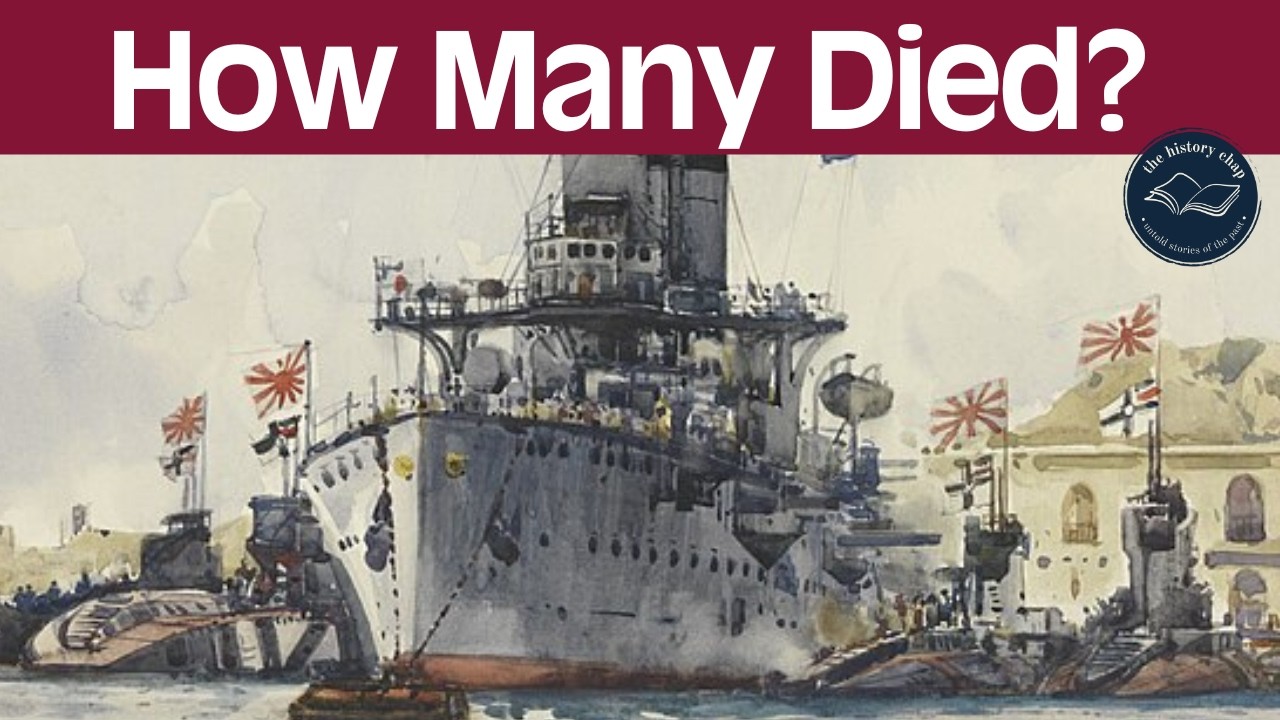
And so it was that in an attempt to relieve some of the pressure on the Royal Navy, the British government asked their Japanese allies for assistance. The Japanese duly sent a squadron of eight destroyers to the Med, in February 1917, under the command of Admiral Soto. Eventually rising to 17 ships (including two Royal Navy warships crewed entirely by Japanese sailors), they escorted nearly 800 troop ships (containing over 700,000 men) across the Mediterranean and engaged enemy submarines 34 times. Based at the British colony of Malta (which also served as the main Royal Navy base in the Mediterranean), the squadron was nominally independent but in practice operated under the orders of the British Rear Admiral George Ballard. They rapidly won the respect of allied sailors for their professionalism and Admiral Ballard himself praised his Japanese opposite number in despatches to London. Meanwhile, the Daily Malta Chronicle consistently reported on them in favourable terms and the Commissioner of the Malta Boy Scouts held the Japanese up to his young members as a model for spirit de corps. According to local stories, the Japanese even ended up in relationships with local women resulting in several children.
Sinking of Troopship Transylvania
On the 3rd of May 1917, the British troopship, Transylvania, left the port of Marseilles escorted by the Japanese Kaba-class destroyers, Matsu and Sakaki. Launched just before the war for the Anchor Line (a subsidiary of Cunard), the Transylvania was carrying nearly 3,500 British troops bound for Alexandria in Egypt.
The following morning, she was zig-zagging at 14 knots about two and a half miles south of Cape Vado in the Gulf of Genoa. Despite her evasive manoeuvring, she was, unknown to her captain or her escorts, in the sights of a German U-boat. U-63 was commanded by Otto Schultze, who sank 53 ships during the First World War. Now at 10:30, he fired a torpedo at the Transylvania. On board the troopship, Lieutenant Philip Murphy, a recently qualified doctor serving with the Royal Army Medical Corps, watched its approach. He later remarked how slowly it seemed to travel. The torpedo struck the port engine and the Transylvania immediately started to take on water. As soldiers and sailors streamed up, a further attack was made.
But Schultz was a canny hunter. Twenty minutes later a second torpedo was seen, this time running straight at the Matsu. She went full astern to avoid it but in doing so, left the Transylvania exposed and the torpedo hit home. The troopship rapidly sank, with many of its passengers leaping into the water. Major Thomas Barclay of the 1st Surrey Yeomanry ceaselessly swam back and forth pulling men to lifeboats before succumbing to exhaustion.
Within an hour of that first torpedo, the Transylvania was at the bottom of the Mediterranean. 383 officers and soldiers along with ten crew went with her.
However, the Japanese cruisers had, along with nearby French and Italian vessels, saved around 3,000 British servicemen from the water.
Sinking of the Sakaki
A month later, the Sakaki was patrolling in the Aegean Sea between Crete and the Greek mainland when she was torpedoed by an Austro-Hungarian submarine. With Austria and Hungary landlocked nowadays, most people are surprised to know that back in the First World War the Hapsburg Empire actually had a coastline (in modern-day Croatia) and possessed a navy, including submarines. Indeed, their most successful submarine commander, with 11 merchant ships sunk, along with an Italian submarine and a French cruiser, was a certain Captain Georg von Trapp - yes, Captain von Trapp from “The Sound of Music.” I bet you’ll never think of Christopher Plummer in the same light again! Anyway, the U-boat that attacked the Sakaki was not commanded by von Trapp but by Robert von Fernland. The resulting explosion on the Japanese destroyer tore off her bow killing her commander and most of the forward crew.
The rest of the crew managed to dampen the fires that had broken out and keep the destroyer (only launched two years beforehand) afloat. She was then towed back to Malta for repair and eventually returned to service. Nevertheless, 68 of her crew had been killed in the action.
And it is the memorial to these Japanese sailors, killed fighting alongside the allies in the First World War, that sits in Kalkara Naval Cemetery in Malta. It is uncertain how many, if any, of the sailors are interred there, as many were cremated and their ashes returned to Japan. The memorial itself was erected around the end of the war, with the Governor of Malta, Lord Methuen, praising the Japanese navy for its splendid work in European waters with the words: “God grant our alliance, cemented in blood, may long endure.”
Allies To Enemies
But it was not to endure. Even by the time the Crown Prince of Japan, Hirohito, visited the memorial during his European tour in 1921, the world was changing. The Japanese had indeed got their place at the table at the Versailles Peace Conference where she retained control of the Germans’ former possessions in mainland China and the North Pacific.
However, she didn’t get everything that she wanted from the peace conference. Aiming for her place as a full-blown Great Power, and smarting against anti-Japanese immigration policies in Australia and California, they tried to include a racial equality clause in the treaty, whose first article established the League of Nations. President Wilson, presiding over the session, insisted this amendment receive unanimous approval. However, when seven of the 18 delegates (including the USA and the British Empire, the latter heavily influenced by Australian PM, Billy Hughes) abstained, the Japanese had to be satisfied with some words in the preamble rather than a specific clause. That feeling that they were not being treated on equal terms would influence Japanese foreign (and military) policy for the next 20 years.
Within two years of Hirohito visiting the memorial in Malta, the British-Japanese alliance was no more. With Russia no longer an imperial threat, Japan’s increasingly assertive position with China, and the Washington Naval Treaty, Great Britain saw a new world order developing, one in which an alliance with Japan no longer fitted. By the time Crown Prince Hirohito became emperor in 1926, Japan was bereft of allies. It would remain the case until she signed the Tripartite agreement with Italy and Nazi Germany in late 1940. The three countries would form the Axis block during World War Two. By then, Admiral Soto was long retired and all his fighting ships from the Japanese squadron in the Mediterranean from the First War were long gone… with one exception. His flagship, the Izumo.
Built on Tyneside by Armstrong Whitworth, in the 1890s, she was already 20 years old by the time she was serving at Malta in World War One. After the war, she had sailed to the Royal Navy base at Scapa Flow, in Scotland, to take control of some former German U-boats and escort them back to Japan. By 1941, she was still serving and famously attacked HMS Peterel and USS Wake at Shanghai, just hours after Pearl Harbour. Eventually, she was sunk in July 1945 by US aircraft. She was raised and scrapped two years later.
During the siege of Malta, in the Second World War, the memorial to the Japanese sailors in Kalkara was damaged by bombs from their country’s new ally, Germany. It was not repaired until the 1970s when a Japanese journalist took up the cause of restoring the monument.
Interestingly, when I was at Kalkara, I signed the visitors book and was surprised to see just how many Japanese had left comments. The wreck of the Transylvania was located by divers in 2011. She lies on the seabed broken in two. At the commemoration that followed at the abbey at Finalborgo on the Italian mainland, Italian, British, Japanese, and German representatives stood together. History can be a strange mistress, can it? And is ever-changing too.
Today
Friends can become enemies, and enemies can become friends. The memorial to the Japanese sailors in Kalkara Naval Cemetery proves that. If you enjoy British history — not just the military stuff but the wider stories about events and people over the centuries — then you might enjoy my newsletter. There’s a link to that and my Supporter’s Club in the description below.
Thanks for joining me today. I look forward to telling you more stories soon, but in the meantime, why not check out all my past episodes.