Skip to comments.
The Battle of Wyoming: 1778 [18:10]
YouTube ^
| July 3, 2026
| The History Guy: History Deserves to Be Remembered
Posted on 07/03/2026 9:39:23 AM PDT by SunkenCiv
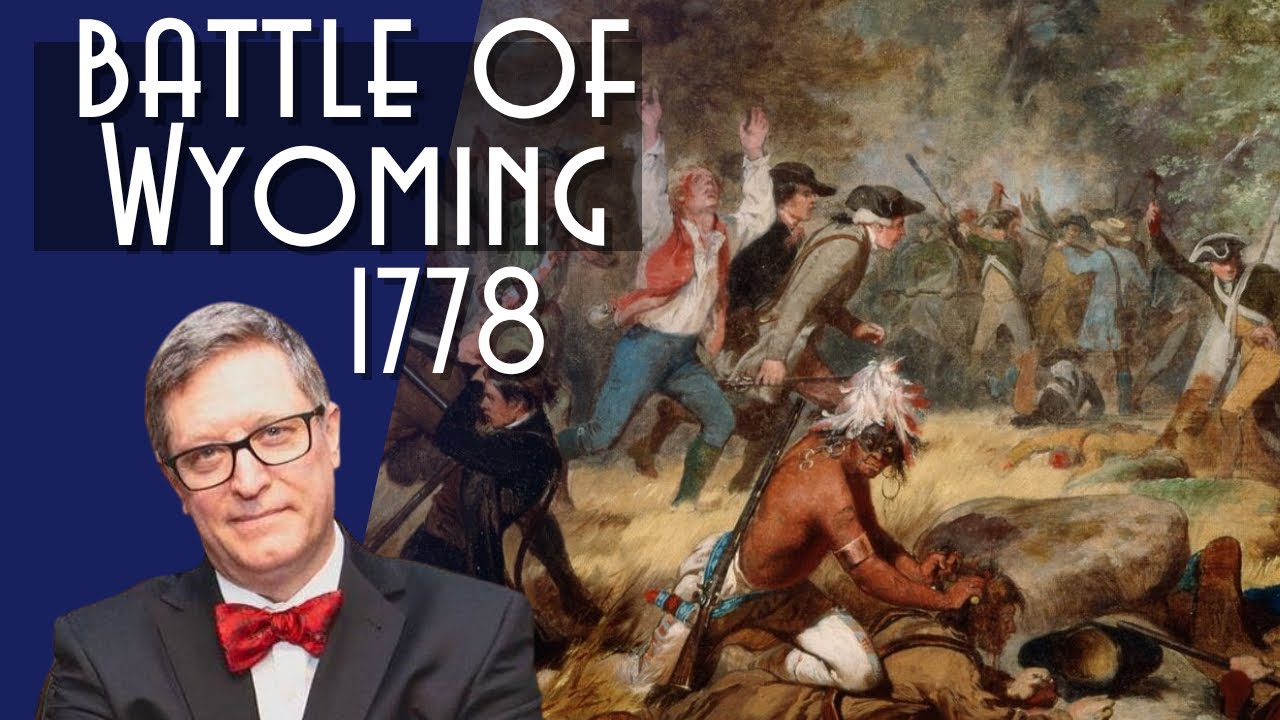
If you come from northern Pennsylvania, you might understand that the name "Wyoming" predates the western state, and that it played a once well-remembered, if not wholly accurate and now nearly forgotten, role in the War for Independence. The Battle of Wyoming: 1778 | 18:10
The History Guy: History Deserves to Be Remembered
1.64M subscribers | 2,930 views | July 3, 2026
(Excerpt) Read more at youtube.com ...
TOPICS: History; Science; Travel
KEYWORDS: battleofwyoming; connecticut; godsgravesglyphs; lancegeiger; pennsylvania; therevolution
1
posted on
07/03/2026 9:39:23 AM PDT
by
SunkenCiv
To: StayAt HomeMother; Ernest_at_the_Beach; 1ofmanyfree; 21twelve; 24Karet; 2ndDivisionVet; 31R1O; ...
Time index set to 2:52 because of the huge long ad for his Incogni sponsor.

2
posted on
07/03/2026 9:40:36 AM PDT
by
SunkenCiv
(TDS -- it's not just for DNC shills anymore -- oh, wait, yeah it is.)
To: SunkenCiv
From Wikipedia on Wyoming PA:
“The name “Wyoming” derives from the Munsee word xwé:wamənk, meaning “at the big river flat”.[5] The state of Wyoming is either named after this borough or the surrounding valley.”
3
posted on
07/03/2026 9:41:27 AM PDT
by
chajin
("There is no other name under heaven given among people by which we must be saved." Acts 4:12)
Transcript
This episode of the History Guy is brought to you by Incogni. Take your personal data off the market.
If I were to ask you what role Wyoming played in the American Revolution, you might be understandably confused. I mean, after all, Wyoming didn’t become a state until more than a century after the American Revolution. The battles of the Revolution were more than 1,500 miles from Wyoming. If it had been visited at all by Europeans in the time of the Revolution, it was only by a handful of fur traders. But if you come from a certain part of western Pennsylvania, you might know that the name Wyoming long predates the western state and that Wyoming played a once well-remembered, if not entirely accurately so, role in the war for independence. The July 3rd, 1778 Battle of Wyoming deserves to be remembered.
[ad text redacted]
Dr. Carl W. Ziggler, an associate professor of education at Lafayette College, wrote in the Washington Post in 1928 that probably at the present time, there is no place in the United States so full of literary and historical lore and yet so neglected and so little visited by tourists and students as the Wyoming Valley in eastern Pennsylvania. The name Wyoming is a very anglicized version of a name from the local Delaware people that means roughly “at the big river flat,” referring to the Susquehanna River that runs some 25 miles through the valley that today includes the Pennsylvania cities of Wilkes-Barre and Scranton. Historically an area of anthracite coal mining, although today it is more of a logistics hub and regional Dunder Mifflin office.
In 1809, Scottish poet Thomas Campbell wrote a poem about the valley which popularized the name Wyoming. And it is generally, though not universally, thought that it was the inspiration behind naming the western state. Yes, the name of the nation’s least populous state was not derived from anything in the mountain west, but from a valley in Pennsylvania, roughly 1,600 miles east. But notably, the poem “Gertrude of Wyoming,” a Pennsylvania tale, is really a bit of a dirge. Although the wild flower on thy ruined wall and roofless homes, a sad remembrance bring of what thy gentle people did befall. He’s actually referencing a battle once quite well known in America. A centennial celebration of the battle in 1878 drew a quarter million people. But that William R. Tharp of Virginia Commonwealth University said in 2004 has retreated from national memory. Its remembrance shifted almost exclusively to local commemorations.
As to the battle itself, there’s a memorial on US Highway 11 in the bustling borough of Wyoming, erected in 1833 that gives a description. Near this spot was fought on Friday the 3rd of July 1778, the Battle of Wyoming in which a small band of patriotic Americans, chiefly the undisciplined, the youthful, and the aged, spared by inefficiency from the distant ranks of the Republic, led by Colonel Zebulon Butler and Colonel Nathan Denison, with a courage that deserved success, fearlessly met and bravely fought a combined Tory and Indian force of twice their number.
Numerical superiority alone gave success to the invader, and widespread havoc, desolation, and ruin marked his savage and bloody footsteps through the valley. It is a story fitting with both the understanding of the battle fought some 55 years before the marker was erected of the time and appropriate to where the young nation stood in the early part of the 19th century. But that you can probably guess by the tone alone is not quite the full story. But to get to the full story, it first helps to have some idea of why there was a battle at all.
In fact, if this was never taught to you in school, there was quite a lot of early conflict over the greater Wilkes-Barre Scranton area. The confusion is understandable in that King Charles II had far away from Britain granted the valley to both Connecticut in 1662 and Pennsylvania in 1681. It isn’t exactly clear that his royal majesty understood that some of the land granted to the colony of Connecticut and later to William Penn was in fact the same land. He might not have known. He also might not have cared.
This would lead to conflict on the frontier. Actually, a group of shooting wars between Pennsylvania and Connecticut called the Pennamite Yankee Wars, which were only briefly interrupted by the kerfuffle with the mother country between 1776 and 1781.
To make matters more confusing, there is good reason to question whether this land was Charles’s to give, and that of course people already lived there. Nominally, the land belonged to the people of the Iroquois or more properly the Haudenosaunee Confederation. But if King Charles did not, the natives almost certainly did know that the plot of land that they sold to Connecticut in 1754 and then to Pennsylvania in 1768 were the same land. If the silly English were willing to pay twice for the same plot, there was no reason to argue. But even then there was a problem in that when the land was supposedly sold, it was actually people by tribes that had been displaced by British settlement who though they may occasionally have been allied with them were not all part of the confederation.
These conflicts wouldn’t officially be resolved until the end of the century and not necessarily to happy satisfaction in that both Wilkes-Barre and Scranton, the major population centers of the valley today, were founded by Connecticuters before being essentially given to Pennsylvania. But they do represent a fact of life for Anglo settlers in the Wyoming Valley in the 18th century. As Harvey Juel explained in his 1909 history of Wilkes-Barre, the settlements were in every sense of the word frontier settlements.
At various points, settlements had been displaced with sometimes casualties in both conflicts with native people and the opposing colonies. In defense, the settlers had built several small fortifications and raised a militia. But then came war with the same crown whose lack of understanding of geography had resulted in the conflict and the sides shifted.
Well, we tend to talk about the revolution as a conflict between the British and the patriots, a confusing enough measure in that the patriots were technically British, but we often gloss over the fact that the revolution was also a bloody civil war between supporters of independence and loyalists as well as with the entry of France and Spain a world war. Among the loyalists were men of upstate New York and northern Pennsylvania who at the outbreak of war had largely fled to Canada. While loyalists represented as much as one-fifth of the white population in the colonies, the militias were generally overwhelmingly supporters of the patriot cause and were also, you know, armed. So many who remained loyal to the crown were forced or chose to flee their lands, including a prominent New York landholder named John Butler.
Butler had been involved in the fur trade, had learned many of the Iroquoian languages, and established a rapport with members of the Confederacy. During the ill-fated Saratoga campaign in 1777, he had persuaded some members of the Seneca and Cayuga to join in an unsuccessful raid on Fort Stanwix. Following Burgoyne’s defeat, the British strategy on the frontier was to engage in raids against the American frontier, mostly using loyalist and Native American allies rather than British troops. Butler was given the rank of major and was given permission to raise among loyalists who would escape to Canada a core of rangers who would, working with native allies, participate in these raids. Butler’s rangers would eventually comprise some 10 companies.
Butler’s rangers participated with gusto in several of the raids and confrontations that would characterize the bloody frontier war that despite her understanding of who was fighting whom only rarely included British or continental regulars. The Wyoming Valley figured directly into this conflict. Harvey explains that there were many reasons for the loyalists to target the Wyoming Valley. It served as a barrier protecting settlements in both New York and Pennsylvania. Its harvest would be used to feed patriot troops and the area would provide men to the patriot cause. And so Harvey writes, “These conditions aroused in the minds of those who were planning and managing the campaigns and forays of the enemy in western and central New York the firm belief that Wyoming settlements ought to be exterminated.”
Two, the conflict represented old resentments. Harvey writes, “This belief was stimulated and strengthened by the violence of resentment, hatred, and vindictiveness which the rough usage they had met with had aroused in the breast of the Tories who had fled or been driven from the Susquehanna and which they did not hesitate to manifest.” What’s more, despite the organized militia and at least three fortifications built, many of the most able men had left the valley to join Washington’s Continentals. Harry Shennowolf, writing in the online Revolutionary War Journal, explains this left mainly boys, older men, and invalids to remain in Wyoming to man the stockades and protect the region from Native American and British incursions.
They were, Harvey notes, particularly vulnerable. They could be easily and quickly reached from New York by way of the Susquehanna River. They were exposed and unprotected, and neither Pennsylvania nor Connecticut could come to their aid, and the Congress had not yet taken them under its wing.
As to the battle, Butler with around 100 rangers and 400 native allies arrived at the end of June. A raid by native scouts took a few prisoners, but also alerted the locals who called out the militia. A small number of continental regulars were also present. Apparently, men visiting home and a continental officer, Lieutenant Colonel Zebulon Butler of the Third Connecticut, and yes, that is somewhat confusing, but he and John Butler were not related, took command of the militia gathered. The Tories quickly took the two northernmost forts in the area, which were only lightly defended.
But most of the militia had gathered at the fort called 40 Fort, so named after the original 40 families that had settled the area. Major Butler demanded that Colonel Butler surrender. Butler said no. Then the Colonials made a quizzical choice, deciding to meet the loyalist force in the field. There’s an argument whether they should have stayed in their defensive position. Chennowolf argues that Colonel Butler wanted to stay put, but was shamed into action by another officer, accusing him of cowardice. But Butler might also have been concerned about supply in a siege where there was scant hope of relief. Moreover, Major Butler had burned the two northern forts, intended to give the impression that his force was retreating, and Colonel Butler may have believed himself to have a numerical advantage. In any case, the colonials marched out, and the two forces met in an open field near the destroyed Fort Wintermoot.
The exact events of the battle, which only lasted about a half an hour, are disputed, but there is general agreement that the militia were flanked by the Synica and Kauga warriors. An attempt to turn a company of the inexperienced militia to protect the flank became confused and fell into a route. The fleeing militia were then, for the most part, run down, killed, and scalped by the Senica and Kauga warriors. The few taken prisoner were also killed, and only a handful, including Colonel Butler, escaped.
That was that. A significant defeat for the patriots. Only three on the loyalist side, one Indian and two Rangers were killed. Colonel Butler fled with a few regulars and the remaining militia that had escaped to Fort were compelled to surrender the next day and paroled. The Tory force then proceeded to burn the settlement.
Now, here there is controversy. Tharp writes that on July 20th, an account was published in the newspaper, The Pennsylvania Packet, written by an editor named John Hol and supposedly collected from many of the distressed refugees who escaped the general massacre. The report said that the attackers had murdered women and children and wounded soldiers at the fort by setting the buildings on fire with them inside and then engaged in an indiscriminate slaughter throughout the countryside. The gruesome account, Tharp explains, was published throughout the colonies, inflaming public opinion against the British. This was the accepted story of what became called the Wyoming massacre and was then amplified after the war. But was it true? Well, Tharp says no. We know, for example, that there was no slaughter at the fort on July 4th. The defenders surrendered and were allowed to leave without bloodshed.
As to the purported slaughter after there was widespread destruction, but Major Butler wrote, “But what gives me the sincere satisfaction is that I can with great truth assure you that in the destruction of the settlement, not a single person was hurt except such as were in arms. To these and truth, the Indians gave no quarter.” In any case, it was the Halt account that was accepted at the time. It was the version that made its way to Europe, prompting Campbell’s poem. It was that account that was summarized on the 1833 monument. The account was arguably much more important than the battle itself.
Writing on the centenary of the battle, historian Wesley Johnson opined, “The Battle of Wyoming was not a great battle directly in its results, as affecting their struggle for independence by the colonies. It was not great in the point of the number of men engaged in the conflict, but it was great in this. The exaggerated story of the atrocities committed by the British troops and their allies, heaven knows the truth was bad enough, fired the heart and nerved the arm of every American patriot in this broad land. Wherever the story became known, the battle and the myth that followed spurred a punitive expedition by the Continental Army the following year under General John Sullivan that largely dispersed the Hoden Ooni. If there was a real loser in the war and the subsequent treaty of Paris, it was the native peoples.”
Tharp argues that the myth was kept alive by patriots after the war who largely wrote the story of the war and had every reason to portray themselves as heroes versus the British. The myth then further defined the conflict in the War of 1812, fought among many other reasons over fear of British inflaming native unrest on the frontier. The battle only faded from national consciousness to local history. Tharp argues as the utility of the myth faded. Tharp focuses on the power of the myth, which he claims had long-lasting effects on American identity and conceptions of the past, in particular on attitudes towards Native Americans.
He concludes, “Above all else, the legends related to the Battle of Wyoming underscore that Americans, historians or not, should be critical of what they accept as accurate information. It just might be the beginning of a new, unfounded American legend.” And that is a fair point. Always. History is always written with a perspective, and anybody who’s reading history should try to keep that in mind.
It is a grand irony that how we remember history is its own kind of history. And to be fair, these men were slaughtered, many of them having surrendered already or in the course of retreat. And I guess you could call that a massacre. Although Shenwolf quotes the Panee Chief Tecumpsa when he says, “When the white man wins, it’s a great victory, but when the red man is victorious, it’s called a massacre.” But in any case, there was a battle and that battle over time seems to have fallen from the national memory, nearly forgotten, except for maybe some local observances.
The monument is correct in some important aspects. These men did march out. They did fight. They did die for a cause. And whatever you want to call that, battle or massacre, grand myth or grim reality, it is history that deserves to be remembered.
I hope you enjoyed watching this episode of The History Guy. And if you did, please feel free to like and [music] subscribe and share the history guy with your friends. And if you also believe that history deserves to be remembered, then you can support the history guy as a member on YouTube, a supporter on our community at locals, or as a patron on Patreon. You can also check out our great merchandise shop or book a special message from the history guy on Cameo.
Here we go.
4
posted on
07/03/2026 9:48:42 AM PDT
by
SunkenCiv
(TDS -- it's not just for DNC shills anymore -- oh, wait, yeah it is.)
To: chajin
Yup, it’s in the presentation as well. In my barely misspent youth I lived in Wyoming — the city in Michigan, which I’ve been told is older than the state of that name.
5
posted on
07/03/2026 9:49:41 AM PDT
by
SunkenCiv
(TDS -- it's not just for DNC shills anymore -- oh, wait, yeah it is.)
6
posted on
07/03/2026 9:50:54 AM PDT
by
SunkenCiv
(TDS -- it's not just for DNC shills anymore -- oh, wait, yeah it is.)
To: SunkenCiv
In that same area of Pennsylvania
The French Azilum, an 18th-century settlement along the Susquehanna River in Bradford County, Pennsylvania. Built in 1793 by French aristocrats fleeing the revolution, the colony featured a grand log mansion known as La Grande Maison built specifically for Queen Marie Antoinette and her children.
The Queen never made it to Pennsylvania, as she was tragically executed during the Reign of Terror. The settlement eventually dissolved as colonists returned to France, but the site’s history and nearby landmarks remain:
Location: The historic site is located at 469 Queens Road, Towanda, PA
Marie Antoinette Lookout: Just off US Route 6 near Wyalusing, PA, this scenic overlook provides panoramic views of the river and the original site where the Queen’s home was intended to stand.
To: SunkenCiv
To: SunkenCiv
I used to live in that area.
Near Harvey’s Lake.
The French kept the Indian names for settlements while the British used British names. Thus Wyalusing, Wyoming, Tunkannok,...
To: tired&retired
The Queen never made it to Pennsylvania,Her last letter was “See you soon, I’m about to head out. “
10
posted on
07/03/2026 10:10:18 AM PDT
by
Sirius Lee
("Never argue with a fool, onlookers may not be able to tell the difference.)
To: tired&retired; Sirius Lee
“Marie Antoinette Lookout”
s/b
“Marie Antoinette! Lookout!”
11
posted on
07/03/2026 1:31:23 PM PDT
by
SunkenCiv
(TDS -- it's not just for DNC shills anymore -- oh, wait, yeah it is.)
To: SunkenCiv; Sirius Lee; chajin
The Battle of Wyoming was the last of several battles in the Pennsylvania-Connecticut wars. At that time, the disputed Pennsylvania-Connecticut border was in Central Pennsylvania.
The Connecticut-Pennsylvania border war—known as the Pennamite-Yankee Wars—was a late 18th-century territorial dispute over the Wyoming Valley in northeastern Pennsylvania. It was not until the mid-1700s, as available farmland dwindled, that Connecticut settlers (acting through the Susquehanna Company) began aggressively moving into the Wyoming Valley of Pennsylvania, resulting in decades of localized armed conflicts known as the Yankee-Pennamite Wars.
The conflict began because early royal charters granted overlapping claims to both colonies. Connecticut’s 1662 charter extended its western territory all the way to the Pacific Ocean, sweeping up the northern third of modern Pennsylvania. However, King Charles II granted William Penn the charter for Pennsylvania in 1681, creating an unavoidable conflict. The dispute unfolded through several key events:
Initial Settlement (1762–1769): Settlers from Connecticut (Yankees) migrated to the lush Wyoming Valley and established farms and forts. Pennsylvanians (Pennamites) viewed them as illegal squatters and sought to evict them.
The Pennamite Wars (1769–1784): This resulted in three distinct periods of armed conflict, fort sieges, and skirmishes as both colonies raised militias to control the region.
Battle of Wyoming (July 1778): A devastating tragedy during the American Revolution where a large force of British-allied Loyalist rangers and Iroquois attacked the Connecticut militia and settlers in the valley, resulting in a massacre that left hundreds dead.
The territorial conflict was definitively brought under the jurisdiction of the newly formed United States government. This landmark resolution was achieved through a multi-stage process:
The Decree of Trenton (1782): Both states agreed to let the Continental Congress settle the matter. Congress formed a federal court of arbitration that unanimously ruled in favor of Pennsylvania. This is historically significant as the very first interstate dispute settled by Congress under the Articles of Confederation.
The Continuation of Violence (1784–1788): Although Congress granted Pennsylvania jurisdiction over the land, Pennsylvania’s state government refused to recognize the property rights of the New England settlers. This sparked a violent resurgence of the conflict known as the Second and Third Pennamite Wars.
The Compromise Act of 1799: To prevent further bloodshed and settle the lingering unrest, the Pennsylvania legislature passed a compromise act that finally confirmed legal land titles for the Connecticut Yankees, provided they swore allegiance to the laws of Pennsylvania.
Thanks to Chief Shikellamy and a missionary that was raised by the Indians, Conrad Weiser, who made friends with the Penn Family in Philadelphia, the Iroquois Federation aligned with the British rather than the French.
Per Wiki: Conrad Weiser (1696–1760) was a pivotal 18th-century Pennsylvania German pioneer, farmer, and diplomat. Immigrating to the American colonies, he mastered the languages of the Iroquois Confederacy, serving as the chief interpreter and peacemaker between colonial Pennsylvania and Native American nations. He was a key figure in William Penn’s “Holy Experiment,” helping to found the city of Reading, PA, and serving as a colonel during the French and Indian War.(I think he immigrated from the Iroquois where he was raised. The Indians often kidnapped the children of the white settlers and raised them as their own. Another such child in the Wyoming Valley was Frances Slocum.)
Shikellamy’s origins are controversial. Some say he was from France, but taken captive by the Indians when he was child. Others claim that he was a Susquehannock by birth, a descendent of the Andastes, who was adopted by the Oneida tribe and, due to his valor in war, eventually named chief. What is known with certainty is that in 1727, when the Iroquois took control of the west branch of the Susquehanna River and began governing Shamokin, they sent Shikellamy to serve as resident viceroy over the great Indian town. It was their intention that he would care for all of the Indians residing along Pennsylvania’s border. Thus the Delaware, the Shawnees, the Nanticoke (or Conoy), and the Conestoga (formerly known as the Susquehannocks), looked to him to guide, direct, and settle disputes. Meanwhile the provincial leaders of the time liked to think that he was sent to keep the Shawnee in line, and since they had trouble exercising authority over the rebellious tribe themselves, they were thankful for his help and respected his leadership. The European’s admiration, combined with both the friendship he established with Moravian missionaries and his Indian authority, made him the perfect candidate to serve as an Iroquois interpreter, ambassador, and contractor among the English in Philadelphia.
His first entry into political history in Pennsylvania documents occurred in 1732 when he was called to Philadelphia to serve beside Conrad Weiser as a mediator among the Six Nations and the whites. This led to a life long devotion and comradeship. Working alongside Weiser, Shikellamy became the most respected and frequently employed Indian interpreter and ambassador of his day. Although he could not read or write, his sensitivity, tact, and control made his word law. In 1747 a Moravian missionary wrote, “Shikellamy, at this date, is emperor over all the kings and governors of the Indian nations on the Susquehanna”. He maintained the balance of power between the different tribes and acted as Agent of the Iroquois confederacy in all affairs of state and war. Much of his success stemmed from his competency of working with the Europeans instead of working against them and he was especially gifted with keeping peace among the Shawnee, who were impatient with Iroquois rule and angry at the British for being displaced. In short, Shikellamy was in charge of supervising the entire Indian population of central Pennsylvania (Everts, 27); he was considered chief, king, superintendent, deputy, emperor, and magistrate of the Indians.
Shikellamy was an Iroquois “Sachem”. A Peace Chief in charge of the many tribes of the Iroquois Federation in Pennsylvania. He lived most of his life in Shamokin (Now Sunbury) (translated as “Land of eels” as they were prevalent in the Susquehanna River). When I was young (1960’s), I used to care for his grave site along the Susquehanna River, near what was then the British Fort Augusta in Sunbury. Been interested in Pennsylvania history all my life.
To: tired&retired
For further reading:
https://www.colonialwarsct.org/1769.htm
1769 — The Pennamite Wars
Early Settlers & the Yankee-Pennamite Wars
The Wyoming Valley was part of the land granted under the Connecticut Charter by King Charles II of England in 1662 to Connecticut for new settlements. On December 28, 1768, the Susquehanna Company in a meeting at Harford, Connecticut made arrangements for the settling the Wyoming Valley lands. Plans were made to divide the territory into five townships, each five miles square. Each township would provide enough land for forty settlers and their families. These five townships were later named Plymouth, Kingston, Hanover, Wilkes-Barre, and Pittston.
When the settlers arrived in Plymouth, they found the land occupied by other settlers from the colony of Pennsylvania. It seemed that King Charles II had granted charters to both Connecticut and Pennsylvania at different times. The King knew very little about America and maps were very poor at that time. Both groups claimed the land. But who was the rightful owner? The Connecticut Charter was granted first in 1662, while the Pennsylvania Charter was not granted until 1681. Fighting soon broke out.
There were two Yankee-Pennamite Wars with the Revolutionary War in between. During the first Yankee-Pennamite War two forts were built by the Yankees, one called Fort Durkee, located on the bank of the Susquehanna River close to the site of Wilkes University today and the other in Kingston, called Forty Fort. It was given this name because the first forty settlers that came from Connecticut built it. The Pennamite’s took shelter in a fort located in Wilkes-Barre near the site of General Hospital today. After the major Battle of Nanticoke in 1775 the Connecticut settlers were able to hold and stay in charge of the valley.
Once the Revolutinary War began in 1776, the men of Wyoming Valley were called upon to serve in the Continental Army. Before long 198 men were ready for duty with 40 of that number being from Plymouth. Men from Plymouth fought in the battles of Millstone, Brandywine, Germantown, Boundbrook, and Mud Fort. Benjamin Harvey, a man who had fought in the Yankee-Pennamite War, was found fronzen to death at Valley Forge. While the men of the valley were away, 400 British troops and 500 Indians attacked the Valley. Forty four men led by Asaph Wittlesey tried to defend the women and children at Forty Fort. At the Battle of Wyoming, Colonel Zebulon Butler led 484 men out of the fort to meet the enemy. Home on furlough from the Continental army were Captains Durkee and Ransom. A line of battle was formed. Colonel Zebulon Butler ordered his men to fire and keep firing into the British line. Butler’s men advanced, pushing back the British but the American’s were swarmed with screaming Indians who had been hiding in the woods waiting to attack. In a few moments Colonel Dorrance and Captains Ransom and Whittlesey were dead. The line was forced to retreat with the Indians right behind them taking scalps. Those who were able to outrun the Indians made their way back to the fort. Many men were captured and put to death. After hearing of the massacre, the women and children hurried out of the valley. On July 4, 1778, British Major, John Butler, demanded the surrender of all forts and ammunition to be given to the Indians. The settlers could not fight in the Revolution anymore. In return for this, Butler promised the settlers that they could return to their homes and live in peace. There was to be no more bloodshed or burning of homes.
After the Revolutionary War, settlers once again moved back to Wyoming Valley. The thirteen colonies were now thirteen states. Both Pennsylvania and Connecticut claimed ownership of the Wyoming Valley. Congress was asked to decide on the legal owner. A court was appointed to decide the case and after forty days, it was decided that Wyoming Valley belonged to Pennsylvania.
The decision by the court did not settle the most important question. Who was to have ownership of the farms and homes in the valley? The Pennsylvania government set up a commission and decided that the Connecticut people should give up their claim to the land and move to western Pennsylvania. Pennsylvania sent Justice Alexander Patterson with a band of Rangers to take charge. Patterson and his men were very unjust and took the belongings of some settlers and sent many valley people to jail. Eleven from Plymouth were arrested during one of Patterson’s raids on the town. In 1784, his small army drove the settlers out of the valley by force. Without any food or extra clothing, they were forced to walk to the Delaware River. Hunger and hardship took the lives of some people. The Pennsylvania government stepped in and sent Colonel John Armstrong to arrest Patterson and restore order. His first step was to disarm everyone including Patterson and his Rangers. As soon as the weapons were turned in, Armstrong arrested forty-six of the Yankee men, but nothing was done to Patterson. Open war broke out and Connecticut and Vermont sent troops to help the Connecticut settlers. John Franklin began to organize to Yankee men into an army. Armstrong and his men were driven out of the valley and Franklin burned Fort Wyoming. By 1794, all of the fighting was over and Wyoming Valley became part of Luzerne County. The settlers became law-abiding citizens once again and the Yankees from Connecticut were assured that their claim to the land would last forever. The Yankee settlers became Pennsylvanians and John Franklin was one of the first valley men to serve in the new government. He lived in the southern end of Plymouth Township.
1769 — SUSQUEHANNA COMPANY
was a land company formed (1753) in Connecticut for the purpose of developing the Wyoming Valley in Pennsylvania. A tract of land was purchased from the Indians in 1754, and preparations were made for development. Aid was sought in England and Eliphalet Dyer was sent in an unsuccessful attempt to secure confirmation of the land grant. Colonization from Connecticut was first attempted in 1762–63, but it was 1769 before any definite settlement was made. Soon the settlers were embroiled in troubles with the rival settlers from Pennsylvania, leading to the Pennamite Wars, in which Zebulon Butler led the Connecticut forces.
WYOMING VALLEY
is an area about 20 mi (30 km) long and 3 to 4 MI (4.8–6.4 km) wide, in Luzerne co., NE Pa., through which flows the Susquehanna River. Wilkes-Barre is the major city of this once-rich anthracite coal region. The valley was the scene of a long contest between Connecticut and Pennsylvania over conflicting land claims based on 17th-century charters. After the Susquehanna Company purchased (1754) land there at the Albany Congress, a temporary settlement of the region in 1762–63 led to the first permanent settlement in 1769 and the building soon after of Forty Fort. The First Pennamite War (1769–71) between the Connecticut and Pennsylvania settlers ensued, but rapid settlement of the area continued. In 1774, Connecticut set up the town of Westmoreland, from which representatives were sent to the Connecticut legislature. During the American Revolution, the valley settlers were attacked (1778) by Loyalist commander John Butler and a party of Tories and Iroquois allies; nearly 400 men, women, and children were killed. The massacre is described in Thomas Campbell’s poem, Gertrude of Wyoming (1809). In 1782 a Continental Congress court of arbitration decided to grant the land in favor of Pennsylvania, but the Connecticut settlers refused to leave, and the Second Pennamite War (1784) ensued. Finally, through the Compromise Act of 1799, the Pennsylvania legislature secured a means of settlement with the Connecticut claimants.
To: tired&retired; SunkenCiv
Thanks! Nice summary. I thought I'd throw in this map for a little color for folks who might not know that CT and PA had a border.

14
posted on
07/04/2026 4:55:16 AM PDT
by
Sirius Lee
("Never argue with a fool, onlookers may not be able to tell the difference.)
To: Sirius Lee
That southern border of CT went right through Pennsylvania.
Disclaimer:
Opinions posted on Free Republic are those of the individual
posters and do not necessarily represent the opinion of Free Republic or its
management. All materials posted herein are protected by copyright law and the
exemption for fair use of copyrighted works.
FreeRepublic.com is powered by software copyright 2000-2008 John Robinson