Transcript
When you think of the American Revolution, you probably think of 1776. But 85 years before the battles of Lexington and Concord, when the founding fathers weren’t even yet children, American colonists leveraged events in the mother country to engineer a little remembered revolution that transformed the colonies and helped to define the nation that we know today. The Boston Revolt of 1689 had some surprising similarities to the events that would occur in the next century, and this history deserves to be remembered.
The 17th century was a turbulent time in England, Scotland, and Ireland. Three kingdoms under a single crown. Starting in 1639, a series of wars began, now known as the Wars of the Three Kingdoms, including the English Civil Wars. The devastating wars eventually led to the execution of King Charles I and the establishment of the Commonwealth of England under Oliver Cromwell. After Cromwell’s death, the crown returned to Charles II and later his brother James II.
Deeply ingrained in all of this unrest were issues of religion. Although the issues were complex, looming large among them was the divide between Protestants and Catholics. Charles II, while he ruled as a Protestant, had significant sympathy for Catholics and even promised to convert in a secret agreement with the king of France in the 1670 secret treaty of Dover. He did convert on his deathbed in 1685, but his brother and heir James had converted years earlier. James II would be England’s last Catholic monarch, but England was proudly and legally Protestant. While Parliament accepted the Catholic James in order to avoid a potential civil war, James was seen as a brief exception. He was 52 years old, and his only surviving children, daughters Mary and Anne, were both Protestant.
While religion was a central piece of the conflict in the colonies, it had more to do with efforts by England to tighten its control over her colonies. Even before the restoration of the monarchy, Oliver Cromwell had enacted the Navigation Act, which restricted colonial trade, part of the economic theory of mercantilism, which advocated for a closed trade system in which the colonies could only benefit England.
The Massachusetts Bay Colony had its own issues, among them, the firm church state of the Puritan Church, which disenfranchised anyone outside of the church while forcing them to pay taxes to the church. This was altered somewhat in 1664 when certain non-church members were allowed to vote, but the Puritan government was still a firmly religious one. In the 1680s, England tried to force changes while trying to enforce the Navigation Acts. Charles II directly attacked the Massachusetts Bay charter, and when the colony refused to cede, he revoked the charter altogether in 1684.
James II became king in 1685, and he pressed forward by reorganizing the colonial government, uniting the Massachusetts Bay, New Hampshire, and Maine colonies into the Dominion of New England. Shortly after, Plymouth, Rhode Island, and Connecticut were added to the Dominion. Sir Edmund Andros was made the Dominion’s first governor. Andros had been the governor of New York until he was recalled in 1681. He arrived in Boston and assumed the position in 1686.
In England, it was hoped that the Dominion would solve problems of trade enforcement, political dependence, and defense against the French and Indians. New York and New Jersey would be further added to the dominion in 1688 and severely restricted town meetings. The assembly was dissolved and replaced militia leaders with Anglicans.
This had a significant effect on the church. Reverend John Higginson bemoaned that the foundation of all our good things were destroyed. Puritan meeting houses were commandeered for Anglican services. Town taxes that supported the clergy were removed. While this was a blow to the state as a Puritan church-led government, it was also a blow to the basic rights of the colonists, says Englishmen.
The political argument became paramount over the protection of the Puritan church. After all, many of those political freedoms had also been specifically denied their opponents when the church was in charge. As David Lovejoy in The Glorious Revolution in America put it, the Puritans argued that if an Englishman at home could not be taxed without his consent, neither then could a colonist. Some, like the Quakers, looked on the weakening of the Puritan church with glee after years of suppression and persecution.
But according to historian Villa Florence Barnes, Andros’s administration was the first and only time in history between the reign of Charles II and the American Revolution that the Navigation Acts were strictly enforced. This dictated what products colonists could sell to anyone other than their mother country and forced the colonies to buy finished products from England alone. It ruined colonial merchants, many of whom had otherwise supported Andros against Puritan tyranny. Andros and his men’s treatment of Massachusetts militia men led them to issue charges against Sir Edmund Andros, governor, when they complained of the cruelty of Sir Edmund’s officers.
In Maine, one of Andros’s officers had predicted to the Massachusetts militia that hell is like to be your winter quarters and the devil your landlord. The officers disdained the colonists and subjected them to the rigorous discipline of the British regulars. Andros’s position was complicated by events in England where James was losing popular support. In July of 1686, rumors abounded that James was conspiring with the French to attack the Dutch and the stat holder William of Orange, who was married to James’s daughter, Mary, based on the Protestant-Catholic divide in Europe.
On August 6th, a remonstrance was produced in which the French pressed James to attack the Dutch immediately while the Holy Roman Empire was busy fighting Turkey and proclaiming that James should and had the right to alter succession to maintain a Catholic England.
According to John Miller, who wrote a biography of James II, the French even suggested that James should, if need be, become Louis’s vassal. James claimed that the remonstrance was a forgery, but refused to issue an official disavowal, and the Dutch took it very seriously. The Dutch became further worried when James secured a large loan to build up the English fleet.
James also pressed to nullify the penal laws which required conformity to the Church of England and ended mandatory religious oaths for offices, essentially granting freedom of conscience to Catholics and non-Anglican Protestants. James did so by questioning many in the government and dismissing those that didn’t agree with him, sowing discord and disaffection throughout the country. They were replaced by Catholics. Some of this came from his Catholicism, but more of it came from his basic belief in the divine right of kings and disregard for Parliament, which he suspended in 1685. Ruling instead by decree, he undermined his own support among the landed gentry, almost all Protestant, in his efforts to reshape the government.
James continued to move against both his enemies in Parliament and the Church of England, trying seven bishops for seditious libel for resisting. And when they were acquitted, bonfires burned on the streets of London in celebration. The same day, seven other bishops sent a letter inviting William of Orange to England.
On June 10th, James’s Catholic wife, Mary of Modena, gave birth to a boy, James Francis Edward Stuart. This raised the risk of placing another Catholic monarch on the throne. No longer could James’s opponents merely wait for his death for a reprieve.
Around the same time, Increase Mather, one of the Puritan leaders of the Massachusetts Bay, arrived in England to undermine Andros. Mather had to be sent secretly, clandestinely, aboard a ship as Dominion agents tried to prevent his sailing. He complained to the king that Andros was not sticking to the king’s declaration of indulgence.
Lovejoy in The Glorious Revolution in America summarizes that Mather reported that Andros had fined and imprisoned a number who scrupled to swear on a Bible and that when the good ministers of Boston proposed the day of thanksgiving to bless God for making James their king, Andros had forbidden it, threatening to use troops to prevent them. Mather petitioned for the return of the colony’s privileges, specifically confirmation of their property, a guarantee for liberty of conscience, and a charter for Harvard College to protect it from the Dominion’s interference.
In the summer of 1688, while Mather was meeting with the king and his ministers, James became fearful for his throne as William and Mary prepared forces in the United Provinces for invasion. James moved to shore up support from dissenting Protestants, not Anglicans like Increase Mather, as enemies closed in. By mid-October, Mather had his last meeting with the king and was granted essentially all of his requests.
James thought it unlikely that the Dutch could mount a successful invasion, but had lost support among his still largely Protestant army. William landed on November 5th at Brixham, surprising both the French and the English as it was so late in the year. There was little bloodshed, and rather than deal with William, James fled the country in early December.
The Glorious Revolution may have been over in England, but its repercussions would take some time to reach the colonies across the ocean. In James’s final days, he issued a proclamation restoring corporations to their ancient charters, liberties, and franchises. While it did not specifically mention colonial corporations, colonial agents made use of the ambiguity to argue that they were included. Mather and other agents also managed to have the attorney general, Sir Thomas Pow, send a report to the Lord of Trade that the charter’s annulment had been illegal. When James was overthrown, Mather and the colonial agents pushed for William and Mary to restore all of the former colonial governments.
In New England, other issues were keeping Andros busy. Anyhow, in April of 1688, months before James was overthrown, Andros had plundered the home of Jean Vincent de Abedi, baron of St. Castine on Penobscot Bay in modern Maine. St. Castine’s home and trading post was in Acadia, and Andros was attempting to assert English jurisdiction and disrupt French fur trading. Though a Frenchman, the Baron was also an Abnaki chief, and he led the Wabanaki Confederacy in a campaign against the New England border. Andros was struggling to manage his colonial militia to defend the frontier thanks to poor relations between officers and the men when he began getting news of the momentous events in England. In January 1689, he received notice of the Dutch preparations for invasion of Britain.
And on January 10th, he released a proclamation prohibiting any attempts against the dominion and denouncing the Protestant assault. Leaders in Boston seem to have gotten word of the revolution even before Andros and were already meeting and circulating a declaration from the Prince of Orange. Fearful of a revolt, Andros returned to Boston in mid-March.
As word came in of the Glorious Revolution, the Massachusetts militia left in Maine mutinate. According to Steven Saunders Webb, in Lord Churchuchill’s coup, the militia declared the entire campaign in Maine against the Abanaki parts of the ongoing popish plot. They argued that the campaign was meant to waste the provincial army and make way for a French Catholic Indian invasion that would be led by Andros himself. All of it was probably nonsense, but it hardly mattered as the militia walked home.
It was this Increase Mather would write that produced the revolution. He wasn’t talking about the glorious revolution, but another one taking place in Boston. Andros determined to arrest the deserting militia and ship them back to the front. Resisting that order necessitated a full coup against Andros’s government. Andros himself was afraid to act until he received new orders. He had reason to expect he would remain governor of the Dominion. He was a childhood friend of William and had fought with him in the Dutch army. The Puritans, of course, couldn’t have that.
On April 17th, Andros ordered the arrest of Cotton Mather, son of Increase. The local militia were rising up. Webb says that all accounts agree that the elite only acted after the country people by any violent motions pushed the matter on so far as to make a revolution unavoidable.
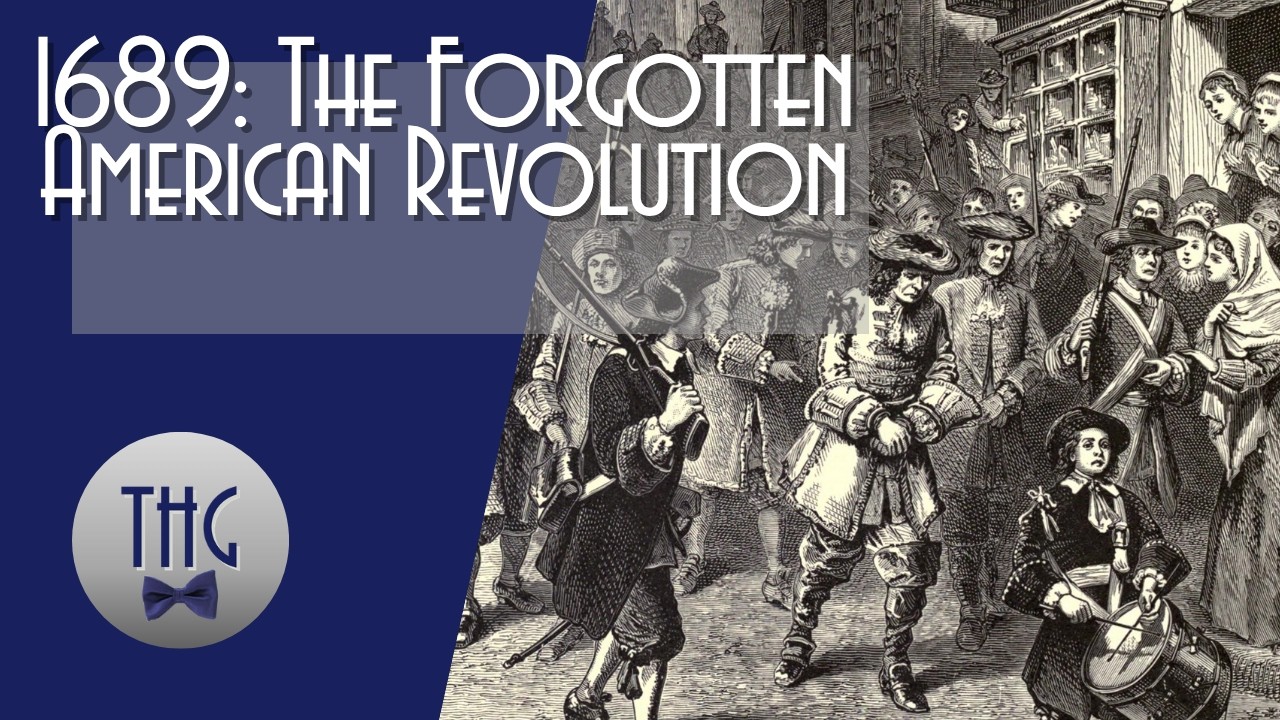
At 5:00 a.m. on April 18th, 12 militia companies assembled in Charles Town and Roxbury. Three hours later, they rode across the river to Boston, where they met Major General Winthrop, backed by the clubmen and the apprentices of the North End Mob. By 8:30, the militia at Roxbury had marched into the city. The Boston regiment, meant to defend the city, was disorganized. Conspirators had seized the regiment’s drums and colors. The regiment’s officers were all arrested. The captain of the Royal Frigot Rose on station in the harbor came ashore after 9:00 a.m. and was immediately arrested by the ship’s own carpenter. The militia also arrested any Anglican leadership.
Before noon, an orange flag was raised over Beacon Hill, declaring the city captured by the cause of the Prince of Orange. Andros and what remained of his men loyal to the Dominion were boarded up in Fort Mary in the southern part of town. At 1 p.m., Massachusetts elite, being surprised with the people’s sudden taking of arms and the first motion whereof we were wholly ignorant, demanded Andros’s surrender. Otherwise, we are sure that they will endeavor the taking of the fortification by storm. The declaration included the denouncement of a horrid popish plot wherein the bloody devotees of Rome had in their design and prospect no less than the extinction of the Protestant religion. While in England, the religious aspect had been primarily Catholic versus Protestant. In New England, it was Puritan versus Anglican. Although the Puritans made every effort to tie the Anglican forces of Andros to supposed Popish machinations.
Andros refused to surrender, but tried to escape the city, leaving Fort Mary. Andros attempted to reach Himus Rose, but was intercepted and chased back into the fort by the militia. The standoff lasted several hours before Andros, promised safe conduct, left the fort to meet the townsmen. The townsmen arrested him. The following day, Protestants aboard Rose took down the ship’s rigging, and the troops still stationed at Castle Island in Boston Harbor also surrendered.
Whatever King William and Queen Mary might have intended for the Dominion, it was effectively dismantled by Andrew’s overthrow, and the colonies returned to the earlier governmental structures.
In New York, a separate revolution overthrew the Dominion’s lieutenant governor.
In England, a new charter was drawn up that combined the Massachusetts Bay Colony with the Plymouth Colony along with parts of Maine and some territory formerly belonging to New York including Nantucket and Martha’s Vineyard. The new charter brought a significant change, however, despite increased Mather’s agitations. The old Puritan government was abandoned. The new charter called for religious toleration and an appointed governor.
Andros was sent to England for trial, but his charges were dismissed. Within a few years, he was made governor of Virginia.
The 1689 Boston revolt is little remembered, but it did have a significant impact on the nature of the early New England colonies. For example, the colony of Massachusetts would no longer be a strictly Puritan government, and much of the modern borders of Massachusetts were actually defined in the charter in 1691. But the revolt also represented a long history of American colonists being willing to buck royal authority, especially when the English crown tried to tighten its grip on colonial governance.
There’s no direct line between the 1689 revolt and the American Revolution, but there are some similarities that are awfully difficult to ignore. Both centered on the city of Boston, both depended upon important issues like taxation without representation, the rights of the colonists as English citizens, and even the navigation acts. Very similar issues would inspire another generation to buck royal authority.
I hope you enjoyed watching this episode of The History Guy. And if you did, please feel free to like and subscribe and share the history guide with your friends. And if you also believe that history deserves to be remembered, then you can support the history guy as a member on YouTube, a supporter on our community at locals, or as a patron on Patreon. You can also check out our great merchandise shop or book a special message from the history guy on Cameo.