Posted on 05/13/2026 6:51:34 AM PDT by MtnClimber
Suppose that you are a large U.S. state with a dynamic modern economy. Here’s an idea for a strategy for powering your electrical grid: Intentionally disinvest in your functioning fossil fuel generation plants; fail to maintain them adequately, and let them age into obsolescence. Meanwhile, encourage and even subsidize the development of solar panels as a replacement. After all, solar power is cheaper!
Those who follow the policy of New York State with respect to our electrical grid will recognize this description as covering the essential elements of our strategy. In our case, the strategy was mainly enacted into law in 2019 via the Climate Leadership and Community Protection Act (CLCPA).
In heading down this path, have we checked around to see what other states or countries have adopted this strategy, and how it has worked out? Just asking.
Let’s start with a quick review of New York’s currently-existing strategy for its grid.
Today, the State gets something over half of its electricity from fossil fuels, almost entirely natural gas, with most of the remainder from hydro (mostly Niagara Falls) and nuclear. The CLCPA contains mandates that that shall change, and rapidly. Section 4 of the CLCPA (codified as Public Service Law § 66-p(2)) mandates that the State get “seventy percent of the state wide electric generation” from “renewable energy systems” by 2030, and that by 2040 “the statewide electrical demand system will be zero emissions.”
These mandates are then administered by state agencies, particularly the Department of Environmental Conservation (DEC). If you want to build a new power plant in New York, or do a major capital project on an existing plant (such as re-powering a natural gas plant with the latest combined cycle technology), you need to get a permit from DEC. Section 7 of the CLCPA gives the following direction to DEC (and other agencies) with respect to issuing permits:
[A]ll state agencies shall consider whether such decisions are inconsistent with, or will interfere with, the attainment of the statewide greenhouse gas emissions limits. . . .
Back in 2021, two aging natural gas plants — the Astoria plant in Queens and the Danskammer plant along the Hudson River in Orange County — sought permits from DEC to re-power to the latest natural gas technology. DEC denied the permits, citing the CLCPA. From Politico, October 27, 2021:
Gov. Kathy Hochul’s administration has made a landmark move to deny permits for two natural gas plants seeking to repower, citing the state’s climate law. The Department of Environmental Conservation denied permits for NRG’s Astoria plant and the Danskammer plant in Orange County. Both plants were seeking to repower with more efficient natural gas units than their previous operations. The decisions were embraced by environmentalists who have been pushing for years to block the fossil fuel projects. . . . “Both [plants] would be inconsistent with New York’s nation-leading climate law, and are not justified or needed for grid reliability. We must shift to a renewable future,” wrote DEC Commissioner Basil Seggos on Twitter.
Since then, as far as I can determine, nobody has wasted the effort to try to get DEC to go along with a project to build or upgrade a fossil fuel power plant. As a result, the existing fleet has just gotten older. In its “Power Trends” Report issued in late 2025, the New York ISO described the state of New York’s aging fleet of fossil fuel power plants:
A growing number of fossil-fuel generators in New York are reaching an age at which similar units across the country have been deactivated. New York’s fleet of fossil-fuel-based generation includes more than 10,000 MW, roughly 25% of the state’s total generating capacity, that has been in operation for more than 50 years. As these fossil-fuel generators age, they are experiencing more frequent and longer outages. Greater difficulties in maintaining older equipment, combined with the impact of policies to restrict or eliminate emissions may drive aging generators to deactivate, which would exacerbate declining reliability margins.
“Declining reliability margins” is a polite way of saying “increasing frequency and duration of blackouts.”
With hydro already built out, and new nuclear taking decades to come online, that leaves wind and solar as the main plan for the future of New York’s electricity. In the case of wind, New York’s grand scheme was a vast collection of some 9 GW capacity of giant turbines off the coast of Long Island. However, that has been almost entirely scuttled by the Trump administration. And thus we are down to our last option, solar. The brain-dead cheerleading agency known as NYSERDA (New York State Energy Research & Development Agency) has this to say about solar for New York as of early 2026:
More than six gigawatts (GW) of solar energy has been installed in New York State – enough to power one million homes and businesses. This robust solar energy infrastructure enables a resilient electric grid that supports local jobs, healthier communities, and access to renewable energy for more New Yorkers. . . . By 2030, New York is expected to be home to more than 10 GW of distributed solar energy.
So by 2030, if we’re lucky, we’ll have the same fleet of natural gas plants, yet four years older than today and, as NYISO says, “experiencing more frequent and longer outages”; plus about 10 GW of solar capacity, to supply about 20 GW of average demand, and about 35 GW of peak demand that typically occurs in the evening after the sun has set.
Has any other state or country tried following the same strategy? Some big countries like Germany and the UK have started down this road. But if the key elements are forcing the thermal plants to age into obsolescence while having mostly solar as the alternative, the closest analogy I can find is Cuba.
Cuba has about 4000 MW of thermal (fossil fuel) electricity generating capacity, in their case almost all using oil rather than natural gas. The plants were almost all built from the 1960s to 1980s — the Soviet era — so they range in age from just under 40 years to over 60. Peak demand is around 3250 MW, so you would think that with the 4000 MW of capacity they have enough. But the plants are old and unreliable, and frequently down for extended maintenance and repairs.
Here’s a report from a source called Ciber Cuba on how Cuba’s electricity system is doing this very day. The headline is “The energy crisis in Cuba worsens: nearly 2,000 MW deficit during peak hours.” Excerpt:
Cuba faces one of the most critical days of its already devastated electrical crisis this Tuesday, with a projected deficit of 1,960 MW during peak nighttime hours, according to the official report from the Electric Union (UNE). The report reveals that at 06:00 hours today, the availability of the National Electric System (SEN) was only 1,250 MW against a demand of 2,884 MW, with 1,649 MW already affected since the early morning. The situation is expected to worsen as night falls. The UNE estimates a supply of 1,290 MW against a peak demand of 3,250 MW, resulting in a deficit of 1,960 MW and a projected impact of 1,990 MW during peak hours, equivalent to leaving almost two-thirds of the country without electricity.
So basically, two-thirds of the country is in forced blackout at any given time. Recent fuel shortages resulting from the U.S. embargo that began in January undoubtedly are a contributing factor to the crisis. However, Ciber Cuba points out that just as big a problem is that many of the aging power plants are out of service:
[A]ccumulated breakdowns partly explain the collapse. Units two and three of the Ernesto Guevara de la Serna Thermoelectric Power Plant (CTE), unit two of the Lidio Ramón Pérez CTE, and unit five of the Antonio Maceo CTE are out of service, while four other units are undergoing maintenance at the Mariel, Renté, and Nuevitas plants.
More availability of oil would not have helped with those outages. And the electricity situation in Cuba was nearly as bad last year, before the fuel supply from Venezuela got cut off. Here is a report from Al-Jazeera from September 2025:
Another total electricity blackout has struck Cuba, the latest in a string of grid collapses that have rocked the island of 10 million over the past year. The island-wide outage, which hit just after 9am local time on Wednesday, is believed to be linked to a malfunction at one of Cuba’s largest thermoelectric plants, the Ministry of Energy and Mines said.
But doesn’t Cuba have a big collection of solar farms? I thought that, in the words of NYSERDA, “robust solar energy infrastructure enables a resilient electric grid that supports local jobs, healthier communities, and access to renewable energy.” Why not just crank those up to fill the gaps when the fossil fuel plants break down? From the Ciber Cuba piece:
The 54 installed photovoltaic solar parks generated 3,822 MWh on Monday, with a maximum capacity of 490 MW during daylight hours; however, this source does not cover the nighttime deficit, which is when demand peaks.
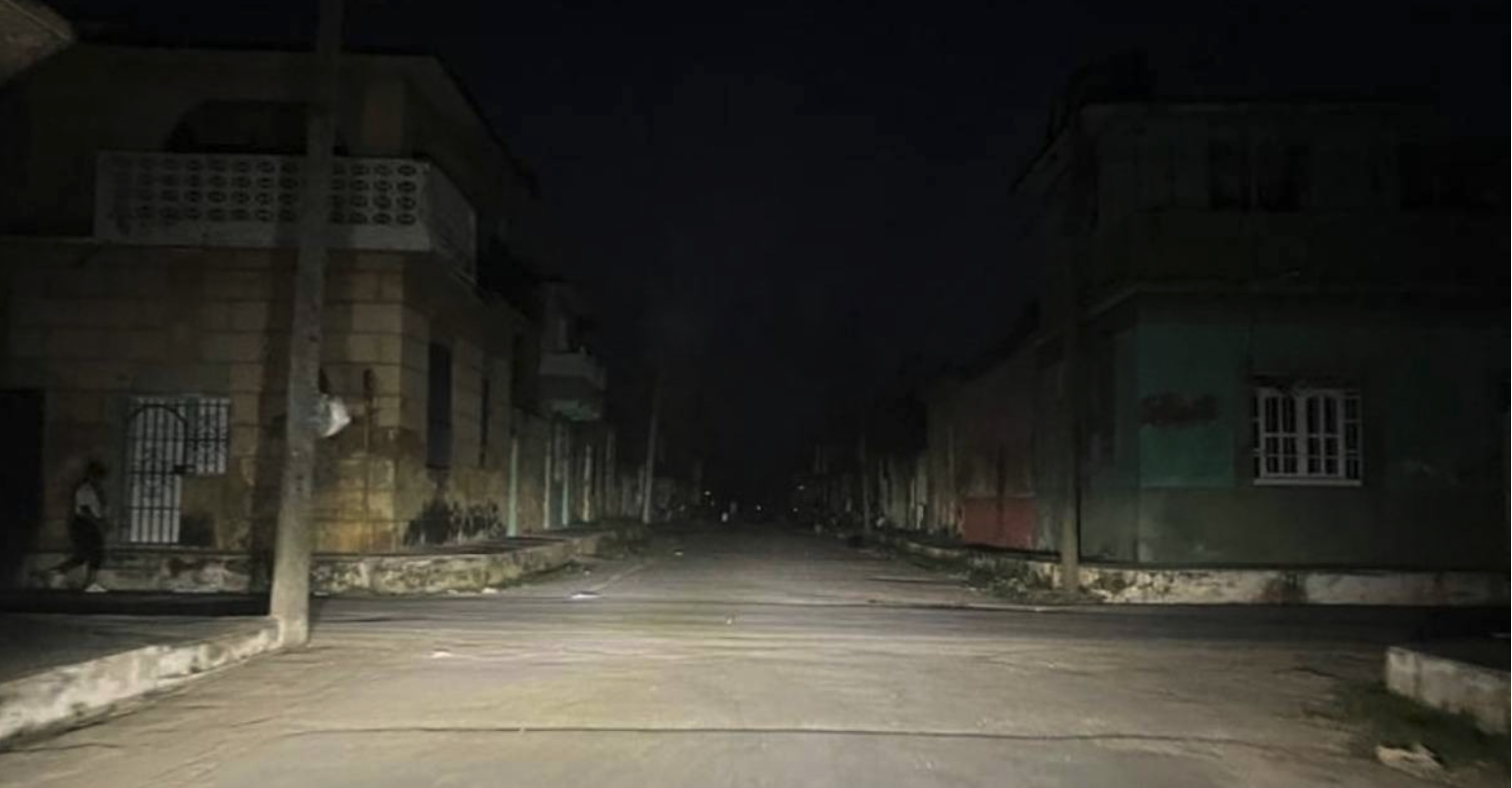
You mean that all the solar generation that Cuba has built doesn’t provide any light in the nighttime? Who knew? Here from Ciber Cuba is a picture of a Havana street after sunset:
If we keep up our current energy policies for long enough, we can also get to the point where our thermal (fossil fuel) power plants are too old to be maintained reliably. And then, if we are lucky, we can hope to achieve the energy utopia that has arrived in Cuba.
Manhattan Contrarian ping
If the State of New York wants to “save the planet” it would best financially encourage its citizens to invest in solar power where solar panels would work best.
Sounds like they’re following the same “green” policies as California - punish the energy industry via over regulation and taxes, oil and natural gas, resulting in major refineries closing.
Result: Price of a gallon of gas today in California: $6.153, and utility bills 60% higher than the national average.
Welcome to our world, thanks to idiot politicians. Newsom would love to take his oil and gas policies nation-wide.
Next Step: the entire economy of New York State should be shifted to cigar production.
Will the Idiots in charge be arrested when people start dying in large numbers because of their incompetence ?
NY State has two parts. Marxist, debt-fed NY City, and Upstate Yankee Appalachia.
By I look forward to the day when the econuts get tried, convicted and put against a wall and shot.
Ditto.
Or in order to be allowed to live, they must live entirely off the grid with only solar heated hot water, solar house heat and solar electricity.
The ignorant fools will soon learn, as I have by actual experimentation that it requires a HUGE number of batteries and insulated water storage to make it through a cloudy spell.
Depending on what you are doing, it takes a LOT just to get through the night.
That's not counting running mini splits for heating and cooling. Even with mini splits if the dopes are in a cold climate, they will learn they need to burn something when it gets much below zero F to keep from freezing.
“Snake” Pliskin call your office.
Disclaimer: Opinions posted on Free Republic are those of the individual posters and do not necessarily represent the opinion of Free Republic or its management. All materials posted herein are protected by copyright law and the exemption for fair use of copyrighted works.