Skip to comments.
Considering the Louisiana Purchase, did the United States inherit slavery from France?
Grok ^
Posted on 05/07/2026 7:39:36 AM PDT by ProgressingAmerica
Yes, the United States effectively inherited the existing institution of slavery in the territory acquired through the Louisiana Purchase of 1803 from France (which had briefly reacquired it from Spain in 1800). The U.S. did not introduce slavery there as a new practice; it was already well-established under prior colonial rule, and the transfer preserved the property rights of slaveholders.
Historical Context of Slavery in the Louisiana Territory
* French origins: France introduced chattel slavery to the Louisiana colony starting in the early 1700s, importing enslaved Africans (beginning around 1710) to support plantation agriculture, alongside some raids on Native American groups for labor. The Code Noir (1685) regulated slavery in French colonies, outlining rules for treatment, manumission, and rights of free people of color.
* Spanish period (1762–1800): Spain continued and expanded the transatlantic slave trade in the territory. By the time of the Purchase, there was a significant population of enslaved Africans, especially in the lower Mississippi Valley (present-day Louisiana), along with free people of color. Spain had banned enslavement of Native Americans in 1769, but some mixed-descent individuals remained in bondage.
* Brief French return (1800–1803): Napoleon reacquired Louisiana from Spain via the secret Treaty of San Ildefonso but never fully reimposed control on a large scale. His broader plans for a New World empire (including using Louisiana to supply Saint-Domingue/Haiti) collapsed due to the successful Haitian Revolution (a massive slave rebellion that led to Haiti's independence in 1804) and disease among French troops. Napoleon restored slavery in other French colonies in 1802 but sold Louisiana before deeply reasserting it there.
At the time of the Purchase, slavery was a functioning economic and social institution in parts of the territory, particularly around New Orleans and agricultural areas. The Purchase doubled the size of the U.S. and brought in a diverse population that included thousands of enslaved people.
The Louisiana Purchase Treaty and Its Provisions
The 1803 treaty (signed April 30, 1803) made no direct mention of slavery or its abolition. Key relevant language came in Article III:
"The inhabitants of the ceded territory shall be incorporated in the Union of the United States and admitted as soon as possible according to the principles of the federal Constitution to the enjoyment of all these rights, advantages and immunities of citizens of the United States, and in the mean time they shall be maintained and protected in the free enjoyment of their liberty, property and the Religion which they profess."
In the legal and social context of the era, enslaved people were treated as property under colonial (and later U.S.) law. Protecting "property" rights thus meant the U.S. recognized and upheld existing claims to enslaved individuals. President Thomas Jefferson and Congress had no intention of ending slavery in the acquired lands; they focused on governance, citizenship for free inhabitants (including free people of color in some cases), and eventual statehood.
Early U.S. actions included:
* Temporary restrictions on importing new slaves into the Orleans Territory (except those brought by migrating owners), but these were quickly weakened or removed due to local opposition.
* The territory (later split into the Orleans and Louisiana Districts) adopted laws similar to those in southern U.S. states while incorporating some French/Spanish precedents. Slavery expanded significantly post-Purchase, fueled by the cotton gin, sugar plantations, and the domestic slave trade. New Orleans became a major slave-trading hub.
Broader Impacts
The Purchase did not "create" slavery in the region but integrated an existing slave society into the U.S., exacerbating sectional tensions over whether new states carved from the territory would allow slavery. This contributed to debates leading to the Missouri Compromise (1820), the expansion of the domestic slave trade, and ultimately tensions culminating in the American Civil War. Parts of the territory (e.g., future Missouri) already had some slaveholders; lower Louisiana had many more.
In short: The U.S. acquired a territory where slavery was a longstanding colonial practice under France (and Spain). By guaranteeing property rights and incorporating the inhabitants without disrupting the institution, the U.S. inherited and then expanded slavery there under American law and governance. The Haitian Revolution indirectly enabled the sale by derailing Napoleon's plans, creating an ironic link between the end of slavery in one former French colony and its reinforcement in another.
TOPICS: History
KEYWORDS: grok; jewhatingkeywrdtroll; jews; louisiana; no; nuts; slavery; sumerians
Navigation: use the links below to view more comments.
first previous 1-20, 21-40, 41-60, 61-80 ... 121-139 next last
To: Worldtraveler once upon a time
But to continue the discussion, "The Democratic Party of the Confederate States and Whig Party of the Confederate States, for starters down south, and that interesting amalgam, the National Union Party in the north." What's not to like? I do not grasp how your citing the existence of other 1860 parties has anything to do with where Northern Republicans lived or what their ideology was. It's certainly not a continuation of anything I was discussing.
I thought we were specifically talking about the Republicans of 1860, not anybody else.
41
posted on
05/07/2026 9:23:16 AM PDT
by
DiogenesLamp
("of parents owing allegiance to no other sovereignty.")
To: skinny old man
---- "Over and done with,let it die."
I got a hall pass from the principal's office.
To: ProgressingAmerica
I agree that slavery was not the original sin and always had an opposition. When the North west territories were being settled slavery was outlawed there. The first 90 Years of America were largely spent in conflict over limiting slavery vs slaveries expansion.
43
posted on
05/07/2026 9:46:11 AM PDT
by
carcraft
(Pray for our Country)
To: Bruce Campbells Chin; DiogenesLamp
"
On the other hand, it is a sin that was with us from the original moment of our founding."
That is probably fair but that "with us" that you put there entirely rules out the use of the word "original".
Ruling out that word "original" is a massive win against The 1619 Project. Original means origination and in no way does it originate with us.
The European Powers did this. The original sin is theirs. Somebody brought the Africans here. There is a somebody.
The 1619 Project wants it to be "BY us", not "with us". But they cannot have that. It is not true. This is massive. This is the elephant in the room.

44
posted on
05/07/2026 9:55:17 AM PDT
by
ProgressingAmerica
(The U.S. Constitution is not a suicide pact. Progressivism is a suicide pact.)
To: Dr. Sivana
45
posted on
05/07/2026 9:57:34 AM PDT
by
Honorary Serb
(Kosovo is Serbia! Free Srpska! Abolish ICTY!)
To: discostu
Except that is not true as you stated it.
Our nation as Americans was already going down the path of abolition even before we declared Independence, but the crown kept vetoing our laws which essentially forced us to have an institution we did not desire to have kept around.
46
posted on
05/07/2026 9:57:50 AM PDT
by
ProgressingAmerica
(The U.S. Constitution is not a suicide pact. Progressivism is a suicide pact.)
To: neverevergiveup; DiogenesLamp
"
Europe has a bad habit of propping itself up as morally, culturally, and intellectually superior to the US - and slavery has been one of their talking points."

Boom.
Exactly. But we as Americans in our stupidity we defend the Europeans and take on a guilt for something we didn't even do.
The U.S. was founded in 1776. We cannot possibly be guilty for 1775 or any year prior. It cannot be. Reality precludes it from ever being true.
The Louisiana Purchase was 1803. We cannot possibly be guilty for 1802 or any year prior. It just simply cannot.
It's simple math. Now I know math is racist for some people out there but that's the fact. Its simple math. And its a simple calendar. We can all see it.
47
posted on
05/07/2026 10:03:09 AM PDT
by
ProgressingAmerica
(The U.S. Constitution is not a suicide pact. Progressivism is a suicide pact.)
To: DiogenesLamp
"
Yeah, there's that pesky little Corwin amendment to be the fly in your ointment."
Yeah, there's that pesky little the crown vetoed our colonial abolitionist laws to be the fly in your ointment.
48
posted on
05/07/2026 10:04:16 AM PDT
by
ProgressingAmerica
(The U.S. Constitution is not a suicide pact. Progressivism is a suicide pact.)
To: ProgressingAmerica
Nonsense. Slavery was also well established in the British colonies and continued after independence. It is interesting to read the “Code Noir” and note certain key differences regarding slave laws in French Catholic territory and the U.S.
Not that all slave owners held to the code.
I don’t think anyone argues that the U.S. originated the practice but it certainly was not established by the French either.
49
posted on
05/07/2026 10:07:28 AM PDT
by
lastchance
(Cognovit Dominus qui sunt eius.)
To: Vaduz
Transatlantic slavery only goes back hundreds of years.
50
posted on
05/07/2026 10:12:55 AM PDT
by
ProgressingAmerica
(The U.S. Constitution is not a suicide pact. Progressivism is a suicide pact.)
To: ProgressingAmerica
What I stated is true. And you just showed it to be true. Yes we were on the path towards abolition, but when it came time for the wood to meet the road we chickened out. The Crown’s opinion stopped mattering when we declared independence, and mattered even less when we won. That’s a perfect time to dump “institutions” from the old country, like say the crown... and slavery. And we chickened out. There was a choice to be made, did they believe their bold statement of all men being created equal, or not. They chose not.
51
posted on
05/07/2026 10:13:00 AM PDT
by
discostu
(like a dog being shown a card trick)
To: ProgressingAmerica
You can’t possibly be so ignorant as to hold to the statement that “America invented Abolitionism”
It should not take you long to discover the facts contradicting your belief.
52
posted on
05/07/2026 10:14:00 AM PDT
by
lastchance
(Cognovit Dominus qui sunt eius.)
To: Worldtraveler once upon a time
"
My comments were about the British."
We have a discussion thread for the British, since that suits you more and you do not want to discuss the French and our inheritance from them.
Did the United States inherit slavery from the British Empire?
https://freerepublic.com/focus/f-chat/4373631/posts
Here you go. Let's discuss it.
53
posted on
05/07/2026 10:16:57 AM PDT
by
ProgressingAmerica
(The U.S. Constitution is not a suicide pact. Progressivism is a suicide pact.)
To: ProgressingAmerica
The Louisiana Purchase did not include the slave owning states of Arkansas, Alabama, Mississippi, Georgia, Florida, South Carolina, North Carolina or Tennessee, so its overall impact on slavery in the United States was not THE MAJOR factor, regardless of the slavery inherited in the territory bought from France.
54
posted on
05/07/2026 10:20:40 AM PDT
by
Wuli
(ui)
To: lastchance
"
I don’t think anyone argues that the U.S. originated the practice"
The phrase "original sin". There's that little word "original" sitting there.
They do argue it. We even had a U.S. president say it. This is a mainstream idea.
Barack Obama, vying for presidency, names slavery as “original sin”
"Oh yeah but that was just Obama who said that" <-- Anybody who believes this nonsense statement here to the left <--- is clueless about indoctrination in the government schools. This is in fact a mainstream idea and a lot of people argue it.
55
posted on
05/07/2026 10:23:13 AM PDT
by
ProgressingAmerica
(The U.S. Constitution is not a suicide pact. Progressivism is a suicide pact.)
To: ProgressingAmerica
--- "
We have a discussion thread for the British, since that suits you more and you do not want to discuss the French and our inheritance from them."
Thanks, but the answer is plain. Our "inheritance" is from many peoples, sources and cultures. I placed a map in this thread, related to the theme and your title, "Considering the Louisiana Purchase, did the United States inherit slavery from France?"
We also "inherited" Marxism through Britain and Germany's Frankfurt School transposed to NUC. We've inherited lots that I reject, and so do you.
To: lastchance
"
You can’t possibly be so ignorant as to hold to the statement that "America invented Abolitionism""
There are no transatlantic countries who were doing abolitionism earlier than we were. Our abolitionist movement organizations are as old as the 1770s and we have one-off abolitionist persons going back into the 1600s.
The very first transatlantic abolitionist tract written anywhere, ever, was by an American. Ever. Period. The very first. The "oldest" in that sense. It was in 1700, "The Selling of Joseph".
No other country can come close to posting numbers like that. If you require details I will be happy to drown and overwhelm this thread with it.
America did that. We own it. Period.
57
posted on
05/07/2026 10:54:38 AM PDT
by
ProgressingAmerica
(The U.S. Constitution is not a suicide pact. Progressivism is a suicide pact.)
To: Worldtraveler once upon a time
“Our “inheritance” is from many peoples, sources and cultures.”
Not when it comes to specific land grants. Ownership is 9/10ths of the law and we did not purchase the Louisiana Territory from “many peoples, sources and cultures.” We purchased the land from France.
That land was French land and that slavery was French slavery. Full stop. The fact will always be there. It does not go away.
I’m not French. I have no problems blaming France for what was in fact their problem/their guilt. I do not see any reasons why this should be covered up.
“Our “inheritance” is from many peoples, sources and cultures.”
(alternative thought) Wait a second, you’re not saying France was actually the victim are you? Many peoples, sources and cultures forced slavery upon poor old France in French territories and actually, France is the victim! Yeah that’s what it is France is the victim.
Are you going there?
I’m just checking. Cause this would be a huge mistake.
58
posted on
05/07/2026 11:04:15 AM PDT
by
ProgressingAmerica
(The U.S. Constitution is not a suicide pact. Progressivism is a suicide pact.)
To: ProgressingAmerica
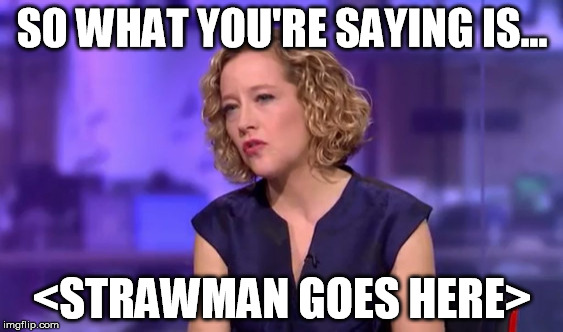
--- "Yeah that’s what it is France is the victim." "Are you going there? I’m just checking. "
Now you're just being silly. You probably need a friend or pen pal more than you have.
To: ProgressingAmerica
Roughly 1,200 years ago Zani wars were fought between Arabs and slaves.
A lot more data on slaves is in the book Lies My Liberal Teacher Told Me.
Every place in the world had them and many colors including whites.
60
posted on
05/07/2026 11:19:11 AM PDT
by
Vaduz
(NEVER TRUST A DEMOCRAT)
Navigation: use the links below to view more comments.
first previous 1-20, 21-40, 41-60, 61-80 ... 121-139 next last
Disclaimer:
Opinions posted on Free Republic are those of the individual
posters and do not necessarily represent the opinion of Free Republic or its
management. All materials posted herein are protected by copyright law and the
exemption for fair use of copyrighted works.
FreeRepublic.com is powered by software copyright 2000-2008 John Robinson