Free Republic
Browse · Search
General/Chat
Topics · Post Article

To: ClearCase_guy; BroJoeK

In 1840, New Orleans was the 3rd largest city in the US, after NYC and Baltimore, and the 4th busiest port in the world, after London, Liverpool, and New York.

By 1860, though, things had begun to turn. Construction of canals and then railroads meant that the Midwestern states could send their produce directly to the large East Coast markets rather than to New Orleans.

The Mississippi needed dredging to remain navigable. Ocean-going ships were becoming larger and couldn’t reach the city without dredging at the mouth of the river.

New York had rail connections to a much larger market. Shipping time to Europe was also less. NYC also took more time and trouble to develop the financial structures that international trade demanded.

More:

https://penelope.uchicago.edu/Thayer/E/Gazetteer/Places/America/United_States/Louisiana/New_Orleans/_Texts/KENHNO/12*.html


150 posted on 03/18/2026 12:25:31 PM PDT by x
[ Post Reply | Private Reply | To 149 | View Replies ]


To: x

Thanks very much.


151 posted on 03/18/2026 12:32:05 PM PDT by ClearCase_guy
[ Post Reply | Private Reply | To 150 | View Replies ]

To: x
New York was 800 miles closer to the transatlantic ships than was Charleston. It also had shipping that could be transported from the Great Lakes through the Eerie canal. New York controlled a vast swath of market and was an ideally located distribution center going both ways.

They say geography predicts destiny, and that location was destined to be as George Washington said "the seat of an empire."

153 posted on 03/18/2026 12:56:57 PM PDT by DiogenesLamp ("of parents owing allegiance to no other sovereignty.")
[ Post Reply | Private Reply | To 150 | View Replies ]

To: x; ClearCase_guy; DiogenesLamp

New Orleans c. 1860 Mississippi River steamboats:
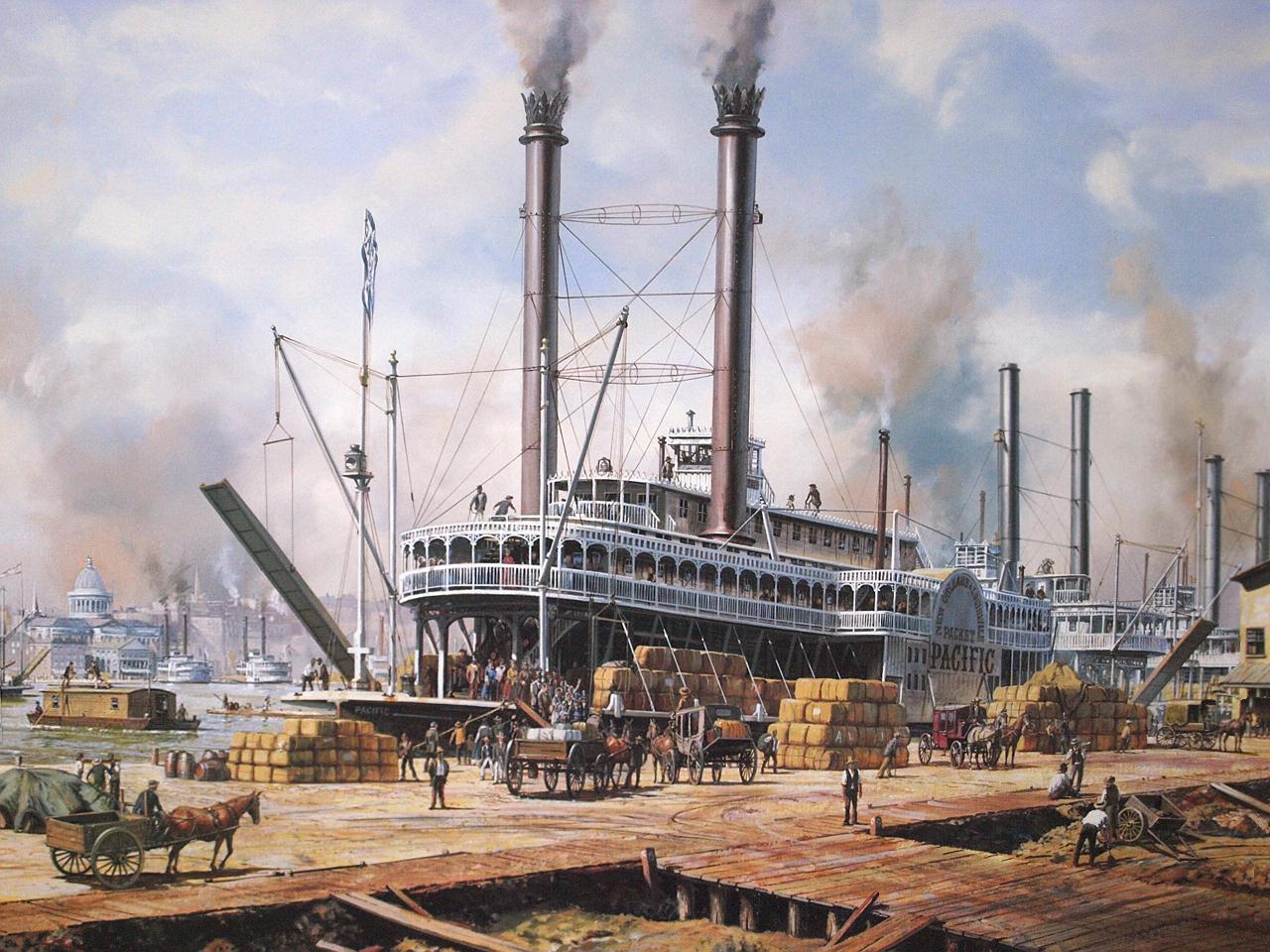
ClearCase_guy: "As I understand it, New Orleans was becoming a much bigger deal by 1860.
Steam ships running up and down the Mississippi.
Railroads moving east and west to connect to the river.
New Orleans sending more goods overseas.
New York faced the possibility of getting completely cut out of the deal.
The big money up North didn’t like that."

x: "In 1840, New Orleans was the 3rd largest city in the US, after NYC and Baltimore, and the 4th busiest port in the world, after London, Liverpool, and New York.
By 1860, though, things had begun to turn."

Right.
By 1860, New Orleans (169,000) had fallen to the fifth largest US city, after New York (1,080,000), Philadelphia (566,000), Baltimore (212,000) & Boston (178,000).

During the decades from 1830 to 1860, New Orleans population had grown at 4.4% per year (compounded), but New York City had grown at 5.4% and so was rapidly expanding its lead over New Orleans and other major US cities.

1860 US railroads:

In terms of Federal tariff revenues, New Orleans in 1860 paid twice more than every other Confederate city combined, but it was still only 4% of total Federal tariff revenues.

Further, tariffs collected in New Orleans were at least 50% on goods which would be transported by river steamboats or by railroads to Northern customers.
So, the total contribution of all Southern ports was around 4% of Federal tariff revenues.

That's why neither New Orleans nor any other Confederate city represented a serious threat to Union tariff revenues in 1860.

170 posted on 03/20/2026 6:27:54 AM PDT by BroJoeK (future DDG 134 -- we remember)
[ Post Reply | Private Reply | To 150 | View Replies ]

Free Republic
Browse · Search
General/Chat
Topics · Post Article


FreeRepublic, LLC, PO BOX 9771, FRESNO, CA 93794
FreeRepublic.com is powered by software copyright 2000-2008 John Robinson