Posted on 01/23/2026 12:11:01 PM PST by MtnClimber
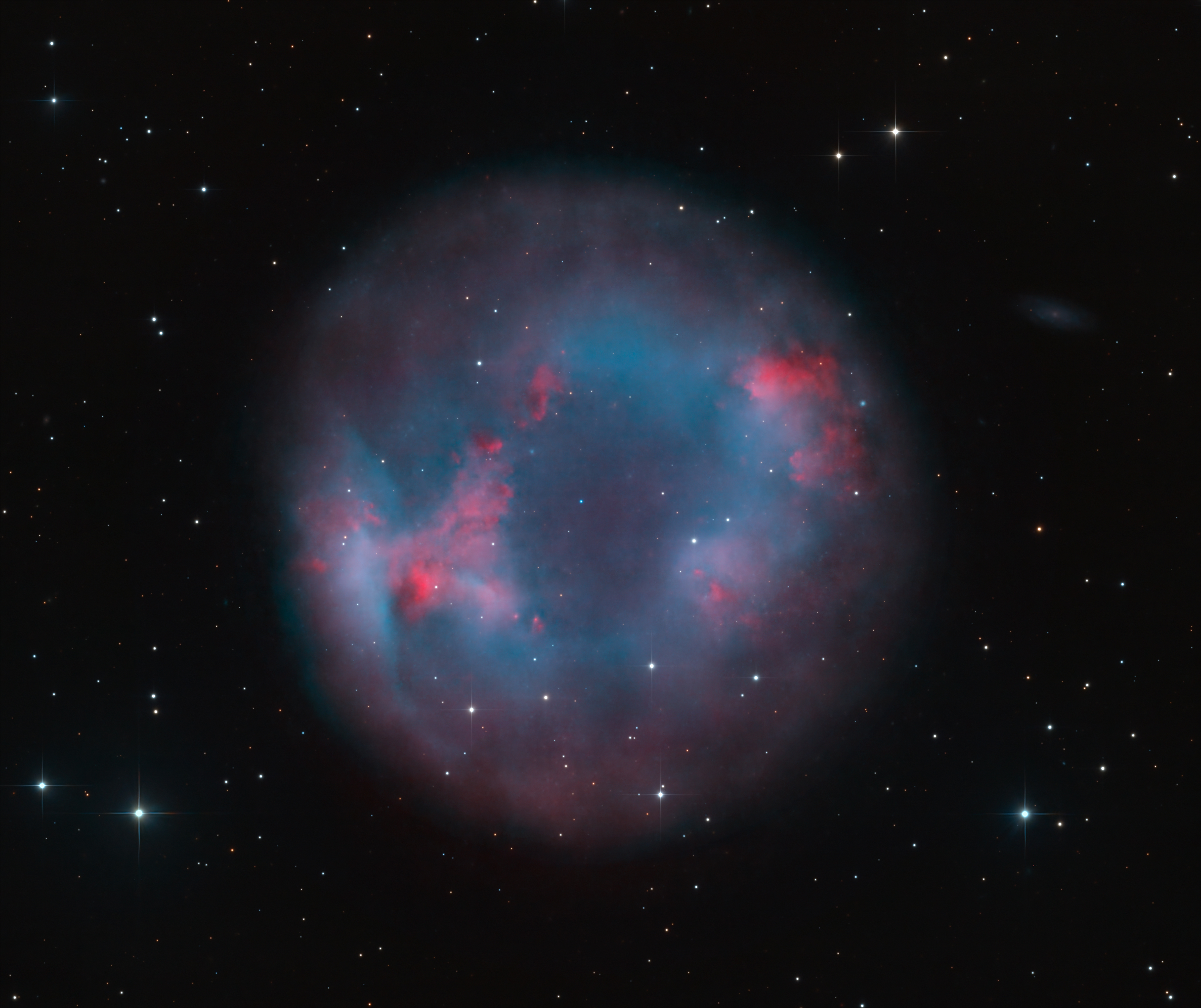
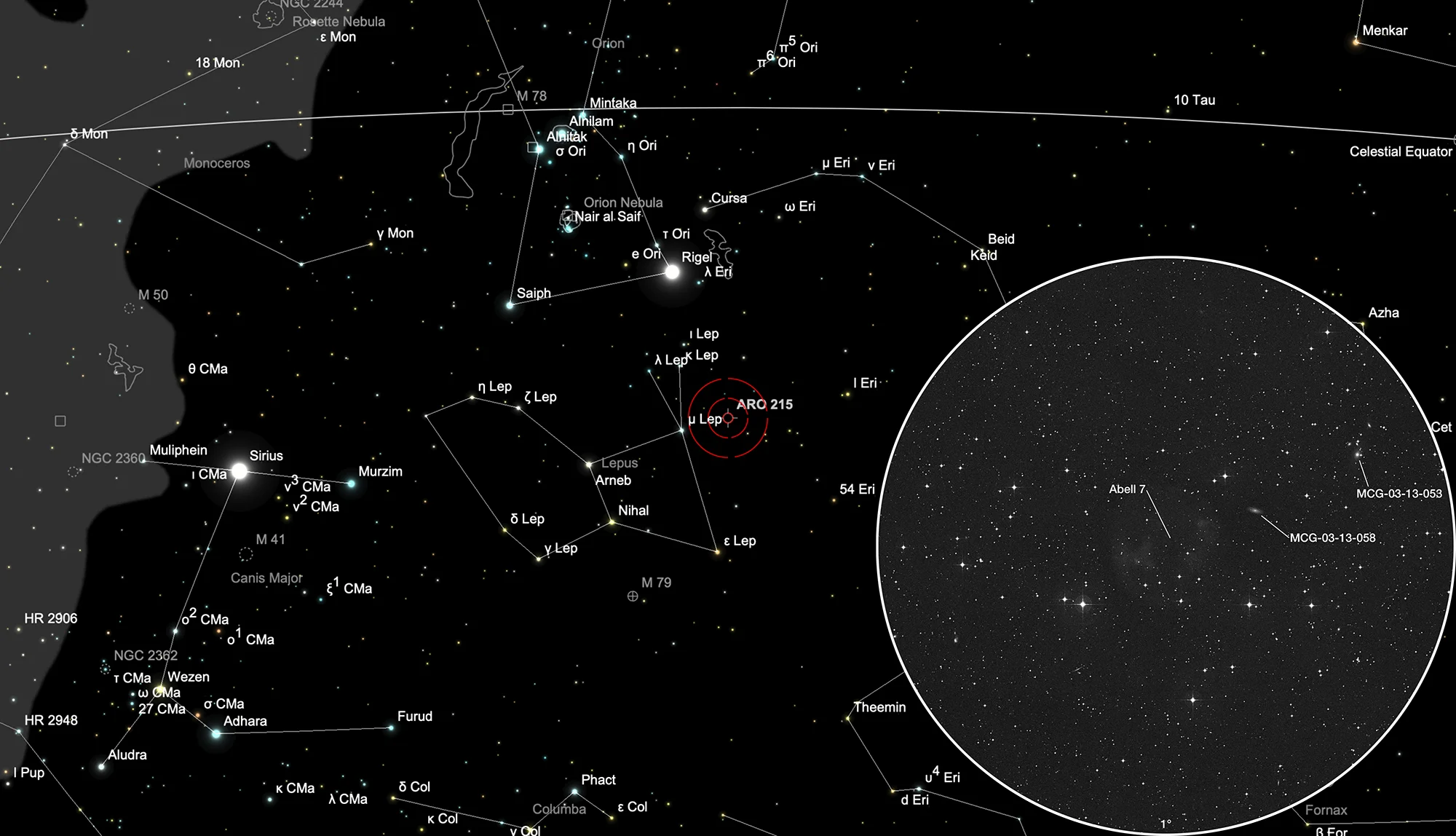
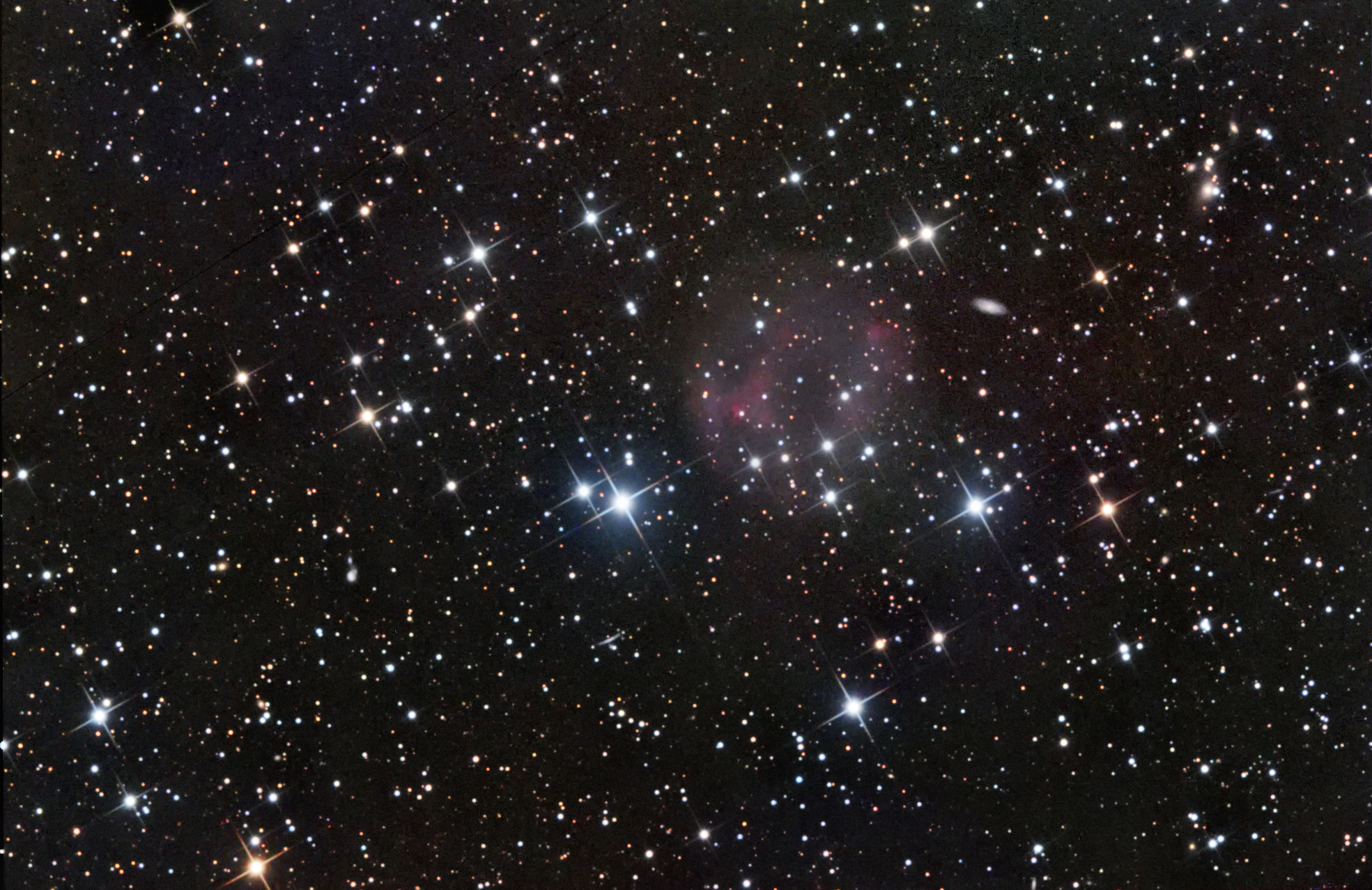
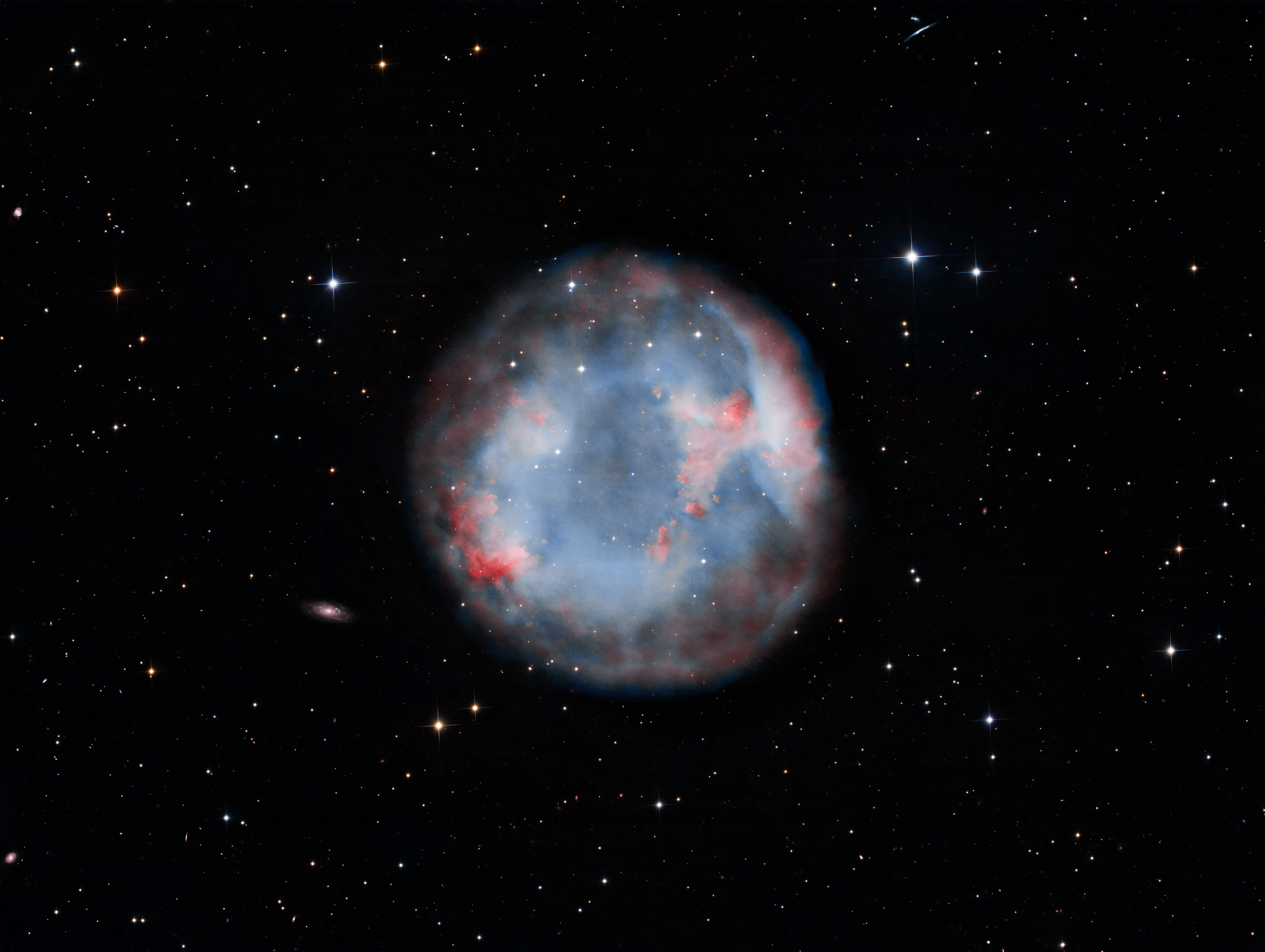
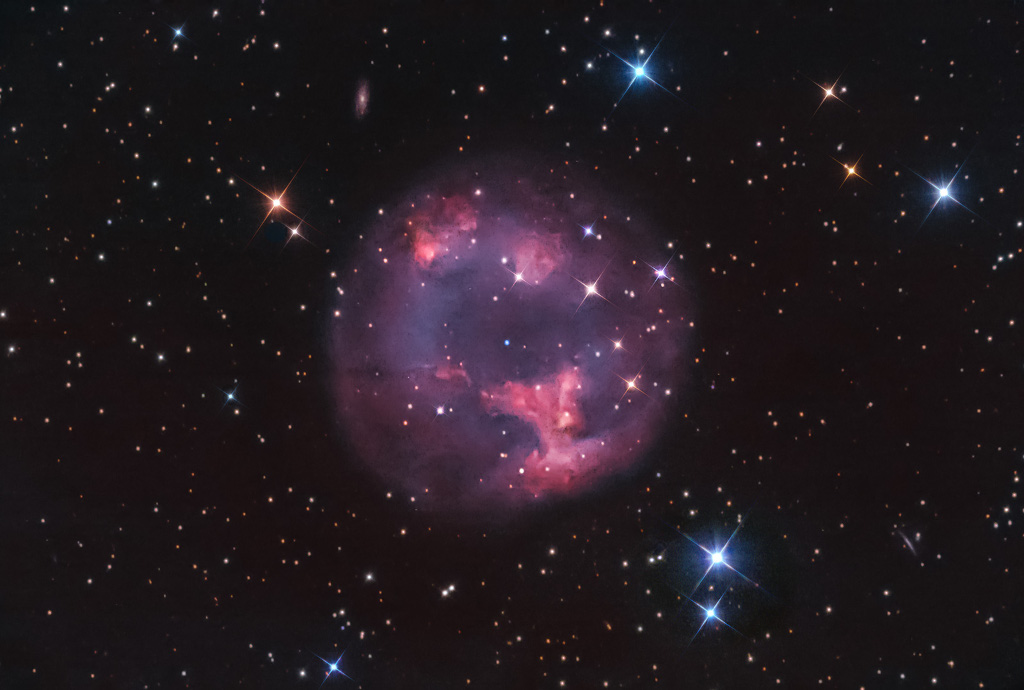
Explanation: Very faint planetary nebula Abell 7 is about 1,800 light-years distant. It lies just south of Orion in planet Earth's skies toward the constellation Lepus, The Hare. Posing with scattered Milky Way stars, its generally simple spherical shape about 8 light-years in diameter is revealed in this deep telescopic image. The beautiful and complex shapes seen within the cosmic cloud are visually enhanced by the use of long exposures and narrowband filters that capture emission from hydrogen and oxygen atoms. Otherwise Abell 7 would be much too faint to be appreciated by eye. A planetary nebula represents a very brief final phase in stellar evolution that our own Sun will experience 5 billion years hence, as the nebula's central, once sun-like star shrugs off its outer layers. Abell 7 itself is estimated to be 20,000 years old. But its central star, seen here as a fading white dwarf, is some 10 billion years old.
For more detail go to the link and click on the image for a high definition image. You can then move the magnifying glass cursor then click to zoom in and click again to zoom out. When zoomed in you can scan by moving the side bars on the bottom and right side of the image.
Pinging the APOD list
🪐 🌟 🌌 🍔
bttt
Wow.
Beautiful.
Very pretty.
How come we are never close to any of these nebula and globular clusters etc? Is it because the stars and gas push each other apart. You would think after 4.5 billion years we would clump together with something interesting....
you can wait around for Betelgeuse to go supernova. Should be visible even during the day.
Disclaimer: Opinions posted on Free Republic are those of the individual posters and do not necessarily represent the opinion of Free Republic or its management. All materials posted herein are protected by copyright law and the exemption for fair use of copyrighted works.