That’s cool. My son is an astronautical engineer. His first mission at NASA was scheduled to be a two year mission that launched the month he was born. 22 years later it was still active.
Actually it went dormant for a few years when a gyroscope failed. They managed to get it back active. It’s still operational.
What about the reports a mysterious AAA space truck arrived and someone did some repairs and gave it a jolt with booster cables?
🛸👽🛰️⚡
Voyager’s plutonium power source is slowly dying, too.
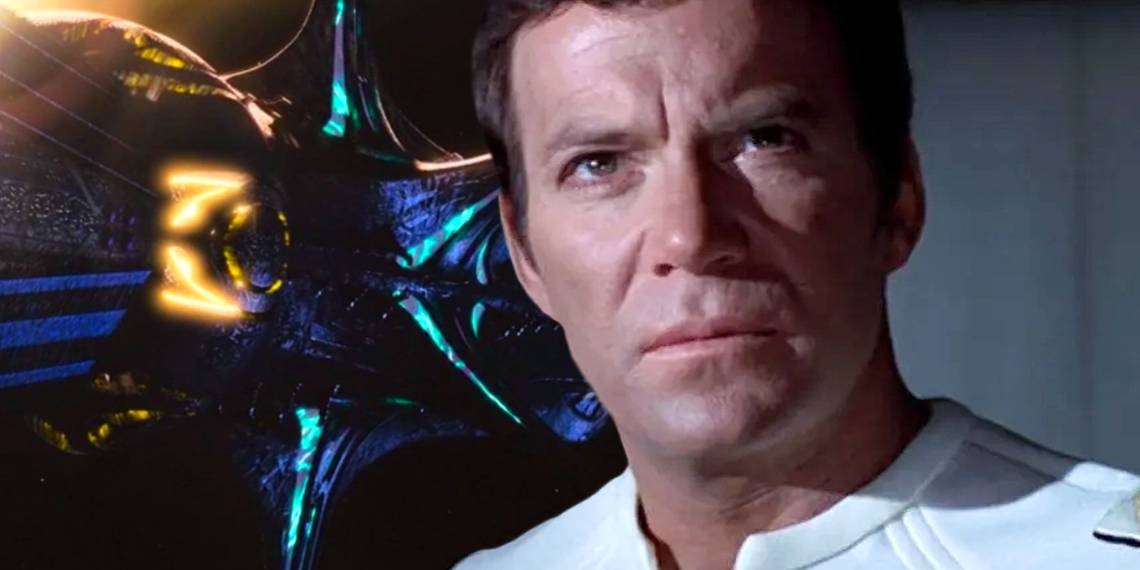
V’ger requires the information…
Way cool.
(I had to look it up- who he heck would know that?)
Traveling at over 38,000 mph.
Voyager 1 suddenly began sending a repeating gibberish, over and over again: The Voyager kept saying “My God, it’s full of stars”...
I literally 'L'aughed 'O'ut 'L'oud at this line'!'(LOL!)
Go V'ger!!!
Almost every other day I access Robert Zimmerman at https://www.behindtheblack.com.
He is a right-thinking space aficionado. Most of the articles and reports are about space, with timely opinions about wokeness and blacklisting of real scientists.
For instance, he mentions that the two Voyager spacecrafts are the longest continually running computers in history. There is much, much more on his website, including podcasts with John Batchelor.
I was wondering how close it will ever get to any star systems. This depiction from wikipedia is a bit hard to read but sort of gets at that question. It will remain in interstellar space for a long, long time. Not sure any alien probes (if they exist at all) would detect it for a long time but who knows?

I see estimates of anywhere from next year to 2036 before the batteries die. There is no fixing that.
astronautical engineer
Never heard that.
I’m a mechanical nginr.
It sure would be cool if NASA decided to design a space probe with the mission of specifically leaving the solar system that’s nuclear-powered and utilizes the most advanced Hall Effect thruster/ion engine possible to really move as fast as possible. Have it pass by as many planets and planetoids as possible for warm up observations on its way out to the Kuiper Belt to observe KBOs and then out to the Oort Cloud.
The other observation instruments would deal with measurements within the heliosphere, the termination shock boundary and heliosheath, and then interstellar medium.
Circa 1967 I was using a slide rule in physics class for tests. Circa 1974 (I had dropped out for a few years) I was using a very expensive hand held calculator. Circa 1983 (I returned to school for a second degree) I had a hand held computer that was cheap and good. It had more computing power than our NASA Apollo computers for the launches to the moon in 1969 and cost less than 100 dollars.
Fascinating stuff. Thanks for posting
The reboot works all the time.