
15 Frost Tolerant Vegetable Plants
Cold winter temperatures and mild frosts are ideal growing conditions for many cool season vegetables.
If you’d like to grow some cold hardy vegetables in your garden during the winter months, you’re sure to find some great options on this list.
Some of these vegetables can even withstand thick frosts and freezing temperatures.
Broccoli
Brussels Sprouts
Cabbage
Cauliflower
Kale
Spinach
Carrots
Peas
Onions
Leeks
Garlic
Turnips
Kohlrabi
Radish
Rhubarb
So there are 15 frost tolerant vegetable plants that you can grow in your garden over the cold winter months.
Some other frost resistant vegetables that you can also grow over winter are beets, arugula (rocket) and collard greens.
https://www.urbangardengal.com/frost-tolerant-vegetable-plants/
Good to know.
We’ve had an exceptionally beautiful October but it
s going to end this weekend.
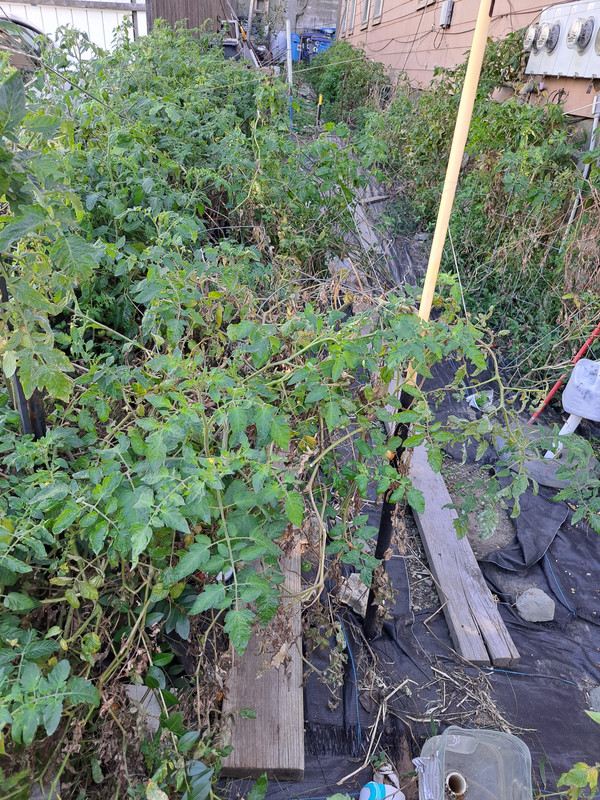
And what were the names of these which I began as seed in May and suspected were weeds (on in the foreground I am still wondering about)
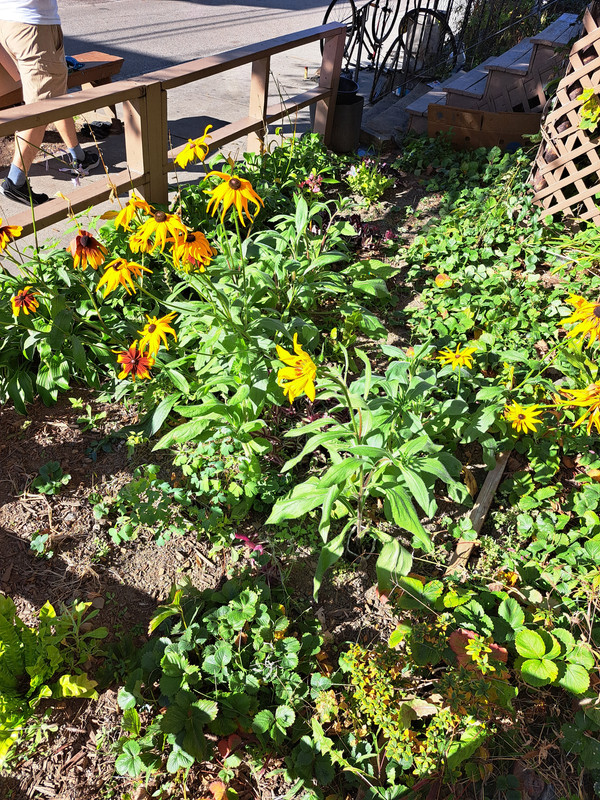
A good winter vegetable! Beside mashing with potatoes butter and sour cream, you can slice this thin and into strips and use it as a vegetable noodle in soups in place of noodles. Adds sweetness to the soup. I suppose you could also spiralize it and do the same thing. (I am going to say that I am able to buy one at my local store for $2.98, about 2 lbs if you do not want to grow and store it.)
"A biennial root vegetable, rutabagas are usually treated as annual crops generally planted in midsummer and allowed to mature in the cool weather of fall (or as a winter crop in warmer climates). They make a lovely autumn harvest vegetable after being “kissed” by a fall frost, which brings out a richer flavor."
Here is information from a European foundation that wants to encourage people to eat more vegetables!
Louis Bonduelle foundation-Rutabagas
"A vegetable that’s worth a new look"
"Famous for having prevented famine in times of war, today rutabagas are well-liked for their delicate flesh. Their fiber content contributes to regular bowel movements, and they are a natural diuretic. In addition, they are low in calories."
Oh My! There you go! A Euro website/foundation gets right to the point (you Old People!) Helps you pee, prevents famine and contributes to regular bowel movements! :o
More serious info:
"Rutabagas are also:
a source of potassium (for the nervous system, muscular function, and blood pressure)
a source of vitamin C (for the immune system, collagen formation, energy, the nervous system, iron absorption, and fatigue reduction)
They also contain:
vitamin B9 (folate)
vitamin B1
manganese
glucosinolates (cancer-fighting compounds)
and from : https://www.healthline.com/nutrition/rutabagas#TOC_TITLE_HDR_2
| One medium rutabaga (386 grams) provides (1Trusted Source): Calories: 143 Carbs: 33 grams Protein: 4 grams Fat: 0.5 grams Fiber: 9 grams Vitamin C: 107% of the Daily Value (DV) Potassium: 35% of the DV Magnesium: 18% of the DV Calcium: 17% of the DV Vitamin E: 7% of the DV |
As you can see, rutabagas are an excellent source of potassium, calcium, magnesium, and vitamins E and C. They also contain a moderate amount of folate, a B vitamin that’s important for metabolism, protein synthesis, and DNA replication (2Trusted Source).
Along with carrots and turnips and potatoes a good SHTF planting. (Plant a lot and feed the excess to any animals you might have!)
Varieties....Johnnies has Helenor and Laurentian. Seed Savers has a post that indicates they know about 81 varieties traded among their members, but lists for sale: Cairns, Westport Macomber, and Tipparary. Bakers Creek lists and Marian ( Marian...from Wales....Dedicated to the BVM???) Navone Yellow (Which I have) The grower reviews on Baker Creek have some very useful information about growing and vegetable quality. 
Baker Creek Navone Yellow rutabaga
An important addition to the list is the many frost-tolerant varieties of Italian chicory, red, white or variously mottled. The flavour actually improves after exposure to frost, which moderates the natural bitterness. A wonderful resource at a time when fresh salad ingredients are hard to find. I’m particularly fond of salads based on various combinations of chicory and stored apples.
Don’t forget, also, that some herbs such as parsley are available in frost-tolerant varieties which not only survive but continue to produce new leaf in winter conditions.