Your first assignment:
Empowering Plus Size Pole Dancers through Inclusive Competitions
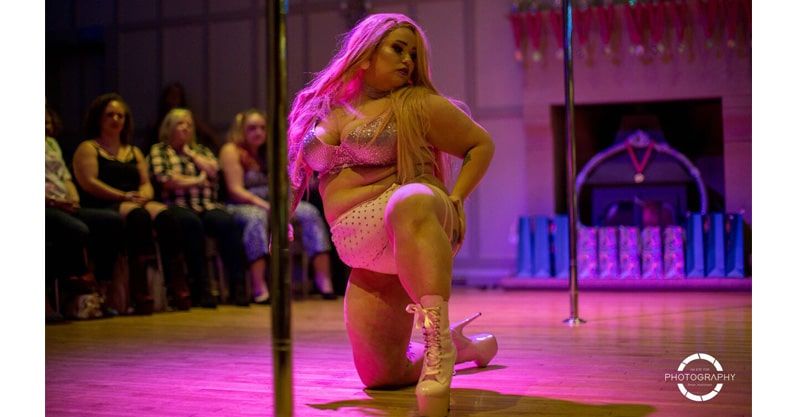 https://www.verticalwise.com/when-plus-size-hits-the-competition-stage/
Posted on 10/05/2023 11:36:26 AM PDT by Red Badger
A recent study found that women with larger breasts tend to exercise less, but post-breast reduction surgery, participation in group exercises improved significantly. The research highlights the need for easier access to publicly-funded breast reduction interventions.
A recent study revealed that women with larger breasts often engage less in high-intensity workouts and exercise less frequently. However, after undergoing breast reduction surgery, their participation in group recreational exercises significantly increased.
The new study published in the international Journal of Reconstructive Surgery (JPRAS Open) further strengthens calls for more accessible, publicly funded breast reduction and other interventions in some cases.
Based on research at Flinders University, the questionnaire was conducted with support from the free community Parkrun UK research board, an organisation aiming to promote 5km running and walking events around the world – for all ages and fitness levels.
The survey was completed by almost 2000 women involved in the Parkrun program in Australia, England and South Africa found women with bigger breasts believe that reducing their breast size would improve their exercise performance and participation
As well, all 56 women who had undergone breast reduction surgery in the group of 1987 surveyed women reported leading more healthy and active lifestyles.
“Women who had undergone breast reduction reported increased overall frequency, enjoyment, and willingness to exercise in a group,” says lead author Dr Claire Baxter, a clinical registrar in reconstructive surgery at the Flinders Medical Centre. “Our study found that breast size affects exercise habits and that breast reduction surgery changes their willingness to exercise.”
Excluding women with a history of breast cancer, the study aimed to investigate how breast size impacts the exercise habits of women and how this compares to women who have undergone breast reduction surgery.
The South Australian study, including Flinders University Associate Professor Nicola Dean, promotes the importance of regular exercise for weight and ischemic heart disease and points out barriers to Australian Government subsidies for reduction mammoplasty as determined in the Australian Medicare Benefits Schedule.
“As well as the need for patients to have macromastia, experiencing pain in the neck or shoulder region, there are a number of state-based requirements for breast reduction to be performed,” says Associate Professor Dean. “For example, there are body mass index (BMI) restrictions in Queensland, Victoria, and Tasmania which can lead to wait times of 12 months or more. In the UK, breast reduction surgery via the National Health Service varies across locations, resulting in a ‘postcode lottery’ as breast reduction is considered a lower priority procedure.”
As well as comparisons between 5km park run competition times and bra size, the BREAST-Q study also looked at the cup size satisfaction levels – which showed more self-satisfaction with AA, A, B, and C cup sizes than DD, E, F, G, and H or greater.
In addition, life satisfaction and happiness were significantly related to bra size, with cup sizes greater than E reliably reporting lower mean results.
“The benefits of breast reduction surgery need more awareness and academic support,” concludes Dr Baxter.
Reference:
“Self-reported breast size, exercise habits and BREAST-Q data – an international cross-sectional study of community runners” by Claire R. Baxter, Tamara A. Crittenden and Nicola R. Dean, 1 July 2023, JPRAS Open.
DOI: 10.1016/j.jpra.2023.06.013
FYI..................
Is it wrong that I’m just here for the gif’s?
Titillating.
I see you HAVEN’T been working out.
This thread isn’t going to make it long…
TTIUWP
This is one of those studies that already has the answers but needs “evidence” to get the rightprograms funded it decided the people need.
The science behind this topic will turn out to be a total bust.
I’ve been a gym rat since 1989.
My only obvious change in the gym is more chicks lift weights,
and many white chicks grew ghetto ass…
Basically its hard for endowed women to excercise.
Small and Sexy or Big and Bouncy... I, the SR... do not discriminate!! I love them all.
(Except fat rolls with nipples! I dont like fat rolls with nipples!!)
A question, but first some background
For background
* There are women with “large” breasts due to genetics.
* Others because they are FAT overall and their breasts got larger with their weight.
* Women with large breasts may experience uncomfortable or embarrassing ‘floppage’ when exercising, and therefore opt out.
Were any of these factors part of the study data and conclusion? Or is it really just large breasts = less exercise.?
This question can only be answered by science. A properly constructed experiment will require well-endowed test subjects and trampolines.
Your first assignment:
Empowering Plus Size Pole Dancers through Inclusive Competitions
https://www.verticalwise.com/when-plus-size-hits-the-competition-stage/
Good questions.
Lets have another ‘study’......................
What about men and man boobs, would they also be bigger if not exercising? hahaha!
Does this also explain MOOBs?

Disclaimer: Opinions posted on Free Republic are those of the individual posters and do not necessarily represent the opinion of Free Republic or its management. All materials posted herein are protected by copyright law and the exemption for fair use of copyrighted works.